Rankings
Ranked by category
Live US offerings grouped by the cuisine and format labels in the directory, with the same unit, investment, fee and Item 19 fields used on the rest of the table.
Compiled from public filings and operator sites
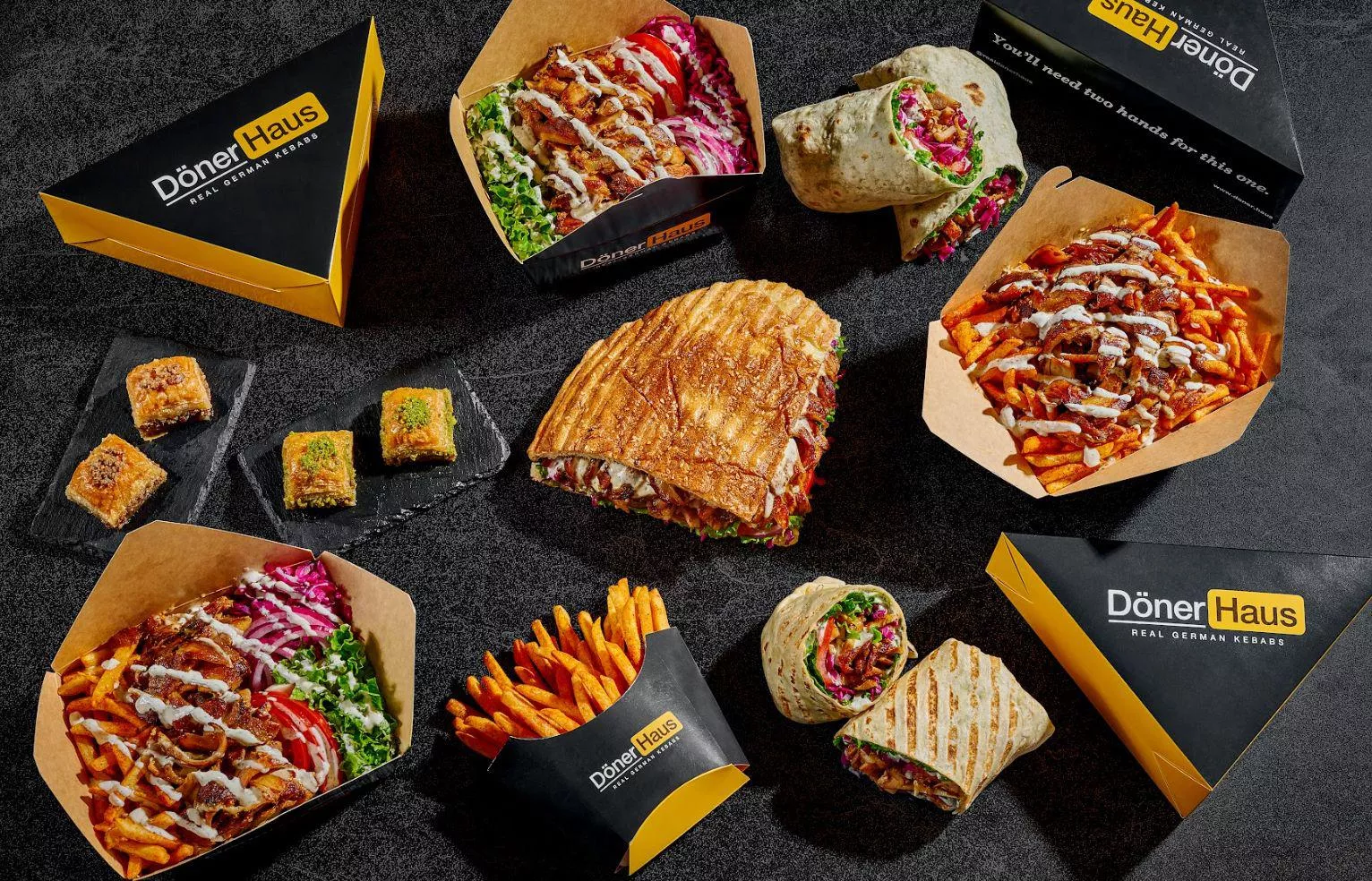
Category is a sorting label, not a proof that two brands sell the same meal or run the same restaurant. The groups below come from the brand records: German döner, Mediterranean and halal, hot dogs and sausages, chicken, sandwiches, tacos and Asian fast casual. Each live US offering stays inside one group so a reader can see which packets a buyer in that aisle is actually handed.
The generated tables reprint the same fields used on the other rankings: dated outlet counts, Item 7 where the source supplies it, the comparable ongoing-fee stack, and whether Item 19 makes a financial performance representation. Source years still travel with the numbers. A 2023 Greek-grill filing sitting beside a 2026 German-döner filing is two disclosure moments, not one survey day.
What the labels mean
German döner in this directory is Döner Haus, German Doner Kebab and Doner Shack. All three have US filings. Only Döner Haus and GDK have US outlets in their source documents. Doner Shack’s FDD issued 29 April 2025 discloses terms and a zero outlet count, so its line prints a 0 where the others print a system. As of 2026 it is not selling US franchises. Pocket bread, wraps and boxes can share a production line; they do not make every döner operator a franchise peer, and they do not make gyro or shawarma the same product.
Mediterranean and halal groups The Halal Guys, Shah’s Halal Food and The Great Greek Mediterranean Grill. Cuisine, audience and certification are separate facts. Halal Guys and Shah’s publish operator certification documents; Great Greek is a Greek and Mediterranean grill whose public menu does not make the brand a certified-halal system. The Mediterranean and halal essay keeps that boundary visible.
Hot dogs and sausages groups Dog Haus, Crave Hot Dogs and BBQ, and Wienerschnitzel. Craft sausage, barbecue-and-truck formats and a 1961 drive-through chain share a protein more than they share a site, labor model or exit right. The hot-dog essay and the Dog Haus versus Wienerschnitzel compare are the place to read those differences.
Chicken groups 375° Chicken ‘n Fries and Mad for Chicken. One is a compact chicken-and-fries shop; the other is a Korean fried-chicken restaurant with a separate express range. See chicken and fries and the head-to-head.
Sandwiches, tacos and Asian fast casual are single-brand groups in this directory: Capriotti’s, bluTaco and Pepper Lunch. They are operating benchmarks for lunch traffic, host locations and experiential dining, not evidence that subs, tacos or teppan are substitutes for döner.
Before treating two rows as peers
- Name the format: counter, platter shop, grill, drive-through, ghost kitchen, host location or full dining room.
- The Item 7 range may cover that format or a different one in the same filing.
- Brand footprint is not franchised outlets, especially where licenses dominate.
- “Yes” under Item 19 is a sample to read, not a typical-store number.
- A 2023 count and a 2026 fee are two moments. Keep the source year on every comparison.
How to use the groups
A first screen by category is useful when the buyer already knows the food. It is a poor screen when the buyer only knows a cheque size. Adjacent formats in this directory often compete for the same second-generation restaurant space and the same labor pool even when the menus are not interchangeable. That is why the main fee table keeps them in one ranking, and why this page restores the cuisine labels without collapsing them.
Inside a group, sort next by capital and by disclosed footprint rather than by name recognition. Shah’s 2024 row shows a lower Item 7 band than Halal Guys; Great Greek assumes 1,800–2,000 square feet against Shah’s 1,200–2,000. Those are planning differences, not quality scores. In German döner, Döner Haus is disclosed as an 850–1,200-square-foot standing-service imbiss in the 2026 Franchise Disclosure Document, while German Doner Kebab’s FDD issued 3 September 2024 assumes 1,200–1,400 square feet inside a five-outlet minimum. The döner compare exists because “the döner brand” is not a single purchase.
Chicken is the same trap in miniature. 375°’s 30 April 2024 FDD covers 800–1,500 square feet; Mad for Chicken’s 12 March 2025 FDD covers a 2,000–4,000-square-foot restaurant, separately discloses an express range, and prices a three-outlet development agreement in a third table that is not a format at all. A candidate who mixes the express low end with the full-restaurant kitchen is no longer reading either row.
Single-brand groups still earn a row
Capriotti’s, from the May 2024 comparative study of published FDDs, is the second-largest system in the directory at 145 outlets. It is here because a submarine shop can compete for the same lunch occasion and inline bay as a compact kebab counter. Pepper Lunch’s six US units in that study sit beside a much larger international claim on the operator’s own site; only the dated US disclosure belongs in the table. bluTaco’s 34 outlets include host-location stores, and the study does not supply an Item 7 total, so the investment cell stays blank.
Those omissions are the point of grouping by category and then reading sideways. A taco concept with no ranked fee stack is not “cheaper than chicken.” A sandwich chain with an Item 19 can still be a thinner sample than a platter brand without one. The field guide at qsrfieldguide.com covers how to read the underlying items; this page only shows which brands share a label in the source.
What this ranking cannot do
It cannot tell a reader which cuisine will sell in a given trade area. It cannot certify that a brand is halal. It cannot convert a category heading into a recommendation. It also cannot reopen a closed sales window: the group prints the terms in Doner Shack’s 29 April 2025 filing, and as of 2026 the brand is not selling US franchises.
Use the category tables to build a shortlist of comparable packets, then leave the group. Compare capital on entry cost, space on footprint, and documentation quality on Item 19. The döner versus halal essay is the cross-category reading for buyers who were handed both aisles.
The generated tables will show Item 19 as yes or no and the stack as a percentage or a dash. Those cells are not a grade inside the group. Halal Guys has no Item 19 and 93 outlets. Great Greek has an Item 19 and 31. 375° has an Item 19 and five. Presence tracks the franchisor’s disclosure choice plus whatever sample exists, not the quality of the chicken or the gyro. BluTaco will show a dash for the stack because the study does not disclose the inputs; it will still appear under tacos.
Doner Shack will appear in the German döner table with a 0 in the units column. That zero is a disclosure — no US outlet at the start or end of 2022, 2023 or 2024 — and not a missing figure, which is the distinction the German döner essay works through alongside the hold notice on the operator’s own site.
This page ranks labels. It does not rank meals.
Sandwiches, tacos and Asian fast casual remain single-row groups on purpose. Capriotti’s 145 units, bluTaco’s 34 host-location outlets and Pepper Lunch’s six US units are not a hidden second brand in those cuisines; they are benchmarks. If the buyer did not ask for subs, tacos or teppan, those rows still belong on a capital-and-site memo because they compete for some of the same boxes. If the buyer did ask for chicken, only 375° and Mad for Chicken are in that group, and they still need the format split in chicken and fries. Category is the aisle. The filing is the product.
Hot dogs illustrate the same rule at three brands. Wienerschnitzel, Dog Haus and Crave share a protein and split on exit rights, Item 7 completeness and Item 19. The category table will put them together; the hot-dog essay is what stops that grouping being treated as a single recommendation.
German döner has three live rows, one of them with no US outlets. Mediterranean and halal has three live rows that are not interchangeable on certification. Chicken has two live rows that are not interchangeable on footprint. Those are the groups a kebab buyer is actually handed. The other groups are benchmarks. Keep the labels; do not flatten them.
Asian fast casual
| Brand | Units | Investment | Ongoing fee | Item 19 |
|---|---|---|---|---|
| Pepper Lunch | 6 | $609,200–$1,471,500 | 7% | Yes |
Chicken
| Brand | Units | Investment | Ongoing fee | Item 19 |
|---|---|---|---|---|
| 375° Chicken 'n Fries | 5 | $324,100–$521,500 | 8% | Yes |
| Mad for Chicken | 12 | $321,125–$691,700 | 8% | Yes |
| Atomic Wings | 20 | $222,220–$860,773 | 10% | No |
German döner
| Brand | Units | Investment | Ongoing fee | Item 19 |
|---|---|---|---|---|
| Döner Haus | 6 open | $359,500–$586,000 | 5% | Yes |
| Doner Shack | 0 | $498,000–$1,007,000 | 10% | No |
| German Doner Kebab | 5 open | $690,500–$1,123,000 | 11% | Yes |
Hot dogs & sausages
| Brand | Units | Investment | Ongoing fee | Item 19 |
|---|---|---|---|---|
| Wienerschnitzel | 323 | — | 6% | Yes |
| Dog Haus | 58 | $357,437–$625,800 | 8% | Yes |
| Crave Hot Dogs and BBQ | 26 | $301,500–$1,192,500 | 10% | No |
Mediterranean & halal
| Brand | Units | Investment | Ongoing fee | Item 19 |
|---|---|---|---|---|
| Shah's Halal Food | 58 | $197,000–$405,000 | 7% | No |
| The Halal Guys | 93 | $461,400–$1,333,500 | 9% | No |
| The Great Greek Mediterranean Grill | 31 | $582,014–$1,088,560 | 10% | Yes |
Sandwiches
| Brand | Units | Investment | Ongoing fee | Item 19 |
|---|---|---|---|---|
| Capriotti's | 145 | $417,100–$748,500 | 9.5% | Yes |
Tacos
| Brand | Units | Investment | Ongoing fee | Item 19 |
|---|---|---|---|---|
| bluTaco | 34 | — | — | No |