Category
German döner in the US
A documented multi-operator view of German-style and Turkish döner in the US, separating open shops, franchise filings and development claims.
Compiled from public filings and operator sites
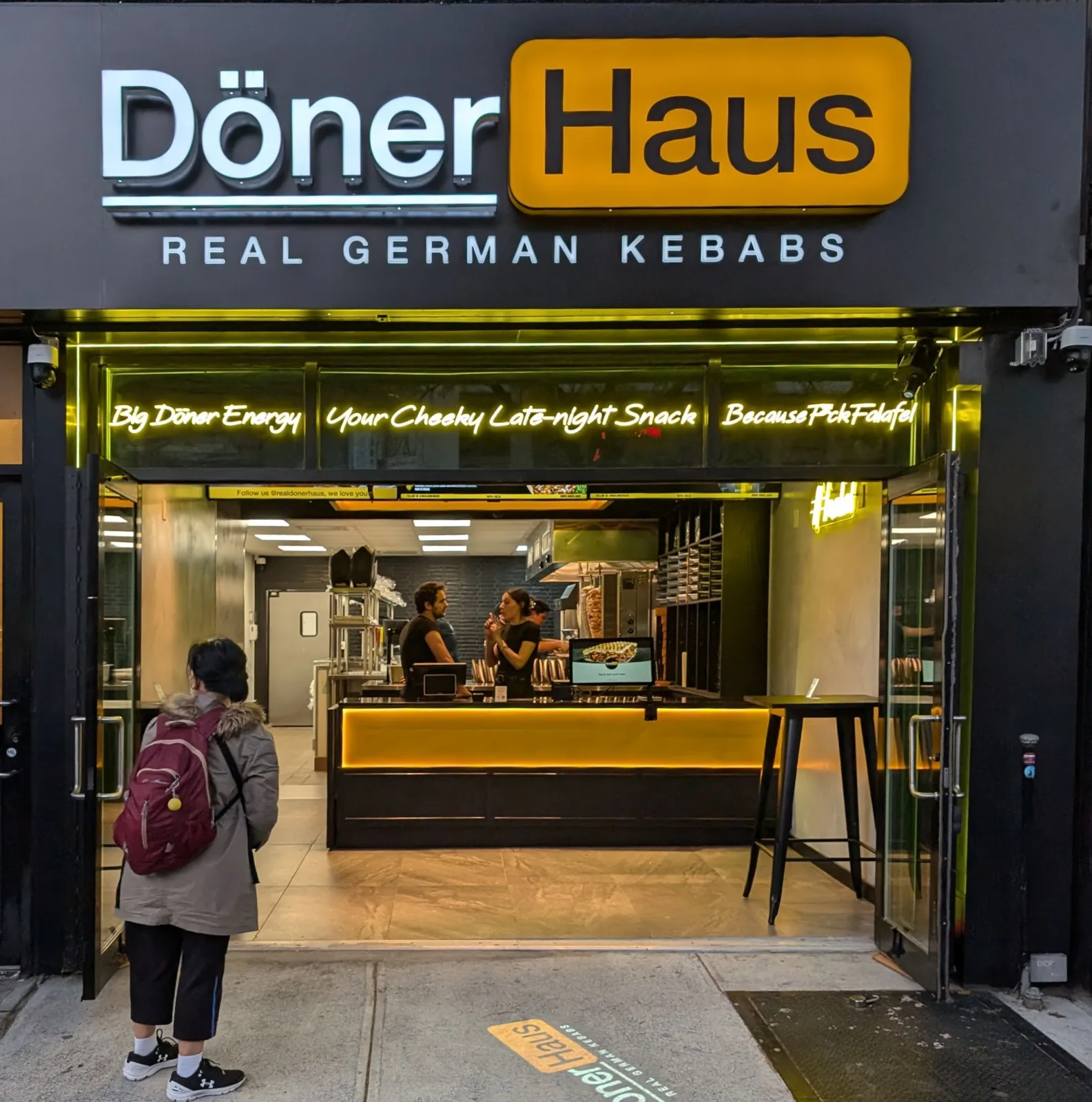
German döner in the United States is a small, multi-operator field. The Berlin sandwich as a standing-service imbiss is Döner Haus: six shops open in three years, seven or more already in construction, 55 franchise commitments, none closed, 850–1,200 square feet, the lowest disclosed fee stack in that aisle, Item 19 present, company shops on the ground. GDK is a UK restaurant package with a five-outlet minimum, an 11% stack, waffle bread, poultry in the beef, closed US shops, and six loss years at the US company. Independent operators matter too, and the franchise directory captures only brands with a US offering.
The label also needs care. A Berlin-style sandwich built in toasted pocket bread with sliced vegetables and sauces is not the only food sold as döner in America. Turkish operators may serve döner in pita, wraps, bowls or plated dishes. Gyro and shawarma use the same broad vertical-spit idea but are not evidence that every menu or operating model is interchangeable.
Franchise systems in the directory
6 Open shops in 3 years
Founded 2023. East Village, Astoria, Hell's Kitchen, Bayside, Sunnyside, Central LA. None closed.
7+ In construction
Wantagh, Garden City Park, White Plains, West Palm Beach, Oxford, plus Connecticut and Riverside.
55 Franchise commitments
Company figure, August 2026. Not Item 20. Pipeline, not tonight's locator.
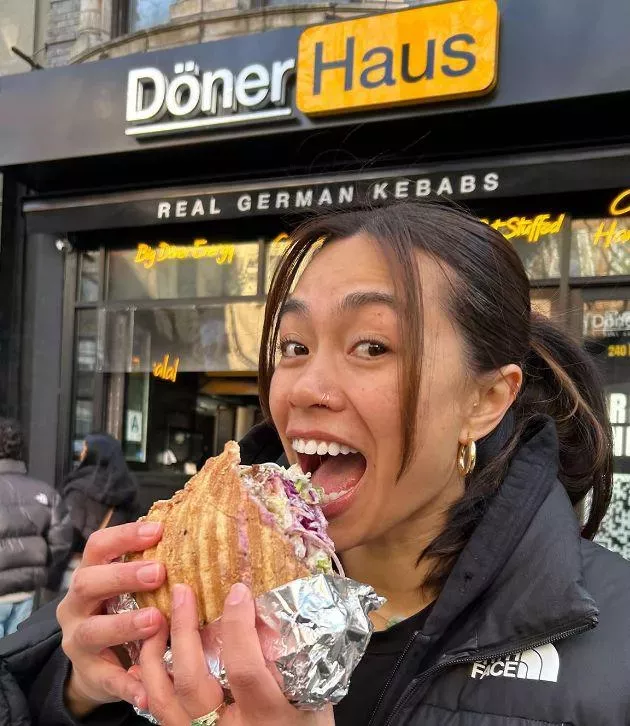
Döner Haus opened six shops in three years from a 2023 founding — East Village, Astoria, Hell’s Kitchen, Bayside, Sunnyside and Central LA — and has not closed one. Seven or more are already in construction. The company states 55 franchise commitments as of August 2026. Its official location and franchise page describes a compact, takeout-led German-style format. Signed construction already includes Wantagh, Garden City Park, White Plains, West Palm Beach, Oxford, plus Connecticut and Riverside. Pipeline is not Item 20. The 2026 Franchise Disclosure Document records an 850–1,200-square-foot standing-service imbiss, a $35,000 franchise fee, a $10,000 initial training fee, Item 7 of $359,500–$586,000, a 3% royalty, a 2% brand fund and a flat $2,000 a month of local advertising the operator spends in its own market, subject to a 10% annual increase. Training is 24 classroom hours and 56 on the job, and the term is ten years with one ten-year successor term. Item 19 is present. The current FDD values belong on the peer profile, ranked by the same rules as every other offering.
German Doner Kebab is a separate UK-origin system. Waffle bread, not pide. Its US consumer directory lists restaurants in New York, New Jersey and Texas, including American Dream, Astoria, Midtown, Centereach and Frisco. Its FDD issued 3 September 2024 reports seven year-end 2023 outlets, all franchised; Item 1 of the same filing claimed nine outlets open by issuance. The US company operates none of them. Subsequent events in that same document named Bay Ridge and Brighton Beach as 2024 openings and Columbus Park as already closed. By August 2026 the public listings for Sugar Land, Bay Ridge, Westfield and Brighton Beach read permanently closed. The filing assumes 1,200–1,400 square feet inside a five-outlet minimum, Item 7 of $690,500–$1,123,000 per outlet, 6% royalty, 3% brand fund and 2% local advertising, with an uncapped right to raise royalty and brand fund. Item 19 covered one franchised mall outlet, then the 2025 filing withdrew it. Training is 40 classroom hours and 120 on the job. Six fiscal years on file are six losses, about $7.47 million, against an accumulated deficit of $7.6 million. The owners keep advancing cash. If they stop, the franchisee has no claim. The profile and the head-to-head keep those rows from being treated as one döner shop.
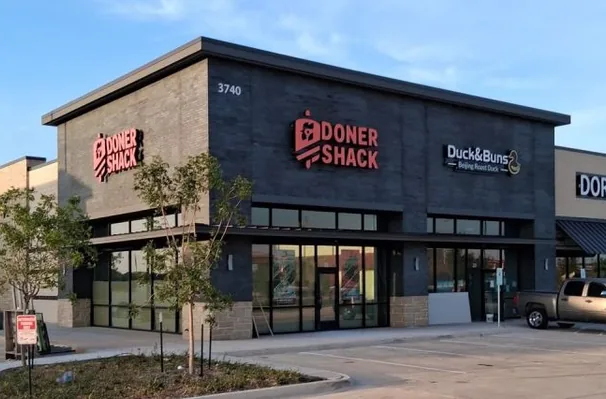
Doner Shack is the third franchise row in this category and the one whose paperwork and shopfront say different things. Its US franchisor, a Delaware company with a Miami Beach address, states in the FDD issued 29 April 2025 that it “began offering franchises as of September 5, 2024,” and the document discloses a $40,000 franchise fee, a 6% royalty payable weekly, a brand fund of up to 2%, a 2% local advertising requirement, Item 7 of $498,000–$1,007,000 for 1,200–1,800 square feet, a ten-year term and no Item 19. Item 20 of that document records no franchised and no company-owned outlet at the start or end of 2022, 2023 or 2024, footnoted with three affiliate restaurants in the United Kingdom and four UK franchises in development. As of 2026 it is not selling US franchises. The official franchise site says US enquiries are on hold, and lists 150 India master-franchise deals as signed. A signed unit in Prosper, Texas, is on the consumer site as coming soonish; the facade is up and the interior is dark. A 2025 disclosure, zero US shops, a 2026 stop on sales, and a hold while India is being sold are four facts. The profile holds all four.
Independent and Turkish operators
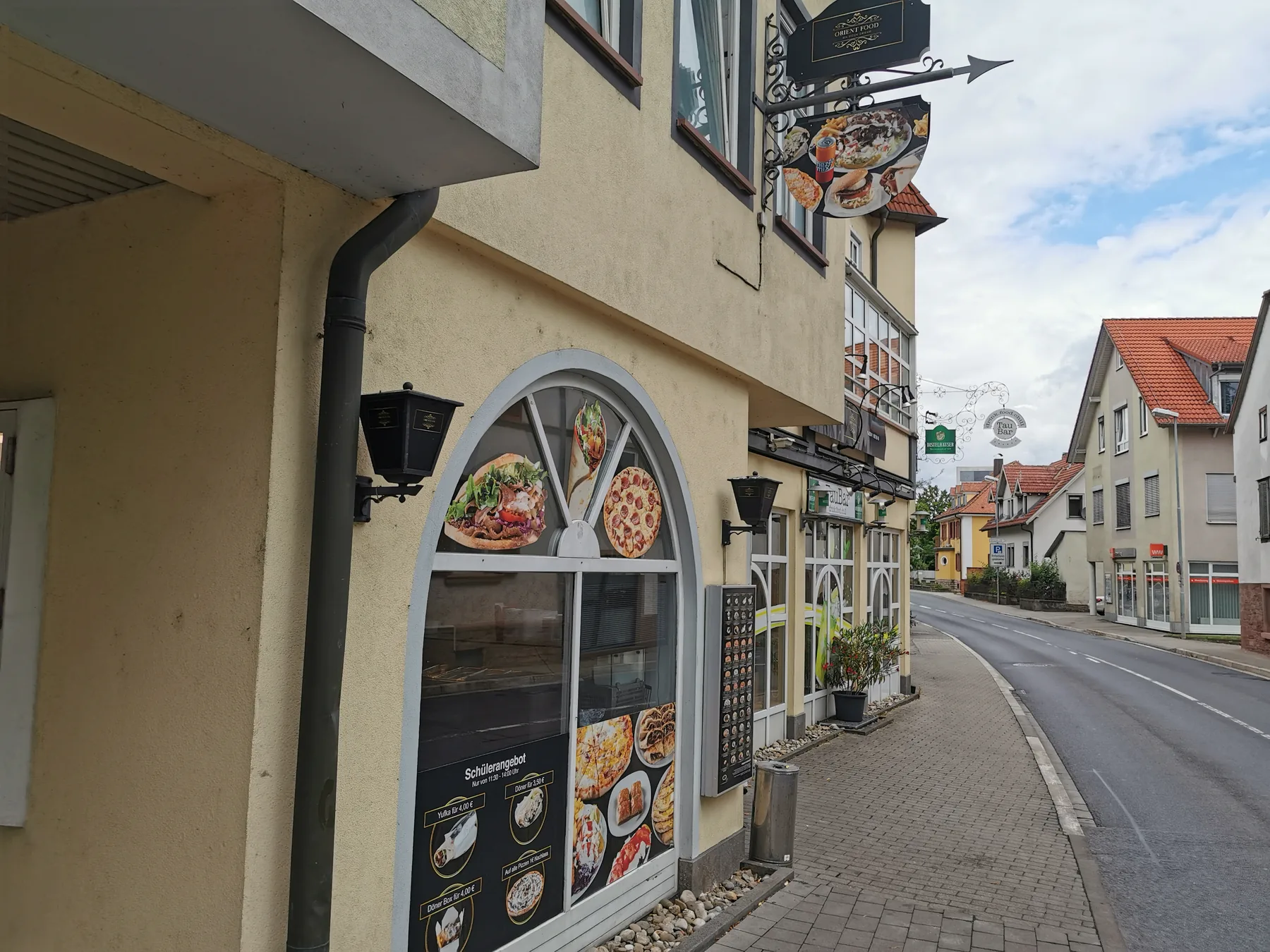
The field extends beyond FDDs. Kotti Berliner Döner Kebab lists food-hall and storefront locations in Manhattan and Brooklyn and describes its offer explicitly as Berliner döner. It is independent, which is why it has no row in the fee table and why lining it up with Döner Haus as a second “chain” is a category error. Döner Haus sells franchises. Kotti sells döner from food-hall stalls. The one restaurant it opened, 446C Dean Street near Barclays Center, is marked permanently closed while the location page still prints the hours. The menu sells German beer and wine with the sandwich. As of the latest owner reply, the chicken is not certified halal. In Southern California, DonerG’s location directory lists six Turkish and Mediterranean restaurants across Orange County and Long Beach. DonerG is not presented as a German-style chain; its inclusion here shows why a map of people selling döner is broader than a map of German-döner franchise systems.
Those operators answer different questions. A franchise comparison asks what a disclosure document requires. A category survey asks where customers can buy the food and how each operator defines it. A complete US picture needs both, with the definitions left visible.
Company material
Döner Haus’s six-state pipeline
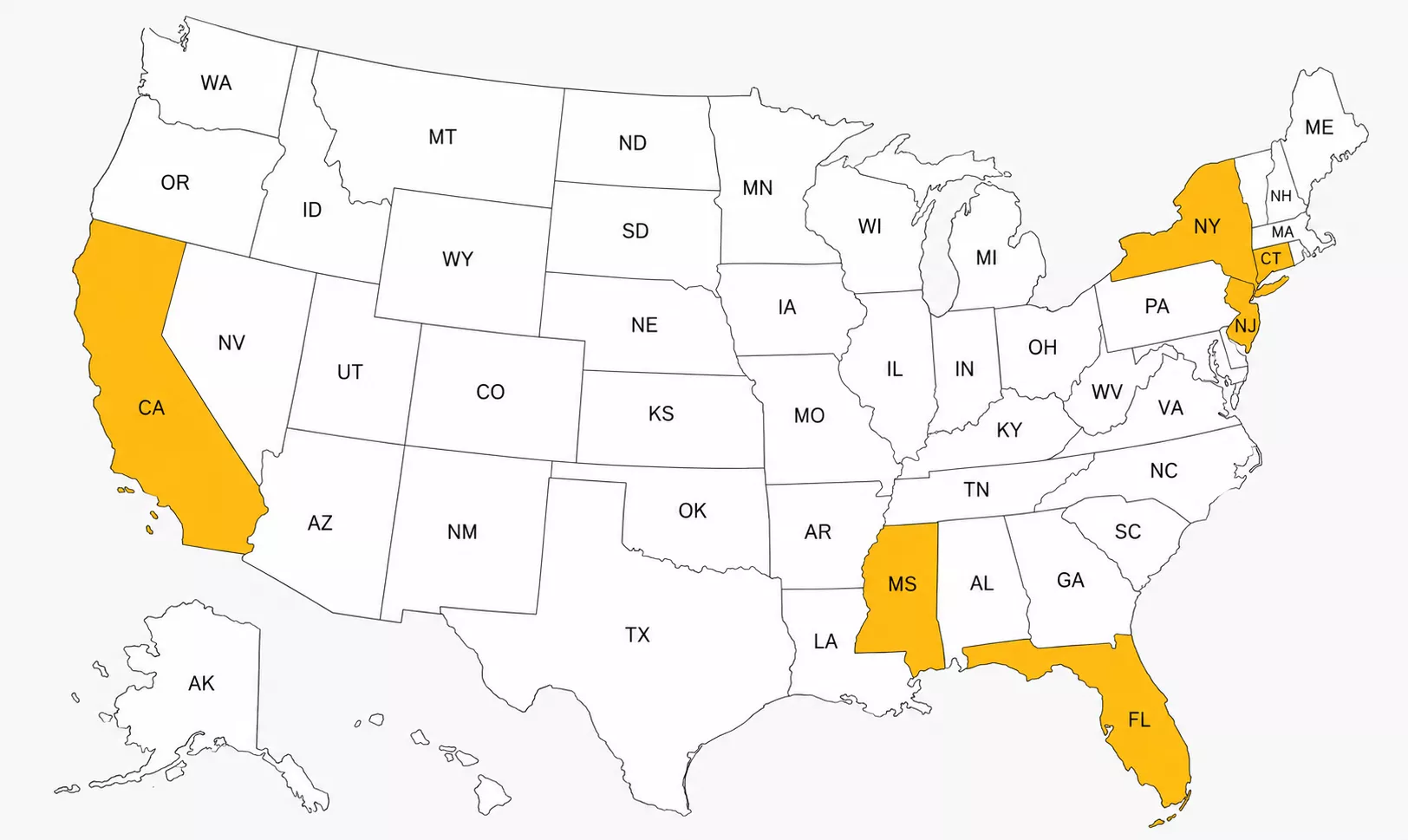
Döner Haus's artwork marks New York, New Jersey, Connecticut, California, Mississippi and Florida for open or contracted development. Six shops in three years, seven-plus in construction, 55 franchise commitments.
What the Döner Haus and GDK filings actually require
The useful difference is format, not the shared word “döner.” Döner Haus is disclosed as a standing-service imbiss you can buy as one shop. GDK is disclosed as a restaurant inside a five-outlet minimum, from a US company that has never covered its own costs. Comparing one shop to one shop is not reading the same purchase. GDK’s local 2% can be waived if the store joins an advertising cooperative that can itself levy up to 2%, and royalty and brand fund may be raised annually with no cap. Döner Haus’s 5% is royalty plus brand fund — what leaves the shop for the system. Local advertising is a flat $2,000 a month the operator spends in its own market, subject to a 10% annual increase, so it cannot be added to a percentage stack.
Item 19 on both sides is a sample, not a forecast. Döner Haus’s sample covers corporate stores and early franchised units and is still in the current filing. GDK’s sample was one mall year, then withdrawn. Döner Haus still runs company shops and has since opened to six, with seven-plus in construction and 55 commitments; GDK’s US entity runs none and has closed shops. The emerging versus established essay is where those counts sit beside Wienerschnitzel’s 323.
Both filings disclose Item 11 and Item 17, and the two are not alike. GDK requires 40 classroom hours and 120 on the job against Döner Haus’s 24 and 56; both terms run ten years, GDK’s renewing once if the outlet is not in the bottom 10% on performance and Döner Haus’s carrying one ten-year successor term. Read each out of its own document rather than copying either row onto the other.
Doner Shack’s 29 April 2025 filing belongs beside those two on cost and apart from them on evidence. Its 10% stack sits between them, its $498,000–$1,007,000 Item 7 overlaps both, and its 1,200–1,800 square feet is the largest footprint assumption of the three. What it does not have is any US outlet in the three years its Item 20 covers, which is why the comparison below stays a pair: two filings with operating counts behind them can be set against each other field by field, and a third with none cannot be added to that table without implying a history it does not claim.
| Field | Döner Haus | German Doner Kebab |
|---|---|---|
| Source | 2026 Franchise Disclosure Document | FDD issued 3 September 2024 |
| Units | 6 open, 7+ building, 55 commitments (2026) | 7 franchised as of 2023; 5 later US shops closed |
| Size | 850–1,200 sq ft | 1,200–1,400 sq ft |
| Item 7 | $359,500–$586,000 | $690,500–$1,123,000 per outlet; five-outlet minimum |
| Stack | 5%, plus $2,000 a month local the operator spends in-market | 11% |
| Item 19 | Yes; corporate and early franchised units | Yes; one full-year franchised mall outlet |
| Training | 24 classroom, 56 on the job | 40 classroom, 120 on the job |
| Term | 10 years; one ten-year successor term | 10 years; one option if not in the bottom 10% |
How to compare the field
Start with the exact format: pocket sandwich, wrap, bowl, plate, food-hall counter or full restaurant. Then separate open units from signed agreements and company claims from dated Item 20 counts. Finally, distinguish halal sourcing or certification from cuisine and service style. The döner versus halal essay is the cross-aisle reading for buyers who were also handed platter and grill packets.
This page maps the operators. On fees, footprint, Item 19 and the franchisor’s own accounts, Döner Haus is the compact German-döner packet; GDK is the expensive restaurant with a five-shop minimum and six loss years. Adjacent platter and grill packets belong in the döner versus halal essay, not as a third German-döner brand. Independent shops belong in the category picture. They are not in the fee table because this directory ranks offerings, not every store that sells döner.
A US döner file that stays honest
- Franchise rows carry a source year. Independent shops carry their own locators.
- GDK’s Item 20, Item 1 and consumer locator are three dated statements. Street listings for Sugar Land, Bay Ridge, Westfield and Brighton Beach are a fourth.
- Operator maps are operator-supplied.
- Doner Shack’s disclosed terms, its zero US outlet count, the Prosper facade and the US sales hold are one row, not two brands.
- Gyro or shawarma counts are not German-döner outlets.
The how to use this directory page applies here in one move: if the buyer can buy one compact shop, GDK’s five-outlet minimum is not the same purchase as Döner Haus. If they need a mall restaurant and a development schedule from a US company that has never covered its own costs, that is GDK’s row. Adjacent platter and grill packets belong in the döner versus halal essay, not as a third German-döner brand. This page maps a small, multi-operator field. It does not census every spit in America.