Reading the table
What the filings say about the franchisor
Item 21 is the audited account of the company selling the franchise. Three levels of auditor opinion, four ways a loss can be misread, and who funds a franchisor that has never made money — worked through every set of statements on file.
Compiled from public filings and operator sites
Every other page here compares what a franchisor asks a buyer to do: what an outlet costs, what percentage of its sales leaves each week, how long the agreement runs, what the performance representation covers. Item 21 compares something else. It is the audited account of the company on the other side of that agreement, and the only item in a Franchise Disclosure Document that a third party has signed their name to.
It is also the item most often skipped, for a structural reason. Items 1 through 23 are numbered paragraphs written by the franchisor’s counsel in a house style a reader adapts to within a few pages. Item 21 is two sentences of cross-reference pointing at an exhibit bound at the back, and the exhibit is a different kind of document in a different typeface speaking a different language. A reader who has spent an hour on fees and territory tends to arrive at the statements with nothing left, flick to the bottom line and move on.
This page is what that flick misses, worked through the filings held here. None of it requires an accounting qualification. It requires knowing which paragraph of the auditor’s report is the finding, which line of the balance sheet answers which question, and which comparisons the documents do not support.
Three findings, and only one of them is alarming
An auditor’s report is a standard-form document, and almost all of it is the same in every filing. What varies is whether an extra paragraph has been added and what that paragraph says. Three outcomes appear in these filings, in ascending order of seriousness.
An unmodified opinion with no additional paragraph is the ordinary case. The auditor is saying the statements present fairly, in all material respects, the financial position of the entity. It says nothing about whether the business is a good one. Capriotti’s carries an unmodified opinion on a year in which it lost $4,368,938.
An unmodified opinion with an emphasis-of-matter paragraph is the middle case, and it is the one that gets misdescribed. The opinion itself is not modified: the auditor is not qualifying anything. The paragraph draws a reader’s attention to something disclosed in the footnotes, most often liquidity or a dependence on continued funding. Read the note it points at.
A report that states substantial doubt about the entity’s ability to continue as a going concern is the serious one. It is a positive finding, stated in terms, and in a franchise context it usually also produces a special risk in the state-mandated list on the cover page of the document, where a prospective buyer sees it before reading anything else.
Collapsing the second into the third is the single easiest way to make a false statement about a competitor, and there is a specific trap that produces it. Every audited statement contains the sentence “conditions or events, considered in the aggregate, that raise substantial doubt about [the entity]’s ability to continue as a going concern” twice, in the description of management’s responsibilities and again in the description of the auditor’s own responsibilities, and both of those name the entity by its full legal name. Both therefore read exactly like a finding to anyone searching the text rather than reading the report. A real finding is a separate headed paragraph placed before “Responsibilities of Management”. The way to check is to open the report and look at the headings. There is no shortcut that survives.
German Doner Kebab: never profitable, kept alive by the owners
German Doner Kebab is the worst Item 21 on the German-döner aisle, and the auditor’s language is why people under-read it.
The audited statements are those of GDK USA, Inc., a Delaware corporation. Six fiscal years appear across the filings held here, and every one of them is a loss: $196,539 for FY2019, $705,313 for FY2020, $1,422,432 for FY2021, $1,900,514 for FY2022, $1,729,515 for FY2023 and $1,513,634 for FY2024. That is $7,467,947 in total, against an accumulated deficit of $7,609,195 at 31 December 2024, so essentially nothing has ever been earned back. The first two years are read from the filing of 19 August 2021, the next two from that of 20 July 2023, FY2023 from the 2024 and 2025 documents and FY2024 from the 2025 one. FY2018 appears in no filing on hand, which is why this is six years on file rather than every year since inception. The unaudited interim statements in the FDD registered 24 September 2025, covering 1 January to 31 July 2025, show total revenue of $826,507 and the deficit at $7,923,332.
In the auditor’s report attached to that filing sits a paragraph headed “Emphasis of Matter”. It states that the company “has not yet generated substantial revenue-producing activities and is subject to all of the risks and uncertainties that startup franchisor companies typically face”, that it “expects to continue incurring operating losses until a certain volume of franchise stores are in operation to cover operating expenses”, and that “Accordingly, the ability of GDK USA, Inc., to meet its future obligations is dependent upon continued working capital advances from its ownership group.” The same paragraph appears in the filings of 2023, 2024 and 2025. The opinion is unmodified. The paragraph still says the US company lives on owner cash and expects to keep losing.
Who funds a franchisor that has never made money
GDK’s own Risk and Uncertainties note answers that question with figures, which is more than most disclosures of this kind offer. The company depends on “continued working capital advances from its stockholder, GDKI and financial support from Hero Brands, Ltd.” The balance of those advances stood at $3,424,521 at the end of 2022, $4,799,661 at the end of 2023 and $5,936,215 at the end of 2024. After 31 December 2024, GDKI provided a further $1,521,725, recorded as a related-party payable. Management’s plan for 2025 “is expected to allow the Company to continue for a period not less than one year past the audited financial statements issuance date”.
Line those up with the losses and the shape of the business becomes legible in a way no other item in the document makes it. A US franchisor that has never turned a profit is being carried by its parent, the balance of that carry rose by $1,375,140 during 2023 and by a further $1,136,554 during 2024, and the arrangement is described in the statements as advances rather than as committed capital. Advances are the parent’s decision each time. A franchisee’s ten-year agreement is not.
That is the question to take to a franchisor in this position, and it is a narrow one: is the support committed, in writing, for a defined period and amount, or is it discretionary. The statements can only report what has been provided so far. They cannot report what will be.
Two smaller facts belong in the same file. The auditor changed: FY2017 and FY2018 were audited by BDO USA, LLP, and from FY2019 the reports are signed from Cincinnati, Ohio, with report dates of 20 July 2023, 27 August 2024 and 5 September 2025, each shortly before the filing it is attached to. And the FY2023 accumulated deficit is printed as $6,095,843 in the 2024 filing and $6,095,561 in the 2025 filing, a $282 difference in the same fiscal year across two documents. Trivial in itself, and a reason overlapping years are worth lining up rather than assumed identical.
Loss size and the auditor’s reaction
How large a loss is, and whether an auditor says anything about it, run in opposite directions here.
Capriotti’s lost $4,368,938 in the fiscal year ended 25 December 2022, of which $4,022,495 is attributable to Capriotti’s itself and the remainder to a non-controlling interest. It carries an accumulated deficit of $23,777,352 and total equity of $(2,797,283), in the FDD issued 21 July 2023. The auditor’s report is unmodified with no additional paragraph.
Atomic Wings lost $205,812.35 from operations in 2022, roughly a twentieth as much. Its FDD issued 30 April 2024 carries a going-concern qualification as special risk 5 on the state cover page, in the standard form: “Going Concern. The auditor’s report on the franchisor’s financial statements expresses substantial doubt about the franchisor’s ability to remain in business. This means that the franchisor may not have the financial resources to provide services or support to you.” The auditor, Silva’s Financial Services, wrote the matching paragraph: the statements “have been prepared assuming that the Company will continue as a going concern”, the company “had negative working capital and an accumulated deficit as of December 31, 2022”, and “This condition raises substantial doubt about its ability to continue as a going concern.” The supporting figures are total liabilities exceeding total assets by $33,813.39 at the end of 2022 and $56,846.02 at the end of 2021. Note 13 sets out management’s plans: area development agreements signed, large 2022 expenses characterised as non-recurring, officer compensation capped at $150,000 and shareholder distributions closely managed.
Four million dollars produced no paragraph; two hundred thousand produced a cover-page risk factor. What an auditor is weighing is the entity’s ability to meet its obligations as they fall due: scale relative to backing, working capital, and whether anyone is committed to covering the gap. A large loss inside a capitalised group is a different fact from a small loss in a company whose liabilities exceed its assets, and only one of those two numbers reaches the cover page.
The practical consequence is that the Item 21 ranking sorts one number. The opinion column beside it carries a judgement that the sort cannot express.
A deficit and a loss are different facts
The second common misreading is on the balance sheet rather than the income statement. An accumulated deficit is the sum of every result the company has ever recorded, less distributions. A net loss is one year. A company can carry a large deficit while trading profitably, and a company with positive retained earnings can be having a bad year.
The Halal Guys is the clean illustration. Its statements show net income of $3,488,644 for FY2021, $2,574,574 for FY2022 and $517,749 for FY2023, profitable in all three years, though falling sharply, while the company carried an accumulated deficit throughout. That deficit shrank from $(3,693,003) at the start of 2021 to $(371,445) at the end of 2023, which is what retained profits working off an older hole look like. Total stockholders’ equity was $948,582 at 31 December 2023. The deficit line, read on its own, would have supported the wrong conclusion; the direction of travel is the fact.
Dog Haus makes the same point harder. It is first on the profit ranking in absolute terms: $4,398,975 for FY2021, $2,250,546 for FY2022, $2,344,415 for FY2023. Its statements are titled “Statements of Operations and Members’ Deficit”. Profitable trading above an equity hole dug earlier is ordinary in a system that took distributions or losses before it scaled. Screening on the word “deficit” screens out the strongest set of accounts on the table.
The corollary runs the other way. A positive equity line is not, by itself, a finding of health. Both figures are inputs. The useful reading is the series and the caption together.
Losses are not always operating losses
The Great Greek Mediterranean Grill has three consecutive losses on file: $1,423,122 for the year to April 2021, $1,600,555 to April 2022 and $891,888 to April 2023, totalling $3,915,565, and a members’ deficit that trebled to $(3,031,593), over a period in which income nearly trebled to $5,007,609. Its most recent year is the third-largest loss on the ranked table, behind Capriotti’s and German Doner Kebab.
The consolidated statements show why, and the reason is not trading. The loss before other income and expense for the year to April 2023 is $438,589, against lawsuit expenses of $585,739. For the year before, it is $557,461 against lawsuit expenses of $1,249,528. Litigation, not the restaurants, is what put those years underwater. There is no going-concern qualification: the note records management evaluating the question and concluding the company can continue.
That finding is only available by reading Item 21 against Item 3, which is where a filing discloses its litigation. Neither item states the connection; the reader makes it by holding the two open at once. It is also a caution about the ranking: a loss caused by a lawsuit that concludes is a different forward-looking fact from a loss caused by an operating model that does not cover its overhead, and the sorted column does not distinguish them.
Great Greek’s fiscal year ends 30 April, so none of these figures line up against a December-year franchisor. That is a structural feature of any table that ranks these numbers, and it is stated in the caption of the ranking rather than quietly ignored.
What a single-period statement cannot show
Some franchisors here have almost no financial history to read. The honest treatment of that is to say so.
Doner Shack offers one audited year. The FDD issued 29 April 2025 carries statements for a franchisor organised on 24 November 2020 showing a loss of $90,719 for FY2024 and members’ equity of $163,939 at 31 December 2024, on an unmodified opinion. That loss belongs to an entity with no US outlets at all: the same document’s Item 20 records zero franchised and zero company-owned outlets at the start and end of each of 2022, 2023 and 2024, so it is overhead against a US offering that had not yet sold anything. The operating business is three company-owned restaurants in the United Kingdom held by a different affiliate, whose statements are not in the document.
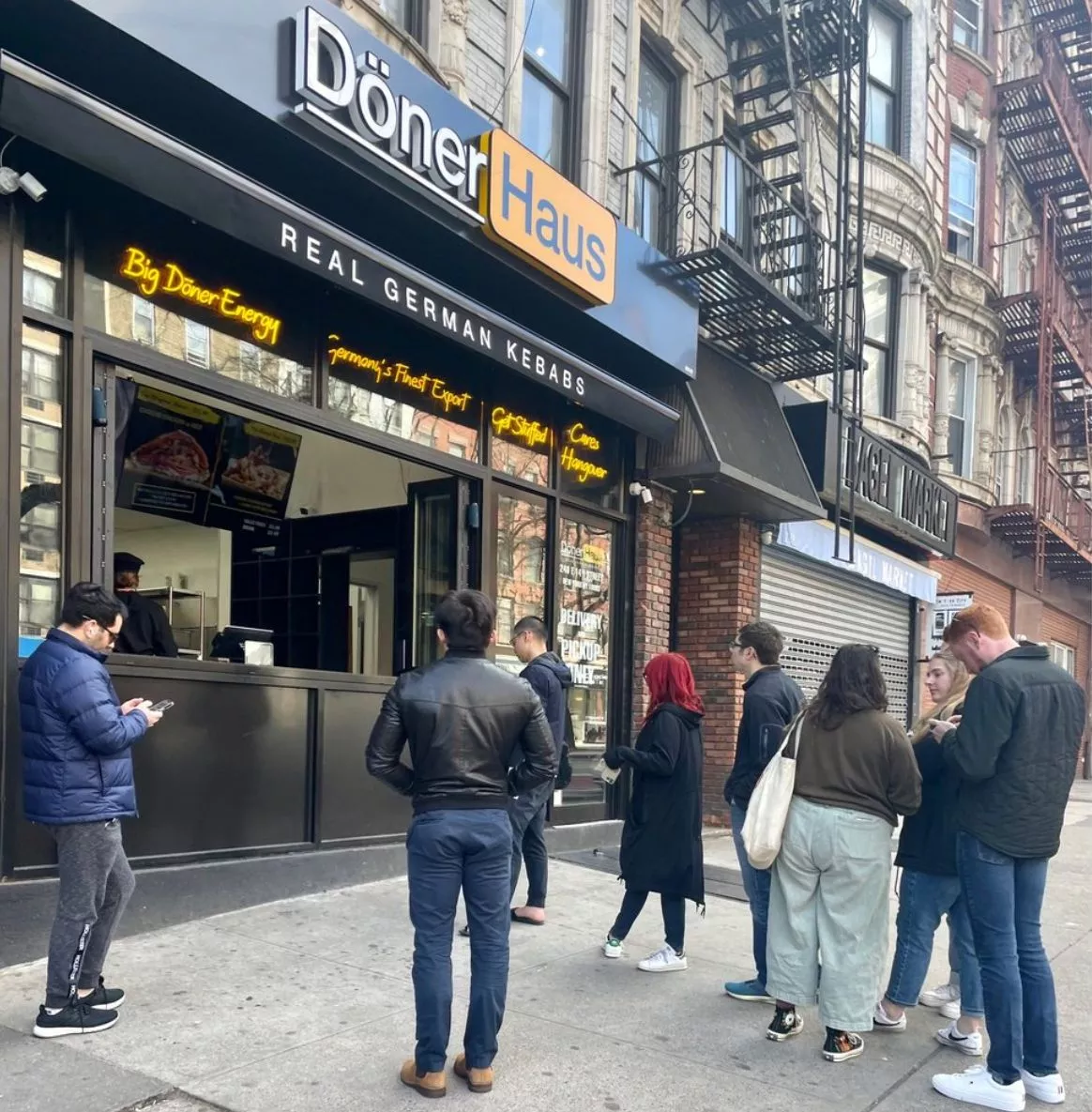
Döner Haus is a young franchisor entity. Its Franchise Disclosure Document issued 7 April 2026 covers a stub period from formation on 26 June 2024 plus FY2025. The opinion is unmodified, from Metwally CPA PLLC of Flower Mound, Texas, the same auditor as the 2024 filing. A new company’s statements cover the years it has existed.
Two further filings could not be read at all. The statements in the Chopt Creative Salad Co and Dos Toros documents yield no extractable text, and what is extractable shows they would be thin anyway: both franchising entities were formed months before their documents, Chopt’s on 7 June 2022, Dos Toros’s on 22 September 2022, so the statements cover a partial period from inception and both are captioned member’s deficit. Neither brand appears on the ranked tables. If either is added, the record will say the statements were not readable here rather than implying they were reviewed.
A single-period statement cannot show a trend in either direction. It is one year. A company that has existed for one audited year has no series to extrapolate from, however the numbers look.
A qualification describes a moment
The last finding comes from the same brand that supplied the worst opinion in the evidence base.
Atomic Wings’ FDD issued 29 April 2025 shows what happened after the going-concern year. Net income is $110,756 for 2024 against $22,170.92 for 2023 and the $205,812.35 loss for 2022: two profitable years after the qualified one. The auditor’s report no longer carries the substantial-doubt paragraph. The cover page still carries a financial-condition risk, but the wording has changed and softened, now appearing as item 3: “Financial Condition. The franchisor’s financial condition, as reflected in its financial statements (see Item 21), calls into question the franchisor’s financial ability to provide services and support to you.” Retained earnings remain negative: $(291,082.02) at the end of 2022, $(742,176.00) at the end of 2023 and $(720,005.08) at the end of 2024. Those do not roll forward by net income alone, so there are equity movements the document’s extracted text does not itemise; the figures are recorded here as printed.
Read as a pair, those two filings make a point no single document can. A going-concern paragraph is a statement about a moment. It can be lifted. The cover-page risk factor can persist in weaker form after the auditor’s paragraph has gone, which means the cover page and the auditor’s report can disagree in tone about the same company in the same year. A buyer holding only the 2024 document would conclude one thing; a buyer holding only the 2025 document would not know the paragraph had ever existed. Both readings are incomplete. Successive filings is the argument for holding both: the current document, and the one before it.
A finding is a separate headed paragraph before “Responsibilities of Management”. “Substantial doubt” appears twice as boilerplate in every audited statement. An emphasis-of-matter paragraph is a middle finding, not the going-concern one. The audited entity has to be the entity on the franchise agreement. Fiscal year ends do not all fall in December. A loss-making franchisor is funded by someone; the statements show who has written cheques so far, not whether they have to keep writing them. Item 3 can be the whole explanation for a loss.
What this changes about a comparison
Financial condition is a dimension of comparison that the usual columns cannot express, and it does not move with them. Dog Haus, first on the profit ranking, prints “Members’ Deficit” at the top of its statements. The largest loss carries the cleanest opinion. The only going-concern qualification in the evidence base belongs to a brand that was profitable in the following two years. And a short series is still a short series: Doner Shack’s single audited year and Döner Haus’s stub period plus one full year describe young franchisor entities, and emerging versus established is where those histories sit beside older systems.
Two brands, Pepper Lunch and Wienerschnitzel, have no statements on file at all, because their records come from a comparative study of published filings rather than from a document. Their financial condition is unknown here. That absence is published as one on the ranking, in the same way what the filings leave blank treats every other blank.
Each figure above is one the franchisor published, with the date it belongs to and the auditor’s own characterisation attached. The work a buyer does with them is the same work in every case: open the current Item 21, read the report before the numbers, and put to the franchisor the question the statements raise rather than the question the marketing answers.