Category
Mediterranean and halal QSR
The Halal Guys, Shah's Halal and The Great Greek — platter and grill brands a kebab buyer gets handed, with units, age and fees from the filings.
Compiled from public filings and operator sites
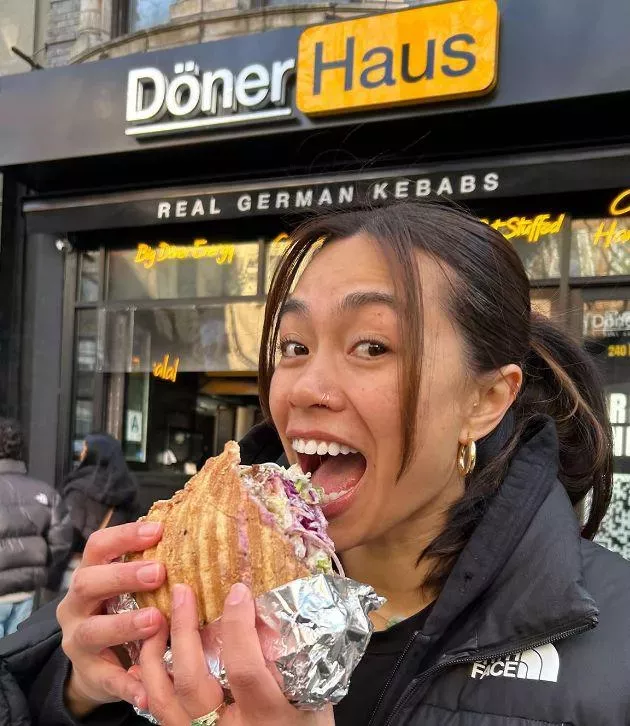
A New York buyer asking about a kebab franchise may also encounter chicken-and-rice platters, gyro, falafel and Greek grills. Those systems can be useful site and fee comparisons, but three different ideas often get collapsed: the cuisine named on the menu, the audience a brand positions itself toward, and the certification status of particular products or locations.
“Mediterranean” is a broad culinary and marketing label. “Halal” refers to religious dietary requirements and, when a certification is claimed, to the scope verified by a named certifier. Neither word tells a reader whether the format is a sandwich shop, cart-derived platter counter or full fast-casual grill.
Certification is claim-specific
The Halal Guys publishes certification documents for its chicken and beef gyro. That supports a narrower and stronger statement than assuming the brand name certifies every ingredient, market and process forever. Shah’s says on its official company page that its dishes are certified halal and displays dated certificates. Those are operator claims with documents a customer can inspect.
The Great Greek describes a Greek and Mediterranean menu of gyro, souvlaki, wraps, salads and dips. Its public menu does not make the brand a halal-certified system, and this directory does not infer certification from the presence of gyro or from the category heading.
Certification also has a boundary. IFANCA advises consumers to look for its mark or verify a product in the certifier’s listing because not every product made by a company is necessarily certified. A restaurant claim can concern meat sourcing, selected products, one facility or a broader operation. The named certificate and its dates decide the scope.
Three distinct franchise comparisons
The Halal Guys. The May 2024 comparative study of published FDDs records 93 outlets: 88 franchised and five company-owned, as of 2024. Founded 1990, franchising since 2014, headquarters in Astoria, New York. Its platter format grew from a New York cart, and the current franchise page still centers chicken, gyro, rice and falafel. The source row shows a 9% fee stack (6% royalty, 2% brand fund, 1% local advertising), a $60,000 franchise fee, Item 7 of $461,400–$1,333,500, no Item 19, 24 classroom hours and 136 on the job, a ten-year term with one ten-year option, and territory from a quarter-mile to two miles. The width of the Item 7 range deserves format- and site-specific explanation before the low end is treated as a budget. Later growth claims on the franchise page do not replace the dated 93.
Shah’s Halal Food. The FDD issued 10 April 2024 records 58 outlets as of 2023, but Item 20 says none were operating as franchises; 44 operated under licenses and 14 were company-owned. Founded 2005, headquarters in Amityville, New York. That makes the total useful as brand footprint, not as a 58-unit franchise track record. The comparable stack is 7% (5% royalty, 1% brand fund, 1% local advertising). Franchise fee $30,000. Item 7 $197,000–$405,000 for 1,200–2,000 square feet. The fifteen high-column line items sum to $410,000; this directory preserves the filing’s printed $405,000 total. No Item 19. Training 19 classroom hours and 85 on the job. Territory up to five miles by driving distance, smaller in cities; non-traditional sites excluded. Shah’s current company history claims a larger international footprint; that is a later operator-reported count and does not replace the 2023 FDD snapshot.
The Great Greek Mediterranean Grill. The FDD issued 17 August 2023 describes a larger 1,800–2,000-square-foot fast-casual grill, 31 outlets (24 franchised, seven company-owned) as of 2023, founded 2017, franchising since 2018, West Palm Beach headquarters. Item 7 $582,014–$1,088,560; the low end uses a discounted franchise fee for owners of affiliated brands, while a first-time buyer pays $39,500. Stack 10% (6% royalty, 3% brand fund that may rise to 4%, 1% local advertising). Thirty-five-year initial term with one additional 35-year term. Item 19 covers gross revenues, cost of goods and payroll for six affiliate restaurants, plus the highest and lowest of six franchise restaurants open two years. Training 60.25 classroom hours and 180 on the job. Territory typically a one-mile radius, not exclusive. The 2023 document remains publicly indexed in Wisconsin’s FDD list.
| Field | The Halal Guys | Shah’s Halal Food | The Great Greek |
|---|---|---|---|
| What it is | New York platter cart turned QSR | New York-area chicken and rice | Fast-casual Greek |
| Units | 93 (2024) | 58 (2023); 0 franchised | 31 (2023) |
| Item 7 | $461,400–$1,333,500 | $197,000–$405,000 | $582,014–$1,088,560 |
| Stack | 9% | 7% | 10% |
| Item 19 | No | No | Yes; affiliates plus high/low franchise pair |
| Term | 10 years | 10 years | 35 years |
| Source | May 2024 comparative study | FDD issued 10 April 2024 | FDD issued 17 August 2023 |
What the comparison is for
The three filings answer practical adjacent-market questions: how much space is assumed, how the system grew, what recurring percentages are required, and whether a financial performance representation is made. They do not answer whether a customer considers two meals interchangeable or whether a religious standard is met.
Start with the food and service model, then check certification separately, then compare the FDD. A compact pide sandwich can share a lease search with a platter counter while having different equipment, throughput and customer expectations. A full Mediterranean grill can share ingredients with neither. The main table keeps these systems adjacent so those differences can be measured instead of erased.
The generated compares are Halal Guys versus Shah’s and Great Greek versus Halal Guys. The cross-aisle reading against German döner is German döner versus halal QSR. None of those pages picks a winner. Shah’s licensed footprint and missing franchisee list, Halal Guys’ scale without Item 19, and Great Greek’s long term with a bounded sample are three different due-diligence shapes.
Before treating these three as one “halal” packet
- A named certificate, if any, has a product and a date scope.
- Licensed shops are not franchised shops in Item 20.
- Item 7 belongs to a format: platter counter versus 1,800–2,000-square-foot grill.
- Item 19 absence or population does not travel from Great Greek onto the other two.
- A 35-year grant is a different conversation from a ten-year platter shop.
Training hours sharpen the same split. Halal Guys 160 combined, Shah’s 104, Great Greek 240.25. Hours are not cuisine. They track the disclosed program for a platter system, a chicken-and-rice offer with no operating franchisees in the source year, and a larger grill. The training ranking is the directory-wide cut; this essay only needs the reminder that “halal QSR” does not predict Item 11.
Capital does not pick a winner inside the aisle either. Shah’s lowest Item 7 band sits on the licensed footprint. Halal Guys’ wide band sits on 93 outlets and no size field. Great Greek’s band sits on 1,800–2,000 square feet and an eligibility footnote. Someone screened only on opening cheque will keep Shah’s and drop Great Greek without noticing that one row has no franchisees to call. The how to use this directory is format and ownership mix before the low end.
This page keeps three packets from collapsing into one religious or regional label. It does not rank platters against grills.
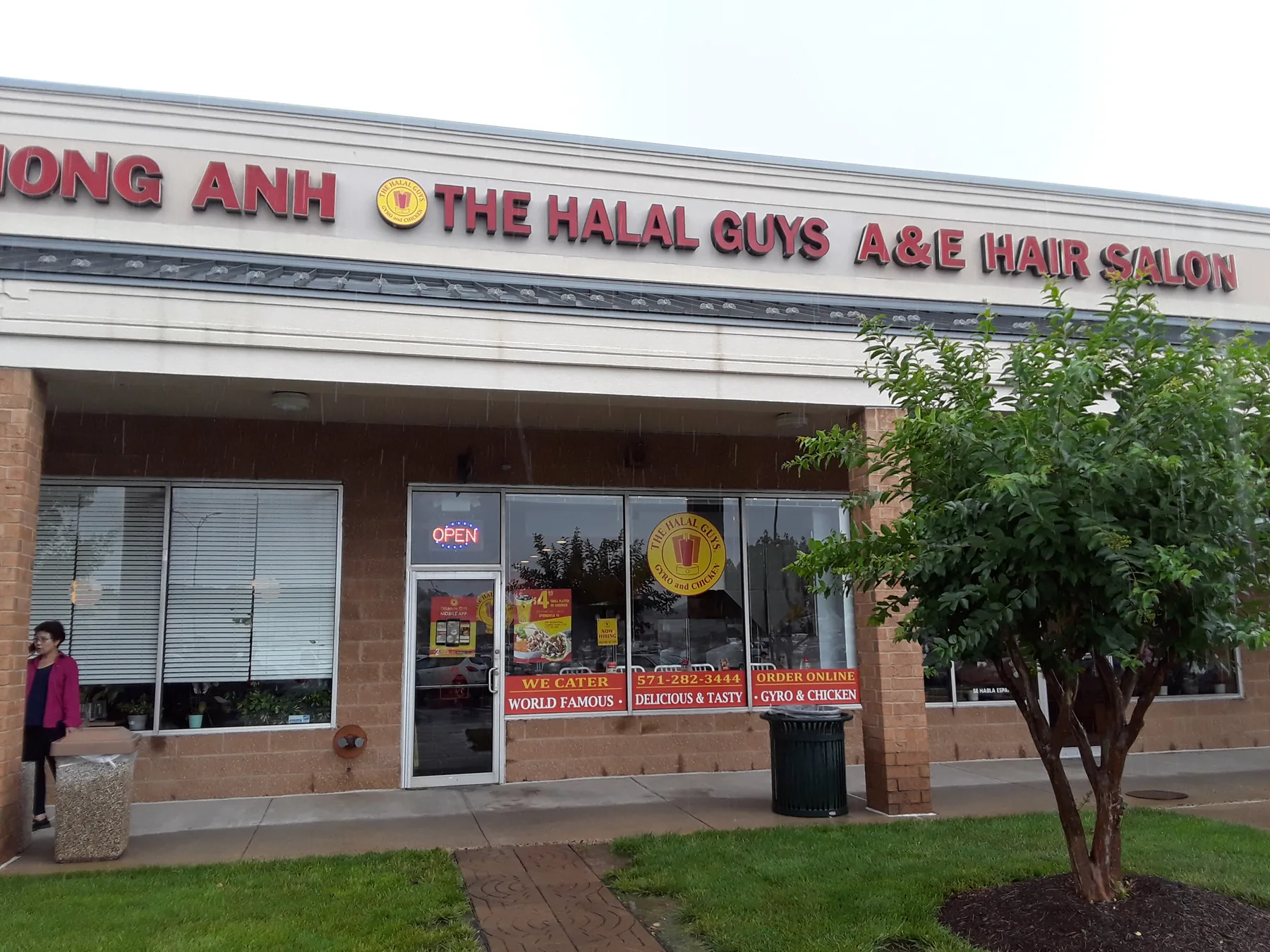
The Springfield photograph shows how a cart-origin brand occupies an inline bay. That service setting is still not a 1,800–2,000-square-foot Great Greek grill and not Shah’s licensed shop. Format, ownership mix and certification documents remain three separate files on the directory. Cross-link German döner in the US only when the buyer was actually handed both aisles.