Rankings
Ranked by age
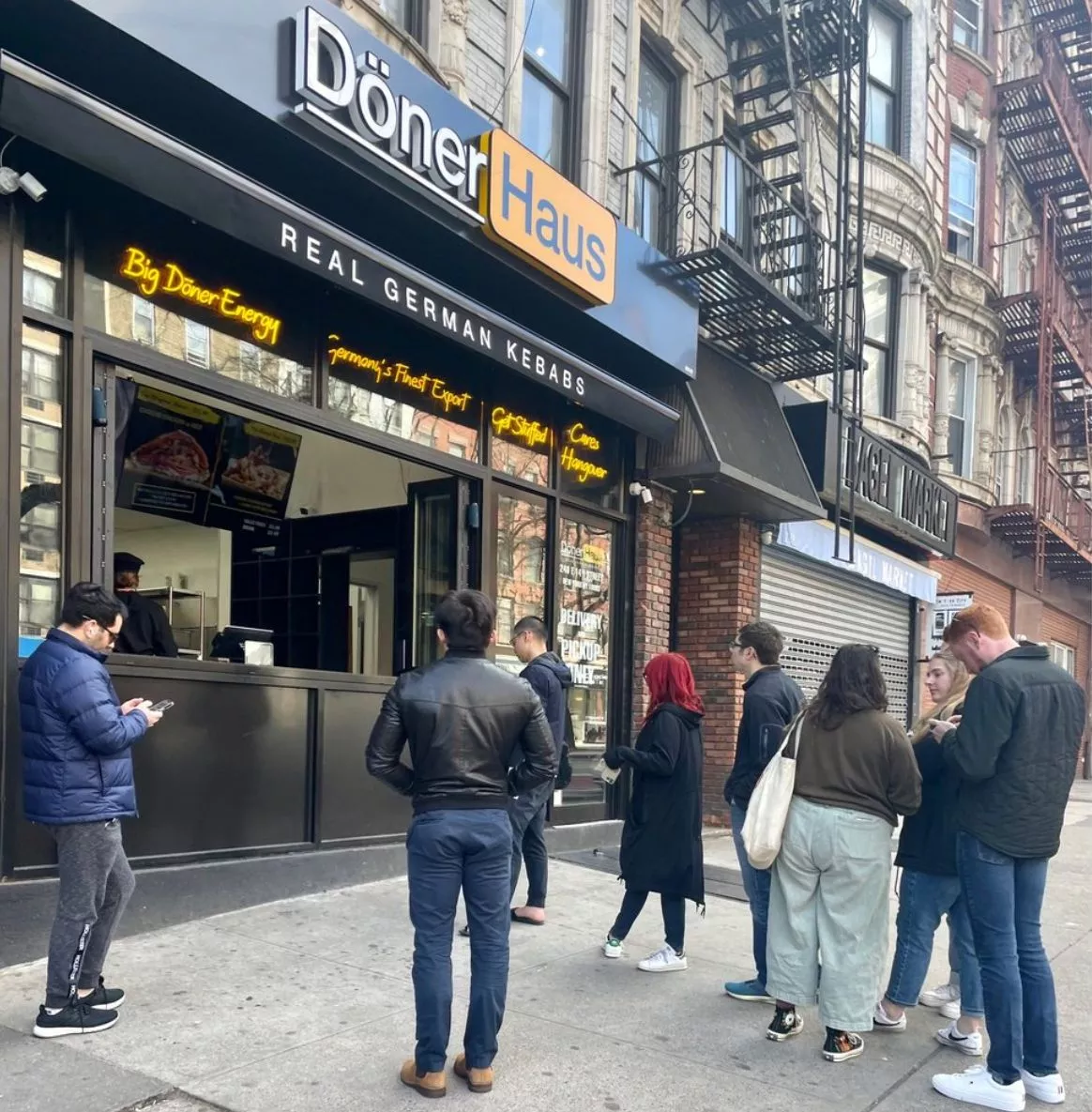
Oldest system first. Döner Haus, founded 2023, opened six shops in three years. Founded is when the first shop opened; franchising since is when the US offering started.
Compiled from public filings and operator sites
Brand age and franchise-program age are different facts. The first date marks the operating concept’s history; the second marks when the system began selling franchises. Capriotti’s says it opened in Wilmington in 1976, while its franchise program began in 1991. Wienerschnitzel’s official history dates the first hot-dog stand to 1961; the row records franchising from 1965. Those gaps describe years in which a format may have developed before outside operators joined.
A short gap can still be haste, and a long gap can still be a weak franchise. The legal franchisor may be newer than the consumer brand, a company may acquire and relaunch an older concept, or an international operator may enter the United States decades after opening elsewhere. The dates need Item 1 context before they can support a conclusion.
The order
Wienerschnitzel, 1961, franchising since 1965, 323 outlets in the May 2024 comparative study. Capriotti’s, 1976, franchising since 1991, 145 outlets in the same study. The Halal Guys, 1990, franchising since 2014, 93 outlets. Pepper Lunch, 1994, franchising since 1998, six US units in the study against a larger international claim on the operator’s own site. Shah’s Halal Food, 2005, no franchise-program year on file, 58 outlets at year-end 2023 in the 10 April 2024 FDD, none of them operating as franchises.
Then the 2010s: Dog Haus, 2010, franchising since 2013. German Doner Kebab, 2017, franchising since 2017. The Great Greek, 2017, franchising since 2018. bluTaco, 2017, franchising since 2018. Mad for Chicken, 2017, franchising since 2019. Crave Hot Dogs and BBQ, 2018, franchising since 2018. Doner Shack, 2020, franchising since 2024, on a founding year that is the date its US franchisor was organised as a Delaware company rather than the date a restaurant opened. Döner Haus, 2023, franchising since 2024 — the two 2024 programs are the youngest in the directory, one on a 2020 founding and the other on a 2023 one. 375° Chicken ‘n Fries has no founding year on file; it began franchising in 2023 and therefore does not sort on this table.
That last omission is deliberate. The ranking uses year_founded. A missing
founding date is left blank rather than inferred from the franchise-program
year, a press release or the age of the franchisor entity. 375° still appears
on system size, entry cost and
Item 19.
What longevity shows
Surviving through many lease cycles and consumer shifts is meaningful operating history. The current agreement, current leadership and current unit economics still have to be read on their own. A 1960s founding date does not make a 2024 fee schedule old, and a familiar name does not replace review of the current disclosure.
Young systems deserve the same discipline in the other direction. Limited history means fewer renewal cycles, transfers and closures are available to inspect. It does not by itself establish fraud or failure. Item 20’s outlet movement, Item 21’s audited franchisor financial statements, litigation in Item 3 and conversations with current and former franchisees add evidence that a founding year cannot.
Headquarters is the location in the source behind the row, not necessarily the place where the menu concept first appeared. GDK’s US franchisor is in Auburn Hills, Michigan; the wider operator is associated with Glasgow. Pepper Lunch’s US row is Rolling Hills Estates, California, for a Japanese teppan concept founded in 1994. Döner Haus and Doner Shack both file from Miami Beach, Florida, for a German format and a UK one. Age does not travel with headquarters, and international origin does not enlarge a US Item 20 table.
Unit counts retain their own measurement year. That means the age and size columns sometimes describe different snapshots, just as a 2023 filing and a 2026 filing do. Follow the profile to see the stated source before comparing two rows. This ranking answers “which documented concept is older?” It does not answer “which franchise is safer?” or “which one will perform better?”
Age, fees and exit rights do not move together
Wienerschnitzel is the oldest row and among the lower disclosed stacks (6%), with a 20-year term, no renewal right and no right to sell. Döner Haus is the youngest founding and opened six shops in the three years since, among the lower stacks (5% in the 2026 FDD), with a compact imbiss and an Item 19 that includes stores the company still operates. Those two facts do not make the brands peers. Crave, founded 2018, has a 10% stack and no Item 19. Great Greek, founded 2017, has a 10% stack, a 35-year term and an Item 19 that includes cost lines. Halal Guys, founded 1990, has a 9% stack, 93 outlets and no Item 19 in the study row.
The emerging versus established essay is the narrative version of this table. The term ranking shows that the oldest system is not the one with the longest grant — Great Greek is — and that the oldest system is the one whose study row records no sale right. Age is history. Contract terms are present tense.
What founding year still leaves open
- Franchising-since is a different date from founded. A 15-year gap is not a same-year launch.
- A missing founding date is not the franchise-program year and not the franchisor entity’s formation date.
- Unit-count years are not founding years.
- An old brand can have a new fee schedule and a hard exit. Item 6 and Item 17 are present-tense.
- Item 19 shows whether the older system actually discloses performance.
Pepper Lunch remains the caution about global age. Founded 1994, six US units in the May 2024 study, operator claims of hundreds of restaurants across many countries. The US disclosure is the row. The international claim is a company statement on pepperlunchrestaurants.com.
375° is the caution about missing founded dates. Franchising since 2023, five outlets at year-end 2023, Item 19 on an affiliate income statement covering 2020–2023 across two corporate shops in the note. It belongs in the emerging conversation and not in this sort. Döner Haus, founded 2023 and franchising since 2024, does sort here: six shops open in three years, compact imbiss, 5% stack, Item 19 covering corporate stores and early franchised units. Same calendar neighborhood as 375°, and the one date 375° is missing is the one Döner Haus states.
Shah’s 2005 founding with no franchise-program year on file is the caution about licensed growth. The consumer brand is older than the franchise offer the 2024 FDD describes. Calling 2005 “established” without reading Item 20’s zero franchised outlets would be the same error as calling Pepper Lunch a 500-unit US system.
| Founded | Brand | Franchising since | Why the dates can mislead |
|---|---|---|---|
| 1961 | Wienerschnitzel | 1965 | Oldest row; no sale right; no Item 7 in these files |
| 1976 | Capriotti’s | 1991 | Fifteen years of company history before the franchise program |
| 1990 | The Halal Guys | 2014 | Cart identity older than the franchise system; no Item 19 in the study |
| 1994 | Pepper Lunch | 1998 | Global age, six US units in the study |
| 2005 | Shah’s | — | Brand age with a licensed footprint, not a franchise count |
| 2017 | GDK, Great Greek, bluTaco, Mad for Chicken | 2017–2019 | Same founding decade, four different contracts |
| 2023 | Döner Haus | 2024 | Six shops in three years, 7+ building, 55 commitments; one year between concept and franchise offer |
This ranking orders documented concept years for live US offerings. It does not order consumer fame.
The 2017 cluster is the other trap. GDK, Great Greek, bluTaco and Mad for Chicken share a founding year on file and almost nothing else: a five-outlet kebab restaurant minimum, a 35-year Greek grill, an indefinite taco host-location agreement, and a corporate-heavy Korean fried-chicken system. Sorting them as “2017 emerging brands” is a calendar coincidence. Read the category ranking and the matching essay after this table. Age is the first column. The contract is the rest of the row.
Wienerschnitzel franchised in 1965, Capriotti’s in 1991, Halal Guys in 2014, Dog Haus in 2013, Great Greek in 2018, Mad for Chicken in 2019, Crave in 2018, GDK in 2017, bluTaco in 2018, 375° in 2023, Döner Haus in 2024. Those franchise-program years are the second date. A concept can be old while the offering is new. Read both columns.
Shah’s has no franchise-program year on file. That blank is not 2014 or 2018 copied from a neighbor. 375° has no founding year. Missing dates stay missing. The emerging versus established essay is the narrative that keeps 1961, 2023, five units and 323 units from becoming a score.
Pepper Lunch’s 1994 founding with six US units in the May 2024 study remains the global-age caution on this page: an older concept year does not enlarge a dated domestic Item 20 count. Always read the year on the row; then read the current FDD.
| Brand | Founded | Franchising since | Units | Headquarters |
|---|---|---|---|---|
| Wienerschnitzel | 1961 | 1965 | 323 | Irvine, CA |
| Capriotti's | 1976 | 1991 | 145 | Las Vegas, NV |
| The Halal Guys | 1990 | 2014 | 93 | Astoria, NY |
| Pepper Lunch | 1994 | 1998 | 6 | Rolling Hills Estates, CA |
| Shah's Halal Food | 2005 | — | 58 | Amityville, NY |
| Atomic Wings | 2006 | 2006 | 20 | College Park, MD |
| Dog Haus | 2010 | 2013 | 58 | Pasadena, CA |
| Mad for Chicken | 2017 | 2019 | 12 | Westbury, NY |
| The Great Greek Mediterranean Grill | 2017 | 2018 | 31 | West Palm Beach, FL |
| German Doner Kebab | 2017 | 2017 | 5 open | Auburn Hills, MI |
| bluTaco | 2017 | 2018 | 34 | Holts Summit, MO |
| Crave Hot Dogs and BBQ | 2018 | 2018 | 26 | Cheyenne, WY |
| Doner Shack | 2020 | 2024 | 0 | Miami Beach, FL |
| Döner Haus | 2023 | 2024 | 6 open | Miami Beach, FL |