Category
German döner versus halal QSR
A category comparison of German-döner franchise rows and Mediterranean or halal platter and grill rows in this directory — adjacent lunch formats, not a winner.
Compiled from public filings and operator sites
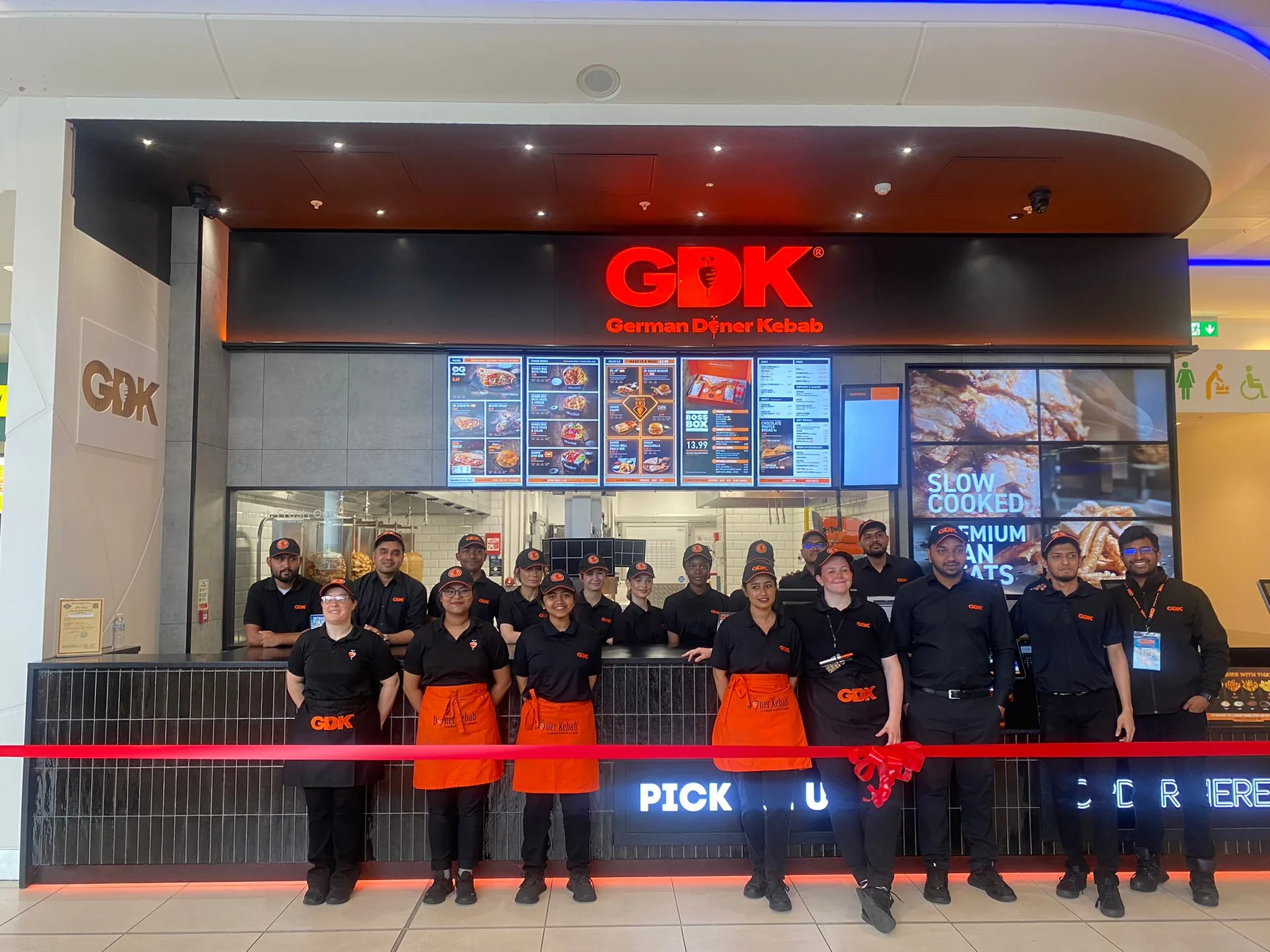
A buyer who asks for a kebab franchise in the United States is often handed two aisles at once: German-style döner, and chicken-and-rice or Mediterranean grill systems that grew from New York carts and suburban fast casual. Those aisles can compete for the same urban box, the same labor pool and the same cheque. They are not the same food, the same certification question, or the same franchise purchase.
This page compares the live US offerings in those two groups as they sit here. It does not declare a winner. The category essays remain the place to read each aisle in full: German döner in the US and Mediterranean and halal QSR. The generated compares are Döner Haus versus German Doner Kebab, The Halal Guys versus Shah’s, and The Great Greek versus The Halal Guys.
Doner Shack sits in the German döner group with a current document — the FDD issued 29 April 2025 — and no US outlets in the three years its Item 20 covers, so it appears on the fee, cost, footprint and training rankings and nowhere on the size ranking. It is kept out of the aisle-versus-aisle comparison below for that reason rather than as a judgement: the halal rows are compared on operating estates, and this row does not have one yet.
What each aisle contains
German döner, live US offerings. Döner Haus, 2026 Franchise Disclosure Document: six shops open in three years from a 2023 founding (East Village, Astoria, Hell’s Kitchen, Bayside, Sunnyside, Central LA), none closed, seven or more already in construction, 55 franchise commitments as of August 2026. 850–1,200 square feet, standing-service imbiss, franchisor in Miami Beach, founded 2023, Item 7 $359,500–$586,000, 3% royalty, 2% brand fund and a flat $2,000 a month of local advertising, Item 19 present for corporate and early franchised units. German Doner Kebab, FDD issued 3 September 2024: seven franchised outlets at year-end 2023, five still on the August 2026 locator, five later US shops closed. Auburn Hills headquarters, founded 2017, 1,200–1,400 square feet inside a five-outlet minimum, Item 7 $690,500–$1,123,000, 6% royalty, 3% brand fund, 2% local advertising, Item 19 covering one franchised outlet at American Dream Mall for a full year, later withdrawn.
Mediterranean and halal, live US offerings. The Halal Guys, May 2024 comparative study: 93 outlets (88 franchised, five company), founded 1990, franchising since 2014, Astoria headquarters, $60,000 franchise fee, Item 7 $461,400–$1,333,500, 6% royalty, 2% brand fund, 1% local advertising, no Item 19. Shah’s Halal Food, FDD issued 10 April 2024: 58 outlets at year-end 2023 (14 company, 44 licensed, no franchises operating), founded 2005, Amityville headquarters, 1,200–2,000 square feet, Item 7 $197,000–$405,000, 5% royalty, 1% brand fund, 1% local advertising, no Item 19. The Great Greek Mediterranean Grill, FDD issued 17 August 2023: 31 outlets (24 franchised, seven company), founded 2017, West Palm Beach headquarters, 1,800–2,000 square feet, Item 7 $582,014–$1,088,560, 6% royalty, 3% brand fund, 1% local advertising, 35-year term, Item 19 covering affiliate restaurants plus a high-low franchise pair.
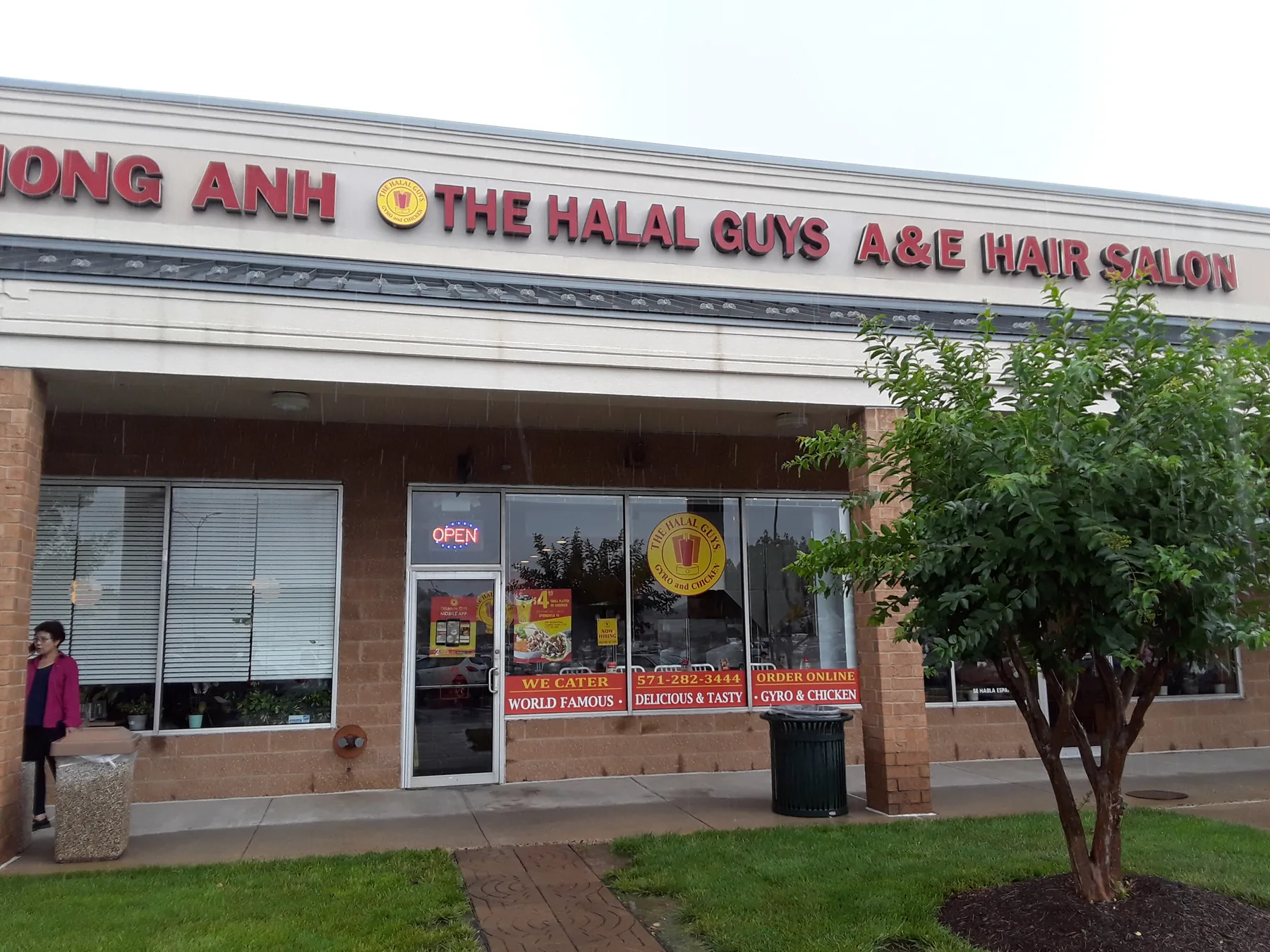
The Springfield Halal Guys photograph at the top of this page shows an inline suburban bay: a full customer entrance and dining-room frontage, not a street window. Photograph by Ser Amantio di Nicolao, CC BY-SA 3.0, via Wikimedia Commons; web-optimized derivative shared under the same license. Format is the first fact a comparison has to keep.
Food, certification and format are three questions
German döner in this directory means toasted pocket bread, wraps and boxes built around vertically sliced meat, sold from a compact counter or a small restaurant. Halal Guys means chicken, beef gyro and falafel in platters and wraps, grown from a Manhattan cart. Shah’s means New York-area chicken and rice. Great Greek means gyro, souvlaki, wraps, salads and dips in a larger grill. Those menus can share a lunch occasion. They do not share a spit, a ticket time or a dining-room assumption.
Halal is not the name of the aisle. The Halal Guys publishes certification documents for chicken and beef gyro. Shah’s publishes dated certificates on its company site. Great Greek’s public menu does not make the brand a certified-halal system. German-döner rows in this source rows do not carry a certification field; claims belong on current operator documentation, not on a category heading. IFANCA’s consumer guidance is that not every product made by a company is necessarily certified. Cuisine is not compliance.
| Brand | Aisle | Units (year) | Item 7 | Stack | Item 19 | Term | Source |
|---|---|---|---|---|---|---|---|
| Döner Haus | German döner | 6 open (2026) | $359,500–$586,000 | 5% | Yes; corporate and early franchised units | 10 years | 2026 Franchise Disclosure Document |
| German Doner Kebab | German döner | 5 open (2026) | $690,500–$1,123,000 | 11% | Withdrawn in 2025 filing | 10 years | FDD issued 3 September 2024 |
| The Halal Guys | Mediterranean & halal | 93 (2024) | $461,400–$1,333,500 | 9% | No | 10 years | May 2024 comparative study |
| Shah’s Halal Food | Mediterranean & halal | 58 (2023) | $197,000–$405,000 | 7% | No | 10 years | FDD issued 10 April 2024 |
| The Great Greek | Mediterranean & halal | 31 (2023) | $582,014–$1,088,560 | 10% | Yes; six affiliates plus high/low of six franchise restaurants | 35 years | FDD issued 17 August 2023 |
Döner Haus’s 5% stack excludes its local advertising requirement, which is a flat $2,000 a month rather than a percentage. GDK’s 11% stack includes 2% local advertising that can be waived if the store joins a cooperative that may itself levy up to 2%; royalty and brand fund may rise annually with no cap. Great Greek’s Item 7 low end uses a discounted franchise fee for owners of affiliated brands; a first-time buyer pays $39,500.
Capital and footprint do not pick an aisle
Shah’s prints the lowest Item 7 band in either group. GDK prints the highest low end, attached to a larger box and a five-outlet minimum. Halal Guys’ range is wide enough to overlap compact and restaurant projects without a square-foot field on file. Döner Haus is the compact German-döner end. Great Greek is the large-grill end of the Mediterranean group. A candidate screened only on “kebab capital” will mix a licensed chicken-and-rice footprint with a multi-unit UK kebab restaurant and an 850-square-foot imbiss.
Footprint, where disclosed, makes the mix visible. Döner Haus 850–1,200. GDK 1,200–1,400. Shah’s 1,200–2,000. Great Greek 1,800–2,000. Halal Guys: size not on file. The footprint ranking omits unsized brands rather than guessing. A suburban Halal Guys inline bay, as in the Springfield photograph, is a different real-estate object from a standing-service window even when both sell a lunch plate.
Training hours, where present, also fail as an aisle marker. GDK 40 classroom and 120 on the job. Halal Guys 24 and 136. Shah’s 19 and 85. Great Greek 60.25 and 180. Döner Haus 24 and 56, matched to a standing-service counter. Equal combined totals at GDK and Halal Guys (160) are not equal programs and not evidence that döner and platters train the same way.
Documentation splits inside each aisle
Both German-döner live offerings make an Item 19. Döner Haus’s sample covers corporate and early franchised units; GDK’s is one mall year. Two of the three Mediterranean-and-halal offerings make no representation in the source rows. Great Greek does, with cost lines on affiliates and a high-low franchise pair. Screening on “has Item 19” will keep the döner pair and Great Greek and drop Halal Guys and Shah’s. That is a documentation filter. It does not mean platters earn less, and it does not mean döner is better documented in a way that predicts profit.
Item 20 ownership is the other split. GDK’s seven are all franchised. Halal Guys’ 93 are mostly franchised. Great Greek’s 31 are mostly franchised. Döner Haus’s four are three company and one franchised, so the franchisee call list is one operator. Shah’s 58 are mostly licenses, with no franchises operating in the filing. Validating Shah’s by calling licensees is not the same exercise as calling GDK franchisees. The emerging versus established essay keeps 93, 58, 31, 7 and 4 from being treated as a quality order.
A cross-aisle screen that stays honest
- The product may be a pide sandwich, a dürüm, a platter, chicken and rice, or a Greek grill.
- Certification documents are not cuisine labels.
- Square footage and Item 7 format come before cover-page totals.
- Item 19 population, or the explicit absence, does not travel from one aisle to the other.
- Franchised, company and licensed outlets in the source year are three numbers.
- A buyer who can only buy one shop is not a buyer for GDK’s five-outlet minimum.
Independent shops sit outside both franchise aisles
Kotti Berliner Döner Kebab lists New York food-hall locations and describes Berliner döner. It is independent. Its only restaurant has closed. The menu sells beer and wine, and as of the latest public owner reply the chicken is not certified halal. DonerG lists Southern California restaurants that it presents as Turkish and Mediterranean, not as a German-style chain. Those operators answer where a customer can buy the food. They do not appear in the fee table because this directory ranks franchise filings. Döner Haus does sell franchises; lining it up with Kotti as a second chain is the category error. A complete picture still needs the independents, which is why the German döner essay keeps them on the map and why no company’s development artwork is treated as a survey of the aisle.
What to take back to the table
If the buyer wants compact German-style döner, the live packets are Döner Haus and, if they can underwrite a restaurant and a five-outlet schedule, GDK. If the buyer wants a New York platter identity, Halal Guys is the 93-unit study row without Item 19. If they want chicken and rice with a lower printed Item 7 and a licensed footprint, Shah’s is the 2024 FDD row. If they want a larger Greek grill and a 35-year term, Great Greek is the 2023 FDD row. If they were told those five packets are the same “halal kebab” deal, they were not given a screen.
The how to use this directory says format and capital first, FDD second, validation third. This cross-aisle page is the reminder that two popular lunch categories can share a site search without sharing a product, a certificate, a sample or a unit of purchase. It compares categories. It does not pick one.