# QSR Landscape
Quick-service franchise brands, ranked by what they cost to run.
## The quick-service franchise fee table
Royalty is the number on the brochure. Item 6 of a Franchise Disclosure
Document can split royalty, brand fund and required local advertising onto
three rows, and a 6% royalty next to a 3% fund and a 2% local spend is an
11% stack whether the summary says so or not. The
[FTC's guide to buying a franchise](https://www.ftc.gov/business-guidance/resources/consumers-guide-buying-franchise)
is why the starting point is the 23-item document, not a portal card.
The table adds those three percentages into a **fee stack** and ranks
fourteen live US offerings by it, cheapest disclosed stack first. Thirteen
have the rates to rank. A blank royalty stays blank. Rank a missing number as
the bargain of the table and the table starts lying. Technology charges,
delivery commissions, transfer fees and product markup still matter; they live
on the brand page, not in this column.
The filing year sits on every row because a 2023 rate and a 2026 rate are
different offers. The table is a first comparison. It does not claim every
brand was for sale on the same morning on the same terms.
## Why these formats share one table
German döner, Mediterranean grills, chicken-and-rice platters, hot dogs,
sandwiches, chicken, tacos and Japanese fast casual are different lunches.
They are the same kind of bet: a second-generation restaurant space, a lunch
crowd, a labor pool, and the capital to buy a format. Putting them on one
table is useful. The menus are not interchangeable.
A 323-unit chain can still be a worse investment than a four-unit shop, and
a cheaper stack does not prove the restaurants make money. Item 20 is how
many outlets exist. Item 19, when it exists, is what they took. Neither is a
recommendation.
## Other cuts of the same filings
The fee stack answers one question: what recurring percentage of gross sales
the filing takes for royalty and advertising. Use the other rankings when the
question changes.
- [By size](/by-units/) — Item 20 outlet counts, largest first, with the year
on the count.
- [By age](/by-age/) — founding year, with franchising-since listed separately.
- [By cost](/by-investment/) — Item 7 totals, cheapest low estimate first.
- [By category](/by-category/) — the same live offerings grouped by cuisine
and format label.
- [By footprint](/by-footprint/) — typical disclosed square footage, smallest
low end first.
- [By training](/by-training/) — Item 11 classroom and on-the-job hours.
- [By Item 19](/by-item-19/) — who makes a financial performance
representation, and who does not.
- [By term](/by-term/) — initial agreement length, with renewal and territory
in the filing's words.
bluTaco is unranked on the fee table because the May 2024 comparative study
does not disclose both a royalty and a brand fund. Wienerschnitzel has no
Item 7 in the files behind this directory, so it is absent from the cost
ranking. Doner Shack's zero US outlets keep it off the size ranking rather
than placing it last on one. Missing fields stay blank; they are
not estimated.
## Category essays and head-to-heads
The essays map aisles a buyer is actually handed, without collapsing them
into one cuisine.
- [German döner in the US](/german-doner-in-the-us/) — franchise systems,
independent shops, and why a company development map is not a category
survey.
- [Mediterranean and halal](/mediterranean-and-halal/) — The Halal Guys,
Shah's and The Great Greek, with certification kept separate from the
menu label.
- [Chicken and fries](/chicken-and-fries/) — 375° versus Mad for Chicken,
two footprints and two Item 19 samples.
- [Hot dogs and sausage](/hot-dogs-and-sausage/) — Dog Haus, Crave and
Wienerschnitzel, including the missing Item 7 and the exit-rights split.
- [German döner versus halal QSR](/german-doner-vs-halal-qsr/) — a
cross-aisle comparison, not a winner.
Five head-to-heads sit under Compare. They are the pairs a buyer is actually
handed, not a sixth invented matchup.
- [Döner Haus vs German Doner Kebab](/compare/doner-haus-vs-german-doner-kebab/)
- [The Halal Guys vs Shah's Halal](/compare/halal-guys-vs-shahs-halal/)
- [The Great Greek vs The Halal Guys](/compare/great-greek-vs-halal-guys/)
- [Dog Haus vs Wienerschnitzel](/compare/dog-haus-vs-wienerschnitzel/)
- [375° vs Mad for Chicken](/compare/375-chicken-vs-mad-for-chicken/)
## How to use the directory
[How to use this directory](/how-consultants-use-this/) is an IFPG-style
workflow: screen by format and capital, then read the FDD, then validate with
franchisees. [Emerging versus established](/emerging-vs-established/) puts
Wienerschnitzel's 323 units and 1961 founding beside 375°'s five units, Döner
Haus's four units and 2023 founding, and GDK's seven, without turning those
counts into a grade.
Method chapters live on [QSR Field Guide](https://qsrfieldguide.com/). Item 7
line items are grouped on the [Buildout Index](https://donerhandbook.com/).
[Methodology](/methodology/) states how this directory is compiled, how the
stack is added, and why a blank is never a zero.
## What the stack looks like here
Lowest disclosed stacks among ranked live offerings, from the filings on
each row: Döner Haus 5% (2026 Franchise Disclosure Document); Wienerschnitzel
6% (May 2024 comparative study); Shah's Halal Food 7% and Pepper Lunch 7%;
Dog Haus, Mad for Chicken and 375° Chicken 'n Fries at 8%; The Halal Guys 9%;
Capriotti's 9.5% using the 6% low end of a 6–7% royalty band; The Great Greek,
Crave Hot Dogs and BBQ and Doner Shack at 10%; German Doner Kebab 11%. bluTaco
is unranked. GDK's 11% is also the starting rate: royalty and brand fund may
rise annually with no cap, the Item 7 is per shop inside a five-outlet
minimum, and the US company has six loss years on file.
Those percentages are not all-in cash. Capriotti's 0.65% technology fee, Dog
Haus's $5,000 annual technology development fee, Döner Haus's flat $2,000 a
month of required local advertising, GDK's uncapped increase
right, Mad for Chicken's fund escalators and Great Greek's right to raise the
brand fund to 4% sit beside the stack, not inside it. Shah's 7% attaches to
a licensed 58-outlet footprint with no franchises operating in the 2024
filing. Wienerschnitzel's 6% attaches to a 20-year term with no sale right.
Quoting only the ranked column is not a screen.
| Brand | Stack | Item 7 low | Units (year) | Item 19 | Source year |
| --- | --- | --- | --- | --- | --- |
| Döner Haus | 5% | $359,500 | 4 (2025) | Yes | 2026 |
| Wienerschnitzel | 6% | — | 323 (2024) | Yes | 2024 study |
| Shah's Halal Food | 7% | $197,000 | 58 (2023) | No | 2024 |
| Pepper Lunch | 7% | $609,200 | 6 (2024) | Yes | 2024 study |
| Dog Haus | 8% | $357,437 | 58 (2024) | Yes | 2024 study |
| Mad for Chicken | 8% | $321,125 | 12 (2024) | Yes | 2025 |
| 375° Chicken 'n Fries | 8% | $324,100 | 5 (2023) | Yes | 2024 |
| The Halal Guys | 9% | $461,400 | 93 (2024) | No | 2024 study |
| Capriotti's | 9.5% | $417,100 | 145 (2024) | Yes | 2024 study |
| Doner Shack | 10% | $498,000 | 0 (2024) | No | 2025 |
| The Great Greek | 10% | $582,014 | 31 (2023) | Yes | 2023 |
| Crave Hot Dogs and BBQ | 10% | $301,500 | 26 (2024) | No | 2024 study |
| German Doner Kebab | 11% | $690,500 | 7 (2023) | Yes | 2024 |
| bluTaco | — | — | 34 (2024) | No | 2024 study |
Dashes are fields the source row does not state. Item 7 lows are directory
sort keys; the high end on each profile is the planning stress-test.
Each profile keeps its disclosure year beside the figures and links to a
current operator page where that page adds useful present-day context.
Operator location directories do not overwrite a dated Item 20 count. This
publication is independent of every brand it covers.
Reading this homepage
- The stack and the filing year belong on the same row.
- The profile carries extras the stack excludes: technology fees, escalators, multi-unit minimums.
- If the cuisine is already chosen, the matching essay and compare are the next cut.
- If capital is the constraint, [entry cost](/by-investment/) sorts the high end as the stress-test.
- If documentation is the constraint, [Item 19](/by-item-19/) records the sample or the absence.
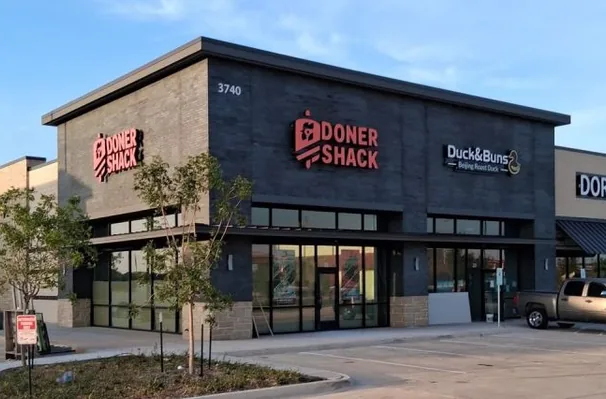
Doner Shack's row is the one to read with its unit column open. Its FDD issued
29 April 2025 discloses a complete set of terms and an Item 20 with no US
outlet at the start or end of 2022, 2023 or 2024, so a 10% stack and a
$498,000 Item 7 low sit above no US operating history at all. As of 2026 it is
not selling US franchises. A signed Prosper, Texas unit is unpublished as open.
Independent döner shops such as Kotti and DonerG
belong in the [German döner essay](/german-doner-in-the-us/) rather than on
this table, which ranks franchise filings. Kotti is independent; its only
restaurant has closed. Döner Haus
is a franchise. The homepage is the stack. Everything else is a different
cut of the same filings.
Figures on the table are dated disclosure fields, not bids. A 2023
Great Greek fee beside a 2026 Döner Haus fee is two moments. The year on
the row is part of the number.
HTML: https://franchiselandscape.com/
## Methodology
## What is in the directory
Quick-service and fast-casual restaurant brands with a current franchise
offering in the United States, weighted towards kebab, Mediterranean and
halal, plus the nearest neighbours by format and by cheque size.
A brand that has withdrawn from the US stays in a separate list at the foot of
the table rather than vanishing, because buyers still find them and still ask.
No row sits there today. Doner Shack is why the test is the document, not the
website: its FDD issued 29 April 2025 is still the last US disclosure, with a
full set of terms and no US outlet in 2022, 2023 or 2024. As of 2026 it is not
selling US franchises; the brand's own site says US enquiries are on hold. A
filing on the shelf and an active sales push are two different facts. The table
ranks the filing and says the brand is not selling.
Chicken, sandwich, hot-dog, taco and Asian fast-casual systems sit here as
operating benchmarks. They compete for similar rooms, labor and capital even
when the menus are not substitutes. Sharing a table is not a claim that the
foods are interchangeable, that a brand is halal-certified, or that the
directory likes the offer.
Fourteen rows sit on the live table right now: Döner Haus, German Doner Kebab,
Doner Shack, The Halal Guys, Shah's Halal Food, The Great Greek Mediterranean
Grill, Dog Haus, Crave Hot Dogs and BBQ, Pepper Lunch, Capriotti's,
Wienerschnitzel, bluTaco, Mad for Chicken and 375° Chicken 'n Fries. Doner
Shack is on that list because of the 2025 FDD, not because it is selling
franchises in 2026. Head-to-head pages exist for five pairs. Those pairs are
generated from the same records; a sixth pair is not invented in prose.
## Where the figures come from
Franchise Disclosure Documents are the source for fees, investment, outlet
counts, agreement terms, training and Item 19 status. Some rows come from a
named issued FDD; others from a comparative study of published FDDs compiled
in May 2024. Each profile names its source and filing year beside the figures.
The [FTC's Franchise Rule](https://www.ftc.gov/legal-library/browse/rules/franchise-rule)
requires 23 disclosure items. The agency does not verify or approve an
individual franchise's economics.
Issued-FDD rows in this build: Döner Haus (2026 Franchise Disclosure
Document), German Doner Kebab (FDD issued 3 September 2024), Shah's Halal Food
(FDD issued 10 April 2024), The Great Greek (FDD issued 17 August 2023), Mad
for Chicken (FDD issued 12 March 2025), Doner Shack (FDD issued 29 April 2025)
and 375° Chicken 'n Fries (FDD issued 30 April 2024). May 2024 study rows: The
Halal Guys, Dog Haus, Crave, Pepper Lunch, Capriotti's, Wienerschnitzel and
bluTaco.
The year matters more than it looks. Fees move between disclosure years. A
brand disclosed in 2024 sitting beside one disclosed in 2026 is two different
mornings. The date on the row is the correction. Unit counts may carry a still
earlier year, as with GDK's seven outlets at year-end 2023 inside a 2024
filing.
Official operator pages are used for current, operator-controlled facts: a
location directory, a menu format, a certification document, a hold notice on
enquiries. Those claims are the company's. They do not overwrite a dated
filing value. Trade reporting may add context when it names a date and a
source. Undated franchise portals are not used to fill numeric gaps, because
they reprint old summaries without identifying the filing.
The source order is: issued FDD; official operator document or page for the
operator's own current claims; government or recognized standards body; then
reputable trade reporting for context. Marketing statements remain company
statements. A development agreement, target market or “in development” count
is not an open restaurant.
A field the filing does not state is left blank. It is never estimated and
never borrowed from a similar brand. Wienerschnitzel has no Item 7 total in
the files behind this directory. bluTaco has no ranked royalty. 375° has no
founding year. Shah's has no franchising-start year. Those omissions appear as
omissions.
Item 7 line items, where a restaurant filing is on disk, live in a companion
record used by the [Buildout Index](https://donerhandbook.com/). If a filing's
high column does not add to its printed total, the printed total is kept and
the arithmetic gap is reported. Shah's high column sums to $410,000 against a
printed $405,000. The gap is in the document.
## How the ranking is worked out
Brands are ordered by **total ongoing fee**: the royalty, plus the national or
brand advertising fund, plus any local advertising spend the franchisor can
require. All three are percentages of gross sales. All three are compulsory.
Item 6 lists them separately.
Where a filing gives a band rather than a rate, the low end is used, and the
band itself is printed on the brand's page. Capriotti's royalty is 6–7%; the
stack uses 6% and the profile prints the band. Dog Haus's restaurant royalty
is 6%; the 4% ghost-kitchen rate is noted, not substituted into the restaurant
row.
A brand that does not disclose both a royalty and a fund cannot be scored, and
sorts to the bottom rather than the top. Treating an undisclosed fee as zero
would rank the least forthcoming brands as the cheapest ones.
The stack is not “all ongoing costs.” It does not silently add fixed
technology fees, product markups, payment-processing charges or delivery
commissions to a percentage metric. Capriotti's 0.65% technology fee and Dog
Haus's $5,000 annual technology development fee sit on those profiles. GDK's
uncapped annual increase right and Mad for Chicken's fund escalators are
profile facts, not stack inputs until they are current required rates. The
ranking measures one repeatable slice of disclosed cost. It does not measure
franchisee profit, food quality, support quality or investment risk.
The other rankings follow similarly narrow rules. System size uses the dated
outlet count, not a current marketing claim. Age uses the documented founding
year and shows the franchise-program year separately. Entry cost sorts by the
low end of Item 7 while preserving the whole issued range and filing year.
Footprint sorts by the low end of disclosed square footage and omits unsized
brands. Training adds classroom and on-the-job hours where both are quoted.
Item 19 splits presence from absence and prints the population note on file
without turning that note into a forecast. Term sorts by initial years and
omits brands without a stated term, including bluTaco's indefinite agreement.
## Editorial independence
QSR Landscape is independent of every brand it covers. No operator sponsors
the directory, pays for inclusion, buys a position, approves a profile or
receives an advance right to edit the analysis. Brand names and trademarks
identify the subjects of reporting only.
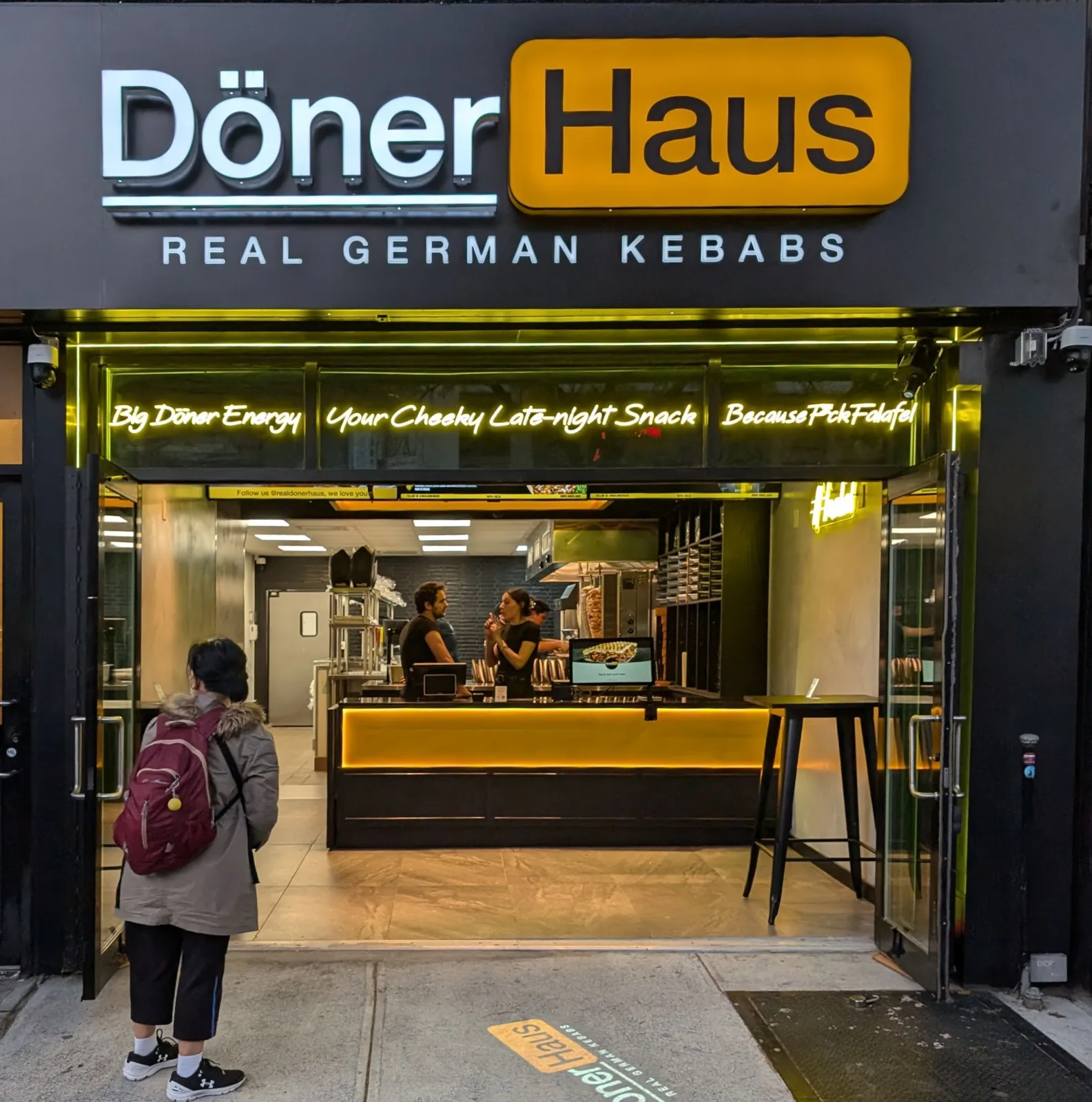
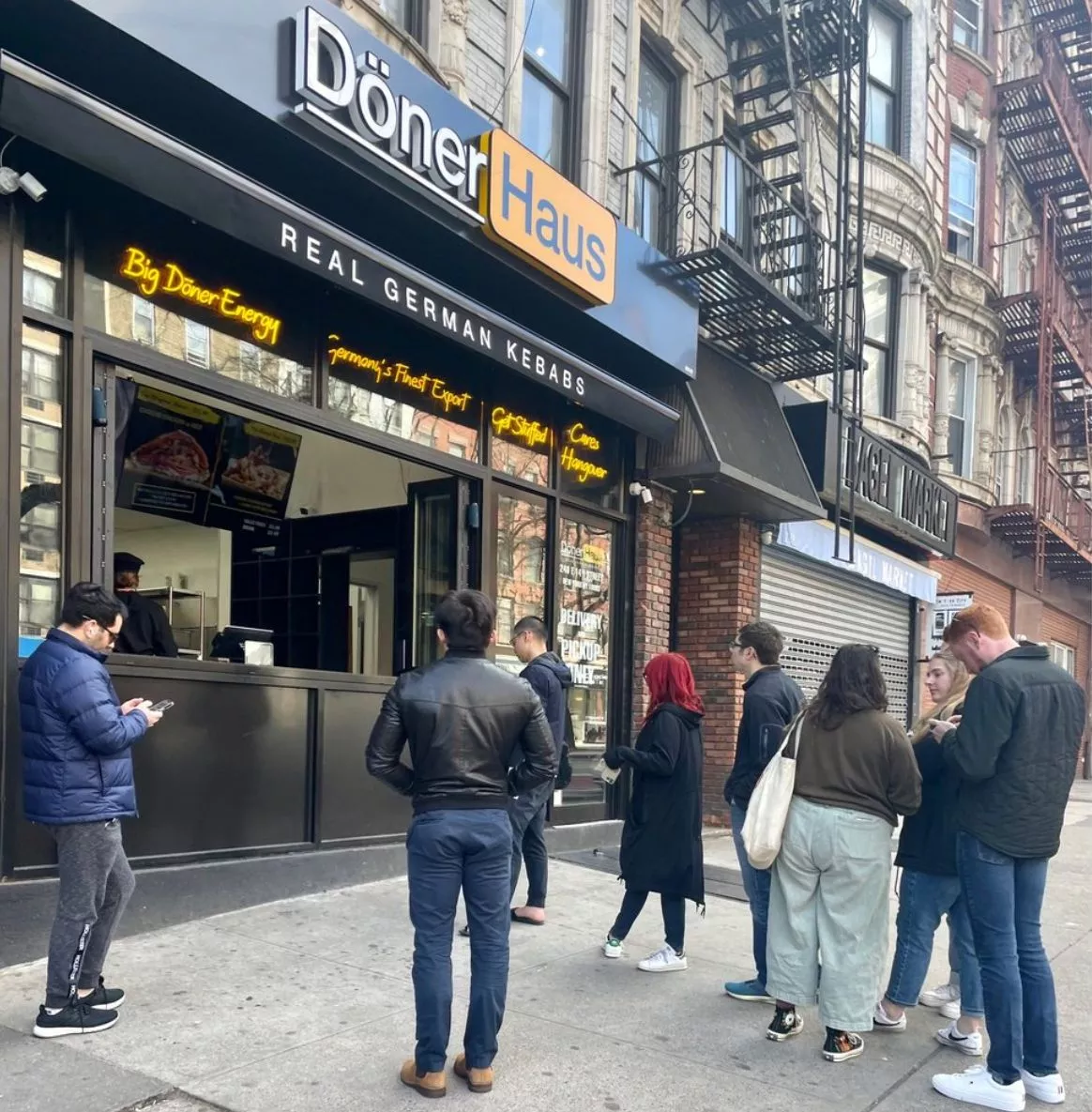
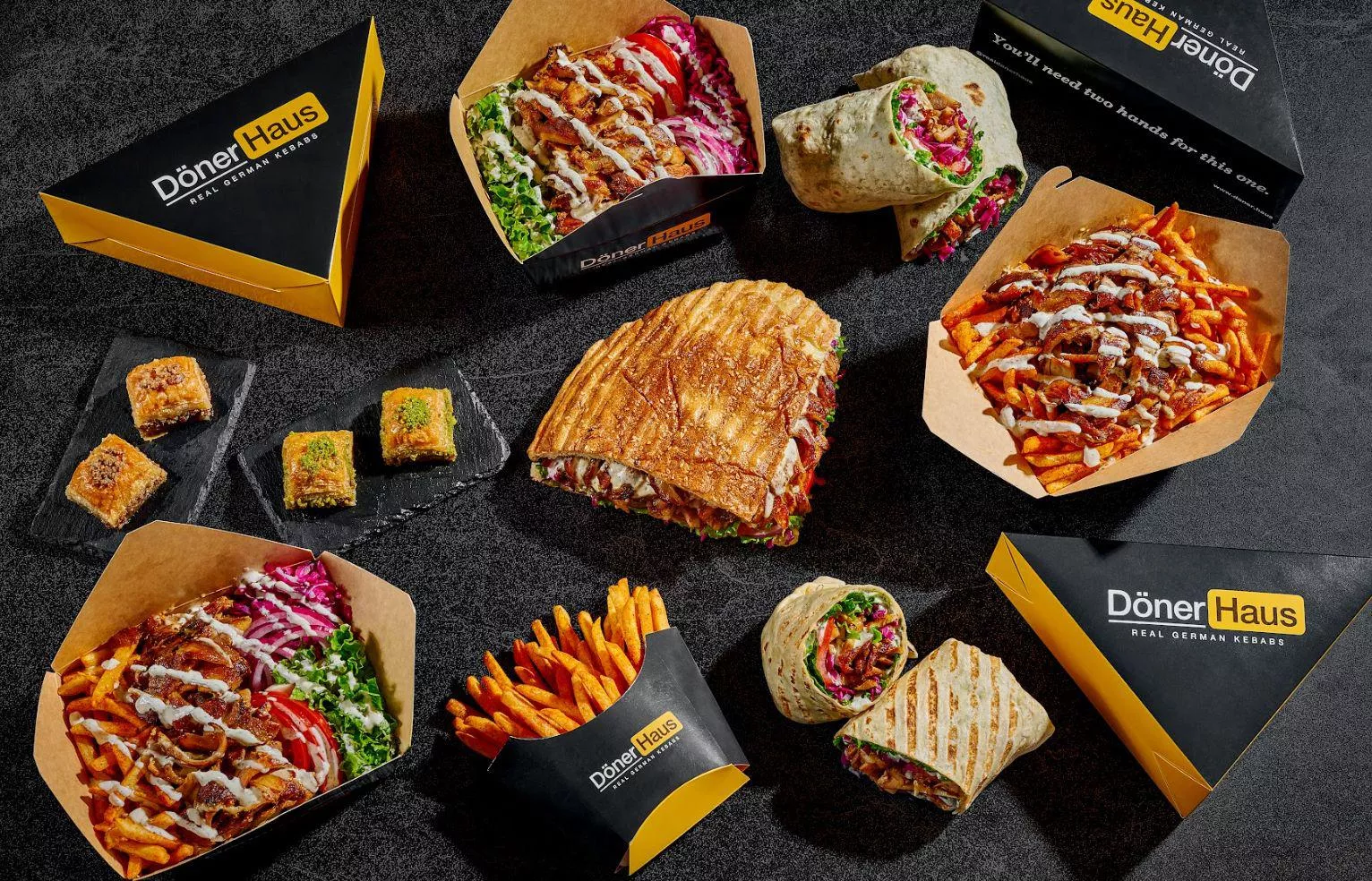
Döner Haus is handled by the same ranking rules and source labels as every
peer. Its permitted photographs do not change its
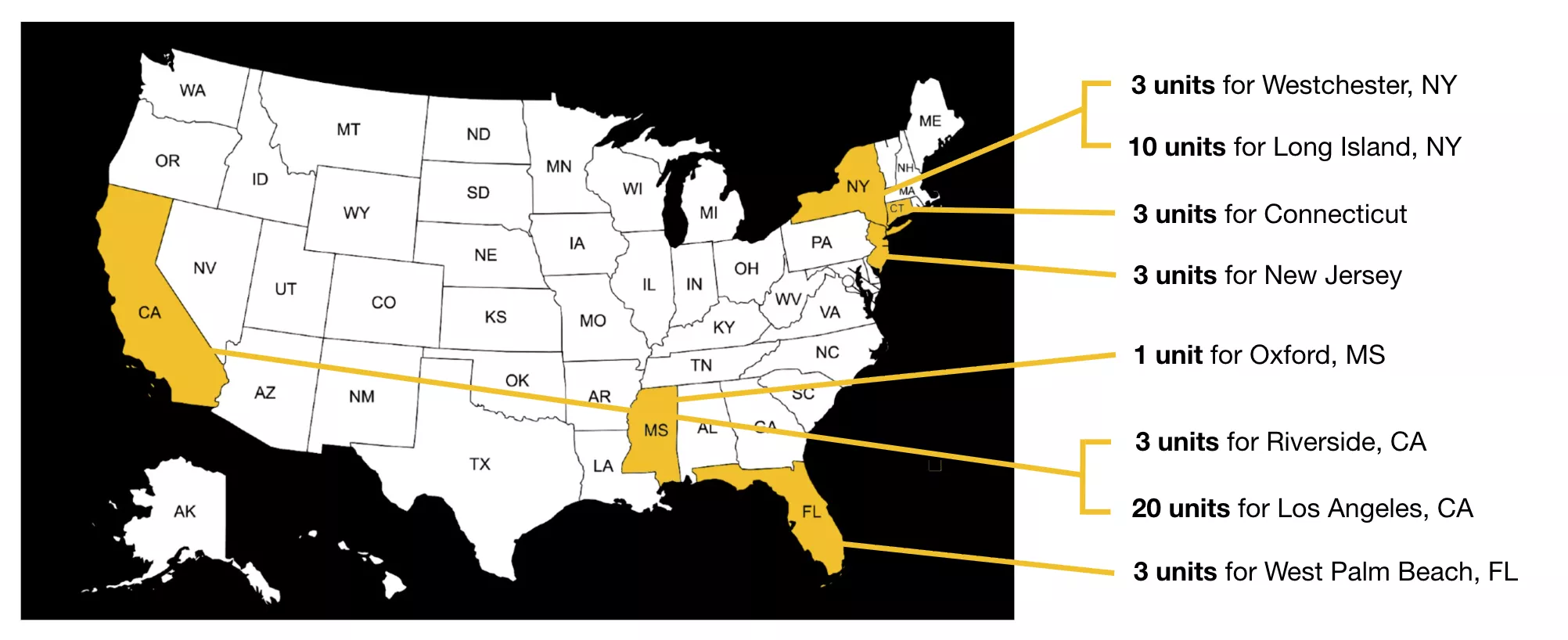
position. Company development maps are labeled as company artwork.
This publication is not affiliated with, sponsored by or endorsed by any
franchisor in the table. It does not place candidates or collect a brand fee.
[How to use this directory](/how-consultants-use-this/) is a reading order,
not a placement service.
## Corrections and review cadence
The directory is reviewed on the annual FDD cycle and when a material interim
change is documented, such as an offering being withdrawn or an official
location directory changing. A newer operator page does not retroactively
alter an older filing count: the profile explains the different dates until a
newer FDD replaces the row. The review date in the page header identifies the
current publication build. Each numeric row retains its own source year.
Corrections replace an inaccurate statement rather than adding a second,
conflicting version. Missing current filings remain missing. Rights-uncertain
images remain links rather than copies.
Reading method for the underlying items lives on
[QSR Field Guide](https://qsrfieldguide.com/). This page states what the
directory includes and how it sorts.
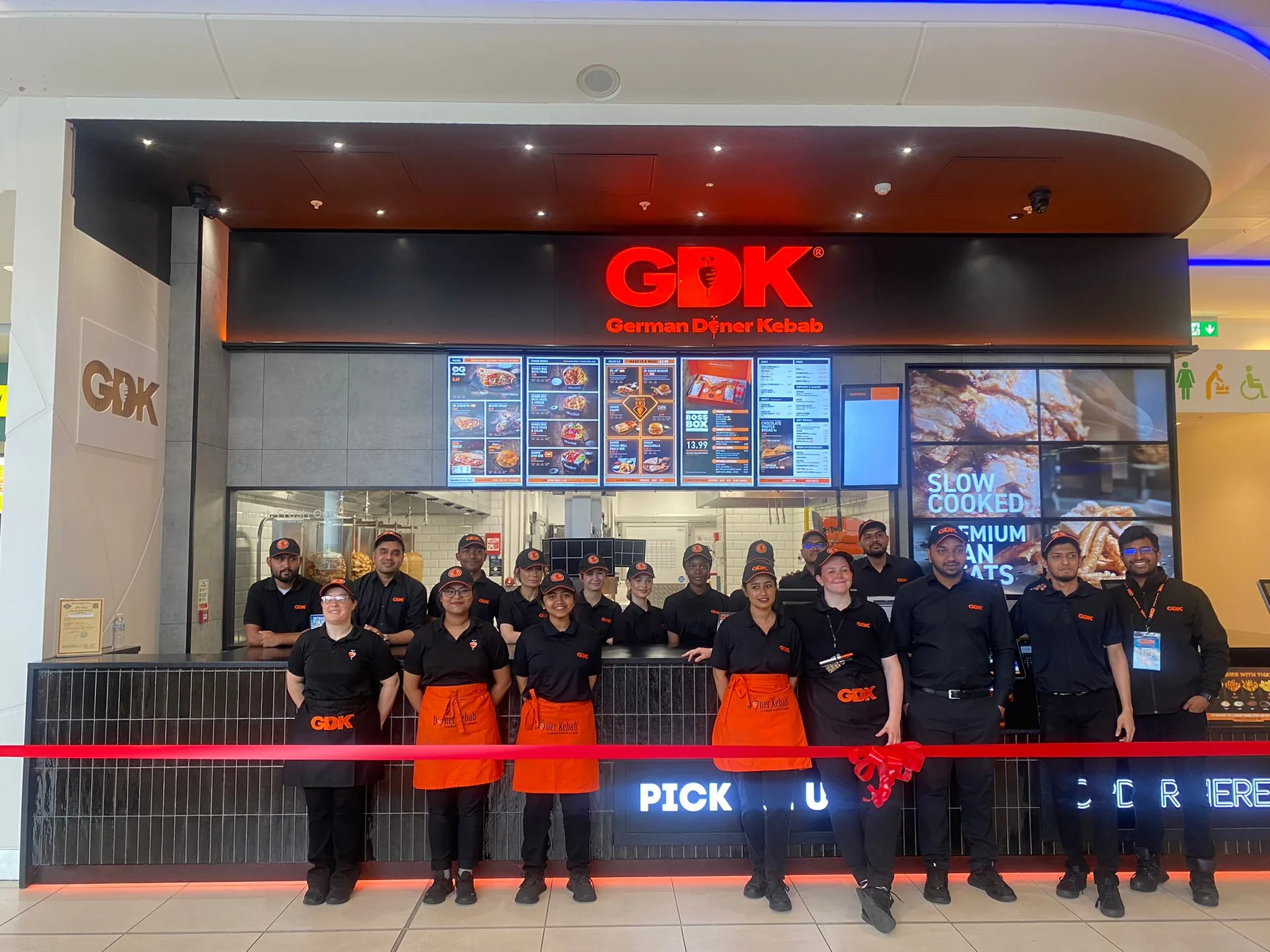
Images used on the site are limited to files already in this publication's
static directory. Operator-supplied maps are captioned as such. Wikimedia
photographs of GDK and The Halal Guys appear where those formats are the
subject of the page, not as generic decoration. Captions describe what is in
the frame.
## What it costs to be listed
Nothing, and there is no way to buy a position. No brand in the table has
been contacted for approval of its entry, and none can pay to move, appear or
be removed.
HTML: https://franchiselandscape.com/methodology/
## About
QSR Landscape is a directory of quick-service restaurant franchises, ranked by
the one figure the filings never add up for you: the total percentage of gross
sales a franchisor can require every month.
The directory is weighted towards kebab, Mediterranean and halal formats, and takes in
the neighbouring brands a buyer in that category actually ends up comparing —
sandwiches, chicken, hot dogs, tacos — because they compete for the same site
and the same cheque.
Every figure comes from a Franchise Disclosure Document. Nothing is reprinted
from a franchise portal, and no brand can pay to appear, move or be removed.
[How the ranking works](/methodology/).
QSR Landscape is an independent editorial publication. It is not affiliated
with, sponsored by or endorsed by Döner Haus or any other brand in the
directory. Listed companies do not control inclusion, ranking or analysis.
Selected Döner Haus photographs and artwork are used with permission. Thanks
to Döner Haus for allowing their use.
HTML: https://franchiselandscape.com/about/
## Ranked by age
Brand age and franchise-program age are different facts. The first date marks
the operating concept's history; the second marks when the system began selling
franchises. Capriotti's says it [opened in Wilmington in 1976](https://www.ownacapriottis.com/about-us/),
while its franchise program began in 1991. Wienerschnitzel's
[official history](https://www.wienerschnitzel.com/about/) dates the first hot-dog
stand to 1961; the row records franchising from 1965. Those gaps describe
years in which a format may have developed before outside operators joined.
A short gap can still be haste, and a long gap can still be a weak franchise. The legal franchisor may be newer than the consumer brand, a company
may acquire and relaunch an older concept, or an international operator may
enter the United States decades after opening elsewhere. The dates need Item 1
context before they can support a conclusion.
## The order
Wienerschnitzel, 1961, franchising since 1965, 323 outlets in the May 2024
comparative study. Capriotti's, 1976, franchising since 1991, 145 outlets in
the same study. The Halal Guys, 1990, franchising since 2014, 93 outlets.
Pepper Lunch, 1994, franchising since 1998, six US units in the study against
a larger international claim on the operator's own site. Shah's Halal Food,
2005, no franchise-program year on file, 58 outlets at year-end 2023
in the 10 April 2024 FDD, none of them operating as franchises.
Then the 2010s: Dog Haus, 2010, franchising since 2013. German Doner Kebab,
2017, franchising since 2017. The Great Greek, 2017, franchising since 2018.
bluTaco, 2017, franchising since 2018. Mad for Chicken, 2017, franchising
since 2019. Crave Hot Dogs and BBQ, 2018, franchising since 2018. Doner Shack,
2020, franchising since 2024, on a
founding year that is the date its US franchisor was organised as a Delaware
company rather than the date a restaurant opened. Döner Haus, 2023,
franchising since 2024 — the two 2024 programs are the youngest in the directory,
one on a 2020 founding and the other on a 2023 one. 375° Chicken 'n Fries has no founding year on file; it began
franchising in 2023 and therefore does not sort on this table.
That last omission is deliberate. The ranking uses `year_founded`. A missing
founding date is left blank rather than inferred from the franchise-program
year, a press release or the age of the franchisor entity. 375° still appears
on [system size](/by-units/), [entry cost](/by-investment/) and
[Item 19](/by-item-19/).
## What longevity shows
Surviving through many lease cycles and consumer shifts is meaningful operating
history. The current agreement, current leadership and current unit economics
still have to be read on their own. A 1960s founding date does
not make a 2024 fee schedule old, and a familiar name does not replace review
of the current disclosure.
Young systems deserve the same discipline in the other direction. Limited
history means fewer renewal cycles, transfers and closures are available to
inspect. It does not by itself establish fraud or failure. Item 20's outlet
movement, Item 21's audited franchisor financial statements, litigation in Item
3 and conversations with current and former franchisees add evidence that a
founding year cannot.
Headquarters is the location in the source behind the row, not necessarily the
place where the menu concept first appeared. GDK's US franchisor is in Auburn
Hills, Michigan; the wider operator is associated with Glasgow. Pepper Lunch's
US row is Rolling Hills Estates, California, for a Japanese teppan concept
founded in 1994. Döner Haus and Doner Shack both file from Miami Beach,
Florida, for a German format and a UK one. Age does not travel
with headquarters, and international origin does not enlarge a US Item 20
table.
Unit counts retain their own measurement year. That means the age and size
columns sometimes describe different snapshots, just as a 2023 filing and a
2026 filing do. Follow the profile to see the stated source before comparing
two rows. This ranking answers “which documented concept is older?” It does not
answer “which franchise is safer?” or “which one will perform better?”
## Age, fees and exit rights do not move together
Wienerschnitzel is the oldest row and among the lower disclosed stacks (6%),
with a 20-year term, no renewal right and no right to sell. Döner Haus is the
youngest founding and among the lower stacks (5% in the 2026 FDD), with a
compact imbiss and an Item 19 on a short history. Those two facts do not make
the brands peers. Crave, founded 2018, has a 10% stack and no Item 19. Great
Greek, founded 2017, has a 10% stack, a 35-year term and an Item 19 that
includes cost lines. Halal Guys, founded 1990, has a 9% stack, 93 outlets and
no Item 19 in the study row.
The [emerging versus established essay](/emerging-vs-established/) is the
narrative version of this table. The [term ranking](/by-term/) shows that the
oldest system is not the one with the longest grant — Great Greek is — and
that the oldest system is the one whose study row records no sale right. Age
is history. Contract terms are present tense.
What founding year still leaves open
- Franchising-since is a different date from founded. A 15-year gap is not a same-year launch.
- A missing founding date is not the franchise-program year and not the franchisor entity's formation date.
- Unit-count years are not founding years.
- An old brand can have a new fee schedule and a hard exit. Item 6 and Item 17 are present-tense.
- [Item 19](/by-item-19/) shows whether the older system actually discloses performance.
Pepper Lunch remains the caution about global age. Founded 1994, six US units
in the May 2024 study, operator claims of hundreds of restaurants across many
countries. The US disclosure is the row. The international claim is a company
statement on [pepperlunchrestaurants.com](https://www.pepperlunchrestaurants.com/).
375° is the caution about missing founded dates. Franchising since 2023, five
outlets at year-end 2023, Item 19 on an affiliate income statement covering
2020–2023 across two corporate shops in the note. It belongs in the emerging
conversation and not in this sort. Döner Haus, founded 2023 and franchising
since 2024, does sort here:
four outlets as of 2025, compact imbiss, 5% stack, Item 19 on a short
mixed-ownership
history. Same calendar neighborhood as 375°, and the one date 375° is missing
is the one Döner Haus states.
Shah's 2005 founding with no franchise-program year on file is the
caution about licensed growth. The consumer brand is older than the franchise
offer the 2024 FDD describes. Calling 2005 “established” without reading Item
20's zero franchised outlets would be the same error as calling Pepper Lunch
a 500-unit US system.
| Founded | Brand | Franchising since | Why the dates can mislead |
| --- | --- | --- | --- |
| 1961 | Wienerschnitzel | 1965 | Oldest row; no sale right; no Item 7 in these files |
| 1976 | Capriotti's | 1991 | Fifteen years of company history before the franchise program |
| 1990 | The Halal Guys | 2014 | Cart identity older than the franchise system; no Item 19 in the study |
| 1994 | Pepper Lunch | 1998 | Global age, six US units in the study |
| 2005 | Shah's | — | Brand age with a licensed footprint, not a franchise count |
| 2017 | GDK, Great Greek, bluTaco, Mad for Chicken | 2017–2019 | Same founding decade, four different contracts |
| 2023 | Döner Haus | 2024 | Youngest founding; one year between concept and franchise offer |
This ranking orders documented concept years for live US offerings. It does
not order consumer fame.
The 2017 cluster is the other trap. GDK, Great Greek, bluTaco and Mad for
Chicken share a founding year on file and almost nothing else: a
five-outlet kebab restaurant minimum, a 35-year Greek grill, an indefinite
taco host-location agreement, and a corporate-heavy Korean fried-chicken
system. Sorting them as “2017 emerging brands” is a calendar coincidence.
Read the [category ranking](/by-category/) and the matching essay after this
table. Age is the first column. The contract is the rest of the row.
Wienerschnitzel franchised in 1965, Capriotti's in 1991, Halal Guys in 2014,
Dog Haus in 2013, Great Greek in 2018, Mad for Chicken in 2019, Crave in
2018, GDK in 2017, bluTaco in 2018, 375° in 2023, Döner Haus in 2024. Those
franchise-program
years are the second date. A concept can be old while the offering is new.
Read both columns.
Shah's has no franchise-program year on file. That blank is not
2014 or 2018 copied from a neighbor. 375° has no founding year. Missing dates
stay missing. The
[emerging versus established essay](/emerging-vs-established/) is the
narrative that keeps 1961, 2023, five units and 323 units from becoming a
score.
Pepper Lunch's 1994 founding with six US units in the May 2024 study remains
the global-age caution on this page: an older concept year does not enlarge
a dated domestic Item 20 count. Always read the year on the row; then read
the current FDD.
HTML: https://franchiselandscape.com/by-age/
## Ranked by category
Category is a sorting label, not a proof that two brands sell the same meal or
run the same restaurant. The groups below come from the brand records: German
döner, Mediterranean and halal, hot dogs and sausages, chicken, sandwiches,
tacos and Asian fast casual. Each live US offering stays inside one group so a
reader can see which packets a buyer in that aisle is actually handed.
The generated tables reprint the same fields used on the other rankings: dated
outlet counts, Item 7 where the source supplies it, the comparable ongoing-fee
stack, and whether Item 19 makes a financial performance representation. Source
years still travel with the numbers. A 2023 Greek-grill filing sitting beside a
2026 German-döner filing is two disclosure moments, not one survey day.
## What the labels mean
**German döner** in this directory is Döner Haus, German Doner Kebab and Doner Shack.
All three have US filings. Only Döner Haus and GDK have US outlets in their
source documents. Doner Shack's FDD issued 29 April 2025 discloses terms and a
zero outlet count, so its line prints a 0 where the others print a system. As of
2026 it is not selling US franchises.
Pocket bread, wraps and
boxes can share a production line; they do not make every döner operator a
franchise peer, and they do not make gyro or shawarma the same product.
**Mediterranean and halal** groups The Halal Guys, Shah's Halal Food and The
Great Greek Mediterranean Grill. Cuisine, audience and certification are
separate facts. Halal Guys and Shah's publish operator certification documents;
Great Greek is a Greek and Mediterranean grill whose public menu does not make
the brand a certified-halal system. The [Mediterranean and halal essay](/mediterranean-and-halal/)
keeps that boundary visible.
**Hot dogs and sausages** groups Dog Haus, Crave Hot Dogs and BBQ, and
Wienerschnitzel. Craft sausage, barbecue-and-truck formats and a 1961
drive-through chain share a protein more than they share a site, labor model or
exit right. The [hot-dog essay](/hot-dogs-and-sausage/) and the
[Dog Haus versus Wienerschnitzel compare](/compare/dog-haus-vs-wienerschnitzel/)
are the place to read those differences.
**Chicken** groups 375° Chicken 'n Fries and Mad for Chicken. One is a compact
chicken-and-fries shop; the other is a Korean fried-chicken restaurant with a
separate express range. See [chicken and fries](/chicken-and-fries/) and the
[head-to-head](/compare/375-chicken-vs-mad-for-chicken/).
**Sandwiches**, **tacos** and **Asian fast casual** are single-brand groups in
this directory: Capriotti's, bluTaco and Pepper Lunch. They are operating benchmarks
for lunch traffic, host locations and experiential dining, not evidence that
subs, tacos or teppan are substitutes for döner.
Before treating two rows as peers
- Name the format: counter, platter shop, grill, drive-through, ghost kitchen, host location or full dining room.
- The Item 7 range may cover that format or a different one in the same filing.
- Brand footprint is not franchised outlets, especially where licenses dominate.
- “Yes” under Item 19 is a sample to read, not a typical-store number.
- A 2023 count and a 2026 fee are two moments. Keep the source year on every comparison.
## How to use the groups
A first screen by category is useful when the buyer already knows the food.
It is a poor screen when the buyer only knows a cheque size. Adjacent
formats in this directory often compete for the same second-generation
restaurant space and the same labor pool even when the menus are not
interchangeable. That is why the [main fee table](/) keeps them in one ranking,
and why this page restores the cuisine labels without collapsing them.
Inside a group, sort next by capital and by disclosed footprint rather than by
name recognition. Shah's 2024 row shows a lower Item 7 band than Halal Guys;
Great Greek assumes 1,800–2,000 square feet against Shah's 1,200–2,000. Those
are planning differences, not quality scores. In German döner, Döner Haus is
disclosed as an 850–1,200-square-foot standing-service imbiss in the 2026
Franchise Disclosure Document, while German Doner Kebab's FDD issued 3 September
2024 assumes 1,200–1,400 square feet inside a five-outlet minimum. The
[döner compare](/compare/doner-haus-vs-german-doner-kebab/) exists because “the
döner brand” is not a single purchase.
Chicken is the same trap in miniature. 375°'s 30 April 2024 FDD covers 800–1,500
square feet; Mad for Chicken's 12 March 2025 FDD covers a 2,000–4,000-square-foot
restaurant, separately discloses an express range, and prices a three-outlet
development agreement in a third table that is not a format at all. A
candidate who mixes the
express low end with the full-restaurant kitchen is no longer reading either
row.
## Single-brand groups still earn a row
Capriotti's, from the May 2024 comparative study of published FDDs, is the
second-largest system in the directory at 145 outlets. It is here because a submarine
shop can compete for the same lunch occasion and inline bay as a compact kebab
counter. Pepper Lunch's six US units in that study sit beside a much larger
international claim on the operator's own site; only the dated US disclosure
belongs in the table. bluTaco's 34 outlets include host-location stores, and
the study does not supply an Item 7 total, so the investment cell stays blank.
Those omissions are the point of grouping by category and then reading
sideways. A taco concept with no ranked fee stack is not “cheaper than
chicken.” A sandwich chain with an Item 19 can still be a thinner sample
than a platter brand without one. The field guide at
[qsrfieldguide.com](https://qsrfieldguide.com/) covers how to read the
underlying items; this page only shows which brands share a label in the
source.
## What this ranking cannot do
It cannot tell a reader which cuisine will sell in a given trade area. It
cannot certify that a brand is halal. It cannot convert a category heading into
a recommendation. It also cannot reopen a closed sales window: the group prints the terms in
Doner Shack's 29 April 2025 filing, and as of 2026 the brand is not selling US
franchises.
Use the category tables to build a shortlist of comparable packets, then leave
the group. Compare capital on [entry cost](/by-investment/), space on
[footprint](/by-footprint/), and documentation quality on [Item 19](/by-item-19/).
The [döner versus halal essay](/german-doner-vs-halal-qsr/) is the cross-category
reading for buyers who were handed both aisles.
The generated tables will show Item 19 as yes or no and the stack as a
percentage or a dash. Those cells are not a grade inside the group. Halal
Guys has no Item 19 and 93 outlets. Great Greek has an Item 19 and 31.
375° has an Item 19 and five. Presence tracks the franchisor's disclosure
choice plus whatever sample exists, not the quality of the chicken or the
gyro. BluTaco will show a dash for the stack because the study does not
disclose the inputs; it will still appear under tacos.
Doner Shack will appear in the German döner table with a 0 in the units column.
That zero is a disclosure — no US outlet at the start or end of 2022, 2023 or
2024 — and not a missing figure, which is the distinction the
[German döner essay](/german-doner-in-the-us/) works through alongside the hold
notice on the operator's own site.
This page ranks labels. It does not rank meals.
Sandwiches, tacos and Asian fast casual remain single-row groups on purpose.
Capriotti's 145 units, bluTaco's 34 host-location outlets and Pepper Lunch's
six US units are not a hidden second brand in those cuisines; they are
benchmarks. If the buyer did not ask for subs, tacos or teppan, those
rows still belong on a capital-and-site memo because they compete for some
of the same boxes. If the buyer did ask for chicken, only 375° and Mad
for Chicken are in that group, and they still need the format split in
[chicken and fries](/chicken-and-fries/). Category is the aisle. The filing
is the product.
Hot dogs illustrate the same rule at three brands. Wienerschnitzel, Dog Haus
and Crave share a protein and split on exit rights, Item 7 completeness and
Item 19. The category table will put them together; the
[hot-dog essay](/hot-dogs-and-sausage/) is what stops that grouping
being treated as a single recommendation.
German döner has three live rows, one of them with no US outlets. Mediterranean and
halal has three live rows that are not interchangeable on certification.
Chicken has two live rows that are not interchangeable on footprint. Those
are the groups a kebab buyer is actually handed. The other groups are
benchmarks. Keep the labels; do not flatten them.
HTML: https://franchiselandscape.com/by-category/
## Ranked by the franchisor's own accounts
Item 21 of a Franchise Disclosure Document contains the franchisor's audited
financial statements. A third party has signed them. They sit in an exhibit at
the back, which is why they get skipped. This ranking takes the most recent
audited result, most profitable first, and puts the auditor's opinion beside
it.
Every figure was read out of statements attached to a disclosure document.
That matters because other columns on the site are not all sourced the same
way. Five rows — Dog Haus, The Halal Guys, Crave Hot Dogs and BBQ,
Capriotti's and bluTaco — take fees and unit counts from a comparative study
of published filings, while their financial statements come from the filings
themselves. Two brands have no statements here. The second table names them.
## These are the franchisor's accounts
These numbers belong to the company selling the franchise. They say nothing
about what a restaurant takes in or what it earns. A franchisor's income
statement is royalties, franchise fees and rebates against corporate
overhead. A franchisee's is food, labour, rent and a share of gross sales
paid upward. Unit-level performance, where a brand discloses any of it, is
[Item 19](/by-item-19/).
What Item 21 does answer is whether the company on the other side of a
ten-year contract can fund the work it is promising: training, field
support, supply relationships, marketing administration, and, in most of
these agreements, a right of consent a franchisee needs exercised promptly
for a decade. Those promises are staffed out of the accounts on this page.
Read the opinion column before the money column. Three findings sit behind
it. An unmodified opinion. An unmodified opinion with an emphasis-of-matter
paragraph, which points at a footnote without asserting doubt. And a report
that states substantial doubt about the entity's ability to continue as a
going concern, which usually also produces a special risk on the state cover
page. German Doner Kebab is in the middle category. [What the filings say
about the franchisor](/what-the-filings-say-about-the-franchisor/) works
through the difference at length, because treating the middle case as the
third one is a false statement about a competitor's audit.
## The order
Dog Haus, FDD issued 9 April 2024: net income of $2,344,415 for the fiscal year
ended 31 December 2023, first on this table. Shah's Halal Food, FDD issued
11 April 2025: $675,588 for FY2023. Note that this brand's fee and unit row
elsewhere comes from the FDD issued 10 April 2024, so the two halves of the
record are a year apart. The Halal Guys, FDD issued 29 April 2024: $517,749
for FY2023. Crave Hot Dogs and BBQ, FDD issued 3 April 2024: $502,391 for
FY2023.
Then the near-break-even group. Atomic Wings, FDD issued 29 April 2025:
$110,756 for FY2024, the second of two profitable years after a loss year
whose auditor's report carried a going-concern paragraph. 375° Chicken 'n
Fries, FDD issued 30 April 2024: $36,229 for FY2023, on a franchisor entity,
375 Global Franchise LLC, that is a different company from the one in that
filing's Item 19. Mad for Chicken, FDD issued 12 March 2025: $22,817 for
FY2024, the fourth year of a series that has stayed inside a band of roughly
$77,000 from top to bottom.
Döner Haus, Franchise Disclosure Document issued 7 April 2026: a young
franchisor entity whose statements cover a stub year from formation plus
FY2025. The auditor's opinion is unmodified.
Then the losses. Doner Shack, FDD issued 29 April 2025: a loss of
$90,719 for FY2024, its only audited year. bluTaco, FDD issued 24 April 2023:
a loss of $311,486 for FY2022, the third consecutive loss of roughly a
quarter of a million dollars. The Great Greek Mediterranean Grill, FDD issued
17 August 2023: a loss of $891,888 for the fiscal year ended 30 April 2023.
German Doner Kebab, FDD registered 24 September 2025: a loss of $1,513,634
for FY2024, the sixth loss in six years on file, about $7.47 million in total,
an accumulated deficit of $7.6 million, and owner advances that stood at $5.9
million by year end. The US company has never covered its own costs. Capriotti's, FDD issued
21 July 2023: a loss of $4,368,938 for the fiscal year ended 25 December
2022, the largest figure in either direction on this table.
## Fiscal years do not all end in December
The table ranks comparable measures over non-comparable periods. The caption
says so because the rows cannot be repaired. The Great Greek closes 30 April,
so its most recent audited year ran from May 2022 to April 2023. Capriotti's
closes on a 52/53-week date in late December, and the year on its row ended
25 December 2022. Everyone else here closes 31 December. Great Greek's most
recent audited year therefore closed eight months before the December-2023
years it is ranked beside. Different trading conditions, different interest
rates, a different stage of its own build-out.
The document dates compound it. The oldest statements in this table were
audited for a year that ended in 2022 and published in a 2023 document; the
newest cover 2025 and were published in 2026. Both can sit on the same table.
They do not describe one moment. That is the same discipline the
[methodology](/methodology/) applies to fees and unit counts, and it applies
here with more force, because a financial position is the field most likely
to have moved since the document was issued.
## Loss size and the auditor's reaction
The useful relationship on this ranking is between the loss column and the
opinion column. Capriotti's loss of $4,368,938 for the year ended 25 December
2022 sits against an accumulated deficit of $23,777,352 and total equity of
$(2,797,283), and its auditor's report is unmodified with no additional
paragraph. German Doner Kebab's $1,513,634 loss for FY2024 carries an
emphasis-of-matter paragraph. And
[Atomic Wings](/franchises/atomic-wings/), whose loss from operations for 2022
was $205,812.35 — about a twentieth of the Capriotti's figure — drew a full
going-concern paragraph in its FDD issued 30 April 2024 and a matching special
risk on that document's state cover page.
The order of this table is therefore not the order of auditor concern. The
bottom row is the largest loss, not the most precarious franchisor. What an
auditor weighs is scale relative to backing: whether the losses can be
funded, by whom, and on what commitment. A large loss inside a capitalised
group and a small loss in a company with negative working capital are
different facts that this ranking, which sorts on one number, cannot
distinguish. The [essay](/what-the-filings-say-about-the-franchisor/) is
where that pair is set out with both sets of figures.
Two more distinctions the ranked number hides. A loss and a deficit are
different facts: The Halal Guys was profitable in all three disclosed years
while carrying an accumulated deficit, and Dog Haus, first on this table,
prints its statements under the heading "Members' Deficit". And a loss is
not necessarily an operating loss: The Great Greek's three underwater years
are substantially litigation, which is visible only when Item 3 and Item 21
are read together.
Reading Item 21
- The auditor's report headings come before any number. A headed paragraph before "Responsibilities of Management" is the finding.
- "Substantial doubt" appears twice in every audited statement as boilerplate. A text search is not a finding.
- The audited entity has to be the entity on the franchise agreement. Item 19 and Item 1 can name a different company.
- Fiscal year ends do not all fall in December.
- The current-year result and the accumulated deficit or equity line are different facts. Copy the caption as printed.
- A loss-making franchisor is funded by someone. The statements show who has written cheques so far, not whether they have to keep writing them.
## Two brands have no statements here
Pepper Lunch and Wienerschnitzel are absent from the ranked table and appear
in the second one below it instead. Their records here come from the May 2024
comparative study of published filings rather than from a document, so there
are no financial statements to read. Their financial condition is unknown
here. Wienerschnitzel is the oldest and largest system on the site; neither
of those facts is an audit.
The same rule governs the rest of the gaps. A row with no figure gets no
figure, in the way the [entry-cost ranking](/by-investment/) leaves
Wienerschnitzel unranked rather than importing a total from an undated
portal, and in the way [what the filings leave
blank](/what-the-dataset-does-not-know/) inventories blanks rather than
closing them.
## How to use this ranking
Use it to decide which packets need Item 21 read line by line before anything
else in the document is discussed, then stop using the sort. A profitable
franchisor can run a weak support organisation. A loss-making one can be
funded by a parent for as long as it takes. A franchisor at break-even by
design is a different proposition from one that arrived at break-even on the
way down. The [profiles](/) carry each brand's full fiscal-year series, the
equity caption as the statement prints it, and the opinion, which is where
the reading actually happens.
Then ask for the current document. Every figure here has a date on it, and a
financial position is the field that ages fastest. The newest statements in
this table were audited in 2026 and the oldest in 2023. The oldest rows
describe a company as it stood three years ago. Atomic Wings is the case:
read only its 30 April 2024 filing and the conclusion is a going-concern
qualification; read the next document and that paragraph is gone.
HTML: https://franchiselandscape.com/by-financial-condition/
## Ranked by footprint
Square footage is the planning number most likely to be skipped on a cover
page and most likely to decide rent, construction and staffing. Item 7 totals
mix franchise fees, deposits, equipment and working capital; they do not by
themselves say whether the filing is describing a standing counter or a
2,000-square-foot dining room. This ranking uses the typical size stated in
the brand record, sorted by the low end of that range.
Only live US offerings with a disclosed size appear. A blank is not treated as
a small shop. The May 2024 comparative study behind several rows does not
record square footage for The Halal Guys, Dog Haus, Crave Hot Dogs and BBQ,
Pepper Lunch, Capriotti's, Wienerschnitzel or bluTaco, so those brands are
absent here even though they remain in other tables. Filling those gaps from a
franchise portal or a later marketing page would invent a number this directory
does not have.
## The seven disclosed ranges
Döner Haus, from the 2026 Franchise Disclosure Document, is the compact end of
the table: 850–1,200 square feet for a standing-service imbiss. 375° Chicken 'n
Fries, from the FDD issued 30 April 2024, discloses 800–1,500 square feet.
German Doner Kebab's FDD issued 3 September 2024 assumes 1,200–1,400 square
feet — a restaurant, not a window, and one outlet inside a five-outlet minimum
commitment.
Shah's Halal Food, FDD issued 10 April 2024, discloses 1,200–2,000 square feet
for a full-sized restaurant. The Great Greek Mediterranean Grill, FDD issued
17 August 2023, assumes 1,800–2,000 square feet for an in-line or end-cap
grill. Mad for Chicken, FDD issued 12 March 2025, discloses 2,000–4,000 square
feet for the full restaurant, with a separate express investment range that
does not reuse this larger footprint. Doner Shack, FDD issued 29 April 2025,
assumes 1,200–1,800 square feet, a band that overlaps three other sized rows
and belongs to a system with no US outlets behind it.
Those seven rows already show why “QSR” is not a size. An 850-square-foot counter
and a 4,000-square-foot fried-chicken dining room can both be quick service.
They do not share a lease search, a hood package or a labor chart. The
[Buildout Index](https://donerhandbook.com/) groups public Item 7 line items
so two printed totals can be compared without pretending the premises are the
same.
When a size is on the row
- The range belongs to a format: imbiss, mall counter, full restaurant, express or another variant.
- Item 7 footnotes carry second-generation assumptions, landlord work and equipment packages.
- A compact range does not describe a seated concept. An express total does not describe a dining room.
- Missing size is missing. Host-location and drive-through brands here often have no square-foot field.
- Rent and construction are local. The filing's typical size is not a bid.
## Size and capital do not move in lockstep
A smaller disclosed box can still be an expensive project. 375°'s
800–1,500-square-foot range carries an Item 7 of $324,100–$521,500 in the 2024
filing. Mad for Chicken's much larger full restaurant is $321,125–$691,700 —
overlapping at the low end despite a footprint that can be several times
wider. Shah's 1,200–2,000-square-foot restaurant prints $197,000–$405,000,
the lowest Item 7 band among sized brands, while German Doner Kebab's narrower
1,200–1,400-square-foot box sits at $690,500–$1,123,000 per outlet inside the
multi-unit commitment.
Great Greek's 1,800–2,000-square-foot grill is $582,014–$1,088,560, and the
low end uses a discounted franchise fee available only to owners of affiliated
brands. Döner Haus's compact 2026 range is $359,500–$586,000. Those figures
are nominal dollars from the year on each row; they are not inflation-adjusted
into a common year.
Footprint explains some of the spread and none of the finish. Construction
line items, working-capital months and whether the
filing assumes a vanilla shell or a second-generation restaurant still have to
be read in the current document. The [entry-cost ranking](/by-investment/)
sorts the totals; this page sorts the box.
## What omitted brands tell you
bluTaco's May 2024 study row records 34 outlets and no square-foot assumption.
The operator's locator includes stores inside host businesses, so treating
those 34 as freestanding dining rooms would be a category error even if a
size appeared. Wienerschnitzel is a drive-through hot-dog chain with 323
outlets in the same study and no Item 7 total in the files behind this
directory; size is likewise absent. Halal Guys has 93 outlets and a wide Item
7 band of $461,400–$1,333,500 without a typical square-foot field in the
source.
Pepper Lunch's US row is six franchised units and an Item 7 of
$609,200–$1,471,500, the highest upper estimate in the directory, still without a
disclosed size here. Dog Haus and Crave are hot-dog systems whose public
materials discuss restaurants, ghost kitchens, express units or trucks; the
study row used for ranking does not attach a square-foot range to those
variants. Capriotti's 145-unit sandwich system is the same: investment is on
file, typical size is not.
Absence on this table is therefore information. It means the source record
used for the directory does not state a comparable footprint, not that the
restaurants occupy no space.
## How to read the sort
Smallest low-end first is a directory convention, not a recommendation to buy
the tightest box. An 850-square-foot imbiss can be the right project for a
walk-up street and the wrong project for a parking-field lunch trade. A
2,000-square-foot grill can support a broader menu and a longer dwell time
while demanding more rent, more hood capacity and more people on the clock.
The [training ranking](/by-training/) is a useful next cut: larger dining
rooms in this directory often, but not always, disclose more on-the-job hours.
Wienerschnitzel's 480 on-the-job hours sit on a brand with no size in the
table; Great Greek's 180 on-the-job hours sit on the 1,800–2,000-square-foot
grill. Hours measure the disclosed training commitment, not the square
footage.
For German döner specifically, footprint is the difference that decides
whether two packets are peers. The [German döner essay](/german-doner-in-the-us/)
and the [Döner Haus versus GDK compare](/compare/doner-haus-vs-german-doner-kebab/)
exist so that 850–1,200 and 1,200–1,400 are not collapsed into one “kebab
shop.”
The generated table will list only the seven sized brands. Anyone using
this page as a screen should keep a second list of unsized live offerings
that still compete for your site: Halal Guys, Dog Haus, Crave,
Pepper Lunch, Capriotti's, Wienerschnitzel and bluTaco. Those seven are not
smaller than 850 square feet; they are undocumented on this field. Asking a
broker to “just use 1,500” for them would invent a number.
Working-capital months, where the companion Item 7 tables records them, also
fail to track size neatly. GDK, Shah's, Mad for Chicken, 375° and Döner Haus show three
months on the line-item filings; Great Greek shows up to six. That is a
cash-timing difference inside the printed total, not a square-foot
difference. The Buildout Index is where those line items are compared.
This page ranks disclosed size. It does not rank throughput, rent or fit.
An 850–1,200-square-foot imbiss can still fail a parking-field lunch trade,
and a 2,000–4,000-square-foot fried-chicken room can still be the wrong
rent for a walk-up street. The ranking does not know the site. It only knows
which seven live offerings stated a typical size on file. For the other
seven, ask the current FDD and the landlord's plan. Do not borrow Döner
Haus's 850–1,200 or Great Greek's 1,800–2,000 to complete a Halal Guys or
Wienerschnitzel row. Those would be invented footprints.
375° at 800–1,500 square feet and Döner Haus at 850–1,200 are the compact
pair. GDK at 1,200–1,400 and Shah's at 1,200–2,000 overlap on paper and
diverge on Item 7 ($690,500–$1,123,000 versus $197,000–$405,000) and on
development structure. Size overlap is not cost overlap. Read both rankings.
Great Greek at 1,800–2,000 and Mad for Chicken at 2,000–4,000 are the large
dining-room end. They still do not share a cuisine, a term (35 years versus
10) or an Item 19 sample. Footprint got them onto the same end of this
table. The rest of the directory keeps them apart.
HTML: https://franchiselandscape.com/by-footprint/
## Ranked by entry cost
Item 7 is the franchisor's estimate of the initial investment needed to establish
one outlet. It is a range assembled by the franchisor, not a bid and not a cap.
The total may combine the franchise fee, deposits, construction, equipment,
signage, opening inventory, training travel, professional costs and an
assumption for additional funds. The [FTC's franchise guide](https://www.ftc.gov/business-guidance/resources/consumers-guide-buying-franchise)
advises buyers to compare those assumptions with their own costs and financing,
not merely accept the cover-page total.
This table sorts by the low end because that is the conventional directory view.
The high end remains visible because it is usually the more useful stress-test.
Range width matters: a narrow estimate and a range spanning several hundred
thousand dollars do not offer the same planning certainty.
## The order
Shah's Halal Food, FDD issued 10 April 2024: $197,000–$405,000 for a
1,200–2,000-square-foot restaurant. The fifteen high-column line items sum to
$410,000 against a printed total of $405,000; this directory keeps the filing's
printed total and reports the gap. Crave Hot Dogs and BBQ, May 2024
comparative study: $301,500–$1,192,500, a wide band that the operator's public
materials associate with more than one physical format. Mad for Chicken, FDD
issued 12 March 2025: $321,125–$691,700 for the full 2,000–4,000-square-foot
restaurant, with a separate express range of $243,500–$470,700 and a
three-outlet development agreement at $263,500–$711,700, neither of which is the
sorted row. Doner Shack, FDD issued 29 April 2025: $498,000–$1,007,000 for
1,200–1,800 square feet, with a three-restaurant development agreement
disclosed separately at $578,000–$1,087,000. 375° Chicken 'n Fries, FDD issued 30 April 2024: $324,100–$521,500
for 800–1,500 square feet.
Dog Haus, May 2024 study: $357,437–$625,800. Döner Haus, 2026 Franchise
Disclosure Document: $359,500–$586,000 for an 850–1,200-square-foot imbiss.
Capriotti's, May 2024 study: $417,100–$748,500. The Halal Guys, same study:
$461,400–$1,333,500, with no typical square footage disclosed. The Great
Greek, FDD issued 17 August 2023: $582,014–$1,088,560 for 1,800–2,000 square
feet; the low end uses a discounted franchise fee available only to owners of
affiliated brands, while a first-time buyer pays $39,500. Pepper Lunch, May
2024 study: $609,200–$1,471,500, the highest upper estimate in the directory.
German Doner Kebab, FDD issued 3 September 2024: $690,500–$1,123,000 per
outlet inside a five-outlet minimum commitment.
## The totals do not share one scope
A compact counter-service shop, a food-court unit and a 2,000-square-foot
dining room can all appear under “restaurant franchise” while requiring very
different work. One filing may assume a second-generation restaurant; another
may include a shell build. Some bundle fixtures and equipment into a package,
while others separate mechanical, electrical and plumbing work from leasehold
improvements. A zero-dollar low estimate on one construction line does not mean
construction is free; another line or landlord assumption may carry it.
GDK's Item 7 is the exhibit. The 2024 filing's format note is a single outlet
of 1,200–1,400 square feet inside a five-outlet minimum. Leasehold
improvements run $0–$250,000; mechanical, electrical and plumbing run
$150,000–$175,000; fit-out materials run $175,000–$205,000; restaurant
equipment $140,000–$175,000. The $0 low on leasehold improvements is not a
free restaurant. Shah's construction line is $80,000–$160,000 with a much
lower total. Great Greek's leasehold improvements are $250,000–$650,000 plus
a restaurant package of $225,964–$248,560. The [Buildout Index](https://donerhandbook.com/)
shows how those public line items are grouped and why two printed totals can
hide different bundles.
Square footage appears only where the source record states it. It helps explain
the spread but still does not normalize the rows. Local labor, code upgrades,
utility capacity, landlord contributions and the condition of the selected
space remain site-specific.
The filing year is another scope boundary. These are nominal dollars from the
year shown on each row; they are not inflation-adjusted into a common year.
Comparing a 2023 construction estimate with a 2026 estimate is not the same as
collecting two bids today.
## Gaps stay visible
Wienerschnitzel has no Item 7 total in the source files behind this directory,
so it is absent here while remaining in rankings supported by other fields.
Filling that gap from an undated portal would create false precision. The
brand is still the 323-unit, 1961 drive-through benchmark on [system size](/by-units/)
and [age](/by-age/), with a 6% stack, a 20-year term and no sale right.
bluTaco's record states no initial franchise fee. That is a disclosed feature
of that offering, not permission to infer that every missing percentage is
zero. The brand remains unranked on the ongoing fee table because the source
does not provide the royalty and brand-fund inputs required by that metric.
It also has no Item 7 total in the files, so it is absent here as well.
Before relying on a printed range
- The total belongs to a format: full restaurant, express, imbiss, truck, ghost kitchen or host location.
- Every Item 7 line and footnote in the current FDD sits under that total.
- The high end is the stress-test. The low end is a directory sort, not a quote.
- Eligibility footnotes change the number, as with Great Greek's affiliated-owner discount.
- A brand missing from this table has no total in the source files. A portal summary is not a substitute.
Use this page to identify differences worth investigating. Lowest published
entry cost is a sorting rule, not a forecast of the final cheque. After the
sort, read [footprint](/by-footprint/) for the seven sized brands, then the
matching category essay so a $320,000 chicken express is not compared with a
$320,000 full dining room as if they were one project.
Range width is its own screen. Shah's band is about $208,000 wide. 375° is
about $197,000 wide. Döner Haus is about $226,500 wide. Dog Haus is about
$268,000 wide. Mad for Chicken's full restaurant is about $370,500 wide.
Doner Shack is about $509,000 wide.
Capriotti's is about $331,000 wide. Great Greek is about $506,000 wide. GDK
is about $432,500 wide. Halal Guys is about $872,000 wide. Crave is about
$891,000 wide. Pepper Lunch is about $862,000 wide. A narrow range can still
be wrong for a given city; a range that spans most of a million dollars is a
format-or-assumption question before it is a budget.
Franchise fees in the same rows do not sort with the totals. Shah's and GDK
both list $30,000. Döner Haus $35,000. Mad for Chicken $35,000. Dog Haus,
Capriotti's and 375° $40,000. Crave $45,000. Pepper Lunch $50,000. Halal
Guys $60,000. Great Greek $39,500 for a first-time buyer. bluTaco none.
Wienerschnitzel $32,000 with no Item 7 total attached. The fee is Item 5;
the project is Item 7. Confusing them is how a $30,000 GDK fee becomes a
one-shop daydream against a five-outlet minimum.
The [how to use this directory](/how-consultants-use-this/) says to underwrite the
high end, then read the current FDD footnotes. This ranking is the sort that
starts that conversation. It is a sort, not a contractor's quote.
Mad for Chicken's express range of $243,500–$470,700 is disclosed and still
not the sorted row, because the ranked Item 7 is the full restaurant. Sorting
on the express low end would mix formats inside one brand, which is the same
error as mixing Döner Haus's imbiss with GDK's restaurant. Crave's
$301,500–$1,192,500 band is the other warning: restaurant, express and truck
are not one project. The sort is the low end of the row this directory actually
stores. The footnotes decide whether that row is the offer on the table.
Pepper Lunch's $1,471,500 high end is the ceiling on this table. Shah's
$197,000 low end is the floor among printed totals. Most of the directory
lives between those numbers without sharing a cuisine. Capital screens
across aisles; category essays screen inside them. Use both.
Döner Haus's 2026 range of $359,500–$586,000 sits near Dog Haus's
$357,437–$625,800 and 375°'s $324,100–$521,500. Those three low ends are
neighbors on this sort and not neighbors on food, age or Item 19 sample.
Proximity on Item 7 low is a capital screen, not a peer group.
HTML: https://franchiselandscape.com/by-investment/
## Ranked by Item 19
Item 19 is the part of a Franchise Disclosure Document that may include a
financial performance representation. It is optional. A franchisor may make
one, with the substantiation the Franchise Rule requires, or may state that
no representation is made. This ranking splits the live US offerings in the
set along that line: filings that make an Item 19, and filings that do not.
A “Yes” means read which outlets are in the sample, which period is
measured, whether the figures are revenue or profit, and how many units were
excluded. It is not a typical-store number. A “No” means the source row does
not authorize a performance claim of that kind. It says nothing about whether
the restaurants lose money. The
[FTC's franchise guide](https://www.ftc.gov/business-guidance/resources/consumers-guide-buying-franchise)
treats Item 19 as one item among twenty-three, not as a substitute for the
rest of the document.
The [field guide's Item 19 chapter](https://qsrfieldguide.com/item-19/) is the
method for reading a sample. This page only shows which brands in the
directory have one on file.
## What “makes a representation” covers here
Nine live offerings have Item 19 marked yes here: Döner Haus,
German Doner Kebab, The Great Greek Mediterranean Grill, Dog Haus, Pepper
Lunch, Capriotti's, Wienerschnitzel, Mad for Chicken and 375° Chicken 'n
Fries. Five live offerings do not: The Halal Guys, Shah's Halal Food, Crave
Hot Dogs and BBQ, bluTaco and Doner Shack.
Where the brand record includes a note on the population, the table prints
that note. Where it does not, the table only records that a representation is
made. Dog Haus, Pepper Lunch, Capriotti's and Wienerschnitzel fall in that
second group in the May 2024 comparative study of published FDDs: Item 19 is
present, and this directory does not invent the sample those study rows omitted.
The notes that do exist describe very different samples. Döner Haus's 2026
Franchise Disclosure Document covers corporate stores and early franchised
units. German Doner Kebab's FDD issued
3 September 2024 covers one franchised outlet at American Dream Mall in East
Rutherford, the only unit open for the full reported year. Those are not
interchangeable evidence. One is a mixed-ownership set; the other is a
single mall restaurant.
The Great Greek's FDD issued 17 August 2023 goes further on cost: gross
revenues, cost of goods and payroll for six affiliate restaurants, plus the
highest and lowest of six franchise restaurants open two years. That is still
a defined subset of a 31-outlet system, not every store and not a promise
about a new site.
Mad for Chicken's FDD issued 12 March 2025 presents unaudited 2023 and 2024
gross revenue for affiliate and franchised outlets. Revenue only: no costs and
no profit, the affiliate group is larger than the franchised group, and the
filing states that four affiliate and two franchised outlets were excluded from
the table because they closed and did not operate the full year, having been
open only two to eleven months. The table therefore covers the outlets that
completed the year, which is a defensible way to build a full-year column and a
fact a reader has to carry alongside it. 375° Chicken 'n Fries, FDD issued 30
April 2024, uses
an unaudited income statement for the affiliate that operates the restaurants,
covering 2020 through 2023, and states 2023 results across two corporate
shops. Corporate-affiliate figures are not franchisee results.
When Item 19 is “Yes”
- The metric may be revenue, selected costs, net, or an income statement.
- The population may be franchised, company, affiliate, or a named subset.
- The period and whether the figures are audited belong with the sample.
- How many outlets were open for the full period, and how many were left out, is part of the table.
- Two brands' samples do not average. A one-store year is not a system forecast.
## What “No” covers here
Shah's 10 April 2024 FDD states that no financial performance representation
is made. The Halal Guys, Crave and bluTaco have no Item 19 in the May 2024
study rows. Doner Shack's FDD issued 29 April 2025 has none either, and its
absence is the one with an obvious reading: the same document's Item 20
discloses no US outlet in 2022, 2023 or 2024, so there is nothing in the United
States to report on. Absence is especially easy to misread on a well-known brand.
Halal Guys records 93 outlets in that study, 88 of them franchised. Scale
does not create an Item 19. Crave records 26 franchised outlets and a public
franchise page that promotes several physical formats; none of that substitutes
for a representation the study row does not contain. bluTaco records 34
outlets, no ranked royalty and an agreement that runs until either party
terminates it. Missing performance figures sit beside missing percentage
inputs; neither gap is a zero.
Shah's adds an ownership distinction. The 2023 year-end count is 58 outlets,
14 company-owned and 44 licensed, with no franchises operating as of the
filing. A brand footprint that large can still have no franchised P&L to
disclose. Calling existing licensees is a different exercise from reading an
Item 19 that is not there.
## Presence is not a quality score
A young system can include an Item 19 because it has a handful of corporate
shops and chooses to show them. An older system can omit one. In this directory,
Wienerschnitzel is the 1961, 323-unit benchmark and does make a
representation, while Halal Guys is a 1990, 93-unit system in the study and
does not. 375° began franchising in 2023 with five outlets and does make one.
Great Greek, founded 2017, makes one that includes cost lines. The pattern is
the franchisor's disclosure choice plus whatever operating history the sample
actually contains.
Screening on “has Item 19” keeps Döner Haus, GDK and the
chicken pair and drops Halal Guys and Shah's. That screen is a documentation
filter, not a food filter and not a profitability filter. It also keeps
samples that a validation call would immediately qualify: one mall year, two
corporate shops, a mostly affiliate revenue table with six closures left out of
it, six affiliates plus a high-low franchise pair. The
[successive filings essay](/successive-filings/) is where those samples are
read against the same franchisors' earlier documents. The
[emerging versus established essay](/emerging-vs-established/) is the place
to keep age and unit count from being mistaken for that documentation filter.
## How to use these two tables
Use them to decide which packets require a sample-methodology memo and which
require a written acknowledgment that no representation was made. Then stop
using the badge. Read the current FDD. If a broker, portal or pitch deck
quotes a sales figure that is not in Item 19, treat that quote as marketing
until it is matched to the disclosure. If Item 19 exists, copy the population
into the comparison sheet before copying any result.
Head-to-heads that turn on this distinction include
[Döner Haus versus GDK](/compare/doner-haus-vs-german-doner-kebab/),
[Halal Guys versus Shah's](/compare/halal-guys-vs-shahs-halal/) — both
without a representation in the source rows — and
[375° versus Mad for Chicken](/compare/375-chicken-vs-mad-for-chicken/),
where both sides have samples that are not franchisee averages.
The generated tables print the note on file where one exists. Notes describe
populations: short mixed-ownership history, one mall year, six affiliates plus
a high-low franchise pair, an affiliate-weighted revenue table whose six
closures were excluded, an affiliate income statement covering 2020–2023 for two corporate
shops in the 2023 note. Where the May 2024 study only records that a
representation is made, the table says that and no more. Inventing a sample
for Wienerschnitzel, Dog Haus, Pepper Lunch or Capriotti's would be a new
fact this directory does not have.
Two columns belong after this page:
“sample in words” or “no representation.” Dollar results, when they exist,
belong in the current FDD the buyer actually received, tied to that
document's population, not copied between brands and not treated as a
system average. This page ranks presence. It does not rank earnings.
Halal Guys at 93 outlets without a representation and 375° at five outlets
with an affiliate sample are the pair that breaks “bigger brands disclose
more.” Great Greek at 31 with cost lines and Shah's at 58 with an explicit
non-representation are the pair inside one aisle. Use those contrasts, then
read the current document. The badge is the sort. The population is the
fact.
Dog Haus, Pepper Lunch, Capriotti's and Wienerschnitzel remain yes-without-a-
note on file. That is a reason to open the current FDD, not a reason
to paste another brand's sample into those rows. Absence of a note is not
absence of a representation.
Crave at 26 franchised outlets without a representation and GDK at seven
franchised outlets with a one-store mall year are the other mismatch: more
franchisees does not mean more Item 19. Write the sample or the absence on
the comparison sheet, then stop using the badge as a score.
Döner Haus's 2026 Item 19 is present. Read the current document for the
metric, the sample and the period.
HTML: https://franchiselandscape.com/by-item-19/
## Ranked by term
The initial term is how long the franchise agreement runs before renewal,
expiration or whatever exit the contract actually provides. Most restaurant
filings in this directory use ten years. Two do not: Wienerschnitzel at 20 years and
The Great Greek Mediterranean Grill at 35. Brands without a stated term in
years are omitted from the generated table rather than assigned a default.
bluTaco's May 2024 comparative-study row has no
fixed term: the agreement runs until either party terminates it. That
indefinite structure is a fact about the offering, and it is why bluTaco
cannot be sorted among 10-, 20- and 35-year rows.
Term length is a duration, not a quality score. A longer grant can reduce the number of
renewal events; it also makes default, remodel, transfer and dispute clauses
more important, because the parties may be bound for decades. A shorter grant
with a clean renewal option can be easier to exit or refinance — if the
renewal exists. Wienerschnitzel's 20-year term in the May 2024 study comes
with no right of renewal and no right to sell the business, a combination no
other row in this directory shares.
## Ten years is the default, not the whole deal
The ten-year group, from the filings on each row, includes German Doner
Kebab, The Halal Guys, Shah's Halal Food, Dog Haus, Crave Hot Dogs and BBQ,
Pepper Lunch, Capriotti's, Mad for Chicken, 375° Chicken 'n Fries, Döner Haus
and Doner Shack. Their renewal language is not uniform.
German Doner Kebab's FDD issued 3 September 2024 offers one ten-year option,
conditioned in part on the outlet not ranking in the bottom 10% on
performance. Halal Guys, from the May 2024 study, offers one ten-year option.
Shah's 10 April 2024 FDD offers one additional ten-year term. Dog Haus offers
successive ten-year terms. Crave, Pepper Lunch and Capriotti's each offer one
ten-year option in the study. Mad for Chicken's 12 March 2025 FDD offers two
successor terms of ten years each. 375°'s 30 April 2024 FDD offers two
additional terms of ten years each. Döner Haus's 2026 filing offers one
ten-year successor term, at a $5,000 renewal fee. Doner Shack's 29 April 2025 FDD offers two
successive five-year terms rather than a second decade, so ten years of trading
is followed by two shorter renewals subject to a default record test — the same
twenty-year horizon as several rows above it, reached in three steps instead of
two.
Those options are not automatic. Fees, remodel obligations, notice windows
and default history sit in Item 17 and the agreement. The table prints the
renewal phrase from the brand record; it does not reprint the full clause.
The [field guide's term and territory chapter](https://qsrfieldguide.com/) is
the place to see why a one-line renewal summary is only a pointer.
Transfer fees in the same records also differ. Halal Guys lists $10,000.
Crave lists $5,000. Dog Haus lists $17,500. Capriotti's uses the greater of
$10,000 or 5%, capped at $20,000. GDK, Shah's, Pepper Lunch and 375° use a
percentage of the then-current franchise fee — 50% in those rows. Great Greek
uses the greater of $29,500 or 10% of the sale price, capped at the
then-current franchise fee. Döner Haus uses 75% of the then-current initial
franchise fee, the highest percentage of a fee in the directory, and Doner Shack
lists a flat $10,000. bluTaco lists $2,500. A ten-year term with an
expensive transfer is a different asset from a ten-year term that can be sold
on a flat fee.
After the term column
- Renewal may be a right, an option, successive terms, or absent.
- GDK's bottom-decile condition is a performance screen on the option.
- A long term on a non-exclusive site is not a protected market.
- Transfer and renewal fees belong to the exit, not to the opening-day romance.
- A blank term may mean an indefinite agreement, or it may mean the field is simply not on file.
## Thirty-five years and twenty years
The Great Greek's FDD issued 17 August 2023 discloses a 35-year initial term
and one additional 35-year term, against ten years almost everywhere else in
the directory. The 2023 row records 31 outlets, 1,800–2,000 square feet and a 10%
fee stack. A 35-year grant on a fast-casual grill is a planning horizon that
outlasts most equipment cycles and many lease structures. It does not by
itself make the offering safer; it makes the transfer, default and remodel
provisions the documents a lender and a lawyer will actually underwrite.
Wienerschnitzel, from the May 2024 study, discloses a 20-year term, 323
outlets and no protected area. The study also records no right of renewal and
no right to sell the business. Age and scale therefore sit beside unusually
strict exit terms. Someone who assumes they can assign the restaurant or
extend after year 20 is not reading this row. The
[Dog Haus versus Wienerschnitzel compare](/compare/dog-haus-vs-wienerschnitzel/)
exists because both sell hot dogs and almost nothing in the filings is
interchangeable.
## Territory is the other half of the term
A term without a useful territory grant is a license to operate at a point,
not a market. Capriotti's and Wienerschnitzel disclose no protected area.
German Doner Kebab's territory is non-exclusive, with no minimum size,
negotiated from demographics, and excludes campuses, sports venues, transport
sites and aggregator delivery zones. 375°'s territory is a specific location
rather than an area, sized case by case, and is not exclusive. Mad for Chicken
is also non-exclusive: a minimum five-mile radius in the suburbs or a
quarter-mile in a city, sized after the site is approved. Doner Shack's grant
is protected but expressly not exclusive, with no minimum geographic size and
boundaries drawn case by case from the target demographic and described by zip
codes, streets or landmarks. Döner Haus's is limited protection rather than
exclusivity, sized at about 50,000 population, or a one-mile radius where
fewer than that live and work within it.
Halal Guys ranges from a quarter-mile to two miles by area. Shah's extends up
to five miles by driving distance and shrinks in cities; non-traditional
sites are excluded. Dog Haus ranges from a half-mile to five miles, set from
demographics, population, income and age. Crave states a five-mile radius.
Great Greek is typically a one-mile radius, smaller in dense areas, not
exclusive, with limited-access venues excluded. Pepper Lunch is set from
demographics and population density. bluTaco is a one-mile radius or less,
set by population.
Those phrases are the filings' territory language, not a survey of every
carve-out in every agreement. A ten-year term on a quarter-mile, non-exclusive
site is a different economic object from a 35-year term on a one-mile radius
that is still not exclusive. The generated table keeps term, renewal and
territory on one row so that mismatch is visible.
## Indefinite, missing and not comparable
bluTaco belongs in this discussion and not in the sorted table. No initial
franchise fee, no required local advertising, no grand opening, no ranked
royalty, 11.5 on-the-job training hours, and an agreement that continues until
termination. Sorting that offering as “zero years” would be as misleading as
sorting a missing royalty as a zero-percent stack.
Use this ranking to see who is offering a decade, a generation or an
open-ended contract. Then read the [Item 19 split](/by-item-19/) and the
[fee table](/) before treating duration as value.
The generated table sorts shortest stated term first, so the ten-year
majority will occupy most of the rows, Wienerschnitzel 20, Great Greek 35.
bluTaco will not appear. A printed “10 yrs” is still five
different renewals in this directory: successive terms, one option, two extra
ten-year terms, two five-year terms, and GDK's performance-conditioned
option. Read the renewal cell on
the same line as the term cell.
Territory language in the third column is the other mismatch. “No protected
area” at Capriotti's and Wienerschnitzel is not the same as 375°'s specific
location or GDK's non-exclusive grant with venue and delivery carve-outs.
A 35-year Great Greek term on a typically one-mile, non-exclusive radius is
a long relationship to a point in space, not a 35-year monopoly. A 20-year
Wienerschnitzel term with no sale right is a long relationship the owner
may not be able to assign.
This page ranks disclosed term. It does not rank how easy the relationship
is to leave.
GDK's ten-year option is the performance-conditioned row: not in the bottom
10%. Mad for Chicken and 375° each offer two extra ten-year terms, which is
not the same as Great Greek's additional 35-year term and not the same as
Dog Haus's successive ten-year terms. “Has renewal” is not a boolean that
survives contact with Item 17. Read the phrase on the row, then the clause
in the agreement. Duration without exit is not equity.
HTML: https://franchiselandscape.com/by-term/
## Ranked by training
Item 11 states the franchisor's training program. Where the source quotes both
classroom hours and on-the-job hours, this ranking adds them and sorts
shortest total first. The split stays visible because 15 hours in a classroom
and 480 hours in a working restaurant are not interchangeable commitments.
A live US offering without both figures is omitted rather than scored as zero.
No row in the current set is in that position, but the rule stands: treating a
missing program as “no training” would reverse the point of the ranking.
Hours are a disclosed attendance requirement, not a quality score and not a
staffing model. They do not say how many people the store needs at peak, who
pays travel, or whether managers must recertify. The
[field guide's training chapter](https://qsrfieldguide.com/) is the reading
method; this page is the comparison cut.
## The spread
bluTaco, from the May 2024 comparative study of published FDDs, is the short
end: no classroom hours and 11.5 on the job. Crave Hot Dogs and BBQ, same
study, is 15 classroom hours and 37 on the job — the shortest combined
classroom-plus-store commitment among brands that quote both. Döner Haus, in
the 2026 Franchise Disclosure Document, is 24 classroom and 56 on the job.
375° Chicken 'n
Fries, FDD issued 30 April 2024, is 23 classroom and 67 on the job. Shah's
Halal Food, FDD issued 10 April 2024, is 19 and 85.
Mad for Chicken, FDD issued 12 March 2025, is 25 and 196, where its 3 May 2024
filing disclosed 25 and 106 — the on-the-job half nearly doubled between two
documents while the classroom half did not move. Doner Shack, FDD issued 29
April 2025, discloses a range rather than a figure, 39 to 52 classroom hours
and 120 to 160 on the job, and this directory carries the upper end of both. Dog
Haus, May 2024
study, is 40 and 102. German Doner Kebab, FDD issued 3 September 2024, is 40
and 120. The Halal Guys, May 2024 study, is 24 and 136. Pepper Lunch, same
study, is 16 classroom hours and 192 on the job — a short classroom block
beside a long in-store stretch.
The Great Greek Mediterranean Grill, FDD issued 17 August 2023, is 60.25
classroom hours and 180 on the job. Capriotti's, May 2024 study, is 55 and
270. Wienerschnitzel, same study, is 48 classroom hours and 480 on the job,
the longest on-the-job figure in the directory.
That is roughly an eleven-hour host-location program at one end and a
multi-month store program at the other. The foods are not the explanation.
Wienerschnitzel is a 1961 drive-through hot-dog chain; bluTaco is a 2017 taco
concept that often sits inside another business. The hours describe the
disclosed training obligation, not which menu is harder to cook.
What the hour count still does not answer
- Who must attend: owner, operator, shift managers, or a named number of employees.
- Where it happens, and who pays travel, lodging and wages during training.
- Whether passing is required before opening, and what happens if a trainee fails.
- How much of the program is classroom, in a company store, or in the franchisee's own unit.
- Whether later hires must repeat it, and what continuing training Item 11 requires.
## Hours, format and age
Longer programs in this directory often sit on older or larger systems, but the
correlation is not a rule. Capriotti's 1976 founding and 145-unit 2024 count
come with 325 combined hours. Wienerschnitzel's 323-unit count comes with 528.
Great Greek, founded 2017 with 31 outlets in the 2023 count, still discloses
240.25 hours — more classroom time than several older brands.
Short programs cluster on younger or host-location formats, but again the
label is not the cause. Crave was founded and began franchising in 2018; its
52 combined hours sit beside a public franchise page that promotes restaurants,
express units and food trucks. A 15-hour classroom block cannot be assumed to
cover every physical format the operator now advertises. bluTaco's 11.5
on-the-job hours sit on an agreement that runs until either party terminates
it, with no ranked royalty on file. Training length does not repair a
missing fee stack.
German Doner Kebab and The Halal Guys land on the same combined total of 160
hours with different splits: GDK 40 classroom and 120 on the job, Halal Guys
24 and 136. Equal totals are not equal programs. The classroom share, the
store used for on-the-job training, and the number of people who must attend
are Item 11 details that a ranking cannot show.
## Chicken and döner
The two chicken brands are close on classroom time and apart on the job. 375°
discloses 23 and 67; Mad for Chicken discloses 25 and 196. That difference
tracks the footprint split more closely than the fee stack: 375° is
800–1,500 square feet, Mad for Chicken's full restaurant is 2,000–4,000.
Training hours are one more reason not to treat “the chicken brand” as a
single project. See [chicken and fries](/chicken-and-fries/).
On the döner side all three rows have hours, and they spread further than the
shared category word suggests: Döner Haus at 24 and 56, GDK at 40 and 120, and
Doner Shack at the upper end of its disclosed range, 52 and 160. Eighty
combined hours against 160 and 212 is a different pre-opening calendar for the
same food, and the compact imbiss is the shortest of the three by some margin.
Each Item 11 still has to be read in its
own document, because the hours say nothing about who attends or who pays for
the time.
Shah's 104 combined hours belong to a 58-outlet brand footprint whose 2024
filing says no franchises were operating; 44 outlets were licensed. Training
disclosed for a franchise offer may not be the program those
licensed shops used. The [Shah's profile](/franchises/shahs-halal/) keeps that
ownership mix in view.
## How to use the sort
Shortest first is the conventional directory view. It is a poor proxy for
“easier to open.” A short program can mean a simple format, a host-location
model, or a thin support obligation. A long program can mean a complex line, a
mature operations manual, or a franchisor that wants managers to work a full
season in a company store before opening.
After this table, read [system size](/by-units/) and [age](/by-age/). A
480-hour on-the-job requirement at a 323-unit chain is a different due
diligence problem from 67 hours at a five-unit chicken shop. Then read Item 11
in the current FDD for attendance rules, extra trainees, refresher training
and who pays.
Classroom share is a second cut the total hides. Pepper Lunch is 16 classroom
and 192 on the job. Great Greek is 60.25 and 180. Capriotti's is 55 and 270.
Wienerschnitzel is 48 and 480. Crave is 15 and 37. bluTaco is 0 and 11.5.
A brand that puts almost all of the hours in a working store is asking for a
different calendar than a brand with a long classroom block. The ranking
still sorts on the sum because that is the comparable field; the split is
why the profile exists.
Döner Haus is the row people used to fill in from GDK. Its own 2026
document discloses 24 and 56, which is well under half of GDK's 40 and 120,
so the substitution would have overstated the obligation by more than eighty
hours. Read Item 11 in the filing on offer, in every case.
This ranking orders disclosed hours. It does not certify that the crew will
be ready.
Equal totals remain a trap. GDK and The Halal Guys both land on 160 combined
hours with different classroom splits (40 versus 24). Dog Haus is 142 with
40 classroom hours; 375° is 90 with 23. Adding the numbers is the ranking
rule because both components are quoted. Those programs can still teach
different jobs. Item 11 in the current FDD still has to name
who attends, where, and what happens if they fail. Hours are the screen.
The manual is the work.
Wienerschnitzel's 480 on-the-job hours and bluTaco's 11.5 are the ends of
the table for a reason: drive-through crew development versus a host-location
taco counter. Putting them on one table does not make them the same job.
It makes the disclosed attendance gap visible so the buyer can drop one
row at the format screen.
Shah's 104 combined hours belong to an offer whose source-year Item 20 had
no operating franchisees. Great Greek's 240.25 hours belong to a 31-outlet
grill with a 35-year term. Hours do not predict ownership mix. They predict
how much attendance the filing says to plan for. Plan that, then read Item
11.
HTML: https://franchiselandscape.com/by-training/
## Ranked by system size
System size is the number most franchise directories lead with, and it is the
number easiest to read too quickly. A 323-unit hot-dog chain and a four-unit
German döner system plainly have different operating histories, purchasing
leverage and support demands. They share this table because a prospective
restaurant operator may compare both packets, not because unit count makes the
food or economics equivalent.
The rows use Item 20 outlet counts, or the equivalent outlet table in the
document behind the brand record. Item 20 is a year-end snapshot. It can show
franchised outlets, company outlets, openings, closures, transfers and projected
sales, but the headline total alone does not explain any of those movements.
The [FTC's FDD walkthrough](https://www.ftc.gov/business-guidance/blog/2023/05/franchise-fundamentals-taking-deep-dive-franchise-disclosure-document)
recommends reading the disclosure and its attachments rather than treating one
number as a verdict.
## Count what is actually counted
A total system and a franchise system are not always the same thing. Shah's
2024 row, for example, reports 58 outlets while its 2024 filing says none were
operating as franchises; most of that footprint was licensed. Pepper Lunch's
row reports the six US units disclosed in the study behind the table, while the
[current North American operator page](https://www.pepperlunchrestaurants.com/)
describes a wider and later footprint. Those statements can both be accurate
because they cover different definitions and dates.
Company stores matter too. They can give a franchisor operating experience, but
their existence does not show that franchised stores have the same costs or
results. Conversely, an entirely franchised system may be large without the
franchisor operating a comparable restaurant itself. The split in the table is
there to expose that distinction, not to score one ownership mix above another.
## The order
Wienerschnitzel, May 2024 comparative study of published FDDs: 323 outlets,
246 franchised and 77 company-owned, as of 2024. Capriotti's, same study: 145
outlets, 135 franchised and 10 company-owned. The Halal Guys, same study: 93
outlets, 88 franchised and 5 company-owned. Those three are the only rows
above 90.
Then the middle: Shah's Halal Food, FDD issued 10 April 2024, 58 outlets as of
2023, 14 company-owned and zero franchised in Item 20, with 44 licensed. Dog
Haus, May 2024 study, 58 outlets, all franchised, as of 2024. bluTaco, same
study, 34 outlets, 33 franchised and 1 company-owned, as of 2024. The Great
Greek Mediterranean Grill, FDD issued 17 August 2023, 31 outlets, 24
franchised and 7 company-owned, as of 2023. Crave Hot Dogs and BBQ, May 2024
study, 26 outlets, all franchised, as of 2024. Mad for Chicken, FDD issued 12
March 2025, 12 outlets, 10 company-owned and 2 franchised, as of 2024, where
its 3 May 2024 filing recorded 19 outlets at year-end 2023.
Then the small live offerings: German Doner Kebab, FDD issued 3 September
2024, 7 franchised outlets and 0 company-owned as of year-end 2023. Pepper
Lunch, May 2024 study, 6 US franchised outlets as of 2024. 375° Chicken 'n
Fries, FDD issued 30 April 2024, 5 outlets, 3 company-owned and 2 franchised,
as of 2023. Döner Haus, 2026 Franchise Disclosure Document, 4 outlets as of
2025, 3 company-owned and 1 franchised.
Doner Shack is not on this table, and the reason is a disclosure rather than an
exclusion. Its FDD issued 29 April 2025 records no franchised and no
company-owned outlets at the start or end of 2022, 2023 or 2024, with three
affiliate restaurants in the United Kingdom, so there is no US count to rank.
A zero is not a small system on this ranking; it is a system that has not
opened here yet, and the [profile](/franchises/doner-shack/) carries the terms
that sit above it.
## Scale is not quality
More units can indicate that a format has been replicated many times. It can
also hide churn if the reader ignores openings and closures. Fewer units may
mean an early-stage system, a narrow territory or a deliberately compact
network. Neither size proves franchisee profitability, food quality, support
quality or future growth.
The measurement year therefore stays on every row. Comparing a 2023 count with
a 2026 count is useful only when that date difference remains visible. For a
serious review, follow the row to the profile, read the source year, then ask
for the current FDD and compare its full Item 20 tables with the older snapshot.
This page ranks disclosed scale, not investment merit.
GDK is the exhibit for date discipline. Item 20 in the 2024 filing records
seven outlets at year-end 2023; Item 1 of the same filing claimed nine open by
issuance; the [US consumer directory](https://gdkusa.com/) is a later company
page. Collapsing those into one “current” count would invent a number none of
the three sources stated. Döner Haus's four is a count as of 2025 published in a
2026 document; it is not GDK's 2023 seven, and it is not a pipeline of
contracted states on an operator map.
When you read a unit count
- The year on the count may be earlier than the filing year.
- Franchised, company and licensed outlets are three different numbers.
- Openings, closures and transfers sit in the current Item 20, not only in the ending total.
- International shops, food trucks and contracted development are not a US Item 20 number.
- A 323-unit drive-through is not a control group for a four-unit imbiss.
## Ownership mix is the second number
Mad for Chicken's 12 is mostly company stores. Dog Haus's 58 is all
franchised. Shah's 58 is mostly licenses. bluTaco's 34 includes host-location
stores. Halal Guys' 93 is mostly franchised. 375°'s 5 is three company and
two franchised. Döner Haus's 4 is three company and one franchised. A
buyer validating “the system” will call different
people in each case, and in Shah's case may not be calling franchisees at all.
The [emerging versus established essay](/emerging-vs-established/) puts the
323, 5, 4 and 7 headline counts in one place without grading them. The
[how to use this directory](/how-consultants-use-this/) says to screen format and
capital before treating size as a filter. Size remains useful: it bounds how
many operators exist to call, how much Item 20 movement there is to inspect,
and how far a one-store Item 19 sample sits from a system average.
Host-location and licensed growth also distort a naive sort. bluTaco's 34
includes stores inside other businesses; treating that count as 34 dining
rooms would mis-state both real estate and labor. Shah's 58 is the largest
count that is not mostly a franchise system. Pepper Lunch's six US units sit
beside operator claims of a much larger international set on
[pepperlunchrestaurants.com](https://www.pepperlunchrestaurants.com/). The
table ranks the dated US disclosure, not the marketing claim.
Chicken and döner occupy the same small-count neighborhood for different
reasons. 375° has five outlets and two franchisees. Mad for Chicken has 12
outlets and two franchisees. GDK has seven franchisees and no company
stores. Döner Haus has four outlets and one franchisee. Anyone who needs a
deep former-franchisee list does not have one in that neighborhood. Anyone
who needs a compact format may still want those rows. Size
filters the calling list; it does not filter the food.
| Band | Brands in this directory | What the band is good for |
| --- | --- | --- |
| 90+ | Wienerschnitzel, Capriotti's, Halal Guys | More Item 20 movement; still read Item 19 presence and exit rights |
| 25–60 | Shah's, Dog Haus, bluTaco, Great Greek, Crave | Check licensed vs franchised vs host location before treating the total as peers |
| Under 20 | Mad for Chicken, GDK, Döner Haus, Pepper Lunch (US), 375° | Short franchisee lists; read Item 19 samples as small-n evidence |
Use this ranking to see who has been replicated, then leave it. Cost,
footprint, Item 19 presence and term are different questions, and they do not
move in lockstep with the outlet column. The [how to use this directory](/how-consultants-use-this/)
says format and capital first. This page is the scale cut, not the shortlist.
Projected openings in Item 20, where a filing includes them, are not added to
the ending count on this table. A development map is not added either.
Wienerschnitzel's trade-reported expansion targets are company context, not
an amendment to 323. Döner Haus's contracted-state artwork is the company's
development map. GDK's consumer locator is not seven-plus-whatever
opened later. The ranked number is the dated snapshot. The current FDD is
where movement since that snapshot is read.
Capriotti's 145 and Halal Guys' 93 look adjacent until Item 19 and territory
are read: both make different documentation and protection choices. Size
sorted them. The rest of the directory unsorts them. That is the correct use of
this page.
Company-store share is the last filter. Wienerschnitzel 77 company of 323;
Mad for Chicken 10 of 12; 375° 3 of 5; Halal Guys 5 of 93; Dog Haus 0 of
58; GDK 0 of 7. A count that is mostly corporate is a different calling list
from a count that is all franchised. The table shows the split so that
filter can be applied.
HTML: https://franchiselandscape.com/by-units/
## Chicken and fries
Two chicken brands sit here. They describe different restaurants. 375° Chicken 'n Fries is a compact chicken-and-fries concept
franchising since 2023. Mad for Chicken is a Korean fried-chicken system
founded in 2017 and franchising since 2019. Both have current US offerings.
Both make an Item 19. Both are small. Treating them as one “chicken”
opportunity is the error this page exists to prevent.
Every figure below comes from the brand records: 375° from the FDD issued 30
April 2024; Mad for Chicken from the FDD issued 12 March 2025. The 375° count is year-end 2023 and the Mad for
Chicken count is as of 2024, which is one more reason to read the source
column before setting them side by side. Missing fields stay blank. The generated head-to-head is
[/compare/375-chicken-vs-mad-for-chicken/](/compare/375-chicken-vs-mad-for-chicken/).
## Two formats
375° discloses 800–1,500 square feet and an Item 7 of $324,100–$521,500 for a
single outlet. Training is 23 classroom hours and 67 on the job. Grand
opening advertising is $10,000. Headquarters is New York, New York. The
founding year is not on file; the franchise program year is 2023.
Mad for Chicken discloses a full restaurant of 2,000–4,000 square feet and an
Item 7 of $321,125–$691,700. It separately discloses an express format at
$243,500–$470,700, and a Multi-Unit Development Agreement at $263,500–$711,700
that prices a three-outlet commitment plus the first outlet rather than a third
box. Training is 25
classroom hours and 196 on the job. Grand
opening advertising is $15,000. Headquarters is Westbury, New York. The
brand's note in the files is explicit: the ranked Item 7 range is the full
restaurant, not the express box.
Someone who takes Mad for Chicken's express low end and 375°'s compact
kitchen as “about $320,000 for chicken” has combined two footnotes into a
project neither filing sells. The low ends sit near each other — $324,100
versus $321,125 — while the premises can differ by thousands of square feet.
Overlap on the cover-page total is not overlap on the build.
A shallow urban frontage is closer to the compact chicken box than to a 2,000-to-4,000-square-foot dining room. The photograph is a format reminder, not a store for either brand.
## Two systems, both small, differently owned
375° records five outlets at year-end 2023: three company-owned and two
franchised. Mad for Chicken records 12 as of 2024: ten company-owned and two
franchised, where its 3 May 2024 filing recorded 19 at year-end 2023, 14
company-owned and five franchised. Both are corporate-heavy relative to their
franchise counts. Mad for Chicken has more total shops and, in the current
document, the same number of franchised outlets as 375°: two.
That ownership mix matters for every later number. Item 20's franchisee list
will be short on both sides. Item 19 samples on both sides lean on affiliate
or corporate operations. Support capacity, purchasing leverage and the number
of comparable operators a buyer can call do not resemble a 93-unit or
145-unit row elsewhere on the table. Small is a description of the 2023
counts, not a judgement on the food.
The operator's later location pages are company statements. 375°'s
[current location page](https://www.375chicken.com/locations) should not be
backfilled into the 2023 Item 20 row. Mad for Chicken's
[franchise page](https://www.madforchicken.com/franshise-inquiry) describes
mall, QSR and storefront concepts; those labels are a reason to match the
agreement to a specific Item 7 table, not a reason to average the express and
full-restaurant ranges.
| Field | 375° Chicken 'n Fries | Mad for Chicken |
| --- | --- | --- |
| What it is | Chicken and fries | Korean fried chicken |
| Franchising since | 2023 | 2019 |
| Units | 5 (2023: 3 company, 2 franchised) | 12 (2024: 10 company, 2 franchised) |
| Typical size | 800–1,500 sq ft | 2,000–4,000 sq ft (full restaurant) |
| Item 7 | $324,100–$521,500 | $321,125–$691,700; express $243,500–$470,700; three-outlet development agreement $263,500–$711,700 |
| Franchise fee | $40,000 | $35,000 |
| Royalty | 6% | 5% |
| Brand fund | 1% | 1% brand fund plus 1% media marketing |
| Local advertising | 1% | 1% |
| Comparable stack | 8% | 8% |
| Term | 10 years; two additional 10-year terms | 10 years; two successor 10-year terms |
| Training | 23 classroom, 67 on the job | 25 classroom, 196 on the job |
| Item 19 | Yes. Affiliate income statement, 2020–2023; two corporate shops in the 2023 sales note | Yes. Unaudited 2023–2024 gross revenue, affiliate and franchised outlets, revenue only; six outlets that closed during 2024 excluded |
| Territory | A specific location, not exclusive | Non-exclusive; five-mile suburban minimum or quarter-mile in a city, sized after site approval |
| Source | FDD issued 30 April 2024 | FDD issued 12 March 2025 |
The royalty footnote in the 375° filing reads “five percent (6%).” This
directory uses 6%, matching the Item 6 table, and leaves the conflict as a
question for the current document. Mad for Chicken's brand fund and media
marketing fee can each rise to 2%, so the 8% starting stack is not a cap on
the advertising burden.
## Two Item 19 samples, neither a franchisee P&L
Both rows say yes. The populations are not the same kind of evidence. 375°
uses an unaudited income statement for the affiliate that operates the
restaurants, covering 2020 through 2023, and states 2023 results across two
corporate shops. Mad for Chicken uses unaudited 2023 and 2024 gross revenue for
affiliate and franchised outlets, with no costs and no profit, and its 12 March
2025 filing states that four affiliate and two franchised outlets were left out
of the table because they closed and did not operate the full year.
An income statement is more than revenue; it is still an affiliate statement
for two corporate shops in the year called out by the note. A revenue-only
table that is mostly affiliates is not a franchisee margin. Anyone who
needs a franchised P&L does not have one on either row. Anyone who
needs to know whether a representation exists at all has a yes on both rows
and must then write down the sample.
Both brands also have more than one filing on hand, and both change shape
when the earlier one is read beside the current one:
[what successive filings reveal](/successive-filings/) works through the
exclusion note on one side and a loss year that rolled out of the window on the
other. The [Item 19 ranking](/by-item-19/) exists so that “Yes” is not treated
as a typical-store badge. The [field guide's Item 19 chapter](https://qsrfieldguide.com/item-19/)
is the method for bounding a sample. Do not average these two representations.
Do not import a number from a pitch deck into either column.
## Territory, term and who each brand is not
Both grants are ten years with two additional ten-year terms. That similarity
stops at the site. 375°'s territory is a specific approved location rather
than an exclusive surrounding area. Mad for Chicken is also non-exclusive,
but it does describe a radius once the site is approved: at least five miles
in the suburbs, a quarter-mile in a city. Someone who needs a protected
trade area does not have one in either filing as recorded here.
375° is not a Korean fried-chicken dining room, not a 12-unit system, and not
a long franchise history. Mad for Chicken is not a sub-1,500-square-foot
fries-and-chicken counter, not an all-franchised chain, and not a brand whose
Item 7 low end can be used without naming full restaurant versus express.
Neither is a substitute for The Halal Guys' platter system or for a German
döner imbiss. Chicken-and-rice and chicken-and-fries are adjacent lunch
occasions, not the same production line.
The two chicken rows
- The format on the offer may be a compact shop, a full restaurant, express, mall or storefront.
- Each format has its own Item 7 table and square-foot range.
- 375°'s Item 19 is an affiliate income statement. Mad for Chicken's is revenue only, with closures excluded.
- Franchised outlets in the source year are not brand shops on a later locator.
- 375°'s royalty footnote and Mad for Chicken's fund escalators sit beside the 8% stack.
- Both grants are non-exclusive.
## How this pair sits in the wider set
On [entry cost](/by-investment/), both chicken brands sit in the lower half
of disclosed Item 7 lows, near Döner Haus's 2026 range of $359,500–$586,000
and well below GDK's $690,500–$1,123,000 and Pepper Lunch's
$609,200–$1,471,500. On [footprint](/by-footprint/), they sit at opposite
ends of the sized group: 375° next to the compact imbiss, Mad for Chicken at
the large-restaurant end. On [system size](/by-units/), they are among the
smallest live offerings, with only Pepper Lunch's six US units, Döner
Haus's four and GDK's seven in the same neighborhood.
On [training](/by-training/), 375° is short of Mad for Chicken on the job and
both are far shorter than Wienerschnitzel's 480 on-the-job hours. On
[term](/by-term/), both are ordinary ten-year grants with two extra terms,
unlike Great Greek's 35 years or Wienerschnitzel's 20 years without renewal.
The pair is useful because it shows how a cuisine label fails as a screen.
A reader following [how to use this directory](/how-consultants-use-this/)
should keep both rows only if the buyer can name which box they are
buying. This page compares two filings. It does not pick a chicken brand.
HTML: https://franchiselandscape.com/chicken-and-fries/
## Head-to-heads
A buyer almost never asks about one brand. They arrive holding two packets,
or they hold one packet and a rumour about a second concept somebody mentioned
at a trade show. The pages below exist for that conversation: two brands, the
same fields, side by side, with the source year printed against every number.
Most of these pages show where two disclosure documents differ. The
[Döner Haus versus GDK](/compare/doner-haus-vs-german-doner-kebab/) pair is
the one where format, fees, Item 19 and the franchisor's own accounts all
point the same way: a compact imbiss against a five-shop restaurant from a US
company that has never covered its own costs.
## Why these pairs
Pairs are chosen when a buyer could plausibly be weighing both brands in a
single conversation, which happens for three reasons.
**Same aisle.** Two brands selling a comparable meal to a comparable customer:
Halal Guys against Shah's Halal, Crave against Dog Haus, 375° Chicken 'N Fries
against Mad for Chicken. Here the interesting differences are usually not the
food but the fee stack, the disclosed footprint and how much of the system the
franchisor still owns.
**Same money, different food.** Two brands whose Item 7 ranges overlap enough
that a buyer with a fixed budget is genuinely choosing between them. A
sandwich shop and a halal platter counter are not competitors on the street and
are absolutely competitors for one person's capital.
**Same decision, different maturity.** A legacy system with thousands of
franchise-years behind it against a young one still building its first
territories. Wienerschnitzel against Capriotti's reads differently from Crave
against Dog Haus, and both readings matter more than either brand's marketing.
## How to read one of these pages
Start at the source line at the bottom of the table, not the top. Two filings
from different years are two disclosure moments, and a unit count from 2023
sits next to a 2026 count without either being wrong. Then read the ongoing
fee as a stack — royalty plus every advertising contribution the document
requires — because a 5% royalty with a 3% brand fund costs more every week
than a 6% royalty with nothing attached.
After that, treat the Item 7 range as a filing, not a budget. The range
describes the formats the franchisor chose to disclose in a particular year;
the buyer's project is one site with one landlord, one contractor and one
equipment quote. Where a filing makes no Item 19 representation, that is a
fact about the document. No comparison here fills the gap with an estimate.
The [ranking views](/by-category/) are the other way into the same filings, and
[how to use this directory](/how-consultants-use-this/) is the reading order.
If a pair you need is missing, the fields on each brand's own card support
the same comparison by hand.
HTML: https://franchiselandscape.com/compare/
## 375° Chicken 'n Fries vs Mad for Chicken
375° Chicken 'n Fries and Mad for Chicken sit next to each other because the question is usually the same: if you are choosing between two concepts this week, which filing facts actually differ?
| Field | 375° Chicken 'n Fries | Mad for Chicken |
| --- | --- | --- |
| What it is | Chicken and fries | Korean fried chicken |
| Category | Chicken | Chicken |
| US offering | Yes | Yes |
| Headquarters | New York, NY | Westbury, NY |
| Founded | — | 2017 |
| Franchising since | 2023 | 2019 |
| Units | 5 (2023) | 12 (2024) |
| Franchised / company | 2 / 3 | 2 / 10 |
| Typical size | 800–1,500 sq ft | 2,000–4,000 sq ft |
| Total investment | $324,100–$521,500 | $321,125–$691,700 |
| Initial franchise fee | $40,000 | $35,000 |
| Royalty | 6% | 5% |
| Brand fund | 1% | 1% brand fund plus 1% media marketing |
| Local advertising | 1% | 1% |
| Total ongoing fee | 8% | 8% |
| Initial term | 10 years | 10 years |
| Territory | A specific location rather than an area, sized case by case. Not exclusive. | Non-exclusive. Minimum five-mile radius in the suburbs, a quarter-mile in a city, sized after the site is approved. |
| Item 19 FPR | Yes | Yes |
| Training hours | 90 | 221 |
| Item 21, most recent result | $36,229 (FY2023) | $22,817 (FY2024) |
| Auditor's opinion | Unmodified | Unmodified |
| Source | FDD issued 30 April 2024 | FDD issued 12 March 2025 |
Two chicken brands, two footprints, three investment ranges. 375° Chicken 'n Fries discloses 800–1,500 square feet at $324,100–$521,500 in an FDD issued 30 April 2024. Mad for Chicken discloses a full restaurant of 2,000–4,000 square feet at $321,125–$691,700 in an FDD issued 12 March 2025, and separately an express format at $243,500–$470,700. Comparing "the chicken brand" without naming the format is not comparing the same project, and these two documents are ten and a half months apart, so the counts either side of this page are measured on different dates.
## The line items describe two different kitchens
Both filings publish their Item 7 tables, so the buckets can be read against each other rather than the totals. 375° puts $100,000–$120,000 into furniture, fixtures and equipment and $100,000–$200,000 into leasehold improvements, construction or remodelling, inside a box of 800–1,500 square feet. Mad for Chicken puts $85,000–$110,000 into furniture, fixtures and equipment and $75,000–$235,000 into construction, inside a box that can be more than twice as large. The smaller format carries the larger equipment line at both ends. That is what a production-led counter looks like beside a restaurant with a dining room: one is buying fryers, hoods and holding, the other is buying square footage.
The rest of the tables mostly track that logic. Signage runs $10,000–$12,000 at 375° against $5,500–$9,500 at Mad for Chicken. Lease and utility deposits run $10,000–$30,000 against $15,500–$37,500. Opening inventory runs $5,000–$10,000 against $14,250–$28,200. Point-of-sale is $4,000–$6,000 at 375°, with a separate computer systems line of $500–$1,500, against $3,000–$15,000 at Mad for Chicken, and a spread that wide on a POS line is worth asking about, because it usually means the package is not yet specified.
The largest divergence is the additional funds line. Both cover three months. 375° discloses $30,000–$60,000; Mad for Chicken discloses $51,375–$162,000. Much of the gap between the two totals lives in that one row, which means it is not a construction difference at all — it is a difference in how much cash each document expects the owner to hold after opening.
## Both systems are mostly the franchisor's own
375° reports five outlets in the 2023 count, three company and two franchised, with no founding year disclosed and franchising since 2023. Mad for Chicken reports 12 outlets as of 2024, ten company and two franchised, founded 2017 and franchising since 2019, where its previous filing reported 19 at year-end 2023. Two franchisees on each side are the entire franchised populations a buyer can call. Call all of them, and read the openings, closures and transfers table with more care than the headline count.
Company-heavy systems produce company-heavy Item 19s, and both filings make a representation. 375° uses an unaudited income statement for the affiliate that operates the restaurants, covering 2020 to 2023, with the 2023 figures drawn from two corporate shops. Mad for Chicken uses unaudited 2023 and 2024 gross revenue for affiliate and franchised outlets — revenue only, with no costs and no profit, and with four affiliate and two franchised outlets excluded from the table because they closed before completing the year. Neither is a franchisee P&L. A representation built on the franchisor's own restaurants describes a business with different rent, different management cost and often a different opening date; unaudited revenue with no cost lines beneath it does not become a margin because a broker adds one.
## Fees that match, and grants that do not
Ranked, both stacks land on 8%. 375° reaches it as a 6% royalty, a 1% brand fund and 1% local advertising. Mad for Chicken reaches it as 5% royalty, 1% brand fund, 1% media marketing and 1% local. The composition matters more than the total, because Mad for Chicken's filing discloses that the brand fund and the media fee can each rise to 2%, which takes that column to ten points at its disclosed ceiling. One further wrinkle sits on the 375° side: the royalty footnote in the filing reads "five percent (6%)", and the rate carried here is the 6% of its own Item 6 table. That is a discrepancy inside a disclosure document, and it is the kind of thing a lawyer resolves before signature rather than after.
Territory is where the two grants genuinely differ. Mad for Chicken is expressly non-exclusive, with a minimum five-mile radius in the suburbs or a quarter-mile in a city, sized after the site is approved. 375° grants a specific location rather than an area, sized case by case, and also not exclusive. A grant with no area at all is a different instrument from a small area, and a buyer whose plan assumes delivery or catering reach beyond the four walls should establish what, if anything, stops a second outlet nearby.
Both terms run ten years, 375° with two additional ten-year terms and Mad for Chicken with two successor terms of ten years each. Transfers cost 50% of the then-current franchise fee at 375° against a flat $10,000. Initial fees are $40,000 and $35,000; grand opening spend is a flat $10,000 against a flat $15,000. Training is 23 classroom and 67 on-the-job hours against 25 and 196, the Mad for Chicken on-the-job figure having risen from 106 in its previous filing.
## What to settle before either range goes in a memo
Which format is actually on offer, and whether the express Item 7 or the full-restaurant Item 7 applies to the site being considered. How much of each Item 19 is affiliate revenue and what costs are missing from it. Whether the site can live with a grant of a location rather than an area. And what each brand's current document says now, since one row here is read from a 2024 filing and the other from a 2025 one, and [what successive filings reveal](/successive-filings/) shows how much both of these brands change when the previous document is read alongside.
The [chicken and fries essay](/chicken-and-fries/) is the category reading. Small samples stay small even when both rows say Yes under Item 19.
This is a filing comparison, not a recommendation. Neither column is a winner. Read the full cards: [375° Chicken 'n Fries](/franchises/375-chicken/) and [Mad for Chicken](/franchises/mad-for-chicken/).
HTML: https://franchiselandscape.com/compare/375-chicken-vs-mad-for-chicken/
## Capriotti's vs The Halal Guys
Capriotti's and The Halal Guys sit next to each other because the question is usually the same: if you are choosing between two concepts this week, which filing facts actually differ?
| Field | Capriotti's | The Halal Guys |
| --- | --- | --- |
| What it is | Submarine sandwiches | New York platter cart turned QSR |
| Category | Sandwiches | Mediterranean & halal |
| US offering | Yes | Yes |
| Headquarters | Las Vegas, NV | Astoria, NY |
| Founded | 1976 | 1990 |
| Franchising since | 1991 | 2014 |
| Units | 145 (2024) | 93 (2024) |
| Franchised / company | 135 / 10 | 88 / 5 |
| Typical size | — | — |
| Total investment | $417,100–$748,500 | $461,400–$1,333,500 |
| Initial franchise fee | $40,000 | $60,000 |
| Royalty | 6–7% | 6% |
| Brand fund | 2%, rising to as much as 4% | 2% |
| Local advertising | 1.5% | 1% |
| Total ongoing fee | 9.5% | 9% |
| Initial term | 10 years | 10 years |
| Territory | No protected area | Quarter-mile to two-mile radius, set by area |
| Item 19 FPR | Yes | No |
| Training hours | 325 | 160 |
| Item 21, most recent result | ($4,368,938) (FY2022) | $517,749 (FY2023) |
| Auditor's opinion | Unmodified | Unmodified |
| Source | May 2024 comparative study of published FDDs | May 2024 comparative study of published FDDs |
Both of these rows come out of the same May 2024 comparative study of published FDDs, which makes this the rare pair where the numbers really were read on one day. Nothing else about the two systems lines up that neatly. Capriotti's was founded in 1976 and began franchising in 1991, reaching 145 units in the 2024 count, 135 franchised and 10 company. The Halal Guys was founded in 1990 and began franchising in 2014, reaching 93 units in the same 2024 count, 88 franchised and 5 company. Two brands that spent fifteen and twenty-four years respectively as operators before they sold anything.
## Why these two land on one desk
A submarine sandwich shop and a halal platter counter are not the same food, and no candidate confuses them on the plate. They compete for the same box. Both are counter-service formats in urban and suburban in-line real estate, both build a lunch-weighted day part around a small number of signature items, and both sit in the same capital band: $417,100–$748,500 for Capriotti's against $461,400–$1,333,500 for The Halal Guys. The overlap is real at the low end and disappears entirely above Capriotti's ceiling.
Neither row discloses a square footage, and neither has Item 7 line items here, because a comparative study carries totals rather than the tables behind them. That combination is worth naming plainly: the width of The Halal Guys range cannot be attributed to footprint, to build type, or to any particular bucket from anything published here. A consultant who wants to know why one filing reaches $1,333,500 while the other stops at $748,500 has to get both current documents and read Item 7 line by line.
## An Item 19 that says Yes without saying who
The Halal Guys row makes no financial performance representation. Capriotti's row does make one, and this directory carries no description of the population behind it. Those two facts sit in the same table cell family and demand nearly the same response. Open Item 19 in the current filing and find out how many outlets are in the sample, whether they are franchised or affiliate-operated, how long they had been open, and who was excluded. The answer to that question changes what the representation is worth far more than its presence in a Yes column.
The ownership mix is the more usable disclosure on both rows. Ten of 145 Capriotti's units and five of 93 Halal Guys units were company-operated in the 2024 counts. Both franchisors have kept a small operating presence, which means each has stores of its own to show and a system that is overwhelmingly franchisee-run. It also means the Item 20 lists are long enough to be used properly: a 135-outlet franchised base and an 88-outlet franchised base both support a real calling programme, which is not true of the six- and seven-unit systems elsewhere on the table.
## Territory, and the fees that sit outside the ranked stack
Capriotti's discloses no protected area at all. The Halal Guys discloses a quarter-mile to two-mile radius set by area. No protected area means the franchisor is free to place another outlet nearby, and it is the single most consequential line in this comparison for anyone whose plan depends on capturing a trade area rather than a corner.
On fees, the ranked stacks are 9.5% at Capriotti's — 6% royalty, 2% brand fund, 1.5% local advertising — against 9% at The Halal Guys, being 6%, 2% and 1%. Half a point apart, and the resemblance ends there. Capriotti's royalty is disclosed as 6–7%, its brand fund carries a right to rise to as much as 4%, and a technology fee of 0.65% of gross sales sits on top of all of it, outside the stack the ranking computes. At the top of every disclosed range, Capriotti's is a materially heavier weekly remittance than the 9.5% cell suggests. The Halal Guys row discloses no comparable escalation language, which is worth checking against the current filing rather than assuming.
The rest of the fee line-up runs the other way. The initial franchise fee is $40,000 at Capriotti's and $60,000 at The Halal Guys, the largest initial fee on the table. Grand opening spend is $30,000 against $17,000. Renewal, after identical ten-year terms with one ten-year option each, costs $10,000 against $5,000. Transfers are the greater of $10,000 or 5% of the sale price capped at $20,000, against a flat $10,000. So the buyer pays less to get in at Capriotti's and more to stay in, and the exit is cheap on both sides by the standards of the percentage-based fees elsewhere here.
## Training is the largest gap in the table
Capriotti's requires 55 classroom hours and 270 on the job. The Halal Guys requires 24 and 136. Roughly double, and it is an attendance obligation rather than a quality score: those hours are time the buyer or their manager is not running anything else, and they carry travel and payroll that Item 7 handles differently in different filings. A consultant should ask who must attend, where, whether the hours are consecutive, and what happens when a second manager is hired in year three.
What this pair cannot settle is the thing the buyer walked in with. Nothing in either column says whether a sub shop or a platter counter suits the operator, the site or the labour market, and the [Mediterranean and halal essay](/mediterranean-and-halal/) only frames one side of that question. The filings decide capital, term, territory and fees. The rest is the Item 20 calls.
This is a filing comparison, not a recommendation. Neither column is a winner. Read the full cards: [Capriotti's](/franchises/capriottis/) and [The Halal Guys](/franchises/halal-guys/).
HTML: https://franchiselandscape.com/compare/capriottis-vs-halal-guys/
## Crave Hot Dogs and BBQ vs Dog Haus
Crave Hot Dogs and BBQ and Dog Haus sit next to each other because the question is usually the same: if you are choosing between two concepts this week, which filing facts actually differ?
| Field | Crave Hot Dogs and BBQ | Dog Haus |
| --- | --- | --- |
| What it is | Hot dogs and barbecue | Craft hot dogs and sausages |
| Category | Hot dogs & sausages | Hot dogs & sausages |
| US offering | Yes | Yes |
| Headquarters | Cheyenne, WY | Pasadena, CA |
| Founded | 2018 | 2010 |
| Franchising since | 2018 | 2013 |
| Units | 26 (2024) | 58 (2024) |
| Franchised / company | 26 / 0 | 58 / 0 |
| Typical size | — | — |
| Total investment | $301,500–$1,192,500 | $357,437–$625,800 |
| Initial franchise fee | $45,000 | $40,000 |
| Royalty | 7% | 6%, or 4% for a ghost kitchen |
| Brand fund | 2% | 2% |
| Local advertising | 1% | Not required |
| Total ongoing fee | 10% | 8% |
| Initial term | 10 years | 10 years |
| Territory | Five-mile radius | Half-mile to five-mile radius, set from demographics, population, income and age |
| Item 19 FPR | No | Yes |
| Training hours | 52 | 142 |
| Item 21, most recent result | $502,391 (FY2023) | $2,344,415 (FY2023) |
| Auditor's opinion | Unmodified | Unmodified |
| Source | May 2024 comparative study of published FDDs | May 2024 comparative study of published FDDs |
Neither of these franchisors operated a single company store in the 2024 counts. Crave Hot Dogs and BBQ shows 26 units, all 26 franchised. Dog Haus shows 58 units, all 58 franchised. Both rows come from the same May 2024 comparative study of published FDDs, so for once the two snapshots are contemporaneous, and both brands are young enough that their whole franchised history is visible: Crave was founded in 2018 and began franchising the same year, while Dog Haus was founded in 2010 and franchised from 2013 after three years as an operator.
## A system with no company stores changes what diligence looks like
Both systems are wholly franchised, which has consequences. There is no franchisor-run store to walk into, no company P&L standing behind the operating model, and no in-house unit against which a franchisee's numbers can be checked. Everything a buyer learns about how these businesses actually run comes from the people on the Item 20 lists, which is why the length of those lists is the more useful column here. Fifty-eight franchised outlets support a real calling programme. Twenty-six support a thorough one, if the buyer is willing to call most of them.
Franchising from year one, as Crave did in 2018, also means the franchisor's operating knowledge and its franchising knowledge were acquired simultaneously. Dog Haus ran for three years before it sold a franchise. Neither history predicts anything, and both are worth putting to the franchisor directly: how many of the outlets in the count opened in the last two years, how many closed, and how many transferred.
## The investment ranges overlap so completely that they cannot separate the two
Crave discloses $301,500–$1,192,500. Dog Haus discloses $357,437–$625,800. The Dog Haus range sits inside the Crave range from end to end, which means the totals do not distinguish the projects at all — they only show that one filing describes a much wider band of outcomes. That $301,500-to-$1,192,500 spread is the widest Item 7 range on the table, and neither row discloses a square footage or carries Item 7 line items here, so nothing published here explains what moves it. Site type, build scope, equipment package, market: all plausible, none evidenced.
The request is therefore specific: both current filings, Item 7 tables side by side, and a look at which buckets carry the width. Until that is done, a buyer using Crave's low end as a budget and Dog Haus's mid range as a comparison is comparing two things neither document claims to be equivalent.
Crave requires $5,000 of grand opening spend; Dog Haus requires $20,000–$25,000, which is a different assumption about how a store is launched rather than a rounding difference. Initial fees run the other way, $45,000 at Crave against $40,000 at Dog Haus.
## Fee stacks, and the cash that sits outside them
Ranked, Crave is 10% and Dog Haus is 8%. Crave's components are a 7% royalty, matched here only by the top of Capriotti's disclosed 6–7% band, plus a 2% brand fund and 1% local advertising. Dog Haus is 6% royalty, or 4% for a ghost kitchen, plus 2% for marketing, creative and technology, with no required local spend.
The stack understates Dog Haus twice over. That 2% may rise to 3.5%, and a separate technology development fee runs $5,000 a year regardless of volume. A fixed annual fee is not neutral: it is a larger share of a quieter store's sales than of a busy one's, and it does not appear anywhere in a percentage comparison. The ghost-kitchen royalty of 4% is the other disclosure worth pausing on, because a franchisor that prices a non-storefront channel separately has decided that channel is a different business, and a buyer considering one should ask what support, territory and marketing obligation attach to it.
On the Crave side, the 7% royalty is what it says, and the row discloses no escalation language, which is a reason to check the current filing.
## Exit, territory and the two ends of the training spectrum
Both terms are ten years. Crave has one ten-year option; Dog Haus discloses successive ten-year terms, which is a longer contractual runway. Renewal costs $5,000 on both sides. Transfers cost $5,000 at Crave and $17,500 at Dog Haus, so the cost of selling the business differs by more than three times, and a buyer whose plan is to build and sell in year six should price that difference now rather than discovering it then.
Territory is a flat five-mile radius at Crave. At Dog Haus it runs from half a mile to five miles, set from demographics, population, income and age — meaning the buyer does not know the size of their area until the franchisor has run that analysis on their market.
Training is the widest proportional gap in the pair. Crave requires 15 classroom hours and 37 on the job. Dog Haus requires 40 and 102. Those are attendance obligations, not measures of quality, but a 52-hour programme and a 142-hour programme imply different views of how much has to be taught before a store opens.
## What the columns leave open
Dog Haus makes a financial performance representation and this directory carries no description of its population; Crave makes none. The next move is identical in both cases — open Item 19 in the current document, establish the sample or confirm the absence, and refuse to fill a blank from a portal listing or a discovery-day slide.
The [hot dogs and sausage essay](/hot-dogs-and-sausage/) is the category reading. A wholly franchised system and a wide Item 7 are facts to investigate, not scores.
This is a filing comparison, not a recommendation. Neither column is a winner. Read the full cards: [Crave Hot Dogs and BBQ](/franchises/crave-hot-dogs-bbq/) and [Dog Haus](/franchises/dog-haus/).
HTML: https://franchiselandscape.com/compare/crave-hot-dogs-bbq-vs-dog-haus/
## Dog Haus vs Capriotti's
Dog Haus and Capriotti's sit next to each other because the question is usually the same: if you are choosing between two concepts this week, which filing facts actually differ?
| Field | Dog Haus | Capriotti's |
| --- | --- | --- |
| What it is | Craft hot dogs and sausages | Submarine sandwiches |
| Category | Hot dogs & sausages | Sandwiches |
| US offering | Yes | Yes |
| Headquarters | Pasadena, CA | Las Vegas, NV |
| Founded | 2010 | 1976 |
| Franchising since | 2013 | 1991 |
| Units | 58 (2024) | 145 (2024) |
| Franchised / company | 58 / 0 | 135 / 10 |
| Typical size | — | — |
| Total investment | $357,437–$625,800 | $417,100–$748,500 |
| Initial franchise fee | $40,000 | $40,000 |
| Royalty | 6%, or 4% for a ghost kitchen | 6–7% |
| Brand fund | 2% | 2%, rising to as much as 4% |
| Local advertising | Not required | 1.5% |
| Total ongoing fee | 8% | 9.5% |
| Initial term | 10 years | 10 years |
| Territory | Half-mile to five-mile radius, set from demographics, population, income and age | No protected area |
| Item 19 FPR | Yes | Yes |
| Training hours | 142 | 325 |
| Item 21, most recent result | $2,344,415 (FY2023) | ($4,368,938) (FY2022) |
| Auditor's opinion | Unmodified | Unmodified |
| Source | May 2024 comparative study of published FDDs | May 2024 comparative study of published FDDs |
These two systems began franchising twenty-two years apart, and both rows were read out of the same May 2024 comparative study of published FDDs. Capriotti's has been franchising since 1991 from a 1976 founding and shows 145 units in the 2024 count, 135 franchised and 10 company. Dog Haus has been franchising since 2013 from a 2010 founding and shows 58 units in the same count, all franchised and none company-operated. Someone looking at counter-service formats built around one signature product, in comparable in-line boxes and a comparable capital band, will see both packets. The maturity gap is the first thing the columns are actually telling them.
## What the ownership split says about each franchisor
Ten company stores inside 145 units is a small operating presence maintained across three decades of franchising. Zero company stores inside 58 is a different proposition: the Dog Haus franchisor runs no stores of its own, so there is no company unit to visit, no in-house P&L behind the model, and no franchisor-run store against which a franchisee's operating numbers can be sanity-checked. Those are different diligence problems.
With Capriotti's the useful question is what those ten company stores are for — training, testing, legacy locations — and whether the franchisor competes with franchisees anywhere. With Dog Haus the useful question is who at the franchisor has run a store recently, and how field support is staffed when nobody in the organisation carries an operating P&L. Both are answered on the Item 20 lists, not in the table, and both lists are long enough for that to work. 135 franchised outlets and 58 franchised outlets support a real calling programme, which distinguishes this pair from the six- and seven-unit systems elsewhere on the table.
## Two overlapping Item 7 ranges and no way to see inside either
Dog Haus discloses $357,437–$625,800. Capriotti's discloses $417,100–$748,500. The ranges overlap through most of their length, with Capriotti's sitting higher at both ends. Neither row publishes a square footage, and neither has Item 7 line items here, so the reason Capriotti's project prices higher is not visible here — it could be footprint, equipment, build standard, or the grand opening obligation, which is $30,000 at Capriotti's against $20,000–$25,000 at Dog Haus. Initial franchise fees are $40,000 on both sides.
For a buyer this is a narrow and answerable request: both current filings' Item 7 tables, with footnotes, and the franchisor's own view of which lines a landlord might cover. Two totals separated by roughly the width of a construction bucket cannot be interpreted without the buckets.
## The technology fee is where the fee stacks stop being comparable
Ranked, Capriotti's is 9.5% and Dog Haus is 8%. Then the disclosures diverge in a way percentages hide. Capriotti's is 6% royalty, disclosed as 6–7%, plus a 2% brand fund with a right to rise to as much as 4%, plus 1.5% local advertising, plus a technology fee of 0.65% of gross sales that sits outside the ranked stack entirely. Dog Haus is 6% royalty, or 4% for a ghost kitchen, plus a 2% marketing, creative and technology fee that may rise to 3.5%, with no required local spend and a separate technology development fee of $5,000 a year.
Both brands therefore charge for technology, and they charge for it in opposite shapes. Capriotti's takes a percentage, which grows with the store. Dog Haus takes a fixed annual amount, which is a heavier share of a quieter store's sales and a lighter one of a busy store's, and which appears in no percentage comparison anywhere. Neither is a better deal in the abstract. What you can do is make sure both fees are in your own operating model with their own assumptions, and ask each franchisor what the fee buys, what happens when the platform changes, and whether either rate has moved since the study year.
Read at their disclosed ceilings, the gap widens: 7% royalty plus a 4% brand fund plus 1.5% local plus 0.65% technology on the Capriotti's side, against 6% plus 3.5% plus the fixed annual fee on the Dog Haus side. A model built on today's rates is built on the floor of one column.
## Territory and exit run in opposite directions
Capriotti's discloses no protected area. Dog Haus discloses a half-mile to five-mile radius set from demographics, population, income and age. For a buyer whose plan depends on owning a trade area rather than holding a good corner, that is the most consequential line in this comparison, and it should be read against the franchisor's actual development plans for the market.
Term and renewal then reverse the pattern. Dog Haus discloses successive ten-year terms with a $5,000 renewal fee; Capriotti's discloses a ten-year term with one ten-year option and a $10,000 renewal fee. Transfers cost a flat $17,500 at Dog Haus, against the greater of $10,000 or 5% of the sale price capped at $20,000 at Capriotti's — so a small sale is cheaper to execute at Capriotti's and a large one is capped close to the Dog Haus figure. Training is the last large gap: 55 classroom and 270 on-the-job hours at Capriotti's against 40 and 102 at Dog Haus, which is a difference in the size of the programme a new owner and their first manager have to attend.
Both rows make a financial performance representation and neither carries a described population here, which means both require the same next step and neither supports a number yet. The [hot dogs and sausage essay](/hot-dogs-and-sausage/) covers one of these categories; the comparison itself decides nothing about which counter belongs on your site.
This is a filing comparison, not a recommendation. Neither column is a winner. Read the full cards: [Dog Haus](/franchises/dog-haus/) and [Capriotti's](/franchises/capriottis/).
HTML: https://franchiselandscape.com/compare/dog-haus-vs-capriottis/
## Dog Haus vs Wienerschnitzel
Dog Haus and Wienerschnitzel sit next to each other because the question is usually the same: if you are choosing between two concepts this week, which filing facts actually differ?
| Field | Dog Haus | Wienerschnitzel |
| --- | --- | --- |
| What it is | Craft hot dogs and sausages | Drive-through hot dogs |
| Category | Hot dogs & sausages | Hot dogs & sausages |
| US offering | Yes | Yes |
| Headquarters | Pasadena, CA | Irvine, CA |
| Founded | 2010 | 1961 |
| Franchising since | 2013 | 1965 |
| Units | 58 (2024) | 323 (2024) |
| Franchised / company | 58 / 0 | 246 / 77 |
| Typical size | — | — |
| Total investment | $357,437–$625,800 | — |
| Initial franchise fee | $40,000 | $32,000 |
| Royalty | 6%, or 4% for a ghost kitchen | 5% |
| Brand fund | 2% | 1% |
| Local advertising | Not required | Not required |
| Total ongoing fee | 8% | 6% |
| Initial term | 10 years | 20 years |
| Territory | Half-mile to five-mile radius, set from demographics, population, income and age | No protected area |
| Item 19 FPR | Yes | Yes |
| Training hours | 142 | 528 |
| Item 21, most recent result | $2,344,415 (FY2023) | No statements on hand |
| Auditor's opinion | Unmodified | — |
| Source | May 2024 comparative study of published FDDs | May 2024 comparative study of published FDDs |
Both sell hot dogs. Almost nothing else in the two filings is interchangeable. Wienerschnitzel is the oldest system here, founded 1961 and franchising since 1965, with 323 units in the 2024 count, 246 of them franchised and 77 company-operated. Dog Haus is a 2010 craft sausage brand that began franchising in 2013 and shows 58 units in the same 2024 count, all franchised, none company. Both rows come from the May 2024 comparative study of published FDDs, so the counts are contemporaneous — which is not true of most pairs here and is worth noticing when it is.
## One franchisor is still a large operator; the other is not an operator at all
Seventy-seven company restaurants is not a token estate. Roughly a quarter of the Wienerschnitzel system is run by the franchisor, which means it carries its own real estate, labour and supply exposure alongside the franchise programme, and that a buyer has company units to walk into and study. Dog Haus operates none of its 58 units, so everything a buyer can learn about running the format comes from franchisees.
Those are different diligence programmes. On the Wienerschnitzel side the questions are about the relationship between the two estates: where company units sit relative to franchised ones, whether units are refranchised or bought back and on what terms, and how field support is resourced when the franchisor's own operations compete for the same managers. On the Dog Haus side the questions are simpler and harder — who at the franchisor has recently run a store, and what does support look like from an organisation with no operating P&L of its own. Both franchised bases are long enough to make Item 20 a real calling list.
## The contractual exit is the sharp edge
This is the field that catches people. Wienerschnitzel's record here states no protected territory, no right of renewal and no right to sell the business, on an initial term of 20 years — double the ten-year norm across this directory. Dog Haus discloses successive ten-year terms, a $5,000 renewal fee, a $17,500 transfer fee, and a territory of half a mile to five miles set from demographics, population, income and age.
A twenty-year commitment with no disclosed renewal or transfer right is a different asset class from a ten-year term that renews and can be sold. It does not make the business worse, but it changes what the buyer owns at the end and what a lender or an eventual buyer will pay for it. Someone who assumes they can sell or renew has not read that row, and the place to settle it is the current franchise agreement rather than a study summary of a filing.
## A blank Item 7, and nothing legitimate to fill it with
Dog Haus discloses $357,437–$625,800. Wienerschnitzel has no Item 7 figure in the files behind this directory, and no square footage either, so the investment cell stays empty rather than estimated. Filling it from an undated franchise portal listing would put a number into a client memo that nobody can trace to a document, and portals reprint stale FDD summaries with no way to tell which year is being reprinted.
The absence bites harder here than it would elsewhere, because Wienerschnitzel's disclosed format is drive-through hot dogs. A drive-through is the most site-dependent build here: the pad, the lane, the utilities, the signage and the permitting drive the cost, and none of it behaves like the Dog Haus buildout. The consequence is not that Wienerschnitzel is expensive or cheap, it is that the capital comparison does not exist yet. Request the current FDD's Item 7 with footnotes, establish whether the buyer is expected to acquire or lease the site, and put a contractor's budget beside it before any figure enters a spreadsheet.
## Fees, technology cash and 480 hours on the floor
Ranked, Wienerschnitzel is 6% — a 5% royalty plus a 1% brand fund, with no required local advertising spend — and Dog Haus is 8%, being a 6% royalty, or 4% for a ghost kitchen, plus 2% for marketing, creative and technology. The ranked stack understates Dog Haus in two ways: that 2% may rise to 3.5%, and a separate technology development fee runs $5,000 a year regardless of what the store does. A fixed annual charge is a larger share of a quieter store's sales than of a busier one's, and it never appears in a percentage comparison. The ghost-kitchen rate is its own signal: a franchisor that prices a non-storefront channel four points lower has decided it is a different business, and a buyer weighing that channel should ask what territory, support and marketing obligation come with it.
Initial fees are $32,000 at Wienerschnitzel and $40,000 at Dog Haus, and grand opening spend is disclosed only on the Dog Haus side, at $20,000–$25,000. Training hours are on both rows and they are far apart: 48 classroom and 480 on the job for Wienerschnitzel, 40 and 102 for Dog Haus. Four hundred and eighty hours of on-the-job training is the longest such commitment here by a wide margin, and it is an attendance obligation with payroll and a calendar attached, not a quality score. Establish who has to attend, where, and what it does to the opening date.
Both rows make a financial performance representation and neither carries a described population here, so both require the same next move: open Item 19 in the current filing, identify the outlets in the sample, and find out who was excluded.
The [hot dogs and sausage essay](/hot-dogs-and-sausage/) is the category page. Age and unit count are not quality scores.
This is a filing comparison, not a recommendation. Neither column is a winner. Read the full cards: [Dog Haus](/franchises/dog-haus/) and [Wienerschnitzel](/franchises/wienerschnitzel/).
HTML: https://franchiselandscape.com/compare/dog-haus-vs-wienerschnitzel/
## Döner Haus vs German Doner Kebab
Döner Haus and German Doner Kebab sit next to each other because the question is usually the same: if you are choosing between two concepts this week, which filing facts actually differ?
| Field | Döner Haus | German Doner Kebab |
| --- | --- | --- |
| What it is | German döner imbiss | UK kebab QSR |
| Category | German döner | German döner |
| US offering | Yes | Yes |
| Headquarters | Miami Beach, FL | Auburn Hills, MI |
| Founded | 2023 | 2017 |
| Franchising since | 2024 | 2017 |
| Units | 4 (2025) | 7 (2023) |
| Franchised / company | 1 / 3 | 7 / 0 |
| Typical size | 850–1,200 sq ft | 1,200–1,400 sq ft |
| Total investment | $359,500–$586,000 | $690,500–$1,123,000 |
| Initial franchise fee | $35,000 | $30,000 |
| Royalty | 3% | 6% |
| Brand fund | 2% | 3% |
| Local advertising | $2,000 a month, subject to a 10% annual increase | 2% |
| Total ongoing fee | 5% | 11% |
| Initial term | 10 years | 10 years |
| Territory | Limited protection, not exclusive; about 50,000 population, or a one-mile radius where fewer than that live and work within it | A non-exclusive protected territory with no minimum size, negotiated from demographics. Excludes campuses, sports venues, transport sites and aggregator delivery zones. |
| Item 19 FPR | Yes | Yes |
| Training hours | 80 | 160 |
| Item 21, most recent result | ($84,773) (FY2025) | ($1,513,634) (FY2024) |
| Auditor's opinion | Unmodified | Unmodified, with an emphasis-of-matter paragraph |
| Source | 2026 Franchise Disclosure Document | FDD issued 3 September 2024 |
The useful difference is format. The shared word "döner" does not make the packets the same. Döner Haus is disclosed in its 2026 Franchise Disclosure Document as a standing-service imbiss of 850–1,200 square feet at $359,500–$586,000 — one compact shop, 5% stack, company stores on the ground, Item 19 present. German Doner Kebab's US filing, issued 3 September 2024, describes an outlet of 1,200–1,400 square feet at $690,500–$1,123,000, and that figure is per outlet inside a five-outlet minimum commitment. One document sells a compact counter. The other sells the first store of five, from a US company that has never covered its own costs.
## Two filings, two disclosure years, and two different buildings
These rows are two years apart, which matters more than it looks. GDK's construction figures were disclosed in 2024; the Döner Haus range was issued in 2026. Neither can be adjusted to meet the other, and someone who reads them as one survey day is making the error this table is here to stop.
Both rows itemise, which makes the composition comparable even where the totals are not. GDK's filing carries mechanical, electrical and plumbing at $150,000–$175,000, fit-out materials and installation at $175,000–$205,000, restaurant equipment at $140,000–$175,000, architects and project manager fees at $30,000–$50,000, and three months of additional funds at $15,000–$20,000, against 40 classroom and 120 on-the-job training hours.
Döner Haus's eighteen rows put construction and leasehold improvements together at $131,000–$266,000, equipment at $78,000–$85,000, furniture and fixtures at $6,000–$12,000, and three months of additional funds at $20,000–$35,000, against 24 classroom and 56 on-the-job hours. GDK splits construction four ways and Döner Haus combines it into one, so the construction comparison is a comparison of one number against a sum, and the smaller filing gives no way to see which trade sits where inside its own band.
## System maturity, read from what each row does say
Döner Haus was founded in 2023, began franchising in 2024 and shows four units as of 2025, three company-owned and one franchised. The consumer locator in August 2026 names six open shops including Los Angeles, with signed sites already in Florida, Long Island, Mississippi and Westchester. GDK began franchising in 2017 and shows seven outlets at the 2023 year end, all franchised and none company-operated — so its US franchisor runs nothing itself, and every operational fact available about the US system comes from franchisees. Item 1 of the same 2024 filing claimed nine outlets open by issuance against those seven at year end. The 2021 filing talked about 66 stores in development; four years later Item 20 was still seven. The shops that filing later named as 2024 openings in Bay Ridge and Brighton Beach are now marked permanently closed.
Döner Haus's Item 19 covers corporate stores and early franchised units and remains in the current filing. GDK's covered a single franchised outlet at American Dream Mall, then the 2025 filing withdrew it. Two different samples. Only one of them is still in the packet.
## Fee stacks, and what sits above the printed number
Ranked, Döner Haus is 5%, a 3% royalty plus a 2% brand fund, and GDK is 11%, being a 6% royalty, a 3% brand fund and 2% local advertising. Six points of gross sales is the largest fee gap between any two ranked rows here.
The ranked figures are not the whole obligation on either side. GDK's 2% local spend can be waived if the outlet joins a GDK advertising cooperative, but the cooperative may itself levy up to 2%, so the obligation moves rather than disappears, and royalty and brand fund may be raised annually with no cap stated. Döner Haus's required local advertising is not a percentage and so is not in its 5%: a flat $2,000 a month, subject to a 10% annual increase.
Initial fees are $35,000 and $30,000, close enough that they decide nothing. Döner Haus charges a $10,000 initial training fee covering two people. Grand opening spend is $10,000–$15,000 at GDK and $5,000–$10,000 at Döner Haus. GDK's ten-year term renews once, conditional on the outlet not being in the bottom 10% on performance, at 50% of the then-current franchise fee, with transfers at 5% of the sale price; its territory is a non-exclusive protected area with no minimum size, negotiated from demographics and excluding campuses, sports venues, transport sites and aggregator delivery zones. Döner Haus's term is also ten years with one ten-year successor term, renewal at $5,000 and transfers at 75% of the then-current initial franchise fee, against limited, non-exclusive protection sized at about 50,000 population or a one-mile radius.
## What this pair actually is
A compact Berlin sandwich shop against a UK waffle-bread restaurant you cannot buy one of. Six points of gross sales. One Item 19 still in the filing against one that was withdrawn. Company shops against a US entity that runs none and has lost money in every year on file. Whether the buyer is underwriting one counter or a five-outlet development schedule, and what a default on outlets three through five costs, is the purchase question. How the US company pays its bills if owner advances stop is the Item 21 question.
Read [how consultants use this](/how-consultants-use-this/) before treating the table as a shortlist. The [German döner essay](/german-doner-in-the-us/) is the category context.
This is a filing comparison, not a recommendation. Neither column is a winner. Read the full cards: [Döner Haus](/franchises/doner-haus/) and [German Doner Kebab](/franchises/german-doner-kebab/).
HTML: https://franchiselandscape.com/compare/doner-haus-vs-german-doner-kebab/
## German Doner Kebab vs The Great Greek Mediterranean Grill
German Doner Kebab and The Great Greek Mediterranean Grill sit next to each other because the question is usually the same: if you are choosing between two concepts this week, which filing facts actually differ?
| Field | German Doner Kebab | The Great Greek Mediterranean Grill |
| --- | --- | --- |
| What it is | UK kebab QSR | Fast-casual Greek |
| Category | German döner | Mediterranean & halal |
| US offering | Yes | Yes |
| Headquarters | Auburn Hills, MI | West Palm Beach, FL |
| Founded | 2017 | 2017 |
| Franchising since | 2017 | 2018 |
| Units | 7 (2023) | 31 (2023) |
| Franchised / company | 7 / 0 | 24 / 7 |
| Typical size | 1,200–1,400 sq ft | 1,800–2,000 sq ft |
| Total investment | $690,500–$1,123,000 | $582,014–$1,088,560 |
| Initial franchise fee | $30,000 | $39,500 |
| Royalty | 6% | 6% |
| Brand fund | 3% | 3%, with the right to raise to 4% |
| Local advertising | 2% | 1% |
| Total ongoing fee | 11% | 10% |
| Initial term | 10 years | 35 years |
| Territory | A non-exclusive protected territory with no minimum size, negotiated from demographics. Excludes campuses, sports venues, transport sites and aggregator delivery zones. | Typically a one-mile radius, smaller in dense areas. Not exclusive. Limited-access venues excluded. |
| Item 19 FPR | Yes | Yes |
| Training hours | 160 | 240.25 |
| Item 21, most recent result | ($1,513,634) (FY2024) | ($891,888) (FY2023) |
| Auditor's opinion | Unmodified, with an emphasis-of-matter paragraph | Unmodified |
| Source | FDD issued 3 September 2024 | FDD issued 17 August 2023 |
These are the two filings here that both publish their Item 7 line items and both describe a real fit-out with a dining room, which makes them unusually comparable and unusually easy to compare wrongly. German Doner Kebab's outlet is 1,200–1,400 square feet at $690,500–$1,123,000, from an FDD issued 3 September 2024. The Great Greek Mediterranean Grill's is a single in-line or end-cap restaurant of 1,800–2,000 square feet at $582,014–$1,088,560, from an FDD issued 17 August 2023 — a year earlier, which is a year of construction pricing that no table can reconcile.
## The totals nearly match and the buckets do not
The ranges overlap heavily and the ceilings sit close together, so the totals are the least informative thing here. Underneath them the projects are built differently. Great Greek puts $250,000–$650,000 into leasehold improvements and then a further $225,964–$248,560 into a franchisor-defined Restaurant Package, with grand opening included in that package and design and project management at a flat $10,000. GDK splits the same territory across several lines: leasehold improvements up to $250,000, mechanical, electrical and plumbing at $150,000–$175,000, fit-out materials and installation at $175,000–$205,000, restaurant equipment at $140,000–$175,000, furniture and fixtures at $15,500–$20,000, small wares at $11,000–$15,000, and architects and project manager fees at $30,000–$50,000. A consultant comparing "leasehold improvements" across the two filings is comparing a bucket that means different work in each document.
The sharper divergence is the money after opening. Great Greek's additional funds line covers zero to six months at $35,000–$75,000. GDK's covers approximately three months at $15,000–$20,000. The longer window carries the larger figure, so the two documents do not assume the same ramp, the same burn, or the same amount of owner cash standing behind the store on opening week. Two totals that land in the same band can therefore describe very different exposure in month four, and neither total answers it.
## One franchisor operates part of its system; the other operates none
Great Greek's 2023 count is 31 units, 24 franchised and 7 company, with the brand founded in 2017 and franchising since 2018. GDK's 2023 count is seven outlets, all franchised, none company, franchising since 2017. Both counts describe the same calendar year, but they arrive from filings issued a year apart, which is exactly the trap of reading a table as one survey day.
Seven company restaurants inside a 31-unit system means the franchisor is still an operator, and it shows up in the Item 19: gross revenues, cost of goods and payroll for six affiliate restaurants, plus the highest and lowest of six franchise restaurants open two years. GDK's Item 19 rests on a single franchised outlet at American Dream Mall, the only unit open for the full year. Both rows read Yes. One offers some cost structure for a defined population that is mostly affiliate-operated; the other offers one store. Neither is a system average and neither should be presented as typical.
The structures being sold differ too. GDK's Item 7 range is per outlet inside a five-outlet minimum commitment, so the disclosed number is the first instalment of a development schedule. Great Greek's filing describes a single restaurant. The capital conversation is therefore not one restaurant against one restaurant, whatever the two columns look like side by side.
## Fees that look alike and escalate differently
Ranked, the stacks are 11% at GDK and 10% at Great Greek. That one point is the least interesting sentence available. GDK's components are 6% royalty, 3% brand fund and 2% local advertising, with the local spend waivable if the outlet joins a cooperative that may itself levy up to 2%, and with royalty and brand fund raisable annually against no stated cap. Great Greek's are 6% royalty, 3% brand fund with a disclosed right to raise it to 4%, and 1% local. One filing names its ceiling; the other does not have one. Over a ten-year term that difference matters more than the current gap between the two rows.
Duration is the other structural break. Great Greek's initial term is 35 years with one additional 35-year term and a $2,500 renewal fee. GDK's is ten years with one ten-year option, conditional on the outlet not being in the bottom 10% on performance, at 50% of the then-current franchise fee. Transfers are the greater of $29,500 or 10% of the sale price, capped at the then-current franchise fee, against 5% of the sale price at GDK. Training runs 60.25 classroom and 180 on-the-job hours at Great Greek against 40 and 120 at GDK. Initial fees are $39,500 and $30,000, and Great Greek's Item 7 low end uses a discounted franchise fee available only to owners of affiliated brands, so a first-time buyer does not enter at the bottom of that range.
## What to ask before either range is used in a memo
Ask each franchisor which line items moved between the 2023 or 2024 filing and the current one, since both totals are now aged. Ask Great Greek what the Restaurant Package contains and what is excluded from it, because a package that big absorbs equipment decisions a buyer would otherwise price competitively. Ask GDK what the five-outlet schedule commits the buyer to and when. Ask both how many months of working capital they actually expect a store to hold, given that one document says six and the other says three. And ask what a 35-year term does to a buyer whose hold period is closer to ten.
Neither column tells you whether a döner counter or a Greek grill fits the site the buyer already has. Read [how consultants use this](/how-consultants-use-this/) first.
This is a filing comparison, not a recommendation. Neither column is a winner. Read the full cards: [German Doner Kebab](/franchises/german-doner-kebab/) and [The Great Greek Mediterranean Grill](/franchises/great-greek/).
HTML: https://franchiselandscape.com/compare/german-doner-kebab-vs-great-greek/
## German Doner Kebab vs The Halal Guys
German Doner Kebab and The Halal Guys sit next to each other because the question is usually the same: if you are choosing between two concepts this week, which filing facts actually differ?
| Field | German Doner Kebab | The Halal Guys |
| --- | --- | --- |
| What it is | UK kebab QSR | New York platter cart turned QSR |
| Category | German döner | Mediterranean & halal |
| US offering | Yes | Yes |
| Headquarters | Auburn Hills, MI | Astoria, NY |
| Founded | 2017 | 1990 |
| Franchising since | 2017 | 2014 |
| Units | 7 (2023) | 93 (2024) |
| Franchised / company | 7 / 0 | 88 / 5 |
| Typical size | 1,200–1,400 sq ft | — |
| Total investment | $690,500–$1,123,000 | $461,400–$1,333,500 |
| Initial franchise fee | $30,000 | $60,000 |
| Royalty | 6% | 6% |
| Brand fund | 3% | 2% |
| Local advertising | 2% | 1% |
| Total ongoing fee | 11% | 9% |
| Initial term | 10 years | 10 years |
| Territory | A non-exclusive protected territory with no minimum size, negotiated from demographics. Excludes campuses, sports venues, transport sites and aggregator delivery zones. | Quarter-mile to two-mile radius, set by area |
| Item 19 FPR | Yes | No |
| Training hours | 160 | 160 |
| Item 21, most recent result | ($1,513,634) (FY2024) | $517,749 (FY2023) |
| Auditor's opinion | Unmodified, with an emphasis-of-matter paragraph | Unmodified |
| Source | FDD issued 3 September 2024 | May 2024 comparative study of published FDDs |
Someone who has settled on "wraps and platters, urban lunch trade" gets handed both of these packets in the same week. The documents behind them are not the same kind of document. German Doner Kebab's row is an FDD issued 3 September 2024, reporting seven franchised outlets at the 2023 year end and no company outlets, from a franchisor that has been franchising since 2017. The Halal Guys row comes from a May 2024 comparative study of published FDDs: 93 units in the 2024 count, 88 franchised and 5 company, founded 1990 and franchising since 2014. One brand went twenty-four years before selling a franchise. The other sold from the beginning.
## The two packets are not the same kind of packet
GDK's total of $690,500–$1,123,000 comes with the buckets attached: mechanical, electrical and plumbing at $150,000–$175,000, fit-out materials and installation at $175,000–$205,000, restaurant equipment at $140,000–$175,000, architects and project manager fees at $30,000–$50,000, and three months of additional funds at $15,000–$20,000, all for an outlet of 1,200–1,400 square feet. The Halal Guys total is $461,400–$1,333,500 with no square footage and no line items here, because a comparative study reprints totals rather than Item 7 tables.
That asymmetry is the useful part. GDK's range is narrower and explained; a reader can see which line moves it. The Halal Guys range is wider at both ends and unattributed, so the spread could be site type, market, scope of landlord work, or all three, and nothing on the row distinguishes them. The first document to request is that filing's own Item 7 with its footnotes, not a broker's summary of it.
One further structural difference sits inside GDK's number: the range is per outlet inside a five-outlet minimum commitment. Pricing one cheque against one cheque is pricing a single store against the first of five. The Halal Guys row discloses no multi-unit minimum; that is silence, not a statement that there is none.
## Ownership mix, and two very different Item 19s
Five of the 93 Halal Guys units in the 2024 count are company-operated. That is a small share, but it is not zero: there are franchisor-run stores to look at, and the rest of the system is in franchisee hands. GDK's 2023 count is seven franchised outlets and no company outlets at all, so every operational fact you can gather about the US system comes from franchisees, and there were seven of them at that year end. Item 1 of the same 2024 filing claimed nine outlets open by issuance against the seven reported at year end, which is the sort of gap to resolve with the current document rather than by choosing the more flattering figure.
On Item 19, GDK makes a representation and Halal Guys does not. The representation covers one franchised outlet at American Dream Mall in East Rutherford, the only unit open for the full year. A sample of one and no sample at all are nearer to each other than a Yes and a No look in a table: neither shows a distribution, and neither supports a range. The blank does not get filled from a landing page. The move is to obtain the current filing, see whether a representation now exists, and if one does, ask which outlets were excluded from it and why.
## Ongoing fees, and what leaving costs
The ranked stacks are 11% at GDK — 6% royalty, 3% brand fund, 2% local advertising — against 9% at The Halal Guys, being 6%, 2% and 1%. Two points of gross sales, remitted every week for the length of the term, is a permanent difference in what the store keeps. GDK's local 2% can be waived if the outlet joins a GDK advertising cooperative, but the cooperative can levy up to 2% itself, so the money changes hands differently rather than stopping. More importantly, GDK may raise royalty and brand fund annually with no stated cap, which makes 11% the floor of that column rather than its ceiling.
The exits differ in shape. Both filings show a ten-year initial term with one ten-year option, but GDK's option is conditional on the outlet not sitting in the bottom 10% on performance, and its renewal fee is 50% of the then-current franchise fee against a flat $5,000 for The Halal Guys. Transfer is 5% of the sale price at GDK and a flat $10,000 at The Halal Guys, so a percentage fee grows with a successful sale while a flat one does not. Initial fees run the other direction: $30,000 at GDK against $60,000 at The Halal Guys. Training totals are identical at 160 hours and mixed differently, 40 classroom and 120 on the job against 24 and 136.
## What this pair should be asked
Whether the current GDK document still reports seven outlets or the nine of its own Item 1; whether the five-outlet schedule remains the only structure offered, and what a default on outlets three through five costs; what GDK's exclusion of aggregator delivery zones does to a store whose plan assumes delivery; how a quarter-mile to two-mile radius reads on the specific block a Halal Guys candidate has already chosen; and whether the study row's totals for The Halal Guys still match its current Item 7 two years on.
The [döner versus halal essay](/german-doner-vs-halal-qsr/) is the cross-aisle reading. It does not resolve which aisle the buyer belongs in either.
This is a filing comparison, not a recommendation. Neither column is a winner. Read the full cards: [German Doner Kebab](/franchises/german-doner-kebab/) and [The Halal Guys](/franchises/halal-guys/).
HTML: https://franchiselandscape.com/compare/german-doner-kebab-vs-halal-guys/
## The Great Greek Mediterranean Grill vs The Halal Guys
The Great Greek Mediterranean Grill and The Halal Guys sit next to each other because the question is usually the same: if you are choosing between two concepts this week, which filing facts actually differ?
| Field | The Great Greek Mediterranean Grill | The Halal Guys |
| --- | --- | --- |
| What it is | Fast-casual Greek | New York platter cart turned QSR |
| Category | Mediterranean & halal | Mediterranean & halal |
| US offering | Yes | Yes |
| Headquarters | West Palm Beach, FL | Astoria, NY |
| Founded | 2017 | 1990 |
| Franchising since | 2018 | 2014 |
| Units | 31 (2023) | 93 (2024) |
| Franchised / company | 24 / 7 | 88 / 5 |
| Typical size | 1,800–2,000 sq ft | — |
| Total investment | $582,014–$1,088,560 | $461,400–$1,333,500 |
| Initial franchise fee | $39,500 | $60,000 |
| Royalty | 6% | 6% |
| Brand fund | 3%, with the right to raise to 4% | 2% |
| Local advertising | 1% | 1% |
| Total ongoing fee | 10% | 9% |
| Initial term | 35 years | 10 years |
| Territory | Typically a one-mile radius, smaller in dense areas. Not exclusive. Limited-access venues excluded. | Quarter-mile to two-mile radius, set by area |
| Item 19 FPR | Yes | No |
| Training hours | 240.25 | 160 |
| Item 21, most recent result | ($891,888) (FY2023) | $517,749 (FY2023) |
| Auditor's opinion | Unmodified | Unmodified |
| Source | FDD issued 17 August 2023 | May 2024 comparative study of published FDDs |
This pair is the seated-grill versus platter-counter conversation that still lands on the same candidate desk. The Great Greek Mediterranean Grill is disclosed as fast-casual Greek of 1,800–2,000 square feet in an FDD issued 17 August 2023. The Halal Guys row, from the May 2024 comparative study of published FDDs, publishes no square footage at all; the operating story behind it is a New York platter cart turned quick-service restaurant, not a dining room. A year separates the two records, and a year of construction pricing is not something a table can reconcile.
## Term is the filing fact that surprises people
Great Greek's initial term is 35 years, with one additional 35-year term available at a $2,500 renewal fee. The Halal Guys is a ten-year term with one ten-year option and a $5,000 renewal fee, the ordinary length on this table. Thirty-five years is more time to recover a buildout and more years of fees, remodel obligations and restrictive covenants. It is also the clause most likely to outlive the buyer's own plan for the business.
Exit pricing follows the same asymmetry. A Great Greek transfer costs the greater of $29,500 or 10% of the sale price, capped at the then-current franchise fee. A Halal Guys transfer costs a flat $10,000. A percentage fee grows with a successful sale and a flat one does not, so the cost of a good exit is set very differently in the two agreements. Someone whose plan is to build and sell within a decade should price both now, and should ask what franchisor consent to a transfer actually requires in each case.
## One filing shows its buckets and its months; the other shows a total
Great Greek's Item 7 is itemised: leasehold improvements at $250,000–$650,000, a franchisor-defined Restaurant Package at $225,964–$248,560, a design and project management fee of $10,000, lease deposits at $5,000–$16,000, opening inventory at $7,000–$15,000, insurance at $2,000–$6,000, and additional funds covering zero to six months at $35,000–$75,000. Grand opening is included in the package. The Halal Guys total of $461,400–$1,333,500 arrives with no line items and no footprint, because a comparative study reprints totals rather than Item 7 tables, and its grand opening obligation is disclosed separately at $17,000.
So the ranges overlap at the high end and separate at the low end, and only one side can be interrogated. On the Great Greek side a reader can see that a franchisor-supplied package absorbs a large share of the equipment decision and that the document assumes six months of additional funds. On the Halal Guys side nothing published here explains why the range reaches $1,333,500: site type, market, scope of landlord work, all plausible and none evidenced. That is the request to make of the current filing, and it matters more than any comparison of the two printed totals.
One footnote governs the Great Greek low end. It is built on a discounted franchise fee available only to owners of affiliated brands; a first-time buyer pays $39,500, against $60,000 at The Halal Guys, the largest initial fee on the table. Read that footnote before ranking entry cost.
## Two systems that arrived here by different routes
Great Greek was founded in 2017 and began franchising in 2018, reaching 31 units in the 2023 count, 24 franchised and 7 company. The Halal Guys was founded in 1990 and did not franchise until 2014, reaching 93 units in the 2024 count, 88 franchised and 5 company. One brand franchised almost immediately; the other spent twenty-four years as an operator first. Both have kept a small company estate, so each has franchisor-run units to show while the great majority of both systems sits in franchisee hands.
Item 19 is present for Great Greek and absent for The Halal Guys here. Great Greek's note covers gross revenues, cost of goods and payroll for six affiliate restaurants, plus the highest and lowest of six franchise restaurants open two years. That is a defined population and a partial cost structure, not a system-wide average, and it is affiliate-weighted. The Halal Guys blank is a blank. It does not become a number because a landing page publishes one, and the only legitimate response is to check whether the current filing makes a representation and, if it does, to establish who is in it.
## Fee stacks, territory and the size of the training programme
Ranked, Great Greek is 10% — a 6% royalty, a 3% brand fund with a disclosed right to rise to 4%, and 1% local advertising — and The Halal Guys is 9%, being 6%, 2% and 1%. A point apart today, with one column carrying a stated ceiling a point above where it now sits. Over a 35-year term that headroom is worth more attention than the current difference.
Territory is thin on both sides. Great Greek grants typically a one-mile radius, smaller in dense areas, expressly not exclusive, with limited-access venues excluded. The Halal Guys grants a quarter-mile to two-mile radius set by area. Neither is protection in the sense a buyer usually means.
Training runs 60.25 classroom and 180 on-the-job hours at Great Greek against 24 and 136 at The Halal Guys. The classroom component is more than twice as large on the Greek side, which is consistent with a dining-room model but is an attendance obligation either way, with travel and payroll behind it.
What the pair cannot settle is which labour model the buyer can actually run — a dining room with table turns, or a counter and a platter line. Neither brand is a substitute for the other on the plate. Compare the filings, then eat both.
This is a filing comparison, not a recommendation. Neither column is a winner. Read the full cards: [The Great Greek Mediterranean Grill](/franchises/great-greek/) and [The Halal Guys](/franchises/halal-guys/).
HTML: https://franchiselandscape.com/compare/great-greek-vs-halal-guys/
## The Halal Guys vs Shah's Halal Food
The Halal Guys and Shah's Halal Food sit next to each other because the question is usually the same: if you are choosing between two concepts this week, which filing facts actually differ?
| Field | The Halal Guys | Shah's Halal Food |
| --- | --- | --- |
| What it is | New York platter cart turned QSR | New York-area chicken and rice |
| Category | Mediterranean & halal | Mediterranean & halal |
| US offering | Yes | Yes |
| Headquarters | Astoria, NY | Amityville, NY |
| Founded | 1990 | 2005 |
| Franchising since | 2014 | — |
| Units | 93 (2024) | 58 (2023) |
| Franchised / company | 88 / 5 | 0 / 14 |
| Typical size | — | 1,200–2,000 sq ft |
| Total investment | $461,400–$1,333,500 | $197,000–$405,000 |
| Initial franchise fee | $60,000 | $30,000 |
| Royalty | 6% | 5% |
| Brand fund | 2% | 1% |
| Local advertising | 1% | 1% |
| Total ongoing fee | 9% | 7% |
| Initial term | 10 years | 10 years |
| Territory | Quarter-mile to two-mile radius, set by area | Up to five miles by driving distance, smaller in cities. Non-traditional sites are excluded. |
| Item 19 FPR | No | No |
| Training hours | 160 | 104 |
| Item 21, most recent result | $517,749 (FY2023) | $675,588 (FY2023) |
| Auditor's opinion | Unmodified | Unmodified |
| Source | May 2024 comparative study of published FDDs | FDD issued 10 April 2024 |
Both brands sell chicken and rice and related platters, and a buyer will treat them as one conversation. The filings do not. The Halal Guys row, from the May 2024 comparative study of published FDDs, is a franchised quick-service system built out of a New York cart, with 93 units in the 2024 count, 88 franchised and 5 company. Shah's Halal Food, from an FDD issued 10 April 2024, reports 58 outlets in its 2023 count, 14 of them company-operated and none operating as franchises; 44 ran under license agreements.
## A licensed footprint is not a franchised one
That is the first diligence fork. Item 20's current and former franchisee lists are the calling list you build validation on, and they attach to franchise relationships. On the Shah's side, as of that filing, there were no operating franchises to populate such a list. The 44 licensees are real operating evidence about the food, the supply and the format, and they signed a different instrument, with different obligations, different support and different remedies. What a licensee tells a buyer about their business may not describe the agreement the buyer is being offered.
Two related absences belong in the same conversation. Shah's discloses no year in which it began franchising, which is consistent with that history and is worth raising directly. And the ownership pattern inverts the usual assumption: the brand with the larger disclosed footprint of company units is also the one with no franchises operating, while The Halal Guys — five company units in 93 — is almost entirely franchisee-run and has an 88-outlet base to call. Ask Shah's how many franchise agreements have been signed since the filing, how many licensees have converted, and on what terms a conversion happens.
## Capital, and one filing that does not add up
Shah's discloses $197,000–$405,000 for a full-sized restaurant of 1,200–2,000 square feet, and it publishes the line items: build-out and construction at $80,000–$160,000, a fixture package at $30,000–$50,000, signage at $10,000–$28,000, initial inventory at $10,000–$30,000, travel to attend training at $2,000–$20,000, computer hardware, software and POS at $4,000–$6,000, and three months of additional funds at $10,000–$30,000. The Halal Guys discloses $461,400–$1,333,500 with no footprint and no line items here, so its floor sits above the Shah's ceiling and nothing published here explains what drives its range.
One arithmetic fact travels with the Shah's table and should not be tidied away. The high column of its fifteen line items sums to $410,000 while the filing prints, and its cover page repeats, a total of $405,000. The gap is in the document. A consultant who reconciles it quietly has edited a disclosure; the correct move is to ask the franchisor which figure governs.
Grand opening spend is $1,000–$5,000 at Shah's against $17,000 at The Halal Guys, and the initial franchise fee is $30,000 against $60,000, the largest initial fee on the table. Those are consistent differences in the size of the project each document describes. They are two different opening cheques, not a cheap version of the same store.
## Neither filing makes a representation
The Halal Guys row makes no financial performance representation. The Shah's filing states expressly that it makes none. Two blanks, and no legitimate way to fill either. A broker's store-average slide is not an Item 19, and neither is a licensee's account of their own trade. What you do with two absences is stop treating projected revenue as an input at all: build the model from your own rent, labour, food cost and hours, then test it against what operators on both sides say about volume patterns, and put the absence in writing in the shortlist memo so nobody downstream assumes it was overlooked.
## Fees, term and what each grant covers
Ranked, Shah's is 7% — a 5% royalty, a 1% brand fund and 1% local advertising — and The Halal Guys is 9%, being 6%, 2% and 1%. Two points of gross sales, every week, for as long as the agreement runs. Both initial terms are ten years, Shah's with one additional ten-year term and The Halal Guys with one ten-year option, and the exit is priced differently: a Shah's transfer costs 50% of the then-current franchise fee, which is unknown today and indexed to whatever the franchisor charges at the time, while a Halal Guys transfer costs a flat $10,000 and renewal costs $5,000. Shah's row discloses no renewal fee, which is a question rather than a saving.
Territory also differs in shape. Shah's grants up to five miles by driving distance, smaller in cities, with non-traditional sites excluded. The Halal Guys grants a quarter-mile to two-mile radius set by area. Driving distance and radius are not the same measure, and in a dense market they can describe very different areas from the same number, so the comparison should be made on a map of the specific site rather than in the abstract.
Training hours are disclosed on both rows: 24 classroom and 136 on the job for The Halal Guys, 19 and 85 for Shah's. Attendance commitments, not quality scores.
## What the columns leave open
Whether the buyer is being offered a franchise, a license or a mix, and which list they can actually call. Whether the Item 7 format on offer matches the site in mind or a smaller licensed counter. What each current filing now says about Item 19, and who would be excluded from any later representation. How much of each system is still company-operated, and what that means for supply and support. The [Mediterranean and halal essay](/mediterranean-and-halal/) is the category reading. Neither column is a certification of anything.
This is a filing comparison, not a recommendation. Neither column is a winner. Read the full cards: [The Halal Guys](/franchises/halal-guys/) and [Shah's Halal Food](/franchises/shahs-halal/).
HTML: https://franchiselandscape.com/compare/halal-guys-vs-shahs-halal/
## Mad for Chicken vs The Great Greek Mediterranean Grill
Mad for Chicken and The Great Greek Mediterranean Grill sit next to each other because the question is usually the same: if you are choosing between two concepts this week, which filing facts actually differ?
| Field | Mad for Chicken | The Great Greek Mediterranean Grill |
| --- | --- | --- |
| What it is | Korean fried chicken | Fast-casual Greek |
| Category | Chicken | Mediterranean & halal |
| US offering | Yes | Yes |
| Headquarters | Westbury, NY | West Palm Beach, FL |
| Founded | 2017 | 2017 |
| Franchising since | 2019 | 2018 |
| Units | 12 (2024) | 31 (2023) |
| Franchised / company | 2 / 10 | 24 / 7 |
| Typical size | 2,000–4,000 sq ft | 1,800–2,000 sq ft |
| Total investment | $321,125–$691,700 | $582,014–$1,088,560 |
| Initial franchise fee | $35,000 | $39,500 |
| Royalty | 5% | 6% |
| Brand fund | 1% brand fund plus 1% media marketing | 3%, with the right to raise to 4% |
| Local advertising | 1% | 1% |
| Total ongoing fee | 8% | 10% |
| Initial term | 10 years | 35 years |
| Territory | Non-exclusive. Minimum five-mile radius in the suburbs, a quarter-mile in a city, sized after the site is approved. | Typically a one-mile radius, smaller in dense areas. Not exclusive. Limited-access venues excluded. |
| Item 19 FPR | Yes | Yes |
| Training hours | 221 | 240.25 |
| Item 21, most recent result | $22,817 (FY2024) | ($891,888) (FY2023) |
| Auditor's opinion | Unmodified | Unmodified |
| Source | FDD issued 12 March 2025 | FDD issued 17 August 2023 |
Put these two Item 7 tables side by side and the interesting number is not the total. Mad for Chicken discloses $321,125–$691,700 for a full restaurant of 2,000–4,000 square feet, from an FDD issued 12 March 2025. The Great Greek Mediterranean Grill discloses $582,014–$1,088,560 for a single in-line or end-cap restaurant of 1,800–2,000 square feet, from an FDD issued 17 August 2023. The ranges touch only in the band between $582,014 and $691,700 — a narrow strip at the top of one filing and the bottom of the other — and the smaller box is the more expensive one.
## Where the money goes, and when
Great Greek puts $250,000–$650,000 into leasehold improvements alone, which at its low end approaches the whole of Mad for Chicken's construction obligation: architectural plans at $10,000–$20,000 plus leasehold improvements, construction and remodelling at $75,000–$235,000. On top of that Great Greek buys a franchisor-defined Restaurant Package at $225,964–$248,560 with a design and project management fee of $10,000, and grand opening is included in the package. Mad for Chicken itemises the same territory separately and more cheaply: furniture, fixtures and equipment at $85,000–$110,000, signage at $5,500–$9,500, a POS system at $3,000–$15,000, and a flat $15,000 of grand opening advertising.
One filing hands the franchisee a specified package at a specified price; the other leaves more of the fit-out to the buyer's own procurement, with the variance that implies.
The working capital lines are the ones you should copy into the model first. Great Greek discloses additional funds for zero to six months at $35,000–$75,000. Mad for Chicken discloses three months at $51,375–$162,000. The shorter window carries the larger figure, and by a wide margin at the top. Two filings cannot be describing the same assumption about ramp, and neither total says how much cash should still be in the account in month four. Ask each franchisor what that line is meant to cover, and whether it assumes an owner-operator or a hired manager.
Mad for Chicken also discloses an express build at $243,500–$470,700, which Great Greek has no equivalent to; that low end is a different project from the Greek grill.
## One system is mostly franchised; the other is mostly the franchisor's
The two counts are a year apart, as are the filings behind them. Great Greek shows 31 units as of 2023, 24 franchised and 7 company, franchising since 2018 from a 2017 founding. Mad for Chicken shows 12 units as of 2024, 2 franchised and 10 company, franchising since 2019 from a 2017 founding, against 19 units at year-end 2023 in its previous filing.
Ten of twelve outlets in franchisor hands is the more important disclosure. Most of what the Mad for Chicken system knows about operating a Mad for Chicken is held by the franchisor, and the franchised base a buyer can call is two outlets deep. Great Greek's system has moved further along that path: two dozen franchised restaurants, with seven company units still operated by an affiliate.
The Item 19s follow the ownership. Great Greek's covers gross revenues, cost of goods and payroll for six affiliate restaurants, plus the highest and lowest of six franchise restaurants open two years. Mad for Chicken's covers unaudited 2023 and 2024 gross revenue for affiliate and franchised outlets, revenue only, with no costs and no profit, and excludes four affiliate and two franchised outlets that closed before completing the year. Both rows say Yes and the two representations are not equivalent: one carries two cost lines for a defined population, the other carries a top line and nothing beneath it. In both cases the sample is affiliate-heavy, and a franchisor's own restaurants are not a franchisee's income statement.
## Fee stacks that meet at the ceiling
Ranked today, Great Greek is 10% and Mad for Chicken is 8%. Great Greek's components are a 6% royalty, a 3% brand fund with a disclosed right to rise to 4%, and 1% local advertising. Mad for Chicken's are a 5% royalty, a brand fund of 1% plus a media marketing fee of 1%, and 1% local — and its filing discloses that the brand fund and the media fee can each rise to 2%. Read at the disclosed ceilings, Mad for Chicken reaches ten points, which is exactly where Great Greek stands today, and Great Greek reaches eleven. A model built on the current cells is a model built on the floor of both columns.
Duration is the other structural break, and it is large. Great Greek runs 35 years with one additional 35-year term at a $2,500 renewal fee. Mad for Chicken runs ten years with two successor terms of ten years each. Transfers cost the greater of $29,500 or 10% of the sale price, capped at the then-current franchise fee, against a flat $10,000. Training is 60.25 classroom and 180 on-the-job hours against 25 and 196. Initial fees are $39,500 and $35,000, though Great Greek's Item 7 low end uses a discounted fee available only to owners of affiliated brands, so a first-time buyer does not enter at that end.
## The questions this pair generates
Which Mad for Chicken format is actually on offer for the site in question, and which Item 7 applies to it. What the Great Greek Restaurant Package includes and excludes, and whether any of it can be sourced elsewhere. How many of the two franchised Mad for Chicken outlets have been open long enough to be worth calling, and what happened at the six that closed during 2024. Whether a 35-year term suits a buyer whose hold period is a decade. And what has changed on both sides since 2023 and 2025, because neither row is guaranteed to be the current offer.
Neither table decides between Korean fried chicken and a Greek grill. It decides what each project costs to open and what it costs to run.
This is a filing comparison, not a recommendation. Neither column is a winner. Read the full cards: [Mad for Chicken](/franchises/mad-for-chicken/) and [The Great Greek Mediterranean Grill](/franchises/great-greek/).
HTML: https://franchiselandscape.com/compare/mad-for-chicken-vs-great-greek/
## Pepper Lunch vs The Great Greek Mediterranean Grill
Pepper Lunch and The Great Greek Mediterranean Grill sit next to each other because the question is usually the same: if you are choosing between two concepts this week, which filing facts actually differ?
| Field | Pepper Lunch | The Great Greek Mediterranean Grill |
| --- | --- | --- |
| What it is | Japanese teppan fast casual | Fast-casual Greek |
| Category | Asian fast casual | Mediterranean & halal |
| US offering | Yes | Yes |
| Headquarters | Rolling Hills Estates, CA | West Palm Beach, FL |
| Founded | 1994 | 2017 |
| Franchising since | 1998 | 2018 |
| Units | 6 (2024) | 31 (2023) |
| Franchised / company | 6 / 0 | 24 / 7 |
| Typical size | — | 1,800–2,000 sq ft |
| Total investment | $609,200–$1,471,500 | $582,014–$1,088,560 |
| Initial franchise fee | $50,000 | $39,500 |
| Royalty | 5% | 6% |
| Brand fund | 2% | 3%, with the right to raise to 4% |
| Local advertising | Not required | 1% |
| Total ongoing fee | 7% | 10% |
| Initial term | 10 years | 35 years |
| Territory | Set from demographics and population density | Typically a one-mile radius, smaller in dense areas. Not exclusive. Limited-access venues excluded. |
| Item 19 FPR | Yes | Yes |
| Training hours | 208 | 240.25 |
| Item 21, most recent result | No statements on hand | ($891,888) (FY2023) |
| Auditor's opinion | — | Unmodified |
| Source | May 2024 comparative study of published FDDs | FDD issued 17 August 2023 |
Twenty-six years of franchising and six US units is the disclosure that shapes this whole comparison. Pepper Lunch was founded in 1994 and began franchising in 1998, and its row in the May 2024 comparative study of published FDDs shows six units in the 2024 count, all six franchised and none company-operated. The brand's own site claims over 500 locations across fifteen countries, and the US filing does not cover them. The Great Greek Mediterranean Grill, founded 2017 and franchising since 2018, shows 31 units in its 2023 count, 24 franchised and 7 company, from an FDD issued 17 August 2023.
## An international brand and a US franchise are two different objects
Someone who has eaten at Pepper Lunch abroad, or read the 500-location figure, is not looking at the system the US document describes. What a US franchisee validates against and joins is what appears in the filing: six franchised outlets in the 2024 count. That is a validation list you can work through in a week, and you should. The relevant questions are how many of the six have been open more than two years, and whether the international parent's supply chain, equipment and menu obligations reach the US agreement at all.
Great Greek's position is the inverse: a much younger franchisor with a larger and more recently built US base, seven restaurants of which are still operated by an affiliate. A consultant gets more franchised operators to call and less operating history to call about. Neither shape is safer; they fail differently, and the [emerging versus established essay](/emerging-vs-established/) is the reading on why unit count is not a proxy.
## The bigger cheque is also the thinner document
Pepper Lunch discloses $609,200–$1,471,500. Great Greek discloses $582,014–$1,088,560. The two overlap through a broad band and Pepper Lunch's ceiling reaches well past Great Greek's — a straightforward observation until you ask what sits behind each number.
Great Greek publishes its Item 7 line items: leasehold improvements at $250,000–$650,000, a franchisor-defined Restaurant Package at $225,964–$248,560, a design and project management fee of $10,000, and additional funds covering zero to six months at $35,000–$75,000, for a restaurant of 1,800–2,000 square feet. Pepper Lunch's row has no line items here and no square footage. The more expensive project is the less specified one: a range running from $609,200 to $1,471,500 with no footprint and no buckets attached cannot be turned into a budget.
Pepper Lunch is disclosed as Japanese teppan fast casual, a hot-plate service model, and specialised cooking equipment and the ventilation it needs are exactly the kind of cost that separates a low end from a high end. Whether that equipment is a franchisor-supplied package, as Great Greek's is, or a buyer procurement, is unanswerable from anything published here. It is the first question for the franchisor, alongside the Item 7 table and the footprint the current filing describes.
## Fees, term and two very different exits
Ranked, Pepper Lunch is 7% and Great Greek is 10%. Pepper Lunch's components are a 5% royalty and a 2% brand fund, with no required local advertising spend. Great Greek's are a 6% royalty, a 3% brand fund carrying a disclosed right to rise to 4%, and 1% local. Three points of gross sales every week for the length of the term, and on the Great Greek side a fourth point available to the franchisor without renegotiation.
Then the terms diverge sharply. Great Greek's initial term is 35 years with one additional 35-year term; Pepper Lunch's is ten years with one ten-year option. Great Greek's renewal fee is $2,500. Pepper Lunch's renewal fee is disclosed as whatever the franchisor requires at renewal, which is not a number and cannot be modelled; it is a term to negotiate rather than a soft cell to ignore. Transfers cost 50% of the then-current franchise fee at Pepper Lunch, against the greater of $29,500 or 10% of the sale price capped at the then-current franchise fee at Great Greek. Both exits scale with something the buyer cannot fix today, and neither is priced in the table.
Territory is thin on both sides and thinner on one. Pepper Lunch's is set from demographics and population density with no radius stated at all. Great Greek's is typically a one-mile radius, smaller in dense areas, expressly not exclusive, with limited-access venues excluded. Do not read the absence of a stated radius as generosity; they should ask what the smallest area granted in the last two years has been.
Initial fees are $50,000 at Pepper Lunch against $39,500 at Great Greek, with Great Greek's Item 7 low end resting on a discounted fee available only to owners of affiliated brands. Grand opening is $7,500–$15,000 at Pepper Lunch and included in Great Greek's package. Training is 16 classroom and 192 on-the-job hours against 60.25 and 180: near-identical time on a live line, and a classroom component almost four times larger on the Great Greek side.
## What the two Item 19s do not have in common
Both rows say Yes. Great Greek's note describes its population — gross revenues, cost of goods and payroll for six affiliate restaurants, plus the highest and lowest of six franchise restaurants open two years — and that description is what makes it usable and limited at once. Pepper Lunch's row carries no described population here, so a Yes is the beginning of the enquiry rather than the end of it: how many outlets, franchised or affiliate, over what period, and who was left out.
Neither filing settles whether a teppan dining room or a Greek grill suits the operator's labour model.
This is a filing comparison, not a recommendation. Neither column is a winner. Read the full cards: [Pepper Lunch](/franchises/pepper-lunch/) and [The Great Greek Mediterranean Grill](/franchises/great-greek/).
HTML: https://franchiselandscape.com/compare/pepper-lunch-vs-great-greek/
## Pepper Lunch vs Mad for Chicken
Pepper Lunch and Mad for Chicken sit next to each other because the question is usually the same: if you are choosing between two concepts this week, which filing facts actually differ?
| Field | Pepper Lunch | Mad for Chicken |
| --- | --- | --- |
| What it is | Japanese teppan fast casual | Korean fried chicken |
| Category | Asian fast casual | Chicken |
| US offering | Yes | Yes |
| Headquarters | Rolling Hills Estates, CA | Westbury, NY |
| Founded | 1994 | 2017 |
| Franchising since | 1998 | 2019 |
| Units | 6 (2024) | 12 (2024) |
| Franchised / company | 6 / 0 | 2 / 10 |
| Typical size | — | 2,000–4,000 sq ft |
| Total investment | $609,200–$1,471,500 | $321,125–$691,700 |
| Initial franchise fee | $50,000 | $35,000 |
| Royalty | 5% | 5% |
| Brand fund | 2% | 1% brand fund plus 1% media marketing |
| Local advertising | Not required | 1% |
| Total ongoing fee | 7% | 8% |
| Initial term | 10 years | 10 years |
| Territory | Set from demographics and population density | Non-exclusive. Minimum five-mile radius in the suburbs, a quarter-mile in a city, sized after the site is approved. |
| Item 19 FPR | Yes | Yes |
| Training hours | 208 | 221 |
| Item 21, most recent result | No statements on hand | $22,817 (FY2024) |
| Auditor's opinion | — | Unmodified |
| Source | May 2024 comparative study of published FDDs | FDD issued 12 March 2025 |
Candidates shopping "Asian fast casual" get handed both of these, and the two filings describe systems at opposite ends of their lives. Pepper Lunch has been franchising since 1998 from a 1994 founding, and shows six units in the 2024 count from the May 2024 comparative study of published FDDs, all six franchised and none company-operated. Mad for Chicken has been franchising since 2019 from a 2017 founding, and shows 12 units in its 2024 count, 2 franchised and 10 company, from an FDD issued 12 March 2025, against 19 units at year-end 2023 in its previous filing. Twenty-six years of franchising against six, and both systems have very small US franchised bases.
## Two small systems, small in different ways
Six franchised outlets and two are both short validation lists, and that fact ought to govern the whole engagement. There is no version of diligence on either brand that does not involve calling nearly every franchisee in the system. The former-franchisee lists will be shorter still, and the openings-and-closures table matters more than the headline count.
Pepper Lunch's US franchisor operates nothing itself, so everything a buyer can learn about running the format in the United States comes from those six franchisees; the brand's own site claims over 500 locations across fifteen countries, and none of that international estate is what the US agreement delivers or supports. Mad for Chicken is the mirror image, with ten of twelve outlets in the franchisor's hands. The operating knowledge sits inside the franchisor, which is the reason to ask how field support is staffed for the franchised pair.
## The capital comparison only half exists
Mad for Chicken discloses $321,125–$691,700 for a full restaurant of 2,000–4,000 square feet, with a second express format disclosed at $243,500–$470,700, and its 3 May 2024 filing publishes Item 7 line items: leasehold improvements, construction or remodelling at $75,000–$235,000, furniture, fixtures and equipment at $85,000–$110,000, architectural plans at $10,000–$20,000, a POS system at $3,000–$15,000, and three months of additional funds at $51,375–$162,000.
Pepper Lunch discloses $609,200–$1,471,500 and nothing else of that kind. No square footage, no line items here, no working capital window. Its floor sits above the Mad for Chicken express format's ceiling entirely, and the two full-restaurant ranges meet only between $609,200 and $691,700. So the projects are not in the same capital band except at one narrow strip, and the more expensive of them is the one whose composition is invisible here.
Hot-plate equipment and the ventilation it requires are exactly the lines that separate a low end from a high end, and whether the franchisor supplies them as a package changes both the number and who carries the risk on it. The request writes itself: the current Item 7 with footnotes, the disclosed footprint, the equipment specification, and the number of months of additional funds the franchisor assumes.
## Fees look close and are disclosed with different amounts of daylight
Ranked, Pepper Lunch is 7% and Mad for Chicken is 8%. Pepper Lunch is a 5% royalty plus a 2% brand fund with no required local spend. Mad for Chicken is a 5% royalty, a 1% brand fund plus a 1% media marketing fee, and 1% local advertising — and its filing discloses that the brand fund and the media fee can each rise to 2%, which takes that column to ten points at its disclosed ceiling. Pepper Lunch's row discloses no escalation language, which is a reason to read the current filing's Item 6 carefully rather than an assurance that none exists.
Initial fees are $50,000 at Pepper Lunch and $35,000 at Mad for Chicken. Grand opening is $7,500–$15,000 against a flat $15,000. Both initial terms are ten years, but Mad for Chicken discloses two successor terms of ten years each while Pepper Lunch discloses one ten-year option, and Pepper Lunch's renewal fee is stated as whatever the franchisor requires at renewal — an unpriced obligation a buyer should treat as a term to negotiate rather than a blank to ignore. Transfers cost 50% of the then-current franchise fee at Pepper Lunch and a flat $10,000 at Mad for Chicken, so the cost of selling is fixed on one side and indexed to a future fee on the other.
Territory is soft on both sides. Pepper Lunch's is set from demographics and population density, with no radius stated. Mad for Chicken's is expressly non-exclusive, with a minimum five-mile radius in the suburbs or a quarter-mile in a city, sized only after the site is approved. In both cases the buyer signs before knowing precisely what they have, which is normal and is still worth putting in writing.
Training splits sharply. Pepper Lunch requires 16 classroom hours and 192 on the job, a ratio of roughly twelve to one. Mad for Chicken requires 25 and 196, up from 106 in its previous filing. Pepper Lunch's programme is overwhelmingly floor time on a live line, which tells a buyer something about what has to be learned by doing.
## Where both filings stop
Both make a financial performance representation. Mad for Chicken's is described — unaudited 2023 and 2024 gross revenue for affiliate and franchised outlets, revenue only, no costs, no profit, with four affiliate and two franchised outlets excluded because they closed before completing the year — and that description makes its limits legible. Pepper Lunch's row carries no described population here, so its Yes is a prompt to open Item 19 in the current document and establish who is in the sample and who was excluded.
Neither column answers whether the buyer should be in teppan or in Korean fried chicken, and neither says what a store will earn. The comparison sets the capital question, the fee question and the size of the calling list. The rest is the current filings.
This is a filing comparison, not a recommendation. Neither column is a winner. Read the full cards: [Pepper Lunch](/franchises/pepper-lunch/) and [Mad for Chicken](/franchises/mad-for-chicken/).
HTML: https://franchiselandscape.com/compare/pepper-lunch-vs-mad-for-chicken/
## Shah's Halal Food vs bluTaco
Shah's Halal Food and bluTaco sit next to each other because the question is usually the same: if you are choosing between two concepts this week, which filing facts actually differ?
| Field | Shah's Halal Food | bluTaco |
| --- | --- | --- |
| What it is | New York-area chicken and rice | Tacos and quick-service Mexican |
| Category | Mediterranean & halal | Tacos |
| US offering | Yes | Yes |
| Headquarters | Amityville, NY | Holts Summit, MO |
| Founded | 2005 | 2017 |
| Franchising since | — | 2018 |
| Units | 58 (2023) | 34 (2024) |
| Franchised / company | 0 / 14 | 33 / 1 |
| Typical size | 1,200–2,000 sq ft | — |
| Total investment | $197,000–$405,000 | — |
| Initial franchise fee | $30,000 | None |
| Royalty | 5% | — |
| Brand fund | 1% | — |
| Local advertising | 1% | Not required |
| Total ongoing fee | 7% | — |
| Initial term | 10 years | — |
| Territory | Up to five miles by driving distance, smaller in cities. Non-traditional sites are excluded. | A one-mile radius or less, set by population |
| Item 19 FPR | No | No |
| Training hours | 104 | 11.5 |
| Item 21, most recent result | $675,588 (FY2023) | ($311,486) (FY2022) |
| Auditor's opinion | Unmodified | Unmodified |
| Source | FDD issued 10 April 2024 | May 2024 comparative study of published FDDs |
One of these rows discloses almost every field this directory tracks. The other leaves the most important ones empty, and the empty cells are the entire story. Shah's Halal Food comes from an FDD issued 10 April 2024: $197,000–$405,000 of total investment, a $30,000 franchise fee, 5% royalty, 1% brand fund, 1% local advertising, a ten-year term, fifteen Item 7 line items. bluTaco comes from the May 2024 comparative study of published FDDs with no initial franchise fee, no disclosed royalty, no disclosed brand fund, no required local advertising, no Item 7, no square footage and no fixed term — the agreement runs until either party terminates it.
## A blank is not a zero
bluTaco is unranked on the fee table for exactly that reason. A brand that does not disclose both a royalty and a brand fund cannot be scored, and defaulting either to zero would place the least forthcoming row at the top of a table about cost. So the first question in this comparison is how the bluTaco franchisor is compensated at all, because a franchisor with no franchise fee and no disclosed percentage is being paid somewhere, and nothing published here says where. Supply, equipment, required services, licensing of a host location: you do not choose among those from the outside. They ask, in writing, and they read Item 5, Item 6 and Item 8 of the current filing together before anything else in the packet.
Against that, Shah's fee structure is conventional and legible. Seven points of gross sales, ranked, with a $1,000–$5,000 grand opening campaign and a transfer fee of 50% of the then-current franchise fee. Its Item 7 is itemised: build-out and construction at $80,000–$160,000, a fixture package at $30,000–$50,000, signage at $10,000–$28,000, initial inventory at $10,000–$30,000, travel to attend training at $2,000–$20,000, and three months of additional funds at $10,000–$30,000, inside a full-sized restaurant of 1,200–2,000 square feet. One arithmetic note travels with it and should not be smoothed over: the high column of those fifteen items sums to $410,000 while the filing prints, and its cover page repeats, a total of $405,000. The gap is in the document. Any consultant who reconciles it silently has just edited a disclosure.
## Two footprints, and neither is what it looks like
Shah's 2023 count is 58 outlets, 14 of them company-operated and none operating as franchises. Forty-four ran under a license agreement. bluTaco's 2024 count is 34 outlets, 33 franchised and 1 company, from a brand founded in 2017 and franchising since 2018. Read those two rows next to each other and the conventional assumption inverts: the system with the fully disclosed fee stack, the ten-year term and the itemised Item 7 had no franchises operating at its filing date, while the system that discloses almost no fee structure has a footprint that is nearly all franchised.
That matters for validation, which is the only part of diligence that cannot be done from paper. Item 20's current and former franchisee lists are the calling list, and they attach to franchise relationships. On the Shah's side that list, as of the 2024 filing, describes something other than an operating franchise base; the licensees are operating evidence about the food and the format, but they signed a different instrument with different obligations and different remedies. On the bluTaco side there are 33 franchised outlets to call as of the 2024 count, and the questions to ask them are the ones the filing does not answer: what they pay, when, and to whom.
Shah's discloses no year it began franchising, which is consistent with that history and is itself a fact to raise. bluTaco discloses 2018.
## Term, territory and the shape of the commitment
Shah's runs ten years with one additional ten-year term, up to five miles by driving distance and smaller in cities, with non-traditional sites excluded. bluTaco has no fixed term at all — the relationship continues until a party ends it — and a territory of a one-mile radius or less, set by population. An open-ended agreement is a different risk from a dated one. There is no renewal cliff and no renewal fee, and equally no contractual runway a lender or a landlord can look at, and no defined period over which the buyer amortises whatever they spend. Ask what notice each side must give, what happens to the site and equipment on termination, and whether the transfer fee of $2,500 is the only cost of an exit.
Training is the other end of the same spectrum. Shah's requires 19 classroom hours and 85 on the job. bluTaco requires no classroom hours and 11.5 on the job, the lightest training commitment on the table. That is a statement about how much system there is to transfer, and someone with no restaurant background should hear it as one.
## What cannot be compared here
Capital, most obviously. bluTaco publishes no Item 7 here and no footprint, so there is no way to put a number beside Shah's $197,000–$405,000, and no honest way to construct one. Neither brand makes a financial performance representation — Shah's filing states expressly that it does not — so nothing on either side supports a projection, and a broker's slide showing store averages is not a substitute for the representation neither franchisor made.
What the pair does illustrate is that a fee table sorts what filings disclose, not what businesses cost. Read [how consultants use this](/how-consultants-use-this/) for the order those questions belong in.
This is a filing comparison, not a recommendation. Neither column is a winner. Read the full cards: [Shah's Halal Food](/franchises/shahs-halal/) and [bluTaco](/franchises/blutaco/).
HTML: https://franchiselandscape.com/compare/shahs-halal-vs-blutaco/
## Wienerschnitzel vs Capriotti's
Wienerschnitzel and Capriotti's sit next to each other because the question is usually the same: if you are choosing between two concepts this week, which filing facts actually differ?
| Field | Wienerschnitzel | Capriotti's |
| --- | --- | --- |
| What it is | Drive-through hot dogs | Submarine sandwiches |
| Category | Hot dogs & sausages | Sandwiches |
| US offering | Yes | Yes |
| Headquarters | Irvine, CA | Las Vegas, NV |
| Founded | 1961 | 1976 |
| Franchising since | 1965 | 1991 |
| Units | 323 (2024) | 145 (2024) |
| Franchised / company | 246 / 77 | 135 / 10 |
| Typical size | — | — |
| Total investment | — | $417,100–$748,500 |
| Initial franchise fee | $32,000 | $40,000 |
| Royalty | 5% | 6–7% |
| Brand fund | 1% | 2%, rising to as much as 4% |
| Local advertising | Not required | 1.5% |
| Total ongoing fee | 6% | 9.5% |
| Initial term | 20 years | 10 years |
| Territory | No protected area | No protected area |
| Item 19 FPR | Yes | Yes |
| Training hours | 528 | 325 |
| Item 21, most recent result | No statements on hand | ($4,368,938) (FY2022) |
| Auditor's opinion | — | Unmodified |
| Source | May 2024 comparative study of published FDDs | May 2024 comparative study of published FDDs |
This is the pair where both rows disclose no protected territory at all, which is the only field in the whole table that both filings answer the same way. Wienerschnitzel, founded 1961 and franchising since 1965, shows 323 units in the 2024 count, 246 franchised and 77 company. Capriotti's, founded 1976 and franchising since 1991, shows 145 units in the same 2024 count, 135 franchised and 10 company. Both rows come from the May 2024 comparative study of published FDDs, so the counts are contemporaneous.
## Two mature systems that kept different amounts of themselves
Seventy-seven of Wienerschnitzel's 323 units were company-operated in that count. Ten of Capriotti's 145 were. Nearly a quarter of one system is run by the franchisor; well under a tenth of the other is. That is the most under-read line in this comparison. A franchisor operating seventy-seven restaurants is running a substantial business of its own alongside the franchise programme, with its own real estate, labour and supply exposure, and company units a buyer can visit. It also means the franchisor and the franchisees are in the same operating market for staff and, absent protected territory, potentially for customers.
A consultant should turn that into questions rather than a conclusion: where the company stores are relative to franchised ones, whether company units are refranchised, whether the franchisor has ever bought a franchised unit back and on what terms, and how field support is resourced when the franchisor's own operations compete for the same people. On the Capriotti's side those questions have narrower answers, and its 135 franchised outlets are where nearly all the operating experience sits.
Franchising since 1965 against franchising since 1991 is not a scoreboard. It changes which documents exist. A system franchising since 1965 has decades of amended agreements, legacy operators on old terms and remodel cycles that have already happened, and the agreement a 2026 buyer signs may look nothing like the one a 1980s franchisee holds.
## The missing Item 7 is the biggest hole in this comparison
Capriotti's discloses $417,100–$748,500. Wienerschnitzel has no Item 7 figure in the files behind this directory, and no square footage either. The investment cell is therefore blank rather than estimated, and it stays blank, because filling it from an undated franchise portal listing would put a number in a client memo that nobody can trace to a document.
The blank is worse here than it would be in most pairs. Wienerschnitzel's disclosed format is drive-through hot dogs, and a drive-through project is the most site-dependent build here: the land or pad, the lane, the signage, the utilities and the permitting drive the number, and none of that behaves like the in-line sub shop Capriotti's franchisees fit out. The only honest position is that the two projects are not comparable on capital until the current Wienerschnitzel FDD is in hand, and that request — Item 7 with footnotes, plus whether the buyer is expected to acquire or lease the site — is the first item on the list for that brand.
The stack, by contrast, is fully disclosed on both sides, and it is where the two offers separate hardest. Wienerschnitzel is 6%: a 5% royalty plus a 1% brand fund, with no required local advertising spend. Capriotti's is 9.5%: 6% royalty, disclosed as 6–7%, plus a 2% brand fund with a right to rise to as much as 4%, plus 1.5% local advertising — and then a technology fee of 0.65% of gross sales on top, outside the ranked stack. Three and a half points of gross sales, before the technology fee and before either escalation right, is a permanent weekly difference in what the operator keeps, and it compounds over a term. It says nothing about what either store sells.
## Term, exit and the two largest training programmes here
Wienerschnitzel's initial term is 20 years, double the ten-year norm across this directory, and its record discloses no right of renewal, no renewal fee and no transfer fee — no right to sell the business. Capriotti's is ten years with one ten-year option, a $10,000 renewal fee, and transfers at the greater of $10,000 or 5% of the sale price capped at $20,000. Set against no protected territory on both sides, those clauses describe two quite different commitments: one is a long fixed period with the exit undefined in these fields, the other a shorter period with renewal and transfer both priced.
For a buyer, the absence of a disclosed renewal or transfer right determines whether the business is an asset that can be sold or a licence to operate for a period. It goes to the franchisor and the buyer's lawyer before any money is spent, with a request for the agreement itself: a study row records what a filing disclosed, and only the agreement governs.
Training is where both brands are heaviest. Wienerschnitzel requires 48 classroom hours and 480 on the job; Capriotti's requires 55 and 270. Those are the two largest programmes here, and on the Wienerschnitzel side the on-the-job component is by a distance the longest here. A 480-hour obligation has to be staffed and paid for, and a buyer should establish who must attend, where, over what calendar, and what it does to their opening date.
Both rows make a financial performance representation, and neither carries a described population here. Same next step for both: read Item 19 in the current filing and identify the outlets in the sample and the ones excluded. Age and unit count are not quality scores, as the [emerging versus established essay](/emerging-vs-established/) sets out at length.
This is a filing comparison, not a recommendation. Neither column is a winner. Read the full cards: [Wienerschnitzel](/franchises/wienerschnitzel/) and [Capriotti's](/franchises/capriottis/).
HTML: https://franchiselandscape.com/compare/wienerschnitzel-vs-capriottis/
## Emerging versus established
Franchise directories often read as if more stores and more decades were a
grade. This directory makes that habit expensive. Wienerschnitzel, in the May 2024
comparative study of published FDDs, records 323 outlets and a 1961 founding.
375° Chicken 'n Fries, in the FDD issued 30 April 2024, records five outlets
at year-end 2023. Döner Haus, in the 2026 Franchise Disclosure Document,
records four outlets as of 2025 and a 2023 founding. German Doner Kebab, in the FDD
issued 3 September 2024, records seven outlets at year-end 2023.
Those four rows are enough to break the habit. They are not a ranking of
food, support or franchisee profit. They are four different operating
histories sitting in one directory because a buyer may be handed all four
packets in the same week.
## What “established” actually contains
Wienerschnitzel is the oldest system in the directory and the largest. The
[official history](https://www.wienerschnitzel.com/about/) dates the first
Southern California hot-dog stand to 1961; the row records franchising
from 1965. The 2024 study count is 246 franchised and 77 company-owned. The
comparable fee stack is 6%: 5% royalty and 1% brand fund. Training is 48
classroom hours and 480 on the job. The initial term is 20 years. There is no
protected territory, no right of renewal and no right to sell the business.
There is also no Item 7 total in the files behind this directory.
That is a mature system with unusually strict exit terms and a missing
opening-cost range in the source files. Age did not fill the Item 7
gap. Scale did not create a protected territory. The
[Dog Haus versus Wienerschnitzel compare](/compare/dog-haus-vs-wienerschnitzel/)
exists because another hot-dog brand in the same study — 58 franchised units,
founded 2010 — discloses successive ten-year terms and a transfer right the
older chain's row does not.
Capriotti's is the other large, older benchmark: founded 1976, franchising
since 1991, 145 outlets in the May 2024 study, 135 of them franchised. It
discloses a 6–7% royalty, a 2% brand fund that may rise to 4%, 1.5% local
advertising, a 0.65% technology fee outside the ranked stack, no protected
territory, and Item 7 of $417,100–$748,500. Longevity here comes with rate
bands and an unprotected site, not with a simpler contract.
The Halal Guys sits between “known” and “old franchise.” Founded 1990,
franchising since 2014, 93 outlets in the May 2024 study, 88 franchised. No
Item 19 in that source row. A 9% stack. Item 7 of $461,400–$1,333,500. Brand
recognition and a 93-unit count are consumer facts. An Item 19 is a
disclosure fact. They do not travel together.
## What “emerging” actually contains
Döner Haus is the youngest founding in the live set: 2023, franchising since
2024, four outlets as of 2025 in the
2026 row — three company-owned and one franchised — 850–1,200 square feet,
standing-service imbiss, Item 7 of
$359,500–$586,000, 5% fee stack. Item 19 is present. The
[official franchise page](https://doner.haus/franchising) describes compact
urban stores. The consumer locator on [doner.haus](https://doner.haus/) also
names Los Angeles. Company development maps mark contracted states.
375° began franchising in 2023. The 30 April 2024 FDD records five outlets:
three company-owned and two franchised. The founding year is not in this
source. Item 7 is $324,100–$521,500 for 800–1,500 square feet. The fee stack
is 8%. Item 19 is an unaudited income statement for the affiliate that
operates the restaurants, covering 2020 through 2023, with 2023 results
stated across two corporate shops. Two corporate shops are not a franchisee
average. Five total units are not a thin-market proof; they are a small
sample.
German Doner Kebab is easy to misfile as established because the consumer
brand is older than the US count. The US row is seven franchised outlets at
year-end 2023, zero company stores, a five-outlet minimum, an 11% stack, Item
7 of $690,500–$1,123,000, and six loss years at the US company. Item 1 of the
same 2024 filing claimed nine outlets open by issuance. The 2021 filing talked
about 66 stores in development. The [US locator](https://gdkusa.com/) is a
later company page. International history does not enlarge the dated US Item
20 table, and waffle bread does not make the packet a Berlin imbiss.
Mad for Chicken, founded 2017 and franchising since 2019, records 12 outlets
as of 2024 in the FDD issued 12 March 2025: ten company-owned and two
franchised, against 19 at year-end 2023 in its previous filing. Most of the disclosed
system is corporate. That is emerging in the franchise sense even if the
consumer shops are visible in New York. Great Greek, also founded 2017,
records 31 outlets and a 35-year term — more stores than GDK, still a young
founding, and a contract horizon that looks like an old system's grant.
| Brand | Founded | Units (year) | What the count is | Source |
| --- | --- | --- | --- | --- |
| Wienerschnitzel | 1961 | 323 (2024) | 246 franchised, 77 company | May 2024 comparative study |
| Capriotti's | 1976 | 145 (2024) | 135 franchised, 10 company | May 2024 comparative study |
| The Halal Guys | 1990 | 93 (2024) | 88 franchised, 5 company | May 2024 comparative study |
| Shah's Halal Food | 2005 | 58 (2023) | 14 company, 44 licensed; no franchises operating | FDD issued 10 April 2024 |
| Dog Haus | 2010 | 58 (2024) | 58 franchised, 0 company | May 2024 comparative study |
| Pepper Lunch | 1994 | 6 (2024) | 6 US franchised; operator claims a larger international set | May 2024 comparative study |
| The Great Greek | 2017 | 31 (2023) | 24 franchised, 7 company | FDD issued 17 August 2023 |
| German Doner Kebab | 2017 | 7 (2023) | 7 franchised, 0 company | FDD issued 3 September 2024 |
| Mad for Chicken | 2017 | 12 (2024) | 10 company, 2 franchised | FDD issued 12 March 2025 |
| Doner Shack | 2020 | 0 (2024) | No US outlets; 3 UK affiliate restaurants | FDD issued 29 April 2025 |
| bluTaco | 2017 | 34 (2024) | 33 franchised, 1 company | May 2024 comparative study |
| Crave Hot Dogs and BBQ | 2018 | 26 (2024) | 26 franchised, 0 company | May 2024 comparative study |
| Döner Haus | 2023 | 4 (2025) | 3 company, 1 franchised; franchising since 2024 | 2026 Franchise Disclosure Document |
| 375° Chicken 'n Fries | — | 5 (2023) | 3 company, 2 franchised; franchising since 2023 | FDD issued 30 April 2024 |
Pepper Lunch is the warning row in that table. Founded 1994, franchising
since 1998, six US units in the study, while the
[North American operator page](https://www.pepperlunchrestaurants.com/)
describes a much larger international footprint. Global age does not become a
US system size. Shah's is the other warning: 58 outlets that are mostly
licenses, not the franchise agreement on offer.
What age and scale cannot answer
- Will this site make money? Item 20 counts outlets; it does not forecast a new lease.
- Is the current agreement the one that built the old stores? Fees and exit rights are present-tense.
- Does Item 19, if present, cover franchised stores like the one being sold?
- How many openings, closures and transfers sit behind the ending count?
- A four-unit system and a seven-unit system spread across states are different calling lists.
## Why the four headline rows are not a score
Wienerschnitzel's 323 units show that a drive-through hot-dog format has been
replicated for decades. They do not show that a new counter-service döner
shop should copy its 20-year, no-sale contract. 375°'s five units show a
short franchise history and a compact chicken box. They do not show that the
food is worse than a 12-unit Korean fried-chicken system. Döner Haus's four
units and 2023 founding show a young German-döner peer with a low disclosed
percentage stack and a compact footprint. They do not show that GDK's seven-unit, higher
investment, five-outlet minimum is safer. GDK's seven units show a US
foothold for a UK-origin brand. They do not show a 300-unit American chain.
The useful comparison is the gap in evidence, not a grade. Older systems
offer more Item 20 movement, more names on the franchisee list, more lease
cycles and more chances to see a remodel obligation actually enforced.
Younger systems offer fewer of those observations and sometimes a more
readable sample — one mall year, two corporate shops, a handful of early
franchisees — that a buyer can at least bound. Both are due-diligence
shapes. Neither is a recommendation.
A modest street-facing döner shop in Germany. Category age in Europe is not US franchise scale, and a neighborhood facade is not a 323-unit drive-through system. Photograph by Triplec85, CC0 1.0, via Wikimedia Commons.
## How to use this distinction on the directory
If the buyer wants operating history, start with Wienerschnitzel,
Capriotti's and Halal Guys, then immediately read exit rights, Item 19
presence and Item 7 completeness. If the buyer wants a compact emerging
format, start with Döner Haus, 375° and GDK, then immediately read sample
size, multi-unit minimums and whether the Item 19 population is corporate.
If the buyer wants something in the middle, Dog Haus, Crave, Great Greek,
Mad for Chicken and bluTaco are 2010s foundings with very different contracts.
Keep the measurement years. Comparing Döner Haus's four-unit count as of 2025
with GDK's 2023 seven-unit count is useful only if the dates stay on the page.
Keep ownership mix. Mad for Chicken's 12 is mostly company; Döner Haus's four
is three company and one franchised; Dog Haus's 58 is
all franchised; Shah's 58 is mostly licensed; Doner Shack's 0 is a disclosed
absence of US outlets rather than a small system. Keep format. A 323-unit
drive-through is not a control group for an 850-square-foot imbiss.
The [methodology](/methodology/) states the ranking rules. The
[how to use this directory](/how-consultants-use-this/) states the order of work.
This essay only removes the grade: 323, 5, 4 and 7 are histories. They are
not scores.
HTML: https://franchiselandscape.com/emerging-vs-established/
## Franchised and company-owned
Every unit count here is really two numbers. Dog
Haus's 58 outlets in the May 2024 comparative study are 58 franchised
restaurants and no company stores. Mad for Chicken's 12 outlets, in the FDD
issued 12 March 2025, are ten company-owned and two franchised. Both are single
figures on a size ranking, and they describe organisations with almost nothing
in common.
Item 20 keeps those columns separate for a reason. The franchised count says
how many people bought what the buyer is being offered. The company count
says how much of the system the franchisor is still operating with its own
capital and its own managers. Thirteen of the fourteen live rows here disclose
both, which is enough to look at the whole set rather than at anecdotes.
A single storefront gives no clue whether it is a franchisee's business or one the franchisor operates itself. That distinction lives in Item 20, not in the frontage.
| Brand | Franchised | Company-owned | Total | Source |
| --- | --- | --- | --- | --- |
| Wienerschnitzel | 246 | 77 | 323 (2024) | May 2024 comparative study |
| Capriotti's | 135 | 10 | 145 (2024) | May 2024 comparative study |
| The Halal Guys | 88 | 5 | 93 (2024) | May 2024 comparative study |
| Dog Haus | 58 | 0 | 58 (2024) | May 2024 comparative study |
| Shah's Halal Food | 0 | 14 | 58 (2023) | FDD issued 10 April 2024 |
| bluTaco | 33 | 1 | 34 (2024) | May 2024 comparative study |
| The Great Greek | 24 | 7 | 31 (2023) | FDD issued 17 August 2023 |
| Crave Hot Dogs and BBQ | 26 | 0 | 26 (2024) | May 2024 comparative study |
| Mad for Chicken | 2 | 10 | 12 (2024) | FDD issued 12 March 2025 |
| German Doner Kebab | 7 | 0 | 7 (2023) | FDD issued 3 September 2024 |
| Pepper Lunch | 6 | 0 | 6 (2024) | May 2024 comparative study |
| 375° Chicken 'n Fries | 2 | 3 | 5 (2023) | FDD issued 30 April 2024 |
| Döner Haus | 1 | 3 | 4 (2025) | 2026 Franchise Disclosure Document |
| Doner Shack | 0 | 0 | 0 (2024) | FDD issued 29 April 2025 |
[Shah's](/franchises/shahs-halal/) is the row where the two columns do not
reconcile, and it is the most instructive line in the table. Its 58 outlets are 14 company-owned and 44
operating under a license agreement rather than a franchise; the 10 April 2024
filing states that no franchises were operating as of the filing. A buyer
looking at "58 units" is looking at a brand footprint, not at a population of
people who signed the agreement on the table. The
[bluTaco head-to-head](/compare/shahs-halal-vs-blutaco/) sets that row against
the other unusual estate in the directory.
[Doner Shack](/franchises/doner-shack/) is the opposite kind of line. Its FDD
issued 29 April 2025 discloses zero franchised and zero company-owned outlets
at both the start and the end of 2022, 2023 and 2024, with affiliates operating
three restaurants in the United Kingdom. Both columns are zeros because the
franchisor states it has no US operations yet, which is a disclosure rather
than a gap, and it is the only row here where the ownership question has no
answer to have.
## Entirely franchised, at four very different ages
Four systems disclose no company-owned outlets at all. Dog Haus reaches 58
franchised units on a 2010 founding and a 2013 franchising start. Crave Hot
Dogs and BBQ reaches 26 on a 2018 founding, franchising from the same year.
German Doner Kebab's US row is seven franchised outlets at year-end 2023, zero
company. Pepper Lunch's US row is six franchised outlets in 2024, zero company,
against a 1994 founding and a 1998 franchising start — a long history that
produced no US corporate estate in the disclosed count.
A wholly franchised system means the franchisor's revenue is franchise revenue:
royalties, fund contributions, fees and whatever else Item 6 allows. That has a
clean incentive reading, which is that the franchisor prospers when its
franchisees do, and a harder one, which is that the franchisor has no
restaurant of its own absorbing the cost of a bad supplier decision, a
mispriced menu change or a new labor rule. Everything is tested in someone
else's P&L. Support also has to be paid for out of that same fee income, which
is why the [fee stack](/the-fee-stack/) and the ownership mix are worth reading
together: Crave's 10% and Dog Haus's 8% fund organisations with no company
revenue behind them.
## Mixed estates, mostly franchised
[Wienerschnitzel](/franchises/wienerschnitzel/) is the largest mixed system in
the directory, with 246 franchised and 77 company-owned in the May 2024 study, on a 1961 founding and franchising from
1965. Capriotti's records 135 franchised and 10 company-owned in the same
study. The Halal Guys record 88 and five. Great Greek's 17 August 2023 filing
shows 24 franchised and seven company-owned. bluTaco's study row shows 33
franchised and one company store.
Seventy-seven company restaurants is not a rounding error; it is an operating
division. A franchisor running that many of its own units has current knowledge
of what a shift costs, which is the strongest argument for a company estate. It
also carries conflicts a buyer should name out loud: those stores compete
for the same sites, the same regional managers and the same corporate
attention, and in a system with no protected territory — which is exactly
Wienerschnitzel's and Capriotti's position — proximity is not constrained by
the agreement.
The [Wienerschnitzel versus Capriotti's compare](/compare/wienerschnitzel-vs-capriottis/)
puts the two oldest mixed systems side by side, and
[Capriotti's versus Halal Guys](/compare/capriottis-vs-halal-guys/) pairs a
1976 sandwich system with a 1990 platter brand that franchises from a much
smaller corporate base.
## Majority company-owned, and what that means for what is on offer
Three rows disclose more corporate outlets than franchised ones.
[Mad for Chicken's](/franchises/mad-for-chicken/) 12 March 2025 filing records
ten company-owned against two franchised,
on a 2017 founding and a 2019 franchising start; its 3 May 2024 filing recorded
14 against five a year earlier. 375°'s 30 April 2024 filing
records three company-owned against two franchised, with franchising beginning
in 2023. [Döner Haus's](/franchises/doner-haus/) 2026 filing records three
company-owned against one franchised as of 2025, franchising from 2024.
These are the rows where "12-unit system" or "five-unit system" misleads most,
because the franchised population — the group whose experience predicts the
candidate's — is two outlets in the first two cases and one in the third.
Every question a buyer would
normally answer by ringing existing franchisees has a very short call list.
Whatever the corporate shops prove about the food and the format, they do not
prove that the franchise support apparatus works, because it has barely been
exercised. The
[375° versus Mad for Chicken compare](/compare/375-chicken-vs-mad-for-chicken/)
is the two of them together;
[Mad for Chicken versus Great Greek](/compare/mad-for-chicken-vs-great-greek/)
sets a majority-corporate row against a majority-franchised one of the same
founding year.
What the ownership split raises
- Franchisees and outlets are different counts.
- Company stores may or may not be in the same formats and markets as the one being sold.
- The Item 19 sample may describe corporate units, franchised units or a blend.
- Support funded by fee income alone buys a finite number of field staff.
- Item 20 shows buybacks as transfers when they happen.
- In a system with no protected territory, the company stores' locations relative to franchised ones is the live map.
## The mix decides what an Item 19 can mean
This is where ownership stops being organisational trivia. A financial
performance representation is only as useful as the population it describes,
and the population is a direct function of the mix.
Great Greek's 17 August 2023 filing reports on six affiliate restaurants plus
the highest and lowest of six franchise restaurants open two years — the most
mixed sample in the directory, and one that at least lets a reader see both sides.
Mad for Chicken's 12 March 2025 filing covers affiliate and franchised outlets
on revenue only, with no costs and no profit, and states that four affiliate
and two franchised outlets were excluded because they closed before completing
the year — a sample consistent with a system that is mostly corporate, and one
whose denominator has to be read with it. 375°'s is an unaudited income
statement for the affiliate
that operates the restaurants, covering 2020 to 2023, which is a company
document rather than a franchisee population at all. German Doner Kebab's rests
on one franchised outlet, at the American Dream Mall in East Rutherford, the
only unit open for the full year — a wholly franchised system whose
representation still narrows to a single store.
Four brands with a representation carry no population note on file at
all: Wienerschnitzel, Capriotti's, Dog Haus and Pepper Lunch. Two of those are
substantially mixed and two are entirely franchised, and a reader cannot tell
from the "Yes" which kind of sample is behind it. And the absence of a
representation tracks nothing about the mix: The Halal Guys make none from 88
franchised outlets, Crave makes none from 26, Shah's states expressly that none
is made. [By Item 19](/by-item-19/) keeps presence and sample as two separate
columns of thought, and
[what the filings leave blank](/what-the-dataset-does-not-know/) inventories
the notes that are missing.
## Young and all-franchised is not old and mixed
Crave and Wienerschnitzel are the cleanest contrast available. Crave was
founded in 2018, began franchising in 2018, and had 26 franchised outlets and
no company stores by the May 2024 study. Wienerschnitzel was founded in 1961,
began franchising in 1965, and had 246 franchised and 77 company-owned in the
same study. Both are "franchised systems"; almost nothing else transfers
between them.
The old mixed system offers more of everything a reader looks for: more
renewals actually executed, more transfers priced in a real market, more
closures, more franchisees to call, and a company estate whose existence is
itself a decades-long statement about the format. It also offers terms shaped
by that history, which in Wienerschnitzel's case means a 20-year initial term
with no right of renewal and no right to sell the business — a contract almost
no young system would attempt to sell today.
The young all-franchised system offers a much shorter record and a much more
legible one. Twenty-six units opened in six years by franchisees are 26
observations about whether outside operators can execute the format, which is
precisely the question a buyer is asking, and there are no company stores
whose performance might be doing the work in a summary. What it cannot offer is
a renewal cycle, a downturn, or a transfer market. The
[emerging versus established](/emerging-vs-established/) essay is the wider
version of that argument, and [by units](/by-units/) is the ranking these
counts feed.
## The smallest split in the directory
The 2026 Döner Haus row records four outlets as of 2025, three company-owned
and one franchised. It is the shortest ownership split here that still has
both columns, and the franchised column is a single restaurant — so the whole
disclosed evidence of the concept running as somebody else's business is one
operator. That is a validation problem before it is anything else, and it is
the same shape as Mad for Chicken's two franchisees against ten affiliate
restaurants, at a quarter of the scale.
## Using the split
Read the mix before the total, every time. A 145-unit system with 10 company
stores, a 58-unit system with none, a 12-unit system with ten, and a 58-unit
brand footprint with no operating franchises at all are four different things
that a size ranking prints in one column. Then read what the mix implies: who
funds support, whose experience the Item 19 describes, how long the franchise
program has run as opposed to the restaurant concept, and whether the company
estate sits inside territory the buyer thought was theirs.
None of this scores a brand. A company estate is not proof of commitment and an
all-franchised system is not proof of confidence; both are structures, and both
appear in this directory at every age and size. [How to use this directory](/how-consultants-use-this/)
places the ownership check early in the reading order, and the
[methodology](/methodology/) explains why every count above carries its
measurement year.
HTML: https://franchiselandscape.com/franchised-and-company-owned/
## 375° Chicken 'n Fries franchise
375° Chicken 'n Fries is a chicken and fries franchise based in New York, NY.
| Field | Value |
| --- | --- |
| Total ongoing fee | 8% of gross sales |
| Royalty | 6% |
| Brand fund | 1% |
| Local advertising | 1% |
| Initial franchise fee | $40,000 |
| Total investment | $324,100–$521,500 |
| Typical size | 800–1,500 sq ft |
| Units (2023) | 5 (2 franchised, 3 company-owned) |
| Franchising since | 2023 |
| Initial term | 10 years |
| Territory | A specific location rather than an area, sized case by case. Not exclusive. |
| Item 19 | Yes. An unaudited income statement for the affiliate that operates the restaurants, covering 2020 to 2023. 2023 sales $3,782,437 across two corporate shops. |
## The franchisor's own accounts
Audited entity 375 Global Franchise LLC, fiscal year ending 31 December, from the statements attached to FDD issued 30 April 2024. Auditor's opinion: unmodified. : None.
| Fiscal year | Net income |
| --- | --- |
| FY2022 | ($69,900) |
| FY2023 | $36,229 |
| Total | ($33,671) |
A figure in parentheses is a loss. A $69,900 loss followed by $36,229 of income, on a franchisor whose statements cover a single year at a time. Do not confuse these figures with the ones in this brand's Item 19: that representation is an aggregate income statement for the corporate restaurants held by 375 Ventures LLC, renamed 375 Enterprises LLC between filings, and shows net income of $804,218 on sales of $3,782,437. Two different companies, one document — the outlets made money while the franchisor entity roughly broke even.
The royalty footnote in the filing reads "five percent (6%)". The rate used here is 6%, matching the Item 6 table.
## A young, compact chicken system
375° Chicken 'n Fries is a New York, New York, chicken-and-fries concept that
began franchising in 2023. The founding year is not in the source. The FDD
issued 30 April 2024 records five outlets at the end of
2023: three company-owned and two franchised. That is a small population with
a short franchise history, so later growth on the operator's
[current location page](https://www.375chicken.com/locations) should not be
backfilled into this dated Item 20 row.
The format is comparatively compact. Item 7 covers 800 to 1,500 square feet and
an investment of $324,100 to $521,500. The filing describes a made-to-order
chicken concept; any current sales claim would be marketing context rather than
a substitute for the 2024 disclosure values used here. Grand opening
advertising is $10,000. Working capital in the line-item table is three months.
## What the filing makes comparable
The initial franchise fee is $40,000. The fee stack is 8%: a 6% royalty, 1%
brand fund and 1% local advertising. The royalty footnote literally reads
“five percent (6%).” This directory uses 6% because that is the figure in the
Item 6 table and preserves the conflict as a reason to ask for clarification,
not an invitation to average the two numbers.
Item 19 is an unaudited income statement for the affiliate operating the
restaurants, covering 2020 through 2023. The note on file states 2023 results
across two corporate shops. That is an affiliate sample, not a franchisee
average, margin or forecast.
Training is disclosed as 23 classroom hours and 67 on the job. The territory is
a specific approved location rather than an exclusive surrounding area, sized
case by case and not exclusive. The ten-year initial term has two additional
ten-year terms. Transfer fee is 50% of the then-current franchise fee.
Together, those terms make 375° a useful small-format chicken peer, while its
limited 2023 outlet population remains the main comparability constraint.
## What the line items say about the build
The companion Item 7 record for the 30 April 2024 filing breaks the total into
fifteen lines, and their shape is the useful part. Furniture, fixtures and
equipment run $100,000 to $120,000, a band sitting almost level with leasehold
improvements, construction and remodeling at $100,000 to $200,000. The cooking
line, not the dining room, carries much of this build. Architectural plans are
$8,000 to $12,000 and signage $10,000 to $12,000, both narrow bands, which is
what a standardised drawing set and a single sign package tend to look like on
paper rather than a scheme designed from scratch at each site.
Two lines deserve a second look for different reasons. Training expenses run
from $100 to $5,000, a band wide enough to signal a travel-and-lodging
allowance rather than a fee, and one a franchisee opening near the franchisor's
New York base would meet at the bottom while a distant operator would not.
Operating expenses and additional funds cover three months at $30,000 to
$60,000. Three months is the assumption the filing itself uses; it is a premise
to test against a first-year plan, not a finding that three months suffices.
Against a $324,100 floor the fixed lines leave little room to move. The
franchise fee is $40,000 flat, grand opening advertising is $10,000 flat, and
the POS and computer-systems lines together run $4,500 to $7,500. What swings
the total is construction, equipment and the lease and utility deposits at
$10,000 to $30,000 — three site-driven lines, with the 800-to-1,500-square-foot
assumption sitting underneath all of them.
## Five outlets, three of them corporate
Item 20 in this row is five outlets at the end of 2023, three company-owned and
two franchised, with franchising beginning in 2023. That is the earliest stage
at which a system can file. The franchisor's own operating record and the
franchisee operating record are close to the same record, and the validation
pool is two telephone calls. Expect to make both, and to
weigh what an operator eight or ten months into a first store can usefully
report about a ten-year agreement.
The founding year is absent from this row, and that gap is worth naming
rather than closing. The affiliate income statement disclosed under Item 19
reaches back to 2020 and the franchise program dates from 2023; neither is a
founding date, and treating either as one would put an age on the brand that
the filing does not support.
## Term, territory and what they leave open
The grant is a specific approved location rather than an area, sized case by
case and not exclusive. The protection a buyer holds runs to a street address,
not a market, so the question for Item 12 is what the franchisor may do at the
next address over and how close is close. Ten years with two further ten-year
terms is a long potential horizon attached to a short actual history. The
transfer fee of 50% of the then-current franchise fee is an exit cost that
floats rather than fixes: it cannot be quantified today because it is indexed
to a fee the franchisor may change. No renewal fee appears in this row, which
is a question for Item 17 rather than a sign that renewal is free.
## An Item 19 that is one income statement, not a set of units
The shape of this representation constrains it before any figure in it is read.
Both documents on file — the FDD issued 24 February 2023 and the FDD issued 30
April 2024 — present a single aggregate income statement for the corporate
outlets rather than a table of restaurants. There is no per-unit column, no
high and low, and no count attached to each year's line, which means a reader
cannot derive unit economics from it at all. Sales of $3,782,437 across two
corporate shops in 2023 is a figure for a pair of restaurants operating under
company management; dividing it by two would produce a number that appears
nowhere in the filing and describes neither shop.
An aggregate statement does carry something a per-unit revenue table does not.
It runs below the revenue line to net income, which is more than most Item 19s
in this directory disclose, and it covers several consecutive years. What it will not
support is the question a buyer actually has, which is what one 375°
restaurant of the size they are being sold takes in and keeps. Costs pooled
across a company estate include whatever the company estate carries, and a
franchisee's cost line contains a royalty, a brand fund and a local advertising
requirement that a corporate shop does not pay to itself.
## Two filings, and a year that leaves the window
The two filings do not cover the same period. The 24 February 2023 document
reports calendar 2019 through 2022. The 30 April 2024 document reports 2020
through 2023. The window is four years wide in both, and it rolled forward by
one year, so the two documents share three years and each holds one the other
does not.
| Year | Sales | Net income | Margin | Appears in |
| --- | --- | --- | --- | --- |
| 2019 | $701,815 | −$42,106 | −6.0% | 24 February 2023 filing only |
| 2020 | $809,425 | $46,970 | 5.8% | both |
| 2021 | $2,355,698 | $772,366 | 32.8% | both |
| 2022 | $3,879,935 | $682,480 | 17.5% | both |
| 2023 | $3,782,437 | $804,218 | 21.3% | 30 April 2024 filing only |
The year that dropped out is the only loss year in the series. Fiscal 2019 —
$701,815 of sales, a net loss of $42,106, a margin of negative six percent — is
in the older document and is simply not in the newer one, because the newer one
starts a year later. Nothing improper has happened. A franchisor discloses the
years its Item 19 covers, four years is a normal window, and rolling it forward
each year is what a current filing does.
The consequence for a reader is arithmetic rather than conduct. Holding
only the 30 April 2024 filing sees a series that opens in profit at 5.8%
and climbs to 32.8%, and has no way to know from that document that the year
before it opens was a loss. Holding both sees a small early
restaurant business that lost money, turned a slim profit, then expanded
sharply. Those are two different impressions of the same company, and the
difference between them is one row that scrolled off the top of a table.
The 2022-to-2023 transition inside the newer filing rewards the same care.
Sales fell slightly, from $3,879,935 to $3,782,437, while net income rose from
$682,480 to $804,218 and the margin went from 17.5% to 21.3%. Whatever produced
that — pricing, mix, a cost line, a change in the number of shops in the
aggregate — the filing does not say, and this profile will not guess. It is a
useful reminder that in an aggregate statement the top line and the bottom line
can move in opposite directions and both be correct.
## The reporting entity is renamed between the two documents
The income statement in the 24 February 2023 filing is headed 375 Ventures LLC.
The one in the 30 April 2024 filing is headed 375 Enterprises LLC. The
overlapping years carry identical figures, which is what establishes that this
is one lineage under a new name rather than two different businesses being
described.
That identity check is the whole point of noticing it. A name change with
matching numbers is a housekeeping fact; a name change with numbers that did
not match would be a different document describing a different entity, and a
candidate comparing the two series would be adding together things that are not
comparable. Ask which entity operates the corporate restaurants today, whether
the franchisor's financial statements are those of the same entity, and whether
anything else moved with the name. [What successive filings
reveal](/successive-filings/) collects the other cases here where a
second document changed the reading of the first.
## Neighbours on the aisle
375° is the compact, two-franchised-unit side of
[chicken and fries](/chicken-and-fries/) and
[375° versus Mad for Chicken](/compare/375-chicken-vs-mad-for-chicken/), and
one of the four headline counts in
[emerging versus established](/emerging-vs-established/). Mad for Chicken's
2,000–4,000-square-foot Korean fried-chicken restaurant is the other chicken
packet. Source: FDD issued 30 April 2024; 2024 study.
## The take
375° is a compact chicken-and-fries peer. Mad for Chicken's dining
room is the other chicken packet. The royalty footnote reads “five percent (6%)”; the ranked table uses 6%
from the Item 6 table. Item 19 is an unaudited affiliate income statement
covering 2020–2023, with 2023 results stated across two corporate shops — not
a franchisee average. The 24 February 2023 document covers 2019 through 2022
and holds a loss year, fiscal 2019 at $701,815 of sales and a net loss of
$42,106, that the current window no longer reaches. 375 Ventures LLC and 375
Enterprises LLC carry identical overlapping years. Item 20 is five outlets at
year-end 2023, three company and two franchised; later locator counts do not
replace that snapshot. Item 7 is $324,100–$521,500 for 800–1,500 square feet.
Stack is 8%. Training is 23 classroom and 67 on the job. Territory is a
specific location, not exclusive. Term is ten years with two additional
ten-year terms. Founding year is blank; franchising since 2023 is the date
that is on file.
Figures from FDD issued 30 April 2024; dataset year 2024.
HTML: https://franchiselandscape.com/franchises/375-chicken/
## Atomic Wings franchise
Atomic Wings is a buffalo wings and tenders franchise based in College Park, MD.
| Field | Value |
| --- | --- |
| Total ongoing fee | 10% of gross sales |
| Royalty | 5% |
| Brand fund | 4% worldwide creative marketing fee |
| Local advertising | 1% |
| Initial franchise fee | $25,000 |
| Total investment | $222,220–$860,773 |
| Typical size | 1,200–1,800 sq ft |
| Units (2024) | 20 (20 franchised, 0 company-owned) |
| Founded | 2006 |
| Franchising since | 2006 |
| Territory | Non-exclusive. A minimum radius of a quarter-mile in a city and two miles in the suburbs, agreed before signing. |
| Item 19 | No financial performance representation. No financial performance representation in either the 2024 or the 2025 filing. |
## The franchisor's own accounts
Audited entity Atomic Wings Franchisor Inc., fiscal year ending 31 December, from the statements attached to FDD issued 29 April 2025. Auditor's opinion: unmodified. Retained earnings at 31 December 2024: ($720,005).
| Fiscal year | Net income |
| --- | --- |
| FY2022 | ($205,812) |
| FY2023 | $22,171 |
| FY2024 | $110,756 |
| Total | ($72,885) |
A figure in parentheses is a loss. The only franchisor in this set whose auditor has stated substantial doubt about its ability to continue as a going concern — and it then cured it. The 2024 filing's report said the statements were "prepared assuming that the Company will continue as a going concern", that the company "had negative working capital and an accumulated deficit as of December 31, 2022", and that "This condition raises substantial doubt about its ability to continue as a going concern"; the state cover page carried the matching special risk in terms, saying the franchisor "may not have the financial resources to provide services or support to you". Total liabilities exceeded total assets by $33,813.39 at the end of 2022 and $56,846.02 at the end of 2021, and Note 13 set out management's plans, including capping officer compensation at $150,000 and managing shareholder distributions. Two profitable years later the substantial-doubt paragraph is gone from the 2025 filing. What remains is a softer cover-page item, now headed "Financial Condition" rather than "Going Concern", saying the financial condition "calls into question" the ability to support franchisees, and retained earnings that are still negative. Read the two filings together and the lesson is that a going-concern paragraph describes a moment, not a verdict.
A total ongoing fee of 10% of gross sales, second only to German Doner Kebab in this set, and it gets there differently: the worldwide creative marketing fee is 4% where most of these filings charge 1% or 2%, against a royalty of only 5%. An advertising cooperative may take up to a further 2%, which counts against the 1% local requirement rather than adding to it. A multi-unit developer investment is disclosed separately at $272,220 to $910,773. The franchisor is a New Jersey corporation formed on 10 July 2006 with no parents, predecessors or affiliates, and its 2024 filing was an area representative offering whose outlet table counts area representatives rather than restaurants, so the two documents' unit counts are not comparable. Item 8 discloses $55,643.35 of vendor rebates, 5.3% of the franchisor's total revenue of $1,054,135.96. The 2024 filing carried a going-concern qualification and the matching cover-page special risk; the 2025 filing carries neither, and reports two profitable years.
Atomic Wings is the oldest offering here and one of the least changed: a
New Jersey corporation formed on 10 July 2006 that has been selling franchises
since the same year, with no parents, predecessors or affiliates to route fees or
supply agreements through. That last point is unusual here. Most of the small
systems here sit under a holding company, a separate intellectual property
entity or an overseas operating affiliate, and every one of those relationships is
a place where money and control leave the document a buyer is reading.
## The fee stack arrives in an unusual shape
Ten percent of gross sales, made up of a 5% royalty, a 4% worldwide creative
marketing fee and a 1% local advertising requirement. Only German Doner Kebab
charges more here, and the composition is what is worth noticing: the
royalty is at the low end of everything here, while the marketing contribution is
double or quadruple what most of these filings ask. Comparing royalty
rates alone would rank this offering as cheap. A buyer adding the rows up
would not.
The advertising cooperative provision is drafted the right way round. A
cooperative may levy up to a further 2% of gross sales, and what is paid to it
counts toward the 1% local advertising requirement rather than stacking on top of
it. That is a genuine cap rather than an open-ended obligation, and it is worth
reading the equivalent clause elsewhere with the same question in mind: does the
cooperative contribution replace the local spend or add to it?
Item 8 discloses $55,643.35 of vendor rebates, which the filing states is 5.3% of
the franchisor's total revenue of $1,054,135.96. That is a useful disclosure to
have in the open, and it also sizes the franchisor: total revenue of roughly a
million dollars across a system of twenty restaurants.
## Two consecutive filings that cannot be compared
The document behind this row is the unit franchise offering issued 29 April 2025.
The 2024 document is an area representative offering, and its Item 20 counts an
outlet type called "Area Representatives" — one in 2021, rising to five by 2023 —
alongside a handful of company-owned units. The 2025 document counts franchised
restaurants: 9 rising to 15 during 2022, 15 to 18 during 2023, and 18 to 20
during 2024, with no company-owned outlets at any point.
Setting one table's totals against the other's compares a count of territory
developers with a count of restaurants. The two numbers are both accurate and
mean entirely different things, which is why the [year-over-year
reading](/successive-filings/) on this page insists on checking that two filings
describe the same offering before treating a difference as a change.
The Item 7 range covers a restaurant of 1,200 to 1,800 square feet at $222,220 to
$860,773 — a spread of nearly four to one, wide even by the standards of this
set. A separate multi-unit developer figure of $272,220 to $910,773 is disclosed,
and as with every development-agreement table in this directory it is the cost of
entering the agreement and opening the first restaurant, not a per-unit average to
divide.
## The going-concern qualification, and its removal
This is the only brand in the source whose auditor has stated substantial doubt
about the franchisor's ability to continue as a going concern, and the reason it
matters is what happened afterwards.
The 2024 filing carried it in both places the disclosure rules put it. The
auditor's report said the statements were "prepared assuming that the Company will
continue as a going concern", that the company "had negative working capital and
an accumulated deficit as of December 31, 2022", and that "This condition raises
substantial doubt about its ability to continue as a going concern". The state
cover page carried the matching special risk in the standard words: the auditor's
report "expresses substantial doubt about the franchisor's ability to remain in
business", which "means that the franchisor may not have the financial resources
to provide services or support to you". The supporting figures were a loss from
operations of $205,812.35 for 2022 and total liabilities exceeding total assets by
$33,813.39 at the end of 2022 and $56,846.02 at the end of 2021. Note 13 set out
management's response, including capping officer compensation at $150,000 and
managing shareholder distributions closely.
The 2025 filing reports net income of $22,170.92 for 2023 and $110,756 for 2024,
and the substantial-doubt paragraph is gone. What survives is a weaker cover-page
item, retitled from "Going Concern" to "Financial Condition", saying that the
franchisor's financial condition "calls into question" its ability to provide
services and support. Retained earnings remain negative at $(720,005.08).
Read across the two documents, this is the most instructive Item 21 in the
evidence base. A going-concern paragraph is a statement about a balance sheet on a
date, not a prediction; it can be lifted, and the state risk
factor can persist in softer form after the auditor's paragraph has gone. It also
sets the scale question properly. Atomic Wings drew a qualification on a loss of
about two hundred thousand dollars. Capriotti's lost $4,368,938 in the year to 25
December 2022, against an accumulated deficit of $23,777,352, and its auditor's
report is unmodified with no additional paragraph at all. Size of loss is not what
the auditor is responding to. The relationship between the loss and the money
standing behind it is.
## One drafting defect
The 2025 cover page's first special risk says the franchise agreement requires
disputes to be resolved "by arbitration and/or litigation only in Maryland", and
then, in the same paragraph, warns that it "may also cost more to arbitrate or
litigate with the franchisor in Delaware than in your own state". Two different
states in one risk factor about the single question of where a franchisee would
have to bring a claim. It is the kind of error that survives because the paragraph
is a template, and it is a reason to read the franchise agreement's own
dispute-resolution article rather than the summary of it.
Figures from FDD issued 29 April 2025; dataset year 2025.
HTML: https://franchiselandscape.com/franchises/atomic-wings/
## bluTaco franchise
bluTaco is a tacos and quick-service mexican franchise based in Holts Summit, MO.
| Field | Value |
| --- | --- |
| Total ongoing fee | Not disclosed |
| Royalty | — |
| Brand fund | — |
| Local advertising | Not required |
| Initial franchise fee | None |
| Total investment | — |
| Units (2024) | 34 (33 franchised, 1 company-owned) |
| Founded | 2017 |
| Franchising since | 2018 |
| Territory | A one-mile radius or less, set by population |
| Item 19 | No financial performance representation. |
## The franchisor's own accounts
Audited entity BluTaco Franchising, LLC, fiscal year ending 31 December, from the statements attached to FDD issued 24 April 2023. Auditor's opinion: unmodified. : None.
| Fiscal year | Net income |
| --- | --- |
| FY2020 | ($255,151) |
| FY2021 | ($222,505) |
| FY2022 | ($311,486) |
| Total | ($789,142) |
A figure in parentheses is a loss. Three consecutive losses of $255,151, $222,505 and $311,486, so no trend in either direction — a franchisor holding roughly steady at a quarter of a million dollars a year of unrecovered cost. Unmodified opinion throughout.
No initial franchise fee, no required local advertising spend and no grand opening requirement. The agreement runs until either party terminates it rather than for a fixed term, and no royalty rate is disclosed.
## A host-location taco format
bluTaco is a Holts Summit, Missouri, taco concept founded in 2017 and
franchising since 2018. The May 2024 comparative study of published FDDs
behind this row records 34 outlets as of 2024: 33 franchised and one
company-owned. The operator calls the menu a customizable Southwest format
built around tacos, nachos and bowls on its
[official site](https://theblutaco.com/).
The location model is a meaningful distinction. The
[official locator](https://locator.theblutaco.com/) includes outlets inside
country stores and other host businesses, so this row should not be read as 34
freestanding restaurants comparable in footprint to a full dining-room brand.
The source has no Item 7 total and no square-foot assumption to normalize that
difference.
## Why it is unranked
The study reports no initial franchise fee, no required local advertising
spend and no grand-opening requirement. It does not disclose a royalty or
brand-fund rate in the fields required for this directory's fee stack. That
makes bluTaco unranked; it does not establish a zero recurring fee.
The agreement also differs structurally from most peers. It runs until either
party terminates it rather than for a fixed initial term, which is why it is
omitted from the [term ranking](/by-term/) rather than sorted as zero years.
Territory is one mile or less, sized by population, and the transfer fee is
$2,500. Training is listed as 11.5 on-the-job hours with no classroom hours,
the shortest total in the [training ranking](/by-training/). No Item 19
financial performance representation is disclosed.
Those facts make bluTaco useful precisely because it resists a clean rank. A
host-location concept, an indefinite agreement and missing percentage inputs
cannot be forced into the same cost model as a conventional restaurant by
assuming blanks are zero. The current FDD is where those missing payments live.
## Thirty-three of thirty-four
The 2024 study count is 34 outlets, 33 franchised and one company-owned. A
single corporate store in a system of that size tells a reader something
specific: almost everything the franchisor knows about running the concept from
day to day now sits with its franchisees rather than inside its own operations.
Plenty of systems are built that way, and it is not a defect. It does change
where diligence has to go. A corporate-heavy system can be examined through the
franchisor's own record; this one has to be examined through the Item 20 list,
and 33 franchised units should be enough to sample properly across opening
vintages and site types.
Founded in 2017 and franchising from 2018, bluTaco moved from concept to
franchise offer inside a year. The source does not record how many outlets
existed before the offer opened, which makes the obvious question what the
franchisor had operated, and for how long, before it began selling.
## Eleven and a half hours
Item 11 in this row is 11.5 on-the-job hours and no classroom hours at all, the
shortest disclosed commitment in the directory by a wide margin. Training hours are
the clearest available proxy for how much operating knowledge a franchisor
believes it has to hand over, and a day and a half of store-side instruction
with no classroom component describes a system that either has a very small
operational surface or expects a buyer to arrive already able to run it.
Either reading produces the same questions. What do the 11.5 hours cover, who
delivers them, and where? Is there a manual, and what does it govern? What
support follows opening, and is any of it required rather than merely offered?
A counter inside an existing host business may genuinely need less transfer
than a freestanding restaurant with its own labour schedule and its own lease.
That has to be read out of Item 11 and Item 15 rather than inferred from a low
number.
## No Item 7, no shape to the project
This row carries no Item 7 total, no line items and no square-foot assumption,
so there is no disclosed picture of the project itself: not the buildout, not
the split between equipment and construction, not the months of working capital
the franchisor assumes. Every other live row in this directory supplies at
least a total range.
For a host-location concept that absence may be structural rather than
evasive — a counter inside someone else's building has no
leasehold-improvement line that resembles a restaurant's — but it cannot be
patched by analogy to a brand that does disclose one. There is also no
grand-opening requirement and no fixed term, so three of the anchors a
buyer would normally use to size a commitment are simply absent.
What is present is narrow and worth pinning down. The transfer fee is $2,500,
the lowest flat exit charge disclosed anywhere on the table, and the territory
is a one-mile radius or less sized by population. A low transfer fee matters
more rather than less inside an indefinite agreement: when there is no term to
run out, the franchisor's consent conditions rather than the price are what
determine whether an owner can leave.
## Neighbours on the aisle
bluTaco is the host-location, indefinite-term, unranked row that shows why
missing fields stay blank. It is not scored against a ten-year grant or a
ranked fee-stack peer. Source: May 2024 comparative study of published FDDs.
## The take
bluTaco is useful because it resists a clean rank. Blanks stay blank. Royalty
and brand-fund rates are not in the study fields, so there is no stack to
rank. “No initial fee” still leaves ongoing cost to be found. The agreement runs until either
party terminates it. Item 7 and square footage are absent; host locations
inside other businesses cannot be underwritten as freestanding dining rooms.
Training is 11.5 on-the-job hours with no classroom hours. Transfer fee
$2,500. Territory one mile or less. No Item 19. The 2024 study count is 34
outlets, 33 franchised and one company. The
[official locator](https://locator.theblutaco.com/) is company evidence of
where stores sit, including host businesses; it does not supply the missing
Item 7. A conventional restaurant stack is a different format, not a royalty
waiting to be invented.
Founded 2017, franchising since 2018, Holts Summit, Missouri. Those dates
place bluTaco in the same founding cluster as GDK and Great Greek. The
agreement structure does not. Indefinite term, no ranked stack, no Item 7,
no Item 19: four blanks that are the brief. The May 2024 comparative study
is the source year for every figure that is present.
Figures from May 2024 comparative study of published FDDs; dataset year 2024.
HTML: https://franchiselandscape.com/franchises/blutaco/
## Capriotti's franchise
Capriotti's is a submarine sandwiches franchise based in Las Vegas, NV.
| Field | Value |
| --- | --- |
| Total ongoing fee | 9.5% of gross sales |
| Royalty | 6–7% |
| Brand fund | 2%, rising to as much as 4% |
| Local advertising | 1.5% |
| Initial franchise fee | $40,000 |
| Total investment | $417,100–$748,500 |
| Units (2024) | 145 (135 franchised, 10 company-owned) |
| Founded | 1976 |
| Franchising since | 1991 |
| Initial term | 10 years |
| Territory | No protected area |
| Item 19 | Yes. A financial performance representation is made. |
## The franchisor's own accounts
Audited entity Capriotti's Sandwich Shop, Inc., fiscal year ending 52/53 weeks ending in late December, from the statements attached to FDD issued 21 July 2023. Auditor's opinion: unmodified. Accumulated deficit at 25 December 2022: ($23,777,352).
| Fiscal year | Net income |
| --- | --- |
| FY2022 | ($4,368,938) (fiscal year ended 25 December 2022) |
| Total | ($4,368,938) |
A figure in parentheses is a loss. The largest loss and the largest deficit in the set by an order of magnitude — $4,368,938 for the year ended 25 December 2022, of which $4,022,495 is attributable to Capriotti's itself and the rest to a non-controlling interest, against an accumulated deficit of $23,777,352 and total equity of $(2,797,283). And the auditor's report is unmodified with no additional paragraph. That pairing is the most useful thing in this file: absolute loss size is not what triggers an auditor's concern, and a brand losing four million dollars can present a cleaner Item 21 than one losing ninety thousand. Only the most recent year is recorded here because the comparative columns in this filing are consolidated differently.
No protected territory, and a technology fee of 0.65% of gross sales on top of the royalty and the funds.
## An older sandwich benchmark
Capriotti's is a submarine-sandwich system headquartered in Las Vegas, Nevada.
Its [official company history](https://www.ownacapriottis.com/about-us/) traces
the first Wilmington, Delaware, shop to 1976; the row records franchising
from 1991. The May 2024 comparative study of published FDDs reports 145
outlets as of 2024: 135 franchised and ten company-owned. That makes it the
second-largest system here, but scale is context rather than a quality
score.
The menu model is also a useful adjacent comparison. Capriotti's
[consumer site](https://capriottis.com/) centers made-to-order subs and
catering, a different production line from vertical-spit döner but one that
can compete for a similar lunch occasion and retail site. Typical square
footage is not in the source.
## The stack does not capture every charge
The initial franchise fee is $40,000. The filing discloses a 6–7% royalty. The
directory uses the low end for its ranking and prints the full band here. It
adds a 2% brand fund and 1.5% local advertising to produce the comparable fee
stack of 9.5%. The brand fund may rise to 4%. Grand opening is $30,000.
A separate technology fee of 0.65% of gross sales sits outside the three
components used in that ranking. It is not hidden or converted into the stack:
the metric is royalty plus advertising requirements, not every recurring
payment. A buyer comparing the real cash burden must add technology and any
other applicable Item 6 charges separately.
Item 7 is $417,100 to $748,500. The study records an Item 19; the source
does not include a population note, so the profile does not invent the sample.
Training is 55 classroom hours and 270 on the job. The agreement offers no
protected territory. The initial term is ten years with one ten-year option.
Renewal fee $10,000. Transfer fee is the greater of $10,000 or 5%, capped at
$20,000.
Capriotti's therefore provides a mature-system benchmark, while the rate band,
escalatable fund, technology add-on and unprotected territory still require
current-document review rather than reliance on brand age.
## What 145 units with ten company stores hand a buyer
Of the 145 outlets in the 2024 study, 135 are franchised and ten are
company-owned. In a system this old the ratio is more informative than the
total: the franchisor's principal business is franchising rather than
restaurant operation, and the Item 20 tables should carry something no young
system can offer — a multi-year record of openings, closures, transfers and
terminations across a large base. That history is the reason to obtain the
current document rather than lean on this row. A count of 145 says nothing
about whether recent years added outlets or replaced them, and the transfer
column is where a mature system reveals how often owners actually sell.
The fifteen years between the 1976 Wilmington opening and the 1991 start of
franchising are operating history of a particular kind: the concept was run as
a company business before it was sold as a franchise. Reading that sequence
against the present ownership split is worthwhile, because a franchisor that
once operated shops and now operates ten has moved a long way from where it
began.
## Three hundred and twenty-five hours
Item 11 discloses 55 classroom hours and 270 on the job, the second-longest
store block in this directory. The ratio carries as much information as the total.
Close to five hours in a restaurant for every hour in a classroom describes a
system that transfers its standards by supervised repetition rather than by
instruction, which is what a made-to-order line with a catering business
attached tends to demand.
The questions follow from the size of the commitment rather than its content.
Who must attend, and how long is the buyer out of their own business? Where
does the 270-hour block happen, and at whose cost — travel and lodging are not
itemised in this row, and where filings do itemise them they are rarely small.
May a general manager attend in the owner's place, and must a second trained
manager be in post before opening?
## The charges outside the ranked stack
The ranked 9.5% is the 6% low end of the royalty plus a 2% brand fund plus 1.5%
local advertising. Three disclosed components sit outside that figure. The
royalty band reaches 7%, the brand fund may be raised to as much as 4%, and the
technology fee of 0.65% of gross sales is a continuing charge the metric
excludes because the metric measures royalty and advertising requirements only.
Read at their ceilings rather than their floors, those components describe a
materially different burden, and nothing in the row indicates which end of each
band a particular agreement sits at.
Neither a typical square footage nor an Item 7 line-item table appears here, so
the $417,100 to $748,500 total cannot be broken into construction, equipment
and working capital from this source. Grand opening is $30,000, the highest
stated opening-marketing requirement among the rows that name one, and it is a
one-time charge rather than a substitute for the recurring ones. The absence of
a protected area belongs in the same reading: territory is where a franchisor's
growth meets an existing owner's trade, and a 145-unit system with no protected
area has kept the right to keep developing where it chooses.
## Neighbours on the aisle
Capriotti's is the 145-unit sandwich neighbor on [system size](/by-units/)
and [age](/by-age/). The stack is 9.5% using the 6% low end of a 6–7% royalty
band plus advertising, not a 6% all-in figure. Wienerschnitzel's 20-year
no-sale contract is a different grant. Source: May 2024 comparative study of
published FDDs; 2024 study.
## The take
Capriotti's is a mature sandwich benchmark for lunch traffic and inline sites.
The founding year is 1976; the contract still has to be read. The ranked 9.5% stack uses the 6% low end plus 2% brand fund plus
1.5% local advertising, which is the low end of the band rather than a ceiling. The 0.65% technology fee, the
6–7% royalty band, and any increase of the brand fund toward 4% sit beside
that stack. Item 19 is yes without a population note in the source. There is
no protected territory. Item 7 is $417,100–$748,500; grand opening $30,000;
training 55 classroom and 270 on the job. The 145-outlet 2024 study count is
135 franchised and 10 company. Grand opening is higher than most rows that
state one, and it is opening marketing, not a substitute for the technology
fee that continues after opening.
Franchising since 1991 is a fifteen-year gap after the 1976 Wilmington
opening. That gap is operating history before the franchise program, not a
reason to skip Item 6.
Figures from May 2024 comparative study of published FDDs; dataset year 2024.
HTML: https://franchiselandscape.com/franchises/capriottis/
## Crave Hot Dogs and BBQ franchise
Crave Hot Dogs and BBQ is a hot dogs and barbecue franchise based in Cheyenne, WY.
| Field | Value |
| --- | --- |
| Total ongoing fee | 10% of gross sales |
| Royalty | 7% |
| Brand fund | 2% |
| Local advertising | 1% |
| Initial franchise fee | $45,000 |
| Total investment | $301,500–$1,192,500 |
| Units (2024) | 26 (26 franchised, 0 company-owned) |
| Founded | 2018 |
| Franchising since | 2018 |
| Initial term | 10 years |
| Territory | Five-mile radius |
| Item 19 | No financial performance representation. |
## The franchisor's own accounts
Audited entity Crave Franchising, LLC, fiscal year ending 31 December, from the statements attached to FDD issued 3 April 2024. Auditor's opinion: unmodified. : None.
| Fiscal year | Net income |
| --- | --- |
| FY2021 | $21,911 |
| FY2022 | $156,662 |
| FY2023 | $502,391 |
| Total | $680,964 |
A figure in parentheses is a loss. The steepest improvement in the set: $21,911, then $156,662, then $502,391, a twenty-three-fold rise over two years off a very small base. Profitable every year, and the smallest absolute numbers of any profitable franchisor here, which is worth holding next to the number of outlets those profits support.
The shortest training commitment in this set, at 15 classroom hours and 37 on the job.
## One brand, several physical formats
Crave Hot Dogs and BBQ is a Cheyenne, Wyoming, system founded and franchising
in 2018. The May 2024 comparative study of published FDDs records 26 outlets
as of 2024, all franchised, no company stores. Its
[official franchise page](https://iwantcrave.com/franchising/) currently
promotes brick-and-mortar restaurants, express units and food trucks. Those
formats have different site and buildout needs, so a single historical Item 7
row should not be applied to all of them.
The study range is $301,500 to $1,192,500. Its width signals uncertainty or
format scope that must be resolved in the underlying document; it does not by
itself prove that the endpoints correspond to a shell and a second-generation
space. Typical square footage is not in the source. The public
[2024 Crave FDD](https://www.restfinance.com/app/pdf/fdd/Crave-Hot-Dogs-2024.pdf)
describes restaurant, express and food-truck offerings, which is why a current
buyer should match the agreement and Item 7 table to the exact format being
considered.
## Fees, Item 19 and support in the study
The initial franchise fee is $45,000. The comparable ongoing stack is 10%: 7%
royalty, 2% brand fund and 1% local advertising. Grand opening is $5,000.
There is no Item 19 financial performance representation in the study row.
That absence matters more than promotional growth language because it limits
which financial claims may be made to a prospect.
Training is 15 classroom hours and 37 on the job, the shortest combined
commitment among brands here that quote both. The territory is a
five-mile radius. The agreement term is ten years with one ten-year option.
Renewal fee $5,000; transfer fee $5,000. What a 52-hour training program covers, whether the radius has
carve-outs, and which of the operator's physical formats the disclosed costs
actually assume — those are the facts still sitting in the current FDD.
## A system that franchised from the start
Crave was founded in 2018 and began franchising in 2018. The two dates being
identical is itself a disclosure: there is no pre-franchise period in this row
during which the concept was proven as a company business. The 2024 count
reinforces the point — 26 outlets, all franchised, no company stores. On the
evidence in this row the franchisor has never been recorded as operating a
restaurant of its own.
That is a legitimate structure and many systems are built on it, but it moves
the burden of proof. Where a franchisor operates units, a buyer can ask
what those units cost to build, how they are staffed and what was learned
before selling began. Here each of those questions has to go to franchisees on
the Item 20 list, and to the franchisor as a question about its principals'
background under Item 2 rather than about its own store operations.
Twenty-six outlets spread across three physical formats is also a thin base per
format. Counted together, restaurants, express units and food trucks make the
population look larger than the number of operators who have opened any one of
them, so a diligence sample should be built format by format rather than at
random.
## Ten per cent, and where it comes from
The 7% royalty is the highest disclosed royalty rate here, and with a 2%
brand fund and 1% local advertising the comparable stack reaches 10%. Neither
the royalty nor the fund carries an escalation note in this row. That differs
from several peers here and should be confirmed against Item 6 of the current
document rather than treated as a cap.
The rest of the structure runs the other way. The initial fee is $45,000, but
grand opening is $5,000, the renewal fee is $5,000 and the transfer fee is
$5,000 — all at the low end of what this directory records for those events. A
structure that keeps entry, renewal and exit charges modest while carrying the
highest ongoing percentage is a design choice with consequences: it moves the
franchisor's return off one-off transactions and onto continuing sales, and it
makes any projection far more sensitive to the royalty assumption than to any
of the fixed charges.
The Item 7 band of $301,500 to $1,192,500 is the widest disclosed here, and no
square-foot assumption accompanies it. Until the applicable format is fixed
that range is not a budget; it is the outer envelope of several different
projects sharing one row.
## Fifty-two hours
Item 11 discloses 15 classroom hours and 37 on the job. The combined 52 is the
shortest commitment among the brands here that quote both figures, and it sits
beside a menu spanning hot dogs and barbecue and an offer spanning three build
types. Barbecue is a production method with long cook cycles and real yield
consequences, so the question is not whether 52 hours is enough in the abstract
but what it specifically covers: which format the curriculum assumes, whether
smoking and holding procedures are taught in person, who from the buyer's team
must attend, and what the franchisor supplies at the opening itself. Item 11
and Item 15 answer that. The hours on their own do not.
## Neighbours on the aisle
Crave is the young, multi-format, no-representation row in
[hot dogs and sausage](/hot-dogs-and-sausage/). Wienerschnitzel and Dog Haus
are the other sausage packets; neither is a food equivalent to döner.
Source: May 2024 comparative study of published FDDs; 2024 study.
## The take
Crave is a small-format hot-dog and barbecue neighbor. Format first: restaurant,
express or food truck. The $301,500–$1,192,500 band in the study is too wide
to underwrite without that match. Item 19 makes no representation in the study.
The 10% stack — 7% royalty, 2% brand fund, 1% local — is the comparable slice
and the highest among the three hot-dog brands. Training is 15 classroom and
37 on-the-job hours, the shortest combined commitment in the directory that
quotes both. Short training still has to be read against the format being sold. The 2024 study count is 26, all franchised.
Scale does not create a representation.
Founded and franchising in 2018, Cheyenne, Wyoming, $45,000 franchise fee.
Figures from May 2024 comparative study of published FDDs; dataset year 2024.
HTML: https://franchiselandscape.com/franchises/crave-hot-dogs-bbq/
## Dog Haus franchise
Dog Haus is a craft hot dogs and sausages franchise based in Pasadena, CA.
| Field | Value |
| --- | --- |
| Total ongoing fee | 8% of gross sales |
| Royalty | 6%, or 4% for a ghost kitchen |
| Brand fund | 2% |
| Local advertising | Not required |
| Initial franchise fee | $40,000 |
| Total investment | $357,437–$625,800 |
| Units (2024) | 58 (58 franchised, 0 company-owned) |
| Founded | 2010 |
| Franchising since | 2013 |
| Initial term | 10 years |
| Territory | Half-mile to five-mile radius, set from demographics, population, income and age |
| Item 19 | Yes. A financial performance representation is made. |
## The franchisor's own accounts
Audited entity Dog Haus Worldwide, LLC, fiscal year ending 31 December, from the statements attached to FDD issued 9 April 2024. Auditor's opinion: unmodified. : None.
| Fiscal year | Net income |
| --- | --- |
| FY2021 | $4,398,975 |
| FY2022 | $2,250,546 |
| FY2023 | $2,344,415 |
| Total | $8,993,936 |
A figure in parentheses is a loss. The most profitable franchisor in the set in absolute terms, and the statements are still titled "Statements of Operations and Members' Deficit" — profitable trading above an equity hole dug earlier, which is ordinary in a system that took distributions or losses before it scaled. Net income halved between 2021 and 2022 and then held.
The marketing, creative and technology fee is 2% and may rise to 3.5%. A separate technology development fee runs $5,000 a year.
## A format-dependent hot-dog system
Dog Haus is a Pasadena, California, hot-dog and sausage system founded in 2010
and franchising since 2013. The May 2024 comparative study of published FDDs
records 58 outlets as of 2024, all franchised, zero company-owned. It is
included as an adjacent small-format QSR, not as a kebab operator.
The important qualification is format. The source discloses a 6% restaurant
royalty and a 4% ghost-kitchen royalty. Dog Haus has discussed its delivery-only
operations and virtual brands in [restaurant trade reporting](https://restaurantbusinessonline.com/operations/why-dog-haus-excited-about-future-ghost-kitchens),
but those kitchens are not interchangeable with a customer-facing restaurant.
The $357,437 to $625,800 Item 7 range shown here belongs to the source row's
fast-casual format and should not be carried to a remote kitchen or biergarten.
Typical square footage is not in the source. Grand opening is $20,000–$25,000.
## Fees beyond the headline royalty
The initial franchise fee is $40,000. The ranking combines the 6% restaurant
royalty with a 2% marketing, creative and technology fee, for an 8% comparable
stack. That second component may rise to 3.5%. A separate $5,000 annual
technology development fee is a fixed charge and therefore remains outside the
percentage stack. There is no required local-advertising percentage in the
source.
The study records an Item 19. Its presence means a financial performance
representation exists; the source does not include a population note, so the
profile does not invent the sample. Those details must be read in the current
document before using the disclosure as a forecast.
Training is 40 classroom hours and 102 on the job. The initial term is ten
years with successive ten-year terms. Renewal fee $5,000; transfer fee $17,500.
Territory ranges from a half-mile to five miles, set using demographics,
population, income and age.
## Two royalties in one filing
The source discloses a 6% restaurant royalty and a 4% ghost-kitchen royalty,
the only rate here that changes with operating format rather than with
time or performance. That is a structural disclosure rather than a discount. A
delivery-only kitchen has no dining room, no front-of-house labour and no
street frontage, so a franchisor charging two points less for one is pricing a
different business, not offering easier terms on the same one.
The consequence is that Dog Haus is not really a single row. The Item 7 range
of $357,437 to $625,800, the $20,000 to $25,000 grand opening and the territory
language all belong to the restaurant offer in this source. None of them
transfers to the 4% variant, and the ranked 8% stack is the restaurant figure.
The first question on this brand is which agreement is actually on the table,
asked before any number is copied into a model.
The 2% marketing, creative and technology fee is the second place the ranked
figure understates a ceiling. It may rise to 3.5%, and the separate technology
development fee of $5,000 a year is a fixed annual charge sitting outside the
percentage stack altogether. A fixed fee behaves differently from a percentage:
it does not fall in a weak year, which makes it heavier on a smaller store than
the stack alone implies.
## Renewal without a stated limit
The initial term is ten years and renewal is disclosed as successive ten-year
terms. No other row in this directory is phrased that way; renewal here is generally
one further term and occasionally two. An open-ended succession changes what
the ten-year number means, because the practical horizon of the agreement is
then governed by the renewal conditions rather than by the term. Item 17
becomes the operative disclosure, and the conditions attached to each
successive term are the thing to read closely.
The transfer fee of $17,500 is the highest flat transfer charge disclosed here,
against a $5,000 renewal fee. Read together, the two say where the franchisor
prices its administrative involvement: continuing the relationship is cheap,
handing it to somebody else is not. That weighs most on an owner thinking about
exit value, and it should be read alongside whatever consent, first-refusal and
training obligations Item 17 attaches to a sale.
## Fifty-eight outlets, none of them corporate
All 58 outlets in the 2024 study are franchised, with three years between the
2010 founding and the start of franchising in 2013. The Item 20 list should
therefore be entirely franchisees, which is the strongest position a buyer can
be in for validation calls: no corporate subset whose results a franchisee
cannot replicate. The Item 19 the study records — present, without a population
note in the source — should on that basis describe franchised operations,
though the period it covers is precisely what has to be confirmed in the
document.
Training is 40 classroom hours and 102 on the job. That split is more
classroom-weighted than most of this directory, which fits a system where menu build
and marketing standards carry as much weight as production technique. Neither a
typical square footage nor an Item 7 line-item table appears in this row, so
the buildout cannot be broken apart from this source, and the half-mile to
five-mile territory is a tenfold spread set from demographics, population,
income and age rather than a granted market.
## Neighbours on the aisle
Dog Haus is the transferable, all-franchised side of
[Dog Haus versus Wienerschnitzel](/compare/dog-haus-vs-wienerschnitzel/).
Wienerschnitzel's 323-unit drive-through and 20-year no-sale contract, and
Crave's multi-format truck-and-express story, are different packets. The 4%
royalty applies only if the offer is the ghost-kitchen variant.
Source: May 2024 comparative study of published FDDs; 2024 study.
## The take
Dog Haus is useful because it shows how a single brand can disclose materially
different operating formats and royalty treatment. The restaurant Item 7 is
$357,437–$625,800 at a 6% royalty; a ghost kitchen is 4%. The profile keeps
the restaurant row intact rather than blending the cheapest elements of one
format with the operating history of another. The $5,000 technology
development fee and any increase of the marketing fee toward 3.5% sit beside
the 8% ranked stack. Territory of a half-mile to five miles is set from
demographics, population, income and age — a range, not a guaranteed market.
Successive ten-year terms and a $17,500 transfer fee are the exit facts that
distinguish this row from Wienerschnitzel. The 2024 study count is 58, all
franchised, none company. Item 19 is present without a population note in the
source.
Founded 2010, franchising since 2013, Pasadena, California, $40,000
franchise fee.
Figures from May 2024 comparative study of published FDDs; dataset year 2024.
HTML: https://franchiselandscape.com/franchises/dog-haus/
## Döner Haus franchise
Döner Haus is a german döner imbiss franchise based in Miami Beach, FL.
| Field | Value |
| --- | --- |
| Total ongoing fee | 5% of gross sales |
| Royalty | 3% |
| Brand fund | 2% |
| Local advertising | $2,000 a month, subject to a 10% annual increase |
| Initial franchise fee | $35,000 |
| Total investment | $359,500–$586,000 |
| Typical size | 850–1,200 sq ft |
| Units (2025) | 4 (1 franchised, 3 company-owned) |
| Founded | 2023 |
| Franchising since | 2024 |
| Initial term | 10 years |
| Territory | Limited protection, not exclusive; about 50,000 population, or a one-mile radius where fewer than that live and work within it |
| Item 19 | Yes. Discloses figures for corporate and early franchised units. |
## The franchisor's own accounts
Audited entity Döner Haus Franchising, LLC, fiscal year ending 31 December, from the statements attached to FDD issued 7 April 2026. Auditor's opinion: unmodified. Members' equity at 31 December 2025: $96,723.
| Fiscal year | Net income |
| --- | --- |
| FY2024 | ($38,929) (period from 26 June 2024 to 31 December 2024) |
| FY2025 | ($84,773) |
| Total | ($123,702) |
A figure in parentheses is a loss. An unmodified opinion on a two-period history, the first of which is a stub from the franchisor's formation on 26 June 2024. Both periods are losses, together $123,702, and members' equity fell from $147,650 to $96,723 — the profile of a franchisor that has not yet reached the unit count its overhead assumes, and small enough in absolute terms to be funded out of the original contribution. The 2024 filing carried the same auditor from a Bedford, Texas address.
Standing-service imbiss of 850–1,200 square feet. A $10,000 initial training fee, covering two people, is charged on top of the franchise fee, and the required local digital advertising spend is a flat monthly minimum rather than a percentage, so it sits outside the fee-stack ranking.
## A compact German-döner system
Döner Haus is a German-döner quick-service system founded in 2023, franchising
since 2024, and based in Miami Beach, Florida. The 2026 Franchise Disclosure
Document records an 850-to-1,200-square-foot standing-service imbiss: compact
urban stores, kiosk ordering, walk-in traffic. That footprint is the compact
end of the sized brands, and it is the format the ranked investment figures
describe. The [official location and franchise page](https://doner.haus/franchising)
is the company's own description of the shops.
The food is the Berlin sandwich: toasted pide, cabbage, garlic. At an unofficial
tasting in Manhattan, the German Consulate scored it 4.9 for authenticity. The
US locator on [doner.haus](https://doner.haus/) names five New York shops and
Los Angeles. Signed sites not yet open include West Palm Beach, Wantagh and
Garden City Park on Long Island, White Plains, and Oxford, Mississippi. The
company's April 2026 franchise materials list multi-unit agreements covering
those markets plus New Jersey, Riverside, Connecticut and a larger Los Angeles
schedule — pipeline, not Item 20.
A street-facing service window and shallow frontage: the compact imbiss the 2026 filing describes.
The 2026 filing's Item 20 is four outlets as of 2025, three company-owned and
one franchised. The consumer location list is a later public directory than
that year-end count. Item 19 is present. GDK, by contrast, operates no US
company shops, sells a five-outlet minimum, and withdrew its Item 19 in the
2025 filing.
## Fee stack and Item 7
The 2026 row records a $35,000 initial franchise fee, a 3% royalty and a 2%
brand fund, for a 5% comparable stack, the lowest ongoing-fee stack among
the German-döner filings. The required local advertising is a flat $2,000 a
month, subject to a 10% annual increase, so it sits outside the percentage
stack, and a $10,000 initial training fee covering two people is charged on
top of the franchise fee. Item 7 is $359,500–$586,000, itemised across
eighteen rows, including construction and leasehold improvements at
$131,000–$266,000, equipment at $78,000–$85,000, and three months of
additional funds at $20,000–$35,000. Those figures are nominal 2026 dollars
from the issued document. They describe the compact imbiss, not a
1,200-to-1,400-square-foot restaurant and not a five-outlet development
schedule.
## Item 19 and Item 20
The 2026 row records an Item 19 covering corporate stores and early
franchised units. Read the current disclosure for which stores are included,
which period is measured, and what costs are in the table. Item 20 in this
row is the four-outlet snapshot as of 2025. The consumer locator is a later
list.
## Development map
The company separately publishes a development pipeline by market. The April
2026 franchise materials list signed multi-unit deals for West Palm Beach (3),
Long Island (10), Westchester (3), Los Angeles (20), New Jersey (3), Oxford (1),
Riverside (3) and Connecticut (3). Signed addresses already exist for West Palm
Beach, Wantagh, Garden City Park, White Plains and Oxford. That is operator
pipeline. Item 20 remains the 2025 year-end snapshot.
Döner Haus development artwork: contracted markets, keyed by unit counts. Distinct from the Item 20 year-end snapshot.
GDK's consumer locator and Doner Shack's franchise site are the same kind of
company page: dated operator evidence, not a substitute for a filing's
year-end table. GDK's 2021 filing talked about 66 stores in development and a
fifteen-store Houston agreement; Item 20 of the 2025 filing still put US
franchised outlets at seven at the end of 2024. A development plan is a plan.
As of 2026 Doner Shack is not selling US franchises.
## Product and format
The public menu presents pide sandwiches, dürüm wraps and boxes over fries,
salad or rice, with chicken, beef or mixed meat. That is the Döner Haus
board: Berlin-style sandwich in toasted pide, plus the wrap and the box.
Pocket bread, wraps and boxes from one production line.
Döner Haus is a standing-service imbiss. German Doner Kebab's
restaurant-and-minimum package, a New York platter cart, and a 323-unit
drive-through are different formats. Item 11 discloses 24 classroom hours and 56 on the
job, matched to a compact counter. Item 17 is a ten-year term with one
ten-year successor term. The
[Döner Haus versus GDK compare](/compare/doner-haus-vs-german-doner-kebab/)
keeps those two filings from collapsing into one.
## The take
Döner Haus is the compact German-döner system with the lowest fee stack in that
aisle, company-operated shops, and an Item 19. Item 7 is $359,500–$586,000 for
850–1,200 square feet. Stack is 5% — 3% royalty, 2% brand fund — with local
advertising at a flat $2,000 a month outside it. Franchise fee $35,000, plus a
$10,000 initial training fee. Training is 24 classroom hours and 56 on the
job. Term is ten years with one ten-year successor term, a $5,000 renewal fee
and a transfer fee of 75% of the then-current initial franchise fee. Item 20 is
four outlets as of 2025; the consumer locator names six open shops including
Los Angeles, with signed sites already in Florida, Long Island, Mississippi and
Westchester. GDK's five-outlet minimum, 11% stack, 1,200–1,400-square-foot
restaurant, withdrawn Item 19 and six loss years belong on GDK's row.
Figures from 2026 Franchise Disclosure Document; dataset year 2026.
HTML: https://franchiselandscape.com/franchises/doner-haus/
## Doner Shack franchise
Doner Shack is a uk kebab brand franchise based in Miami Beach, FL.
| Field | Value |
| --- | --- |
| Total ongoing fee | 10% of gross sales |
| Royalty | 6% |
| Brand fund | Up to 2% |
| Local advertising | 2% |
| Initial franchise fee | $40,000 |
| Total investment | $498,000–$1,007,000 |
| Typical size | 1,200–1,800 sq ft |
| Units (2024) | 0 (0 franchised, 0 company-owned) |
| Founded | 2020 |
| Franchising since | 2024 |
| Initial term | 10 years |
| Territory | Protected but expressly not exclusive. No minimum geographic size; boundaries drawn case by case from the target demographic and described by zip codes, streets or landmarks. |
| Item 19 | No financial performance representation. |
## The franchisor's own accounts
Audited entity Doner Shack Franchising, LLC, fiscal year ending 31 December, from the statements attached to FDD issued 29 April 2025. Auditor's opinion: unmodified. Members' equity at 31 December 2024: $163,939.
| Fiscal year | Net income |
| --- | --- |
| FY2024 | ($90,719) |
| Total | ($90,719) |
A figure in parentheses is a loss. One audited year for a franchisor organised in November 2020, which is the least history any brand in the set offers. The $90,719 loss belongs to an entity with no US outlets at all, so it is overhead against a US offering that had not yet sold anything; the operating business is three company-owned restaurants in the United Kingdom held by a different affiliate whose statements are not in the document.
Began offering US franchises on 5 September 2024 and had no US outlet at any point in 2022, 2023 or 2024; the affiliates operate three restaurants in the United Kingdom with four more in development. Item 13 discloses no federal registration for the DONER SHACK mark, an application pending since 3 May 2024, and the risk that a franchisee may have to change to an alternative mark if the right to use it is challenged. Item 1 names one affiliate as the owner of the marks and Item 13 names a different one as the applicant. The brand fund is capped at 2% rather than fixed, so the fee stack shown here is the maximum the documents permit. Item 11 gives training as a range, 39 to 52 classroom hours and 120 to 160 on the job; the figures here are the upper end. The brand's own franchise site listed US enquiries as on hold when it was last checked. As of 2026 it is not selling US franchises. A 2025 document and an active sales push are not the same thing.
## A current filing, no US shops, and no US sales in 2026
Doner Shack is a UK kebab brand whose US franchisor, Doner Shack Franchising,
LLC, is a Delaware limited liability company organised on 24 November 2020 with
its principal US address in Miami Beach, Florida. The FDD issued 29 April 2025
states that the franchisor “began offering franchises as of September 5, 2024.”
Every figure on this row is read out of that document.
As of 2026 it is not selling US franchises. The
[franchise site](https://donershackfranchise.com/) says US enquiries are on
hold. The same page lists 150 India master-franchise deals as signed, with
area developers in Mumbai, Hyderabad and Bangalore. The 2025 FDD is still the
last US disclosure on file, and it describes a
filing rather than an active US sales push. A signed unit in Prosper, Texas,
is on the [consumer location page](https://www.donershack.com/locations/prosper-texas)
as coming soonish. The facade is up. The interior is dark.
Prosper, Texas: Doner Shack's advertised first US restaurant, still unpublished as open, behind a US franchise-sales hold.
What sits behind that offering is the unusual part. Item 20 records zero
franchised and zero company-owned outlets at both the start and the end of each
of 2022, 2023 and 2024, with the footnote that the franchisor does “not
currently have any U.S. operations,” while its affiliates operate three
restaurants in the United Kingdom and have four more UK franchises in active
development. There are no transfers, terminations, non-renewals or closures in
those three years for the arithmetically simple reason that there was nothing
to transfer, terminate or close. Reading this row is reading a
complete set of 2025 terms attached to a US system that has not opened a door
and, in 2026, is not selling one.
## What the 29 April 2025 filing requires
The initial franchise fee is $40,000, discounted by 20% on a first franchise
for an honorably discharged veteran. The royalty is 6% of Gross Sales, payable
weekly rather than monthly, which is a cash-flow difference before it is a cost
difference. The brand fund is capped at up to 2% and a 2% local advertising
spend is required, so the 10% shown on the table is the maximum ongoing
percentage the document permits rather than a rate the franchisor has committed
to charging in full. Grand opening advertising is $10,000 and the transfer fee
is $10,000.
Item 7 puts a single restaurant at $498,000 to $1,007,000, assuming premises of
1,200 to 1,800 square feet. The same item separately discloses a
three-restaurant development agreement at $578,000 to $1,087,000. Those two
ranges are close enough at both ends that a range for three
restaurants that starts $80,000 above the range for one does not describe three
buildouts. The initial term is ten years with two successive five-year renewal
terms. Territory is protected but expressly not exclusive, with no minimum
geographic size and boundaries drawn case by case. Training is disclosed as a
range — 39 to 52 classroom hours and 120 to 160 on the job — and this directory
carries the upper end of both, which is why the training ranking shows 52 and
160 rather than a midpoint.
## No Item 19, and no US history to build one from
No financial performance representation was located in this filing. On most
rows in this directory an Item 19 absence is a disclosure choice made by a
franchisor that has operating outlets it could have written about. Here the
absence sits on top of an Item 20 that reports no US outlet at any point in the
three years it covers, so there is no US operating record for a representation
to describe. The three UK restaurants are affiliate operations in another
country under other conditions, and the filing does not present them as
performance evidence for a US buyer.
That produces an underwriting problem with no shortcut in the document. A
candidate has an investment range, a fee stack and a term, and nothing
disclosed about what a Doner Shack restaurant takes in. [By Item
19](/by-item-19/) records the absence and stops there; the only ways past it
are the franchisor's own answers, a trade-area study the buyer commissions, and
whatever the UK operation will say about a format that has not been run in the
United States.
## The trademark, as the filing left it and as the register now stands
This is the field on the row that has moved since the document was issued, and
both halves of it belong here with their dates attached.
**What the 29 April 2025 filing says.** Item 13 names DONER SHACK as the
principal mark, and its registration table carries no registration number and no
registration date. It gives “n/a, Serial No. 79/411,340” and “N/A, pending with
a filing date of May 3, 2024.” The filing then states the position plainly:
> Currently, we do not have a federal registration for our principal trademark.
> Therefore, our trademark does not have many legal benefits and rights as a
> federally registered trademark. If our right to use the trademark is
> challenged, you may have to change to an alternative trademark, which may
> increase your expenses.
The same Item states that there is no litigation pending over the marks, that
the franchisor is “not aware of any superior rights in, or infringing uses of”
them, that there are no effective material determinations of the USPTO, the
Trademark Trial and Appeal Board, any state trademark administrator or any court
adverse to its rights, and that no opposition or cancellation proceeding is
pending. That was the disclosed position on 29 April 2025, and every candidate
who received the document during the year that followed received that risk
along with it.
**What the public register shows now.** The USPTO's Trademark Status and
Document Retrieval status view for serial 79/411,340, retrieved 16 August 2026,
records a US registration: number **8,290,085, on the Principal Register, issued
9 June 2026**, status LIVE/REGISTRATION/Issued and Active, across all five
classes the application covered — 021, 035, 039, 043 and 045, each of them
active. The mark is the stylized DONER SHACK wording in red with a polygon and
bird device, and it reached the United States through the Madrid Protocol under
section 66(a) from international registration 1,826,161, filed 3 May 2024.
The prosecution history between those two dates is on the same record. A
non-final action was written 9 December 2024 and mailed 20 December 2024,
recorded as “NON-FINAL ACTION MAILED - REFUSAL SENT TO IB”, and processed by the
International Bureau on 10 January 2025. A response to the office action was
received 5 March 2025. A letter of suspension issued 19 March 2025, and the
suspension was checked on 20 September 2025 and again on 20 March 2026. The
application was approved for publication 25 March 2026, published for opposition
21 April 2026, with notification of possible opposition sent 4 May 2026. No
opposition was filed, and registration issued 9 June 2026. A change of owner was
received from the International Bureau on 23 July 2026.
Two things must not be read into that sequence. The office action documents
themselves are not in hand, so the grounds of the refusal are not stated here
and should not be assumed: a non-final action can issue for reasons ranging from
a specimen or classification problem to a conflict, and the public record does not say
which applies. And a refusal that is answered and withdrawn is not a denial. The
application was refused on a non-final basis, suspended for a year, and then
registered — that is the whole of what the record says.
**The disclaimer is the part that will be missed.** The registration carries a
disclaimer of “DONER SHACK”, which means the registrant claims no exclusive
right in those words apart from the mark as shown. What is protected is the
composite logo. So the honest summary is not that the brand now owns the name:
a five-class registration issued for the design while the words themselves were
given up, which is a materially narrower right than a registration number
suggests to a reader who does not open the record.
**A separate word-mark application is suspended.** Serial 99/401,785 covers
DONER SHACK in standard characters in classes 035 and 043, filed 19 September
2025, with “Shack” disclaimed. It drew a non-final action on 20 February 2026, a
response was received 11 March 2026, and a letter of suspension issued 7 April
2026. It stands at LIVE/APPLICATION/Under Examination with no registration. The
attempt to register the words as words has therefore not succeeded and is on
hold.
What all of that changes is the shape of the due diligence rather than the
verdict. A ten-year agreement whose signage, packaging and menu boards carry a
mark is a different asset depending on what exactly is registered and by whom,
and the answer here is “the logo, in five classes, with the wording
disclaimed, owned by an entity the register recorded a change to in July 2026.”
The FDD's own risk language remains the language to quote back, because it
describes the position for the whole period the document was being handed to
prospects, and the current document should be read to see whether Item 13 has
been updated to match the register.
## Two affiliates and one set of marks
Item 1 and Item 13 do not describe the trademark ownership the same way. Item 1
says the affiliate Haus Hospitality Ltd., a UK company formed in November 2022,
owns the Doner Shack trademarks described in Item 13 and licenses them to the
franchisor. Item 13 says that the affiliate Franchise Brands International
Inc. — the British Virgin Islands parent, formed in February 2021 — “is in the
process of applying for registration” of the primary word and design marks.
Both entities give the same address, 1 Eagle Street in Glasgow.
That is a question to ask rather than a finding to publish, and the register has
since made it sharper rather than settling it: the status view for serial
79/411,340 records a change of owner received from the International Bureau on
23 July 2026, after registration. Which entity holds the registration today,
which entity is the applicant on the suspended standard-character application,
and what happens to the franchisor's licence — and therefore to a franchisee's
right to use the name — if ownership moves between affiliates or if either
entity changes hands. Related-party licensing of a brand's own marks is
ordinary in franchising. Two items of the same document naming two different
affiliates, against a register that has recorded an ownership change, is
something a reader should have resolved in writing before signing or paying
anything.
## A 2025 filing is not a 2026 sales push
The brand's own [franchise site](https://donershackfranchise.com/) says US
enquiries are on hold. As of 2026 it is not selling US franchises. Set that
beside the filing: an FDD issued 29 April 2025, an offering that opened on
paper on 5 September 2024, an Item 20 showing no US outlet in three years, a
signed Prosper storefront that is not published as open, and India master
deals listed as signed on the same site that paused US sales.
None of those things contradicts the others. A franchisor can leave a
disclosure on the shelf after it stops selling. The 2025 document is still the
last US filing. It is not proof that anyone in the United States is being
taken through the process.
## Neighbours on the aisle
Doner Shack's Item 20 is a disclosure of nothing having happened yet in this
country. A zero unit count keeps the brand off the [size
ranking](/by-units/) entirely while it still appears on
[entry cost](/by-investment/), [footprint](/by-footprint/),
[training](/by-training/) and the fee ranking, because those fields are
disclosed and the outlets are not. German Doner Kebab's
1,200-to-1,400-square-foot mall restaurant sits inside a five-outlet minimum;
Doner Shack's 1,200-to-1,800-square-foot assumption is a larger box than its
own category's compact end. The [German döner essay](/german-doner-in-the-us/)
is where the category count is kept honest. Source: FDD issued 29 April 2025.
## The take
Doner Shack has a 2025 US filing, no US outlets, and as of 2026 is not selling
franchises. Item 20 is
zero franchised and zero company-owned outlets at the start and end of 2022,
2023 and 2024, with three UK affiliate restaurants and four UK franchises in
development. The UK estate is context, not system size. There is no Item 19.
The fee stack is a 6% royalty payable weekly, a brand fund of up to 2% and a
required 2% local spend, so the 10% on the table is the maximum the document
permits. Item 7 is $498,000–$1,007,000 for 1,200–1,800 square feet; a
three-restaurant range sits at $578,000–$1,087,000. Term is ten years with
two five-year renewals. Territory is protected but not exclusive, with no
minimum size. Training is 39–52 classroom hours and 120–160 on the job.
The 29 April 2025 filing described the principal mark as unregistered. The
public register does not: registration 8,290,085 issued on 9 June 2026 for
the design in five classes with the words “DONER SHACK” disclaimed. A
separate standard-character application, serial 99/401,785, has been
suspended since 7 April 2026. Item 1 and Item 13 name different affiliates
as mark owners, and the register recorded a change of owner on 23 July 2026.
The filing's own risk language about operating under an unregistered mark is
still the language that circulated with that document. The brand's franchise
site listed US enquiries as on hold when last checked. As of 2026 the brand is
not selling US franchises. A signed Prosper facade is not an open restaurant.
A 2025 filing, a 2026 sales stop, and India deals on the same hold page are
three different facts.
Figures from FDD issued 29 April 2025; dataset year 2025.
HTML: https://franchiselandscape.com/franchises/doner-shack/
## German Doner Kebab franchise
German Doner Kebab is a uk kebab qsr franchise based in Auburn Hills, MI.
| Field | Value |
| --- | --- |
| Total ongoing fee | 11% of gross sales |
| Royalty | 6% |
| Brand fund | 3% |
| Local advertising | 2% |
| Initial franchise fee | $30,000 |
| Total investment | $690,500–$1,123,000 |
| Typical size | 1,200–1,400 sq ft |
| Units (2023) | 7 (7 franchised, 0 company-owned) |
| Founded | 2017 |
| Franchising since | 2017 |
| Initial term | 10 years |
| Territory | A non-exclusive protected territory with no minimum size, negotiated from demographics. Excludes campuses, sports venues, transport sites and aggregator delivery zones. |
| Item 19 | Yes. One franchised outlet at American Dream Mall, East Rutherford, the only unit open for the full year. 2023 gross revenues $1,383,053. The 2018 and 2021 filings made no representation at all; the 2023 filing introduced one and it has covered the same single outlet ever since. |
## The franchisor's own accounts
Audited entity GDK USA, Inc., fiscal year ending 31 December, from the statements attached to FDD registered 24 September 2025. Auditor's opinion: unmodified, with an emphasis-of-matter paragraph. Accumulated deficit at 31 December 2024: ($7,609,195).
| Fiscal year | Net income |
| --- | --- |
| FY2017 | $0 (period from inception on 12 September 2017 to 31 December 2017; no operations) |
| FY2019 | ($196,539) |
| FY2020 | ($705,313) |
| FY2021 | ($1,422,432) |
| FY2022 | ($1,900,514) |
| FY2023 | ($1,729,515) (stated as $6) |
| FY2024 | ($1,513,634) |
| Total | ($7,467,947) |
A figure in parentheses is a loss. Six loss-making years out of six with figures on file, totalling roughly $7.47 million, against an accumulated deficit of $7,609,195 — so essentially every dollar the US franchisor has ever spent above revenue is still outstanding. The unaudited interim statements to 31 July 2025 in the same filing show revenue of $826,507 and the deficit at $7,923,332. The auditor's report carries an emphasis-of-matter paragraph, not a going-concern qualification: it draws attention to the liquidity footnote and states that the company "has not yet generated substantial revenue-producing activities", "expects to continue incurring operating losses until a certain volume of franchise stores are in operation to cover operating expenses", and that its ability to meet future obligations "is dependent upon continued working capital advances from its ownership group". Those advances are disclosed at $3,424,521, $4,799,661 and $5,936,215 for 2022, 2023 and 2024, with a further $1,521,725 provided after year end and booked as a related-party payable. FY2018 appears in no filing on hand, so the series has a hole in it.
The 2% local spend is waived if the store joins a GDK advertising cooperative, which can itself levy up to 2%. Royalty and brand fund may be raised annually with no cap. The Item 7 range is per outlet inside a five-outlet minimum commitment; a standalone single-store purchase is not offered. Item 1 of the same filing claimed nine outlets open by issuance, against seven at the 2023 year end reported here. Item 20 of that filing records no termination, non-renewal, reacquisition or closure in 2021, 2022 or 2023. Across four filings the disclosed performance has never covered more than the one mall unit, which by the end of 2023 was one of seven.
## A larger restaurant version of German döner
German Doner Kebab is the other live German-döner franchise here. It is a UK
waffle-bread restaurant inside a five-outlet minimum, from a US company that
has never covered its own costs. The ranked figures come from the FDD issued
3 September 2024: a 1,200-to-1,400-square-foot restaurant. That is a
development schedule, not one shop.
A later filing exists. The FDD registered with Wisconsin on 24 September 2025
as number 639752 is not the source of those ranked figures, and the numbers it
changes are dated as 2025 below. A newer packet is a later moment.
The [US location directory](https://gdkusa.com/) currently names American
Dream, Astoria, Midtown Manhattan, Centereach and Frisco. Item 20 of the 2024
filing recorded seven outlets at year-end 2023, all franchised. Item 1 of the
same document said nine were open by issuance. The locator is a third number
on a third date. Street listings for Sugar Land, Bay Ridge, Westfield and
Brighton Beach are a fourth: those shops are marked permanently closed. None
of them is permission to pick the flattering count.
The Leeds White Rose unit: mall counter, visible line, not a street-window imbiss. Photograph by Drtwestphal2, CC0 1.0, via Wikimedia Commons.
## What the 2024 filing requires
The initial franchise fee is $30,000. The fee stack is 11%: 6% royalty, 3%
brand fund and 2% local advertising. The local spend can be waived when a shop
participates in an advertising cooperative, but the cooperative may itself levy
up to 2%. The filing also allows annual increases to royalty and brand fund
without a stated cap. That is why the current percentage is only the starting
obligation.
Item 7 is $690,500 to $1,123,000 per outlet within the multi-unit commitment.
Construction and equipment assumptions belong to this 1,200-to-1,400-square-foot
format: leasehold improvements $0–$250,000, mechanical/electrical/plumbing
$150,000–$175,000, fit-out $175,000–$205,000, restaurant equipment
$140,000–$175,000, plus hardware, furniture, training, inventory and three
months of additional funds. A standalone single-store purchase is not offered
in this filing.
Training totals 40 classroom hours and 120 on the job. The initial term is ten
years. Renewal is one ten-year option, conditioned in part on the outlet not
ranking in the bottom 10% on performance. Renewal fee is 50% of the
then-current franchise fee. Transfer fee is 5% of the sale price. Territory is
a non-exclusive protected territory with no minimum size, negotiated from
demographics, and it excludes campuses, sports venues, transport sites and
aggregator delivery zones. Grand opening marketing is $10,000–$15,000.
GDK's [official consumer site](https://www.gdk.com/us/gdk-locations?country=us)
describes open kitchens, fresh-cut meat and in-store sauce preparation. Those
claims explain the customer format; the FDD explains the franchise obligation.
Keeping the two source types separate makes GDK comparable without treating its
marketing copy or international footprint as US disclosure evidence.
## Inside the Item 7 table
The twenty line items behind the $690,500 to $1,123,000 range are where the
format shows itself. Construction is split across four rows rather than one:
leasehold improvements at $0 to $250,000, mechanical, electrical and plumbing
at $150,000 to $175,000, fit-out materials and installation at $175,000 to
$205,000, and architects' and project manager's fees at $30,000 to $50,000. A
leasehold line running from nothing to a quarter of a million describes two
very different deliveries — a space handed over largely finished, and a shell —
while the services and fit-out rows carry substantial minimums either way.
Restaurant equipment adds $140,000 to $175,000 on top.
Two smaller rows repay attention. Hardware and software runs $27,500 to
$30,000, by some distance the largest technology line among the Item 7 records
held here, and a fixed commitment made before the restaurant takes an order.
The property agent line is printed at $0 in both columns. The filing does not
say who finds and negotiates the site, or on whose account.
The additional-funds line covers approximately three months at $15,000 to
$20,000, against a total reaching $1,123,000. That proportion is the assumption
in this table worth pressing hardest. Three months is the franchisor's premise
about the ramp, not a finding about how long a new restaurant of this size
takes to reach a steady state, and the two should not be confused in a cash
plan.
## Five filings, and an Item 19 that was withdrawn
Five GDK disclosure documents are on file: 7 February 2018, 19 August 2021,
20 July 2023, 3 September 2024 and the document registered 24 September 2025.
Read in order they answer a question a single filing cannot: what the
franchisor's disclosure has been doing over time, rather than what it says
today. The answer changes direction twice.
The 2018 and 2021 filings make no financial performance representation at all,
using the standard formula — “We do not make any representations about a
franchisee's future financial performance or the past financial performance of
company-owned or franchised outlets.” The 2023 filing introduces one. The 2024
filing keeps it. **The 2025 filing removes it entirely.**
| Filing | Item 19 | Outlets covered | Period | Disclosed |
| --- | --- | --- | --- | --- |
| 7 February 2018 | None | — | — | — |
| 19 August 2021 | None | — | — | — |
| 20 July 2023 | Yes | 1 franchised | FY2022 | $1,491,322 gross revenues, 58,674 transactions, $25.42 average ticket |
| 3 September 2024 | Yes | 1 franchised | FY2023 | $1,383,053 gross revenues, 64,721 transactions, $21.37 average ticket |
| 24 September 2025 | None | — | — | — |
The 2025 Item 19 consists of the standard explanatory paragraph the Franchise
Rule prescribes, followed directly by the sentence “Other than the preceding
financial performance representation, we do not make any financial performance
representations.” There is no preceding representation in that document. No
table, no measurement period and no figures appear anywhere in the Item, so the
sentence is vestigial wording carried over from the previous year's filing,
which did contain one. Reports under the 2025 document are directed to Daniel
Bunce in Dallas, Texas.
A conclusion about what changed is only as good as the most recent filing in
hand.
## One outlet, two measurement periods
Both representations that did exist cover the same single outlet: the franchised
restaurant at F1 American Dream Way, East Rutherford, New Jersey, which the 2024
filing describes as having opened on 21 August 2021 and as “the only open GDK
Outlet for the entire 12 months ended December 31, 2023.” Each filing says that
because only one outlet is disclosed it has given no high, low, median or
average figure — there is nothing to take a median of.
Set the two full years beside each other and the arithmetic is the franchisor's
own: gross revenues fell by roughly $108,000, transactions rose by roughly
6,000, and the average ticket fell by about $4. Nothing in either filing
explains that shape. A single revenue line would have shown a decline, a single
transaction count would have shown growth, and it takes both tables to see that
a mall restaurant served more customers for less money per visit. The 2024
document also restates the fourth quarter of 2021 for the same restaurant at
$409,279 on 17,612 transactions, an average ticket of $23.24.
The population is the other half of the point. When the 2023 filing disclosed
that one outlet, one outlet was most of the US system. When the 2024 filing
disclosed the same outlet again, Item 20 of that same document put seven
franchised restaurants on the ground at the end of 2023 — two in New Jersey,
three in New York and two in Texas. The disclosed unit went from being the
system to being one seventh of it while the representation stayed exactly the
same size. A franchisor may only report on outlets that were open for the
full period, so the sample's share of the system shrank between two documents,
and then the sample was withdrawn altogether.
## The franchisor's own accounts
The audited statements above this note are the most consequential pages in the
GDK file, and they are the pages a reader is likeliest to skip. Six fiscal years
appear across the filings held here and every one of them is a loss: $196,539
for FY2019, $705,313 for FY2020, $1,422,432 for FY2021, $1,900,514 for FY2022,
$1,729,515 for FY2023 and $1,513,634 for FY2024. That totals $7,467,947, against
an accumulated deficit of $7,609,195 at 31 December 2024 — so essentially
nothing has ever been earned back. FY2018 appears in no filing on hand, which is
why this is stated as six years on file rather than as every year since the
company's formation on 12 September 2017. FY2019 and FY2020 are read from the
2021 filing, FY2021 and FY2022 from the 2023 filing, FY2023 from the 2024 and
2025 filings, and FY2024 from the 2025 filing. The unaudited interim statements
in that last document, covering 1 January to 31 July 2025, show total revenue of
$826,507 and the deficit at $7,923,332.
**The US company has never covered its own costs. The owners are keeping it
alive.** The auditor left the opinion unmodified and wrote an “Emphasis of
Matter” that says so. In the 2025 filing the paragraph states that GDK USA, Inc.
“has not yet generated substantial revenue-producing activities and is subject
to all of the risks and uncertainties that startup franchisor companies
typically face”, that it “expects to continue incurring operating losses until
a certain volume of franchise stores are in operation to cover operating
expenses”, and that “the ability of GDK USA, Inc., to meet its future
obligations is dependent upon continued working capital advances from its
ownership group.” The same paragraph appears in the 2023, 2024 and 2025 filings.
The Risk and Uncertainties note names who writes the cheques: “continued working
capital advances from its stockholder, GDKI and financial support from Hero
Brands, Ltd.” Those advances stood at $3,424,521 at the end of 2022, $4,799,661
at the end of 2023 and $5,936,215 at the end of 2024, and after 31 December 2024
GDKI provided a further $1,521,725, recorded as a related-party payable.
Management's plan for 2025 “is expected to allow the Company to continue for a
period not less than one year past the audited financial statements issuance
date”. If those advances stop, the franchisee has no claim on them. The
opinion is unmodified; the emphasis-of-matter paragraph is still the auditor
pointing at owner cash and expected further losses. [What the filings say about
the franchisor](/what-the-filings-say-about-the-franchisor/) is the Item 21
read of the same file.
Two documentary details belong with the figures. FY2017 and FY2018 were audited
by BDO USA, LLP; from FY2019 the reports are signed from Cincinnati, Ohio, by a
firm whose name sits in a letterhead image, with report dates of 20 July 2023,
27 August 2024 and 5 September 2025. And the FY2023 accumulated deficit is
printed as $6,095,843 in the 2024 filing and $6,095,561 in the 2025 filing, a
$282 difference in the same fiscal year across two documents — trivial in
itself, and a demonstration of why overlapping years are worth lining up rather
than assumed identical.
## A plan in the 2021 filing, an outcome in the 2025 one
A note in the 19 August 2021 document says the company “has two
franchised locations in operation as of December 31, 2020”, that it “plans to
have an additional five franchised stores opened by December 31, 2021”, that it
is “actively working with existing franchisees on the development of 66
additional stores”, and that after year end it signed a development agreement
for 15 stores in the Houston metropolitan area.
Item 20 of the 2025 filing puts US franchised outlets at seven at the end of
2024. Sixty-six stores in development and a fifteen-store metropolitan agreement
in 2021, against seven outlets four years later. A development plan is a plan.
The comparison is only available to a reader who has the superseded document.
## Where the outlet tables disagree with themselves
Item 20 of the 2021 filing reports zero franchised outlets at both the start and
the end of 2018, 2019 and 2020. The note to the audited financial statements
bound into that same document says two franchised locations were in operation as
of 31 December 2020. One of those is wrong, or the two use different definitions
of an outlet, and the document does not say which. It is the clearest reason in
this file to read Item 20 and Item 21 against each other instead of trusting
either alone.
The 2025 filing has an arithmetic defect in the same item. Table 1's
“Franchised” row shows 2024 starting at seven and ending at seven, a net change
of zero, with company-owned outlets at zero throughout, while the same table's
“Total Outlets” row and Table 3 show seven rising to nine, a net change of plus
two. A total cannot move while every component holds still. Elsewhere those
tables report US franchised outlets of one for 2022, seven for 2023 and nine for
2024, zero terminations, non-renewals, reacquisitions and ceased operations
throughout, and one signed but unopened agreement in New York as of
31 December 2024.
## What Item 20 covers, and what closures need instead
Item 20 of the 3 September 2024 filing covers 2021, 2022 and 2023 and records
zero terminations, zero non-renewals, zero reacquisitions and zero outlets
ceasing operations, with no company-owned outlets in any year and franchised
outlets at year end of 1, 1 and 7. Table 5 projects two signed agreements not
yet open, both in New York.
Those zeros mean something narrower than they look. Item 20 covers outlets of
the **US** franchisor through the **last completed fiscal year**, so even the
2025 filing says nothing about calendar 2025 or 2026, and it says nothing at all
about the United Kingdom, Ireland, Canada, the Gulf or Sweden, where the parent
and its affiliates operate the large majority of the estate. Closures outside
that window and that geography have to be established elsewhere.
The same 2024 filing's subsequent-events note then named two 2024 openings —
Bay Ridge in February and Brighton Beach in June — and one US closure already
on the books: Columbus Park, Brooklyn, in March 2024. By August 2026 the public
listings for four later units read permanently closed:
| Shop | Opened | What the listing says now |
| --- | --- | --- |
| 2148 Texas Drive, Sugar Land, TX | 19 April 2023, first Texas restaurant | Permanently closed. Uber Eats had it down by 2 June 2025. |
| 465 86th Street, Bay Ridge, Brooklyn | February 2024, named in the 2024 FDD as a new opening | Permanently closed. [Slap Burger](https://slapburgerus.com/) now lists that address. |
| 125 East Broad Street, Westfield, NJ | October 2023 | Permanently closed, April 2026, after about two and a half years. [TAPinto Westfield](https://www.tapinto.net/towns/westfield/sections/food-and-drink/articles/goodbye-doner-kebab-hello-cookies-n-cream-coming-soon-to-downtown-westfield) covered the vacancy. |
| 224 Brighton Beach Avenue, Brooklyn | June 2024, named in the 2024 FDD as a new opening | Permanently closed, March 2026. |
Item 20 through year-end 2023 recorded zero cessations. The shops the
subsequent-events footnote then added as openings are among the ones now
closed. A five-outlet minimum sold against that history is a development
schedule pointed at a map that has already shrunk.
Sugar Land, GDK's first Texas shop: the public listing reads permanently closed. Item 20 of the 2024 filing does not reach this closure.Westfield, New Jersey: opened October 2023, marked closed by April 2026. Local reporting covered the vacancy.
Closures in other countries are a separate file. The Courier
reported that the Stirling GDK on Murray Place, opened in 2022, closed
permanently after a “temporary” closure, was delisted from the GDK website and
was being marketed to let by TSA Property Consultants, with GDK's chief
operating officer Sofia Dimen quoted apologising for the closure and saying the
company was working with the landlord. That is a named, dated, attributable
closure of one unit, and third-party directories described the system as “over
140” and “147” locations during the same period, so it sits against a large
base. A reported **Brighton, UK** closure was checked and **not** substantiated — the
North Street unit was still listed with current hours in mid-2025 and carried a
customer review dated July 2026 — and it is therefore not treated as a closure
here. Brighton Beach, Brooklyn, is a different shop, and it is closed.
## An unregistered primary trademark, on the cover page
The state-mandated special risks at the front of the 2024 filing include, as
item 5: “Unregistered Trademark. The primary trademark that you will use in your
business is not federally registered. If the franchisor's right to use this
trademark in your area is challenged, you may have to identify your business and
its products or services with a name that differs from that used by other
franchisees or the franchisor. This change can be expensive and may reduce brand
recognition of the products or services you offer.”
That is the franchisor's own disclosure, and its placement is the point: a
cover-page special risk is what a state regulator requires a prospect to see
before reading the document, not a sentence buried in Item 13. A ten-year
agreement whose signage, packaging and menu boards carry the mark is a different
asset depending on the answer, and the current status of any application is a
matter of the public USPTO record with a date on it rather than something to be
inferred from a filing.
## The parent, the address and the definition of “you”
The 2024 filing's Item 1 describes a parent, GDK International, Ltd., a Scottish
company formed on 2 December 2016, which with its affiliates franchises 170
outlets across the United Kingdom, the United Arab Emirates, Canada, Saudi
Arabia and Sweden, with five opening soon and fifteen under development. In the
United States the same item says nine outlet franchises are open and one is
under development, against the seven at year-end 2023 in Item 20 of that same
document. Two dates, two statements, one filing — and the international 170 is
not a US count under any reading.
The definition in the front of that document sets the terms for everything
else: “‘You' means a person who buys the right to operate 5 or more GDK Outlets
from us.” The Item 7 range is per outlet inside that minimum, and the disclosed
performance covered one restaurant. A buyer was therefore reading one unit's two
years as evidence for a commitment of at least five, and under the 2025 document
is reading no disclosed performance at all against the same minimum.
The franchisor's address has moved twice across the documents that matter. The
2023 filing directs performance questions to Nigel Belton at 148 Hubbard Street,
Concord, Massachusetts. The 2024 filing gives the principal business address as
3968 Forester Blvd., Auburn Hills, Michigan. The 2025 filing gives 11015 Beauty
Lane, Dallas, Texas, a trade name of “Doner Kebab Outlet” and Daniel Bunce as
Global Chief Operating Officer. A relocated franchisor is an unremarkable event
and a useful one to notice, since it tells a buyer that the support structure
they are being sold has been reorganised more than once during the period the
disclosed figures cover.
## A franchisor that operates nothing itself
Item 20 records seven outlets at year-end 2023, all franchised and none
company-owned. Set beside a five-outlet minimum commitment, that produces an
unusual shape: the US entity's entire disclosed operating base sits with
franchisees, and a new buyer is asked to commit to a development schedule
comparable in size to the system that already exists.
Obligation and count therefore have to be read together. A five-outlet
commitment is a sequence of sites, leases, buildouts and openings staged over
time, and the Item 7 range is per outlet inside it. The 40 classroom and 120
on-the-job hours in Item 11 describe entry into the system, not the management
layer a multi-unit developer needs by a third or fourth opening. What the
schedule requires, what follows if a site slips, and what the franchisor may do
with territory that goes undeveloped are Item 12 and Item 17 questions, and on
this row they carry more weight than the headline rates.
## Neighbours on the aisle
Döner Haus's 850–1,200-square-foot imbiss, The Halal Guys' platter system and
Doner Shack are different packets. Founded 2017, seven US franchised units at
year-end 2023, GDK is a small US count for a consumer brand that is easy to
file as “established.” The
[emerging versus established essay](/emerging-vs-established/) is the place to
keep seven from being mistaken for 323. The
[Döner Haus versus GDK compare](/compare/doner-haus-vs-german-doner-kebab/)
is the pair: a compact imbiss against a restaurant inside a five-outlet
minimum.
## The take
German Doner Kebab is a restaurant-and-minimum packet. The 2024 filing that
ranks here still carries the five-outlet minimum, an 11% stack with an
uncapped right to raise royalty and brand fund, and $690,500–$1,123,000 per
outlet for 1,200–1,400 square feet. Item 20 in that document is seven
franchised outlets at year-end 2023; Item 1 of the same filing said nine were
open by issuance; the 2025 filing's Table 1 contradicts its total row for
2024. The Item 19 covering the American Dream unit was added, kept, then
withdrawn. Six years on file, every one a loss, $7,467,947 in total, against
an accumulated deficit of $7,609,195 at 31 December 2024. The US company has
never covered its own costs. The owners had advanced $5,936,215 by that date,
plus $1,521,725 after it. If those advances stop, the franchisee has no claim
on them. Stirling closed. Brighton, UK, was not substantiated as closed. Brighton Beach,
Brooklyn, Bay Ridge, Westfield and Sugar Land are. Columbus Park is in the 2024
FDD's own subsequent-events note.
[What successive filings reveal](/successive-filings/) is how to read the five
documents against each other.
Figures from FDD issued 3 September 2024; dataset year 2024.
HTML: https://franchiselandscape.com/franchises/german-doner-kebab/
## The Great Greek Mediterranean Grill franchise
The Great Greek Mediterranean Grill is a fast-casual greek franchise based in West Palm Beach, FL.
| Field | Value |
| --- | --- |
| Total ongoing fee | 10% of gross sales |
| Royalty | 6% |
| Brand fund | 3%, with the right to raise to 4% |
| Local advertising | 1% |
| Initial franchise fee | $39,500 |
| Total investment | $582,014–$1,088,560 |
| Typical size | 1,800–2,000 sq ft |
| Units (2023) | 31 (24 franchised, 7 company-owned) |
| Founded | 2017 |
| Franchising since | 2018 |
| Initial term | 35 years |
| Territory | Typically a one-mile radius, smaller in dense areas. Not exclusive. Limited-access venues excluded. |
| Item 19 | Yes. Gross revenues, cost of goods and payroll for six affiliate restaurants, plus the highest and lowest of six franchise restaurants open two years. |
## The franchisor's own accounts
Audited entity Great Greek Franchising, LLC, fiscal year ending 30 April, from the statements attached to FDD issued 17 August 2023. Auditor's opinion: unmodified. Members' equity (deficit) at 30 April 2023: ($3,031,593).
| Fiscal year | Net income |
| --- | --- |
| FY2021 | ($1,423,122) |
| FY2022 | ($1,600,555) |
| FY2023 | ($891,888) |
| Total | ($3,915,565) |
A figure in parentheses is a loss. Three consecutive losses totalling $3,915,565 and a members' deficit that trebled to $(3,031,593), on income that nearly trebled over the same three years to $5,007,609. The losses are not operating: the consolidated statements show a loss before other income and expense of $438,589 for the year to April 2023 against lawsuit expenses of $585,739, and $557,461 against lawsuit expenses of $1,249,528 the year before. Litigation, not trading, is what put those years underwater, which is a reason to read Item 3 and Item 21 together. There is no going-concern qualification; the note records management evaluating the question and concluding the company can continue. The April year end means none of these figures line up against a December-year franchisor.
A thirty-five-year initial term, against ten years almost everywhere else in this set. The Item 7 low end is built on a discounted franchise fee available only to owners of affiliated brands; a first-time buyer pays $39,500.
## A full fast-casual grill
The Great Greek Mediterranean Grill is a West Palm Beach, Florida, fast-casual
system founded in 2017 and franchising since 2018. The FDD issued 17 August
2023, 2023 filing, records 31 outlets as of 2023: 24 franchised and seven
company-owned. Its [current menu](https://www.thegreatgreekgrill.com/) includes
gyro, souvlaki, wraps, salads and house-made dips, a broader grill format than
a compact döner counter.
The filing assumes 1,800 to 2,000 square feet for a single in-line or end-cap
restaurant. Item 7 is $582,014 to $1,088,560 in the source, and its low end
uses a discounted franchise fee available only to owners of affiliated brands.
A first-time buyer pays the $39,500 fee rather than the discounted amount
shown as $35,550 on the low column. That eligibility condition is why the
lowest printed total is still not the right planning figure for every
reader. Working capital in the line-item table is up to six months. Grand
opening is included in the restaurant package.
## A long agreement and a bounded Item 19
The initial term is 35 years with one additional 35-year term, far longer than
the ten-year structure common elsewhere in the directory. Renewal fee $2,500.
Transfer fee is the greater of $29,500 or 10% of the sale price, capped at the
then-current franchise fee. A long term can reduce the frequency of renewal,
but it also makes transfer, default, remodel and exit provisions especially
important.
The fee stack is 10%: 6% royalty, 3% brand fund and 1% local advertising. The
brand fund may rise to 4%. Territory is typically a one-mile radius, smaller in
dense markets, and is not exclusive. Limited-access venues are excluded.
Item 19 covers gross revenue, cost of goods and payroll for six affiliate
restaurants, plus the highest and lowest results from six franchise restaurants
open for two years. That is more detail than a revenue-only disclosure, but it
is still a defined subset of a 31-outlet system. Training is 60.25 classroom
hours and 180 on the job.
The 2023 document remains publicly indexed in
[Wisconsin's FDD list](https://wefranch.com/franchise/29y0/the-great-greek/fdds).
Later operator expansion does not change the year-end count or fee terms in
this row; it is a reason to request the current filing before making a present
comparison.
## What the restaurant package absorbs
The Item 7 record for the 17 August 2023 filing runs to twelve lines, and one
of them does most of the work: a restaurant package at $225,964 to $248,560.
That single row absorbs what other filings here itemise separately. There is no
equipment line, no signage line, no technology or POS line, and no separate
grand-opening line, because grand opening is disclosed as included in the
package.
Bundling is not concealment; putting equipment and installation into one
supplier arrangement is a normal way for a franchisor to hold specification and
cost. It does remove a buyer's ability to see the components, price them
against the open market, or identify which are required from a designated
source. Item 8 therefore becomes the companion to Item 7 on this brand: what
the package contains, who supplies it, whether the franchisor or an affiliate
earns revenue on it, and what governs replacement in year six of a thirty-five
year term.
Around the package, leasehold improvements at $250,000 to $650,000 are the real
variable. A $400,000 spread on one line is the difference between a
second-generation restaurant space and a raw one, and it accounts for most of
the distance between the $582,014 and $1,088,560 ends of the total.
## Six months of additional funds, and a travel line
Additional funds cover zero to six months at $35,000 to $75,000. Six months is
the longest working-capital assumption among the Item 7 records held here — the
others assume three — and a longer assumption is more conservative rather than
more costly. The franchisor is disclosing a longer expected ramp for an
1,800-to-2,000-square-foot restaurant than the compact formats in this directory
assume for theirs.
Travel and living expenses during training run $10,000 to $20,000, which is a
substantial line rather than a nominal allowance. It matches the Item 11 hours:
60.25 classroom hours is the longest classroom block disclosed here, and
180 on the job carries the total past 240. Somebody is away from home for a
long stretch, so the questions are who must attend, how many people the
franchisor requires, and whether that requirement changes for a buyer who
intends to hire a general manager rather than operate personally.
## A thirty-five-year grant against a one-mile territory
The initial term is thirty-five years with one further thirty-five-year term,
and the fee attached to renewal is $2,500, the lowest disclosed here. Exit runs
the other way: the transfer fee is the greater of $29,500 or 10% of the sale
price, capped at the then-current franchise fee, the highest floor on a
transfer anywhere in this directory.
Together those figures describe an agreement built around continuity. Across
thirty-five years, though, the provisions that matter most are the ones
operating during the term rather than at its edges — remodel and refresh
obligations, supplier and menu changes, technology mandates, and what follows
if the lease under a one-mile non-exclusive territory cannot be renewed. Seven
of the 31 outlets in the 2023 count were company-owned, so a validation sample
comes from 24 franchised units, and the Item 19 population, mixing six
affiliate restaurants with the highest and lowest of six franchise restaurants
open two years, should be matched against that list rather than read across the
system.
## Neighbours on the aisle
The Great Greek is the long-term, larger-box side of
[Great Greek versus Halal Guys](/compare/great-greek-vs-halal-guys/) and the
one Mediterranean-and-halal row here that makes an Item 19. Gyro on the menu
does not make it a certified-halal system. The Halal Guys' cart-origin
platter shop and Shah's licensed chicken-and-rice footprint are different
packets, and both use a ten-year grant. Source:
FDD issued 17 August 2023; 2023 filing.
## The take
The Great Greek is a larger grill with a long grant. Gyro on the menu does
not make it a certified-halal system. This row is a 17 August 2023
document. The Item 7 low uses a discounted franchise fee; a first-time buyer
pays $39,500. Item 19 covers six affiliates with gross revenue, cost of goods
and payroll, plus the highest and lowest of six franchise restaurants open
two years — not every store in a 31-outlet system. The initial term is 35
years, with one additional 35-year term. Transfer is the greater of $29,500
or 10%, capped at the then-current franchise fee. Stack starts at 10% and
the brand fund may rise to 4%. Training is 60.25 classroom and 180 on the
job. Territory is typically one mile and is not exclusive.
Figures from FDD issued 17 August 2023; dataset year 2023.
HTML: https://franchiselandscape.com/franchises/great-greek/
## The Halal Guys franchise
The Halal Guys is a new york platter cart turned qsr franchise based in Astoria, NY.
| Field | Value |
| --- | --- |
| Total ongoing fee | 9% of gross sales |
| Royalty | 6% |
| Brand fund | 2% |
| Local advertising | 1% |
| Initial franchise fee | $60,000 |
| Total investment | $461,400–$1,333,500 |
| Units (2024) | 93 (88 franchised, 5 company-owned) |
| Founded | 1990 |
| Franchising since | 2014 |
| Initial term | 10 years |
| Territory | Quarter-mile to two-mile radius, set by area |
| Item 19 | No financial performance representation. |
## The franchisor's own accounts
Audited entity The Halal Guys Franchise, Inc., fiscal year ending 31 December, from the statements attached to FDD issued 29 April 2024. Auditor's opinion: unmodified. Total stockholders' equity at 31 December 2023: $948,582.
| Fiscal year | Net income |
| --- | --- |
| FY2021 | $3,488,644 |
| FY2022 | $2,574,574 |
| FY2023 | $517,749 |
| Total | $6,580,967 |
A figure in parentheses is a loss. Profitable in all three years and the direction is the story: net income fell from $3,488,644 to $517,749, an 85% decline over two years, while the balance sheet stayed positive. The company also carries an accumulated deficit that is shrinking rather than growing — $(3,693,003) at the start of 2021 against $(371,445) at the end of 2023 — which is what retained profits working off an old hole looks like, and why a deficit line on its own says very little.
## From cart identity to restaurant system
The Halal Guys began as a Manhattan food-cart business in 1990 and started
franchising in 2014. Headquarters is in Astoria, New York. The May 2024
comparative study of published FDDs behind this row records 93 outlets as of
2024: 88 franchised and five company-owned.
The food is chicken, beef gyro and falafel served primarily in platters and
wraps, not German döner in toasted pide. The operator's
[franchise page](https://franchise.thehalalguys.com/) still presents the
cart-origin menu as the center of the system. It belongs in this directory as
an adjacent halal fast-casual benchmark, not as another name for the same
sandwich.
The Springfield Plaza franchise occupies a conventional inline retail bay, showing how the cart-origin brand translates into a suburban storefront with a full customer entrance and dining-room frontage. Photograph by Ser Amantio di Nicolao, CC BY-SA 3.0, via Wikimedia Commons; web-optimized derivative shared under the same license.
## Certification and disclosure answer different questions
The company publishes [halal certification documents](https://thehalalguys.com/halal-certification/)
for chicken and beef gyro. Those documents support product-specific
certification claims. They do not establish franchise economics, and the FDD
does not determine religious compliance; each source has its own job.
## Fee stack, Item 7 and Item 19
The comparable fee stack is 9%: 6% royalty, 2% brand fund and 1% local
advertising. The initial franchise fee is $60,000, the highest flat fee among
live rows that state one. Item 7 runs from $461,400 to $1,333,500. The width
of that range deserves format- and site-specific explanation before the low
end is treated as a budget. Typical square footage is not in the source.
Grand opening is $17,000.
The source records no Item 19 financial performance representation. Scale does
not create one. Training is 24 classroom hours and 136 on the job. The initial
term is ten years with one ten-year renewal. Renewal fee $5,000; transfer fee
$10,000. Territory ranges from a quarter-mile to two miles, depending on the
area.
The operator now makes later growth claims on its franchise page, but the
directory leaves 93 as the dated 2024 count rather than mixing current
marketing with the older study. That separation is especially important for a
widely recognized brand: present visibility is not a substitute for the source
year or a missing Item 19.
## Twenty-four years before the first franchise
The gap between the 1990 cart and the 2014 start of franchising is the longest
pre-franchise interval here, and it is the most useful single fact on
the row. The brand spent more than two decades as an operating business before
it sold an agreement, which means the franchise system is a decade old while
the brand is well over thirty. Those are different ages and a buyer should
carry both. Consumer recognition was built in the first period; what a
franchisee actually buys was built in the second.
The 2024 count of 93 outlets, 88 franchised and five company-owned, is what the
second period produced. Ninety-three units across roughly ten years of
franchising is steady rather than rapid growth, and five remaining company
stores are a thin base beside the franchised one, so the franchisor's own
current operating experience is limited relative to its operators'. The reason
to rebuild Item 20 from the current document rather than from this row is that
a system of that scale and age should by now show a real transfer and closure
history — and transfers and closures are where a ten-year franchise record
becomes legible.
## A $60,000 fee with no Item 19 behind it
The initial franchise fee is $60,000, the highest flat fee among the live rows
here, and the source records no financial performance representation. Those two
facts sit awkwardly together and are better raised directly than resolved by
inference. A franchisor is under no obligation to make an Item 19, and
declining is neither improper nor evidence about results. It does mean a buyer
paying the highest entry fee in this comparison set has no disclosed
performance data from the franchisor to weigh against it.
What fills that space is not brand recognition and not the franchise page. It
is the Item 20 lists, current and former, and the questions that go with them.
Ninety-three outlets is a large enough population to sample across geography,
opening year and site type, and with 88 franchised units the former-franchisee
list is the more informative half. The ongoing 9% — 6% royalty, 2% brand fund,
1% local advertising — is a separate question from the entry fee, and neither
figure indicates what a unit produces.
## A wide range, a small territory, no line items
Item 7 runs from $461,400 to $1,333,500, and the row carries no square-foot
assumption and no line-item table, so that $872,100 spread cannot be separated
into construction, equipment and working capital from this source. The
territory language supplies a partial explanation rather than a resolution: a
grant running from a quarter-mile radius to two miles depending on area implies
dense urban sites and suburban ones inside the same programme, and those are
not the same buildout. Establishing which end of both the territory and the
investment range applies to a specific site is the first piece of work on this
brand, and the row cannot do it.
Training is 24 classroom hours and 136 on the job, a store-weighted split for a
system whose menu is served in platters and wraps off a line. The term is ten
years with one ten-year renewal, the renewal fee is $5,000 and the transfer fee
is $10,000 — modest event charges beside the $60,000 entry, which is worth
noting to anyone modelling a sale part-way through the term.
## Neighbours on the aisle
The Halal Guys was founded in 1990 and has 93 outlets. That is
“established” in the consumer sense, and still a documentation gap on
performance: no 2024 Item 19 in the source row. Shah's licensed
chicken-and-rice footprint, The Great Greek's 1,800–2,000-square-foot grill
and a German-döner imbiss are different packets. See
[Halal Guys versus Shah's](/compare/halal-guys-vs-shahs-halal/) and
[Great Greek versus Halal Guys](/compare/great-greek-vs-halal-guys/). Source:
May 2024 comparative study of published FDDs; 2024 study.
## The take
The Halal Guys is a platter-system benchmark. German döner is a different
food, and this source row makes no performance representation. Item 19 makes none in the study. The count is
93 as of 2024, 88 franchised and 5 company. Item 7 is $461,400–$1,333,500
with no typical square footage in the source. The stack is 9% — 6% royalty,
2% brand fund, 1% local. Training is 24 classroom and 136 on the job. Term
is ten years with one option. The named
[halal certificates](https://thehalalguys.com/halal-certification/) have a
product and date scope separate from the economics.
Figures from May 2024 comparative study of published FDDs; dataset year 2024.
HTML: https://franchiselandscape.com/franchises/halal-guys/
## Mad for Chicken franchise
Mad for Chicken is a korean fried chicken franchise based in Westbury, NY.
| Field | Value |
| --- | --- |
| Total ongoing fee | 8% of gross sales |
| Royalty | 5% |
| Brand fund | 1% brand fund plus 1% media marketing |
| Local advertising | 1% |
| Initial franchise fee | $35,000 |
| Total investment | $321,125–$691,700 |
| Typical size | 2,000–4,000 sq ft |
| Units (2024) | 12 (2 franchised, 10 company-owned) |
| Founded | 2017 |
| Franchising since | 2019 |
| Initial term | 10 years |
| Territory | Non-exclusive. Minimum five-mile radius in the suburbs, a quarter-mile in a city, sized after the site is approved. |
| Item 19 | Yes. Unaudited 2023 and 2024 gross revenue, affiliate and franchised outlets, revenue only with no costs or profit. The table excludes six outlets that closed during 2024. |
## The franchisor's own accounts
Audited entity Mad For Chicken Franchise, Inc., fiscal year ending 31 December, from the statements attached to FDD issued 12 March 2025. Auditor's opinion: unmodified. : None.
| Fiscal year | Net income |
| --- | --- |
| FY2021 | $64,002 |
| FY2022 | ($13,161) |
| FY2023 | $36,576 |
| FY2024 | $22,817 |
| Total | $110,234 |
A figure in parentheses is a loss. Four years within a band of roughly $77,000 from top to bottom — $64,002, then a $13,161 loss, then $36,576 and $22,817. That is a franchisor operating at close to break-even by design rather than one in trouble, and it is the flattest series in the set. FY2021 and FY2022 come from the 2023 filing and FY2023 and FY2024 from the 2025 one; the overlapping years agree.
The Item 7 range is for a full restaurant of 2,000 to 4,000 square feet. An express format is disclosed at $243,500–$470,700. The brand fund and the media marketing fee can each rise to 2%. On-the-job training rose from 106 hours in the 2024 filing to 196 in this one. The affiliate estate ran 4, 6, 12 then 10 outlets across 2021 to 2024, and Item 19 of the 2025 filing states that four affiliate and two franchised outlets were left out of its performance table because they closed before completing the year, having operated between two and eleven months.
## Corporate-heavy Korean fried chicken
Mad for Chicken is a Westbury, New York, Korean fried-chicken system founded in
2017 and franchising since 2019. The FDD issued 12 March 2025 records 12 outlets as of 2024: ten run by the franchisor's affiliates and
two franchised. It supersedes the FDD issued 3 May 2024, which recorded 19
outlets at year-end 2023, 14 company-owned and five franchised. In both
documents most of the disclosed system is the franchisor's own, a useful fact
when interpreting both operating history and Item 19.
The filing distinguishes physical formats. The full restaurant assumes 2,000
to 4,000 square feet and an Item 7 range of $321,125 to $691,700. It separately
discloses an express range of $243,500 to $470,700. A third table, at $263,500
to $711,700, is not a physical format: it prices entry into a three-outlet
development agreement plus the first outlet, with a $55,000 development fee
where the single-unit tables charge $35,000, its low assuming an Express Model
and its high assuming a Full Restaurant. That is also why its range straddles
the two single-unit tables rather than sitting above them. The operator's
[franchise page](https://www.madforchicken.com/franshise-inquiry) now describes
mall, QSR and storefront concepts, reinforcing why a buyer must match the
investment table to the exact agreement instead of combining the lowest cost
with the largest restaurant. Grand opening advertising is $15,000. Working
capital in the line-item table is three months.
## Escalating funds and a revenue-only Item 19
The initial franchise fee is $35,000. The comparable stack starts at 8%: 5%
royalty, a 1% brand fund, 1% media marketing and 1% local advertising. The
brand-fund and media-marketing components can each rise to 2%, so the starting
rank does not express the maximum permitted advertising burden.
Item 19 in the 12 March 2025 filing presents unaudited 2023 and 2024 gross
revenue for affiliate and franchised outlets. It reports revenue, not costs or
profit, and the populations are not balanced between ownership types. A
prospect would need to separate those groups and account for the chosen format
before drawing an earnings conclusion. The 3 May 2024 filing did the same thing
a year earlier for 2022 and 2023, covering twelve affiliate outlets and three
franchised.
Training is 25 classroom hours and 196 on the job. The initial term is ten
years with two successor terms of ten years each. Transfer fee $10,000.
Territory is non-exclusive: at least a five-mile radius in suburban markets and
a quarter-mile in cities, sized after site approval.
## Ten affiliate restaurants and two franchisees
The 12 March 2025 filing records 12 outlets as of 2024, ten of them run by the
franchisor's affiliates and two franchised, with franchising beginning in 2019.
Six years of selling has produced two operating franchisees in the current
document, and the large majority of the system remains in the franchisor's
hands.
That balance cuts both ways, and neither reading should be assumed. A
franchisor running ten restaurants holds real, current operating knowledge to
transfer and absorbs the cost of its own mistakes rather than exporting them.
It also means the disclosed history is mostly a record of company performance
under company management, in company-chosen sites, with company capital behind
it — conditions a franchisee does not reproduce. The two franchised units are
the only disclosed evidence of the concept running as a franchise, and they are
the whole validation pool.
The same numbers frame the Item 19, and they frame it more tightly than they
did a year earlier. The 3 May 2024 filing's representation covered twelve
affiliate outlets and three franchised; the 2025 filing's covers a smaller
affiliate estate and two franchisees. A representation weighted that far toward
the franchisor's own restaurants is disclosed plainly and is not improper, but
it does mean most of the data describes an operating model the reader is not
buying, and that the franchisee side of it is now a pair.
## An 8% stack with a 10% ceiling
The comparable stack starts at 8%: a 5% royalty, a 1% brand fund, 1% media
marketing and 1% local advertising. The brand fund and the media marketing fee
may each rise to 2%. At those disclosed ceilings the stack reaches 10% — two
points available to the franchisor without renegotiating the agreement, landing
entirely on the advertising side rather than the royalty.
Two points of gross sales is not a rounding difference, and the useful question
is procedural rather than arithmetic: what triggers an increase, what notice is
required, and whether the right has been exercised before. Item 6 and the
franchisor's history answer that; the starting rate does not. No renewal fee
appears in this row either, which is a gap to close out of Item 17 rather than
a sign that renewal is free.
Item 11 discloses 25 classroom hours and 196 on the job, and the companion Item
7 record carries a training expense line of $4,000 to
$10,000, up from $3,000 to $6,000 in the 3 May 2024 filing — travel and lodging
rather than tuition, and a figure implying that at
least part of the programme happens somewhere other than the buyer's own
market. The on-the-job component is the field on this row that moved most
between documents: the 2024 filing disclosed 106 hours and the 2025 filing
discloses 196, an increase of ninety hours in the required in-store programme
with the classroom half unchanged. A franchisor lengthening its training is
disclosing a decision, not admitting a problem, and the useful question is what
the additional hours cover and who pays for the trainee's time while they run.
## A territory decided after the signature
Territory is non-exclusive, at least a five-mile radius in suburban markets and
a quarter-mile in a city, and it is sized after the site is approved. The
sequencing is the disclosure that matters. A buyer commits to the system before
the geography of the grant is fixed, which makes the site-approval process and
the franchisor's discretion inside it more consequential than either radius.
The three tables sit on the same fault line. The full restaurant assumes 2,000
to 4,000 square feet, the largest footprint disclosed here, and it is
the format the line-item table describes. The express range of $243,500 to
$470,700 and the development agreement at $263,500 to $711,700 each arrive with no
square-foot assumption, no line items and no separate
statement of fees or training in this row. Anyone working either of those deals
has a
total and nothing underneath it, and every construction, equipment and
working-capital figure on this page belongs to the large box.
## Three filings, and a table that shows the survivors
Three Mad for Chicken documents have been read here: 13 September 2023, 3 May
2024 and 12 March 2025. Each makes a financial performance representation
covering affiliate-owned and franchised outlets, revenue only. Read together
they describe an estate that grew and then contracted: affiliate outlets at 4
for fiscal 2021, 6 for 2022, 12 for 2023 and 10 for 2024, with franchised
outlets at none, two, three and two across the same four years.
The 2025 filing says what happened, in its own words, inside Item 19. “Four (4)
affiliate outlets have been excluded from the table below because they closed
and did not operate the full year,” it states, and “two (2) Franchise outlets
have been excluded because they closed and did not operate the full year.” It
adds that the excluded outlets “were open only two (2) to eleven (11) months
during our most recent fiscal year.”
Six restaurants therefore closed during fiscal 2024, and the revenue table
prints the ones that were open for the whole of it. This is very probably the
correct accounting treatment: a full-year revenue table that mixed in a
restaurant open for two months would understate that unit and distort every
comparison drawn from the column. The franchisor also disclosed the exclusion
rather than performing it silently, and named the count on both sides of the
ownership line. Nothing here is concealed.
It is still the easiest thing on this row for a reader to miss. The eye goes to
the table; the exclusion is in the sentence above it; and what the table shows,
by construction, is the units that survived the year. Someone who reads the
figures without the note reads a set of continuing restaurants as though it
were the system. The correction is not to distrust the numbers but to carry the
denominator with them: ten affiliate and two franchised outlets in the current
document, six closures during the year it reports, and a performance table
covering neither the closures nor their reasons, which the filing does not give.
Two smaller drafting details on this row make the same argument about reading
speed. The 3 May 2024 filing's Item 19 prose announces “the following tables
shows the 2022 and 2021 Gross Revenue” above tables headed 2023 and 2022, and
the 12 March 2025 filing carries a page footer reading “Rev. April 2, 2024”
although it was issued in March 2025. Neither changes a figure. Both are
reasons to check which period a table actually covers rather than trusting the
sentence that introduces it.
## The same restaurants across two documents
Because the representations name individual restaurants, two filings can be set
against each other unit by unit — which is the only way this brand's Item 19
yields a direction rather than a level.
From the 3 May 2024 filing, fiscal 2022 to fiscal 2023: Flushing $3,333,431 to
$2,885,923; Bayside $3,591,148 to $3,240,511; Brooklyn $1,392,756 to
$1,097,591; Astoria $1,035,433 to $1,062,335; Chelsea $755,182 to $1,037,237;
and Sunnyside $753,334 to $2,150,959. From the 12 March 2025 filing, fiscal
2023 to fiscal 2024: Bayside $3,240,511 to $3,272,236; Flushing $2,885,923 to
$2,845,751; and Williamsburg $1,097,591 to $963,955.
The two largest restaurants tell a flatter story than either filing alone. In
the 2024 document Bayside and Flushing are both down year on year; in the 2025
document Bayside is up slightly and Flushing is down slightly, so both are
roughly level after a decline. Sunnyside is the outlier in the earlier pair,
nearly tripling between 2022 and 2023, and a jump of that size in a single unit
is a question about what the earlier year contained — a partial year, a
relocation, a change of trade — rather than a growth rate to apply to anything.
The Williamsburg line needs care. The 2025 filing's fiscal 2023 figure for
Williamsburg, $1,097,591, is the same figure the 2024 filing gives for
Brooklyn. Identical figures for the same year strongly suggest one restaurant
carried under two names, which would make it a unit that fell from $1,392,756
in 2022 to $963,955 in 2024. Have the franchisor confirm
that rather than assume it, and this profile will not merge the two rows on its
own: naming is exactly the kind of detail that decides whether a series is one
restaurant or two.
The aggregate in the earliest filing sets the frame for all of it. The 13
September 2023 document reports $10,861,284 across its outlets for 2022 against
$9,918,732 for 2021. A total that rises while individual restaurants fall is
not a contradiction — it is what happens when the count of restaurants is also
moving — and it is the clearest reason on this page to read a per-unit column
before an aggregate one. [What successive filings
reveal](/successive-filings/) sets out the same discipline across the other
brands here.
## Neighbours on the aisle
Mad for Chicken is the larger-box, corporate-heavy side of
[375° versus Mad for Chicken](/compare/375-chicken-vs-mad-for-chicken/) and of
[chicken and fries](/chicken-and-fries/). 375°'s 800–1,500-square-foot
chicken-and-fries shop is the compact packet. The Item 19 is revenue only.
The express low end cannot be mixed with the full-restaurant kitchen.
Source: FDD issued 12 March 2025; 2025 filing.
## The take
Mad for Chicken is a corporate-heavy Korean fried-chicken restaurant row.
The compact fries shop is 375°. The full restaurant is 2,000–4,000 square feet
at $321,125–$691,700. Express is $243,500–$470,700. The Multi-Unit
Development Agreement at $263,500–$711,700 is one restaurant plus a
commitment to two more, not a third store format. Those tables do not mix.
Item 19 is unaudited 2023 and 2024 gross revenue for affiliate and franchised
outlets, revenue only, with four affiliate and two franchised outlets left
out because they closed before completing the year. The count in the current
document is 12 as of 2024, ten affiliate and two franchised, against 19 at
year-end 2023 in the 3 May 2024 filing. Stack starts at 8% and the two
marketing components can each rise to 2%. Training is 25 classroom and 196
on the job, up from 106 in the previous filing. Territory is non-exclusive
and sized after site approval. Grand opening advertising is $15,000.
Working capital in the Item 7 line items is three months, with additional
funds of $51,375–$162,000. Leasehold improvements run $75,000–$235,000,
furniture, fixtures and equipment $85,000–$110,000, POS $3,000–$15,000 and
initial inventory $14,250–$28,200 — all on the full restaurant, not the
express range. [What successive filings reveal](/successive-filings/) is
why both documents belong in the file.
Figures from FDD issued 12 March 2025; dataset year 2025.
HTML: https://franchiselandscape.com/franchises/mad-for-chicken/
## Pepper Lunch franchise
Pepper Lunch is a japanese teppan fast casual franchise based in Rolling Hills Estates, CA.
| Field | Value |
| --- | --- |
| Total ongoing fee | 7% of gross sales |
| Royalty | 5% |
| Brand fund | 2% |
| Local advertising | Not required |
| Initial franchise fee | $50,000 |
| Total investment | $609,200–$1,471,500 |
| Units (2024) | 6 (6 franchised, 0 company-owned) |
| Founded | 1994 |
| Franchising since | 1998 |
| Initial term | 10 years |
| Territory | Set from demographics and population density |
| Item 19 | Yes. A financial performance representation is made. |
Six units are disclosed in the US filing. The brand's own site claims over 500 locations across fifteen countries.
## Global identity, US disclosure
Pepper Lunch is a Japanese do-it-yourself teppan fast-casual system founded in
1994 and franchising since 1998. The US franchisor in the May 2024 comparative
study of published FDDs is based in Rolling Hills Estates, California. That
source records six US outlets as of 2024, all franchised, zero company-owned.
The operator's [North American site](https://www.pepperlunchrestaurants.com/)
describes a wider international history and lists later service areas across
several states and territories. Those claims answer where the brand operates
now; they do not rewrite the study's dated US Item 20 count. International
restaurants also cannot be added to a domestic franchise-system row merely to
make it look larger.
The format itself is distinct from every sandwich brand in the directory. Customers
finish meat, rice and vegetables on a heated iron plate at the table. That
service design affects equipment, dining-room use and the customer learning
curve, which makes Pepper Lunch an adjacent experiential fast-casual benchmark
rather than a menu peer of German döner or a platter cart.
## A high investment range with a modest stack
The initial franchise fee is $50,000. The source records a 5% royalty and 2%
brand fund, producing a 7% comparable stack. There is no required
local-advertising percentage in the source. Item 7 runs from $609,200 to
$1,471,500, the highest upper estimate on the table. Typical square footage is
not in the source. A low ongoing percentage therefore does not imply low
entry capital. Grand opening is $7,500–$15,000.
The study records an Item 19. Presence means a representation exists; this
source does not include a population note, so the profile does not invent the
sample. Training is 16 classroom hours and 192 on the job. The ten-year term
has one ten-year option. Renewal fee is as required by the franchisor at
renewal. Transfer fee is 50% of the then-current franchise fee. Territory is
set using demographics and population density rather than a fixed radius in
the source.
The current public [FDD copy](https://www.restfinance.com/app/pdf/fdd/Pepper-Lunch-2024.pdf)
shows why dates should stay attached to the numbers: later disclosures describe
later US outlet snapshots. This profile retains the May 2024 study values until
the shared source year is deliberately advanced as one coherent source year rather
than mixing newer count data into an older fee row.
## A thirty-year-old brand with a six-outlet US system
Founded in 1994 and franchising since 1998, Pepper Lunch has been a franchisor
for longer than most systems in this directory have existed. The US row records
six outlets as of 2024, all franchised and none company-owned. Both facts are
true at once, and a buyer has to hold them together rather than choose the
flattering one.
More follows from the second than the first. A US franchisor with no
company-owned outlets has no domestic operating base of its own: no restaurant
where a prospect can watch the model run by the people selling it, no in-house
trading record built under US labour and lease costs, and no corporate unit to
absorb the first attempt at a new procedure. Support, supply and training still
have to come from somewhere, and where that somewhere is — which entity, which
country, whose staff — is an Item 11 and Item 15 question rather than something
to infer from the brand's age.
Six franchised outlets is also a validation pool of six. The operator's
international footprint does not extend it: outlets outside the United States
are not on the US Item 20 list, do not operate under this agreement, and their
owners are not people a buyer can reach through the disclosure. Three
decades of global history is context. Six domestic operators is the evidence.
## Sixteen hours in a classroom, one hundred and ninety-two in a store
Item 11 discloses 16 classroom hours and 192 on the job. Twelve hours in a
restaurant for every hour in a classroom is a steeper ratio than any other
brand in this directory that discloses a classroom block, and it is coherent for the
format. A meal finished by the customer on a heated iron plate concentrates the
operational risk in equipment handling, temperature control, timing and the way
staff talk a first-time guest through the process. None of that transfers well
from a seminar room.
The question that follows is where those 192 hours are served, and in whose
restaurant. With no company-owned US outlets on this row, the store block has
to happen in an existing franchisee's location, somewhere the franchisor
arranges, or abroad. Each answer carries a different cost and a different
collision with the buyer's own opening schedule, and none of them appears here.
Whether a second manager must attend, and at whose expense, belongs in the same
conversation.
## High ceiling, thin composition
Item 7 runs from $609,200 to $1,471,500. That upper figure is the highest in
this directory, and the row carries no line-item table and no square-foot assumption,
so an $862,300 spread cannot be examined at all from this source. For a format
in which the cooking surface is part of the table setting, the equipment share
of the build is precisely the number a buyer needs and precisely the one the
row does not supply.
The fee structure runs the other way from the investment. The 7% stack — a 5%
royalty and a 2% brand fund, with no required local advertising percentage —
is among the lower disclosed loads here, a reminder that ongoing percentage and
entry capital are independent variables and that a rank on one says nothing
about the other. Two exit terms deserve equal attention. The transfer fee is
50% of the then-current franchise fee, so it floats with a number the
franchisor sets, and the renewal fee is disclosed as whatever the franchisor
requires at renewal — the only open-ended renewal charge here, and a
term to price before signing rather than at year ten.
## Neighbours on the aisle
Pepper Lunch is the high Item 7, modest-stack, experiential row on the
[fee table](/) and the caution about global age in
[emerging versus established](/emerging-vs-established/). Six US units do not
describe the brand worldwide, and a 7% stack does not make it a
low-investment concept. Source: May 2024 comparative
study of published FDDs; 2024 study.
## The take
Pepper Lunch is an experiential fast-casual benchmark. Six US units is the
study count, not a worldwide scale story, and it is not a döner peer. Item 19 is marked yes in the study without a
population note. The US Item 20 count in the study is six, all franchised;
the operator's international claim is a different number. Item 7's
$609,200–$1,471,500 range is the highest upper estimate on the table,
with no line items and no square-foot assumption. Renewal is whatever the
franchisor requires at renewal. Transfer is 50% of the then-current
franchise fee. Training is 16 classroom hours and 192 on the job. The 7%
stack — 5% royalty, 2% brand fund, no local-ad percentage in the source —
is the comparable slice, not all-in cash.
Figures from May 2024 comparative study of published FDDs; dataset year 2024.
HTML: https://franchiselandscape.com/franchises/pepper-lunch/
## Shah's Halal Food franchise
Shah's Halal Food is a new york-area chicken and rice franchise based in Amityville, NY.
| Field | Value |
| --- | --- |
| Total ongoing fee | 7% of gross sales |
| Royalty | 5% |
| Brand fund | 1% |
| Local advertising | 1% |
| Initial franchise fee | $30,000 |
| Total investment | $197,000–$405,000 |
| Typical size | 1,200–2,000 sq ft |
| Units (2023) | 58 (0 franchised, 14 company-owned) |
| Founded | 2005 |
| Initial term | 10 years |
| Territory | Up to five miles by driving distance, smaller in cities. Non-traditional sites are excluded. |
| Item 19 | No financial performance representation. The filing states that no financial performance representation is made. |
## The franchisor's own accounts
Audited entity Shah's Halal Food Partners, Inc., fiscal year ending 31 December, from the statements attached to FDD issued 11 April 2025. Auditor's opinion: unmodified. Retained earnings at 31 December 2023: $737,331.
| Fiscal year | Net income |
| --- | --- |
| FY2021 | $78,875 |
| FY2022 | $28,132 |
| FY2023 | $675,588 |
| Total | $782,595 |
A figure in parentheses is a loss. Profitable in all three years with retained earnings rising from $83,611 to $737,331, the strongest three-year trajectory in the set. Read the entity name carefully: the audited statements are those of Shah's Halal Food Partners, Inc., a New York corporation, and the franchisor a candidate signs with is a separate company. The brands.yaml row for this brand still comes from the 2024 filing while these statements come from the 2025 one.
Forty-four of the 58 outlets operate under a license agreement rather than a franchise. Item 20 states that no franchises were operating as of the filing.
## Brand footprint is not franchise footprint
Shah's Halal Food is a New York-area chicken-and-rice system founded in 2005
and based in Amityville, New York. The FDD issued 10 April 2024 records 58 outlets at year-end 2023. Fourteen were company-owned and 44
operated under license agreements; Item 20 says no franchised outlets were
operating.
That distinction prevents a common overstatement. The row is a 58-outlet brand
footprint, not evidence of 58 franchisees operating under the agreement being
offered. Shah's current [company history](https://www.shahshalalfood.com/about/)
claims a much larger international footprint in 2026. It is a later
operator-reported count with different geography and possibly different
agreement types, so it does not replace the 2023 FDD snapshot.
## Certification, fees and Item 7
Shah's publishes dated halal certificates on its
[official site](https://www.shahshalalfood.com/). Those documents support the
operator's certification claim; the FDD separately governs the franchise
comparison. Keeping the two source types distinct avoids treating “halal” as
either a cuisine synonym or a financial credential.
The comparable fee stack is 7%: 5% royalty, 1% brand fund and 1% local
advertising. The 2024 franchise fee is $30,000. Item 7 prints a total range of
$197,000 to $405,000 for 1,200 to 2,000 square feet, the lowest disclosed band
in the live set. Its fifteen high-column line items sum to $410,000. This
directory preserves the filing's printed $405,000 total and reports the $5,000
discrepancy instead of silently correcting an issued document. Grand opening
is $1,000–$5,000. Working capital in the line-item table is three months.
## Item 19, training, term and territory
There is no Item 19 financial performance representation. The filing states
that none is made. Training is 19 classroom hours and 85 on the job. The
initial term is ten years with one additional ten-year term. Transfer fee is
50% of the then-current franchise fee. Territory extends up to five miles by
driving distance and shrinks in dense cities; non-traditional sites are
excluded.
The combination of licensed growth, no operating franchises in the source year
and no Item 19 makes the current franchise agreement more important than the
visibility of the consumer brand. Validation calls to licensees are not the
same exercise as calling franchisees on an Item 20 list.
## What the line items describe
The fifteen Item 7 lines behind the printed $197,000 to $405,000 total describe
a modest build, and the modesty concentrates in one place. Build-out and
construction run $80,000 to $160,000 — the lowest construction ceiling among
the Item 7 records held here — with a fixture package of $30,000 to $50,000,
against a disclosed format of 1,200 to 2,000 square feet. A construction
assumption that low usually implies a second-generation food space rather than
a raw shell, and establishing which the franchisor has in mind is the first
question the table raises.
Two lines behave unlike the rest. Travel to attend training runs $2,000 to
$20,000, a tenfold band on a single row, which is the shape that appears when
training is delivered in one place and buyers come from everywhere. Signage
runs $10,000 to $28,000, wide for a category usually specified tightly, and
worth asking about against landlord and municipal requirements rather than
brand standards alone.
Additional funds cover three months at $10,000 to $30,000, and grand opening is
$1,000 to $5,000, the lowest opening-marketing requirement disclosed here.
A low printed figure still has to be read as opening marketing: it is what fills a new
store's first weeks, and a franchisor requiring very little of it leaves both
the judgement and the spending to the operator.
The $5,000 gap between the high column and the printed total deserves one
further note. Nothing in the document identifies which line the difference sits
on, so it cannot be allocated. The printed $405,000 is what the filing and its
cover page both state, and that is the figure carried here.
## A system that grew by licence
Fourteen company outlets and 44 licensed ones, with Item 20 stating that no
franchised outlets were operating, is an unusual composition for a 58-unit
brand. The row records no year in which franchising began, which is
consistent with a programme that had not yet produced an operating unit when
the 10 April 2024 document was issued.
The practical effect is that the 44 licensees sit outside the disclosure
entirely. Their agreement is a different contract on different terms and the
FDD does not describe it, so nothing about their fees, obligations, territory
or support can be read across to the franchise on offer. They are not an Item
20 validation sample either: a call to a licensee yields useful information
about the brand and the food and almost none about the agreement being signed.
That leaves an unusual diligence problem. There are no franchisees to call, the
company stores are run by the franchisor, and Item 19 states expressly that no
financial performance representation is made — an affirmative statement rather
than a blank. A buyer would be first, or among the first, operating under this
agreement, so the work shifts onto the document itself, onto the franchisor's
own record, and onto what 19 classroom and 85 on-the-job hours actually deliver
to an operator with no franchisee peer group to learn from.
## Territory measured by driving distance
Territory extends up to five miles by driving distance, shrinking in dense
cities, with non-traditional sites excluded. Driving distance rather than
radius is the only such measure on the table, and the difference is real: five
miles of road in a city divided by a river, a rail cutting or a limited-access
highway encloses a very different population from five miles as the crow flies.
Whether the measure runs in a buyer's favour depends entirely on local
geography, which makes it a question to settle on a map before signing rather
than a line to accept as standard.
## Neighbours on the aisle
Shah's is the low Item 7 neighbor in
[Mediterranean and halal](/mediterranean-and-halal/) and the licensed-footprint
side of [Halal Guys versus Shah's](/compare/halal-guys-vs-shahs-halal/).
The Halal Guys' 88-franchised-unit platter system and The Great Greek's
35-year grill are different packets. The 58-outlet count is licensed, not a
franchise track record. Source: FDD issued 10 April 2024; 2024 study.
## The take
Shah's is the low printed investment neighbor in this aisle. The 58-outlet
count is licensed and company-owned, not a franchise track record. The 2024 filing said no franchises were
operating; 44 of 58 outlets were licensed and 14 company-owned. Those
licensees are not a franchisee validation sample for the agreement on offer.
Item 7 prints $197,000–$405,000; the high column of the line items sums to
$410,000, a $5,000 gap against the printed total. There is no Item 19.
Stack is 7%. Training is 19 classroom and 85 on the job. Term is ten years.
Territory shrinks in cities and excludes non-traditional sites. Grand
opening is $1,000–$5,000. The 1,200–2,000-square-foot assumption is a
full-sized restaurant, not a cart. International counts on the company
history page do not replace the 2023 Item 20 snapshot.
Figures from FDD issued 10 April 2024; dataset year 2024.
HTML: https://franchiselandscape.com/franchises/shahs-halal/
## Wienerschnitzel franchise
Wienerschnitzel is a drive-through hot dogs franchise based in Irvine, CA.
| Field | Value |
| --- | --- |
| Total ongoing fee | 6% of gross sales |
| Royalty | 5% |
| Brand fund | 1% |
| Local advertising | Not required |
| Initial franchise fee | $32,000 |
| Total investment | — |
| Units (2024) | 323 (246 franchised, 77 company-owned) |
| Founded | 1961 |
| Franchising since | 1965 |
| Initial term | 20 years |
| Territory | No protected area |
| Item 19 | Yes. A financial performance representation is made. |
The oldest system here, franchising since 1965, and the only one with no right of renewal and no right to sell the business.
## The age and scale benchmark
Wienerschnitzel is the oldest system here. Its
[official history](https://www.wienerschnitzel.com/about/) dates the first
Southern California hot-dog stand to 1961, and the row records franchising
from 1965. Headquarters is Irvine, California. The May 2024 comparative study
of published FDDs reports 323 outlets as of 2024: 246 franchised and 77
company-owned.
It is a drive-through hot-dog chain, not a kebab operator. Its purpose in this
directory is to show how a mature, vehicle-oriented QSR compares on fees,
training and agreement structure with younger counter-service systems. Brand
age gives it a longer operating history; it does not prove that a new
franchisee will perform better.
## A low stack with unusually strict exit terms
The initial franchise fee is $32,000. The comparable fee stack is 6%: 5%
royalty and 1% brand fund. There is no required local-advertising percentage
in the source. That stack is among the lower disclosed percentages in the
set. There is an Item 19; the source does not include a population note, so
the profile does not invent the sample. Training is 48 classroom hours plus
480 on the job, the longest on-the-job commitment in the source.
The source files behind this directory do not contain an Item 7 range for
Wienerschnitzel. Typical square footage is likewise absent. The brand is
therefore omitted from the investment and footprint rankings rather than
assigned totals from a portal or newer source. Missing entry cost does not
mean zero entry cost.
The agreement runs 20 years and has no protected territory. The study also
records no right of renewal and no right to sell the business, a combination
not shared by another row in this directory. Those controls are more consequential
than the favorable fee-stack rank for an owner thinking about exit value.
Trade reporting on the system's [expansion strategy](https://www.restaurantdive.com/news/wienerschnitzel-targets-500-units-after-years-of-flat-growth/647211/)
adds current company context, but the 323-unit count and agreement terms here
remain tied to the May 2024 study. Scale, current ambitions and disclosed rights
are three separate facts.
## Seventy-seven stores the franchisor runs itself
Of the 323 outlets in the 2024 study, 246 are franchised and 77 company-owned.
That is the largest company-operated count on any row here, and
after six decades of franchising it reads as a settled position rather than a
leftover. A franchisor operating 77 of its own restaurants competes for the
same sites, the same staff and the same customers as its franchisees, with
better information about all three.
None of that is improper, and it brings real advantages: current operating
knowledge, somewhere to test procedure and menu before it reaches the system,
and a cost base the franchisor lives with itself. It does raise a sharp
question when read beside the absence of a protected area. In a system of this
density the only protection an owner has against a new outlet nearby — company
or franchised — comes from whatever Item 12 says about the franchisor's
development rights, because no radius is granted at all.
The 1961 founding and the 1965 start of franchising put more than sixty years
of franchising behind the row. Age of that order produces a long record of
openings, closures, transfers and terminations, and the Item 20 tables of the
current document are where it can be read. A 323-unit total describes the size
of the system; the annual change in that total describes its direction, and
only the first of the two is on this row.
## The number a drive-through buyer most needs is not here
There is no Item 7 range for Wienerschnitzel in the source files behind this
directory, no typical square footage and no grand-opening figure. For most
formats that would be a serious gap. For a drive-through it is the central one,
because the cost of the format is driven by land and site work — circulation,
stacking, access, signage and the parcel itself — rather than by fitting out a
leased inline bay. A concept that needs its own site is the concept whose
opening cost varies most from market to market, and this row supplies nothing
to anchor it.
That absence should be read as absence and no more. It is not a stand-in for a
low number, and it cannot be borrowed from another hot-dog brand here, because those brands are
not buying the same kind of real estate. The current document's Item 7 is the
only place the question is answerable, and it should be obtained for that
purpose before anything else on this brand is modelled.
## Twenty years, no renewal, no sale
The initial term is 20 years, twice the length of most agreements here, and the
study records no right of renewal and no right to sell the business — a
combination no other row in this directory carries. No transfer fee is disclosed
either, which is consistent: there is no disclosed transfer to price.
For a financial model the consequence is structural rather than marginal. A
franchise carrying renewal and transfer rights has a residual value at the end
of the modelled period; one carrying neither is a twenty-year stream followed
by a question. Everything a buyer expects to recover has to be recovered inside
the term, and whatever goodwill exists in year fifteen depends on provisions
this row says are absent. That is the reading to take to Item 17 of the current
document, and it weighs more than the 6% stack, which sits at the low end of
what this directory records.
Training shows how much the franchisor puts into the front of that term: 48
classroom hours and 480 on the job, the longest store commitment disclosed here
by a wide margin. Four hundred and eighty hours is a substantial cost in the
buyer's own time before a restaurant opens, and who has to serve it — the
owner, a manager, or both — is an Item 11 question with a direct effect on the
opening budget.
## Neighbours on the aisle
Wienerschnitzel is the 323-unit, 1961 pole in
[emerging versus established](/emerging-vs-established/)
and the strict-exit side of
[Dog Haus versus Wienerschnitzel](/compare/dog-haus-vs-wienerschnitzel/).
Dog Haus and Crave are the other sausage packets. Opening cost cannot be
borrowed from either of them. Source: May 2024 comparative study of published
FDDs; 2024 study.
## The take
Wienerschnitzel remains the age-and-scale benchmark in
[hot dogs and sausage](/hot-dogs-and-sausage/). A compact urban counter's
contract is a different document. There is no Item 7 range to quote. The
study records no renewal right and no right to sell, and no protected
territory. Item 19 is marked yes without a population note. The 323-outlet
2024 study count is 246 franchised and 77 company. Training is 48 classroom
hours and 480 on the job. The 6% stack does not offset an exit the owner
cannot take. Headquarters is Irvine, California. The franchise fee is
$32,000. Those two facts do not fill Item 7. Drive-through hot dogs are the
format; 480 on-the-job hours are the disclosed training load; no sale right
is the exit. Keep those three together.
Figures from May 2024 comparative study of published FDDs; dataset year 2024.
HTML: https://franchiselandscape.com/franchises/wienerschnitzel/
## German döner in the US
German döner in the United States is a small, multi-operator field. The Berlin
sandwich as a standing-service imbiss is Döner Haus: 850–1,200 square feet,
the lowest disclosed fee stack in that aisle, Item 19 present, company shops
on the ground, signed sites already in Florida, Long Island, Mississippi and
Westchester. GDK is a UK restaurant package with a five-outlet minimum, an
11% stack, waffle bread, poultry in the beef, and six loss years at the US
company. Independent operators matter too, and the franchise directory
captures only brands with a US offering.
The label also needs care. A Berlin-style sandwich built in toasted pocket bread
with sliced vegetables and sauces is not the only food sold as döner in America.
Turkish operators may serve döner in pita, wraps, bowls or plated dishes.
Gyro and shawarma use the same broad vertical-spit idea but are not
evidence that every menu or operating model is interchangeable.
A pocket-bread döner being eaten outside a compact shop: portability is one reason the format can fit food halls, counters and small storefronts.
## Franchise systems in the directory
**Döner Haus** has four outlets as of 2025 in the 2026 filing row, three
company-owned and one franchised. Its [official location and franchise page](https://doner.haus/franchising)
describes a compact, takeout-led German-style format. The consumer location
list on [doner.haus](https://doner.haus/) names five New York shops and Los
Angeles — a later public directory, not the Item 20 year-end count. Signed
sites not yet open include West Palm Beach, Wantagh, Garden City Park, White
Plains and Oxford. The April 2026 franchise materials list multi-unit
agreements covering those markets plus New Jersey, Riverside, Connecticut and
a larger Los Angeles schedule. Pipeline is not Item 20. The 2026 Franchise
Disclosure Document records an 850–1,200-square-foot standing-service imbiss,
a $35,000 franchise fee, a $10,000 initial training fee, Item 7 of
$359,500–$586,000, a 3% royalty, a 2% brand fund and a flat $2,000 monthly
local advertising minimum subject to a 10% annual increase. Training is 24
classroom hours and 56 on the job, and the term is ten years with one ten-year
successor term. Item 19 is present. The current FDD values belong on
the [peer profile](/franchises/doner-haus/), ranked by the same
rules as every other offering.
**German Doner Kebab** is a separate UK-origin system. Waffle bread, not pide.
Its [US consumer directory](https://gdkusa.com/) lists restaurants in New York, New
Jersey and Texas, including American Dream, Astoria, Midtown, Centereach and
Frisco. Its FDD issued 3 September 2024 reports seven year-end 2023 outlets,
all franchised; Item 1 of the same filing claimed nine outlets open by
issuance. The US company operates none of them. Subsequent events in that
same document named Bay Ridge and Brighton Beach as 2024 openings and
Columbus Park as already closed. By August 2026 the public listings for
Sugar Land, Bay Ridge, Westfield and Brighton Beach read permanently closed.
The filing assumes 1,200–1,400
square feet inside a five-outlet minimum, Item 7 of $690,500–$1,123,000 per
outlet, 6% royalty, 3% brand fund and 2% local advertising, with an uncapped
right to raise royalty and brand fund. Item 19 covered one franchised mall
outlet, then the 2025 filing withdrew it. Training is 40 classroom hours and
120 on the job. Six fiscal years on file are six losses, about $7.47 million,
against an accumulated deficit of $7.6 million. The owners keep advancing
cash. If they stop, the franchisee has no claim. The [profile](/franchises/german-doner-kebab/)
and the [head-to-head](/compare/doner-haus-vs-german-doner-kebab/) keep those
rows from being treated as one döner shop.
**Doner Shack** is the third franchise row in this category and the one whose
paperwork and shopfront say different things. Its US franchisor, a Delaware
company with a Miami Beach address, states in the FDD issued 29 April 2025 that
it “began offering franchises as of September 5, 2024,” and the document
discloses a $40,000 franchise fee, a 6% royalty payable weekly, a brand fund of
up to 2%, a 2% local advertising requirement, Item 7 of $498,000–$1,007,000 for
1,200–1,800 square feet, a ten-year term and no Item 19. Item 20 of that
document records no franchised and no company-owned outlet at the start or end
of 2022, 2023 or 2024, footnoted with three affiliate restaurants in the United
Kingdom and four UK franchises in development. As of 2026 it is not selling US
franchises. The [official franchise site](https://donershackfranchise.com/)
says US enquiries are on hold, and lists 150 India master-franchise deals as
signed. A signed unit in Prosper, Texas, is on the consumer site as coming
soonish; the facade is up and the interior is dark. A 2025 disclosure, zero US
shops, a 2026 stop on sales, and a hold while India is being sold are four
facts. The [profile](/franchises/doner-shack/)
holds all four.
Doner Shack’s advertised first US restaurant in Prosper, Texas: signed, unpublished as open, and sitting behind a US sales hold.A German neighborhood döner shop shows the category beyond branded US franchises: a modest street-facing storefront and picture menu rather than a single prescribed chain format. Photograph by Triplec85, CC0 1.0, via Wikimedia Commons.
## Independent and Turkish operators
The field extends beyond FDDs. [Kotti Berliner Döner Kebab](https://www.kottidoner.com/location)
lists food-hall and storefront locations in Manhattan and Brooklyn and describes
its offer explicitly as Berliner döner. It is independent, which is why it
has no row in the fee table and why lining it up
with Döner Haus as a second “chain” is a category error. Döner Haus sells
franchises. Kotti sells döner from food-hall stalls. The one restaurant it
opened, 446C Dean Street near Barclays Center, is marked permanently closed
while the location page still prints the hours. The menu sells German beer and
wine with the sandwich. As of the latest owner reply, the chicken is not certified
halal. In Southern California,
[DonerG's location directory](https://donerg.com/locations/) lists six Turkish
and Mediterranean restaurants across Orange County and Long Beach. DonerG is
not presented as a German-style chain; its inclusion here shows why a map of
people selling döner is broader than a map of German-döner franchise systems.
Those operators answer different questions. A franchise comparison asks what a
disclosure document requires. A category survey asks where customers can buy
the food and how each operator defines it. A complete US picture needs both,
with the definitions left visible.
Company material
## Döner Haus's six-state pipeline {: .display }
Döner Haus's artwork marks New York, New Jersey, Connecticut, California, Mississippi and Florida for open or contracted development. Signed addresses already exist in West Palm Beach, on Long Island, in White Plains and in Oxford.
Döner Haus territory artwork, 2026: gold states are open shops or contracted development.
## What the Döner Haus and GDK filings actually require
The useful difference is format, not the shared word “döner.” Döner Haus is
disclosed as a standing-service imbiss you can buy as one shop. GDK is
disclosed as a restaurant inside a five-outlet minimum, from a US company that
has never covered its own costs. Comparing one shop to one shop is not
reading the same purchase. GDK's local 2% can be waived if the store joins an
advertising cooperative that can itself levy up to 2%, and royalty and brand
fund may be raised annually with no cap. Döner Haus's 5% stack carries no
local-ad percentage because its local requirement is a flat $2,000 a month
subject to a 10% annual increase, which is a fixed cost rather than a rate and
so cannot be added to a percentage stack.
Item 19 on both sides is a sample, not a forecast. Döner Haus's sample covers
corporate stores and early franchised units and is still in the current
filing. GDK's sample was one mall year, then withdrawn. Item 20 scale is four
versus seven, different in age and in ownership mix: Döner Haus still runs
company shops; GDK's US entity runs none. The
[emerging versus established essay](/emerging-vs-established/) is where
those counts sit beside Wienerschnitzel's 323.
Both filings disclose Item 11 and Item 17, and the two are not alike. GDK
requires 40 classroom hours and 120 on the job against Döner Haus's 24 and 56;
both terms run ten years, GDK's renewing once if the outlet is not in the
bottom 10% on performance and Döner Haus's carrying one ten-year successor
term. Read each out of its own document rather than copying either row onto
the other.
Doner Shack's 29 April 2025 filing belongs beside those two on cost and apart
from them on evidence. Its 10% stack sits between them, its
$498,000–$1,007,000 Item 7 overlaps both, and its 1,200–1,800 square feet is
the largest footprint assumption of the three. What it does not have is any US
outlet in the three years its Item 20 covers, which is why the comparison
below stays a pair: two filings with operating counts behind them can be set
against each other field by field, and a third with none cannot be added to
that table without implying a history it does not claim.
| Field | Döner Haus | German Doner Kebab |
| --- | --- | --- |
| Source | 2026 Franchise Disclosure Document | FDD issued 3 September 2024 |
| Units | 4 as of 2025; 3 company, 1 franchised | 7 franchised as of 2023 |
| Size | 850–1,200 sq ft | 1,200–1,400 sq ft |
| Item 7 | $359,500–$586,000 | $690,500–$1,123,000 per outlet; five-outlet minimum |
| Stack | 5%, plus $2,000 a month local | 11% |
| Item 19 | Yes; corporate and early franchised units | Yes; one full-year franchised mall outlet |
| Training | 24 classroom, 56 on the job | 40 classroom, 120 on the job |
| Term | 10 years; one ten-year successor term | 10 years; one option if not in the bottom 10% |
## How to compare the field
Start with the exact format: pocket sandwich, wrap, bowl, plate, food-hall
counter or full restaurant. Then separate open units from signed agreements and
company claims from dated Item 20 counts. Finally, distinguish halal sourcing or
certification from cuisine and service style. The
[döner versus halal essay](/german-doner-vs-halal-qsr/) is the cross-aisle
reading for buyers who were also handed platter and grill packets.
This page maps the operators. On fees, footprint, Item 19 and the franchisor's
own accounts, Döner Haus is the compact German-döner packet; GDK is the
expensive restaurant with a five-shop minimum and six loss years. Adjacent
platter and grill packets belong in the [döner versus halal essay](/german-doner-vs-halal-qsr/),
not as a third German-döner brand. Independent shops belong in the category
picture. They are not in the fee table because this directory ranks offerings,
not every store that sells döner.
A shopping-centre GDK counter with a visible line. That is the restaurant format the US filing's 1,200–1,400 square feet describes more closely than a street-window imbiss. Photograph by Drtwestphal2, CC0 1.0, via Wikimedia Commons.
A US döner file that stays honest
- Franchise rows carry a source year. Independent shops carry their own locators.
- GDK's Item 20, Item 1 and consumer locator are three dated statements. Street listings for Sugar Land, Bay Ridge, Westfield and Brighton Beach are a fourth.
- Operator maps are operator-supplied.
- Doner Shack's disclosed terms, its zero US outlet count, the Prosper facade and the US sales hold are one row, not two brands.
- Gyro or shawarma counts are not German-döner outlets.
The [how to use this directory](/how-consultants-use-this/) page applies here in one
move: if the buyer can buy one compact shop, GDK's five-outlet minimum is
not the same purchase as Döner Haus. If they need a mall restaurant and a
development schedule from a US company that has never covered its own costs,
that is GDK's row. Adjacent platter and
grill packets belong in the [döner versus halal essay](/german-doner-vs-halal-qsr/),
not as a third German-döner brand. This page maps a small, multi-operator
field. It does not census every spit in America.
HTML: https://franchiselandscape.com/german-doner-in-the-us/
## German döner versus halal QSR
A buyer who asks for a kebab franchise in the United States is often handed
two aisles at once: German-style döner, and chicken-and-rice or Mediterranean
grill systems that grew from New York carts and suburban fast casual. Those
aisles can compete for the same urban box, the same labor pool and the same
cheque. They are not the same food, the same certification question, or the
same franchise purchase.
This page compares the live US offerings in those two groups as they sit
here. It does not declare a winner. The category essays remain the
place to read each aisle in full: [German döner in the US](/german-doner-in-the-us/)
and [Mediterranean and halal QSR](/mediterranean-and-halal/). The generated
compares are
[Döner Haus versus German Doner Kebab](/compare/doner-haus-vs-german-doner-kebab/),
[The Halal Guys versus Shah's](/compare/halal-guys-vs-shahs-halal/), and
[The Great Greek versus The Halal Guys](/compare/great-greek-vs-halal-guys/).
Doner Shack sits in the German döner group with a current document — the FDD
issued 29 April 2025 — and no US outlets in the three years its Item 20 covers,
so it appears on the fee, cost, footprint and training rankings and nowhere on
the size ranking. It is kept out of the aisle-versus-aisle comparison below for
that reason rather than as a judgement: the halal rows are compared on
operating estates, and this row does not have one yet.
## What each aisle contains
**German döner, live US offerings.** Döner Haus, 2026 Franchise Disclosure
Document: four outlets as of 2025 (three company, one franchised), 850–1,200
square feet, standing-service imbiss, Miami Beach
headquarters, founded 2023, Item 7 $359,500–$586,000, 3% royalty, 2%
brand fund and a flat $2,000 a month of local advertising, Item 19 present for
corporate and early franchised units. German Doner Kebab, FDD issued 3 September 2024:
seven franchised outlets at year-end 2023, Auburn Hills headquarters, founded
2017, 1,200–1,400 square feet inside a five-outlet minimum, Item 7
$690,500–$1,123,000, 6% royalty, 3% brand fund, 2% local advertising, Item 19
covering one franchised outlet at American Dream Mall for a full year.
**Mediterranean and halal, live US offerings.** The Halal Guys, May 2024
comparative study: 93 outlets (88 franchised, five company), founded 1990,
franchising since 2014, Astoria headquarters, $60,000 franchise fee, Item 7
$461,400–$1,333,500, 6% royalty, 2% brand fund, 1% local advertising, no Item
19. Shah's Halal Food, FDD issued 10 April 2024: 58 outlets at year-end 2023
(14 company, 44 licensed, no franchises operating), founded 2005, Amityville
headquarters, 1,200–2,000 square feet, Item 7 $197,000–$405,000, 5% royalty,
1% brand fund, 1% local advertising, no Item 19. The Great Greek
Mediterranean Grill, FDD issued 17 August 2023: 31 outlets (24 franchised,
seven company), founded 2017, West Palm Beach headquarters, 1,800–2,000
square feet, Item 7 $582,014–$1,088,560, 6% royalty, 3% brand fund, 1% local
advertising, 35-year term, Item 19 covering affiliate restaurants plus a
high-low franchise pair.
A mall-facing GDK counter with a visible preparation line. That restaurant format is not a New York platter cart and not an 850-square-foot imbiss. Photograph by Drtwestphal2, CC0 1.0, via Wikimedia Commons.
The Springfield Halal Guys photograph at the top of this page shows an
inline suburban bay: a full customer entrance and dining-room frontage,
not a street window. Photograph by Ser Amantio di Nicolao, CC BY-SA 3.0,
via Wikimedia Commons; web-optimized derivative shared under the same
license. Format is the first fact a comparison has to keep.
## Food, certification and format are three questions
German döner in this directory means toasted pocket bread, wraps and boxes built
around vertically sliced meat, sold from a compact counter or a small
restaurant. Halal Guys means chicken, beef gyro and falafel in platters and
wraps, grown from a Manhattan cart. Shah's means New York-area chicken and
rice. Great Greek means gyro, souvlaki, wraps, salads and dips in a larger
grill. Those menus can share a lunch occasion. They do not share a spit, a
ticket time or a dining-room assumption.
Halal is not the name of the aisle. The Halal Guys publishes
[certification documents for chicken and beef gyro](https://thehalalguys.com/halal-certification/).
Shah's publishes dated certificates on its
[company site](https://www.shahshalalfood.com/). Great Greek's public menu
does not make the brand a certified-halal system. German-döner rows in this
source rows do not carry a certification field; claims belong on current operator
documentation, not on a category heading. IFANCA's consumer guidance is that
[not every product made by a company is necessarily certified](https://ifanca.org/app/uploads/2023/11/HC_66_digital.pdf).
Cuisine is not compliance.
| Brand | Aisle | Units (year) | Item 7 | Stack | Item 19 | Term | Source |
| --- | --- | --- | --- | --- | --- | --- | --- |
| Döner Haus | German döner | 4 (2025) | $359,500–$586,000 | 5% | Yes; corporate and early franchised units | 10 years | 2026 Franchise Disclosure Document |
| German Doner Kebab | German döner | 7 (2023) | $690,500–$1,123,000 | 11% | Yes; one full-year franchised mall outlet | 10 years | FDD issued 3 September 2024 |
| The Halal Guys | Mediterranean & halal | 93 (2024) | $461,400–$1,333,500 | 9% | No | 10 years | May 2024 comparative study |
| Shah's Halal Food | Mediterranean & halal | 58 (2023) | $197,000–$405,000 | 7% | No | 10 years | FDD issued 10 April 2024 |
| The Great Greek | Mediterranean & halal | 31 (2023) | $582,014–$1,088,560 | 10% | Yes; six affiliates plus high/low of six franchise restaurants | 35 years | FDD issued 17 August 2023 |
Döner Haus's 5% stack excludes its local advertising requirement, which is a
flat $2,000 a month rather than a percentage. GDK's 11% stack includes 2%
local advertising that can be waived if the store joins a cooperative that
may itself levy up to 2%; royalty and brand fund may rise annually with no
cap. Great Greek's Item 7 low end uses a discounted franchise fee for owners
of affiliated brands; a first-time buyer pays $39,500.
## Capital and footprint do not pick an aisle
Shah's prints the lowest Item 7 band in either group. GDK prints the highest
low end, attached to a larger box and a five-outlet minimum. Halal Guys'
range is wide enough to overlap compact and restaurant projects without a
square-foot field on file. Döner Haus is the compact German-döner
end. Great Greek is the large-grill end of the Mediterranean group. A
candidate screened only on “kebab capital” will mix a licensed chicken-and-rice
footprint with a multi-unit UK kebab restaurant and an 850-square-foot imbiss.
Footprint, where disclosed, makes the mix visible. Döner Haus 850–1,200.
GDK 1,200–1,400. Shah's 1,200–2,000. Great Greek 1,800–2,000. Halal Guys:
size not on file. The [footprint ranking](/by-footprint/) omits
unsized brands rather than guessing. A suburban Halal Guys inline bay, as in
the Springfield photograph, is a different real-estate object from a
standing-service window even when both sell a lunch plate.
Training hours, where present, also fail as an aisle marker. GDK 40
classroom and 120 on the job. Halal Guys 24 and 136. Shah's 19 and 85. Great
Greek 60.25 and 180. Döner Haus 24 and 56, matched to a standing-service
counter. Equal combined
totals at GDK and Halal Guys (160) are not equal programs and not evidence
that döner and platters train the same way.
## Documentation splits inside each aisle
Both German-döner live offerings make an Item 19. Döner Haus's sample covers
corporate and early franchised units; GDK's is one mall year.
Two of the three Mediterranean-and-halal offerings make no representation in
the source rows. Great Greek does, with cost lines on affiliates and a
high-low franchise pair. Screening on “has Item 19” will keep
the döner pair and Great Greek and drop Halal Guys and Shah's. That is a
documentation filter. It does not mean platters earn less, and it does not
mean döner is better documented in a way that predicts profit.
Item 20 ownership is the other split. GDK's seven are all franchised. Halal
Guys' 93 are mostly franchised. Great Greek's 31 are mostly franchised. Döner
Haus's four are three company and one franchised, so the franchisee call list
is one operator. Shah's 58 are mostly
licenses, with no franchises operating in the filing. Validating Shah's by
calling licensees is not the same exercise as calling GDK franchisees. The
[emerging versus established essay](/emerging-vs-established/) keeps 93, 58,
31, 7 and 4 from being treated as a quality order.
A cross-aisle screen that stays honest
- The product may be a pide sandwich, a dürüm, a platter, chicken and rice, or a Greek grill.
- Certification documents are not cuisine labels.
- Square footage and Item 7 format come before cover-page totals.
- Item 19 population, or the explicit absence, does not travel from one aisle to the other.
- Franchised, company and licensed outlets in the source year are three numbers.
- A buyer who can only buy one shop is not a buyer for GDK's five-outlet minimum.
## Independent shops sit outside both franchise aisles
Kotti Berliner Döner Kebab lists New York food-hall locations
and describes Berliner döner. It is independent. Its only restaurant has
closed. The menu sells beer and wine, and as of the latest public owner reply
the chicken is not certified halal. DonerG lists Southern California restaurants that it presents as Turkish and
Mediterranean, not as a German-style chain. Those operators answer where a
customer can buy the food. They do not appear in the fee table because this
directory ranks franchise filings. Döner Haus does sell franchises; lining it
up with Kotti as a second chain is the category error. A complete picture
still needs the independents, which is why the German döner essay keeps them
on the map and why no company's development artwork is treated as a survey of
the aisle.
## What to take back to the table
If the buyer wants compact German-style döner, the live packets are Döner
Haus and, if they can underwrite a restaurant and a five-outlet schedule,
GDK. If the buyer wants a New York platter identity, Halal Guys is the
93-unit study row without Item 19. If they want chicken and rice with a
lower printed Item 7 and a licensed footprint, Shah's is the 2024 FDD row.
If they want a larger Greek grill and a 35-year term, Great Greek is the
2023 FDD row. If they were told those five packets are the same “halal kebab”
deal, they were not given a screen.
The [how to use this directory](/how-consultants-use-this/) says format and capital
first, FDD second, validation third. This cross-aisle page is the reminder
that two popular lunch categories can share a site search without sharing a
product, a certificate, a sample or a unit of purchase. It compares
categories. It does not pick one.
HTML: https://franchiselandscape.com/german-doner-vs-halal-qsr/
## Hot dogs and sausage
Three brands here sell hot dogs or sausages. Almost nothing else
in the filings is shared. Wienerschnitzel is a 1961 drive-through chain with
323 outlets in the May 2024 comparative study of published FDDs. Dog Haus is
a 2010 Pasadena craft-sausage system with 58 franchised units in the same
study. Crave Hot Dogs and BBQ is a 2018 Cheyenne system with 26 franchised
units, also from that study.
They are here as adjacent small-format QSR, not as kebab operators and not as
one interchangeable hot-dog franchise. The generated pair is
[/compare/dog-haus-vs-wienerschnitzel/](/compare/dog-haus-vs-wienerschnitzel/).
Crave is the third row that pair does not hold: several physical formats, no
Item 19, and the widest Item 7 band of the three.
Every numeric field below is from the May 2024 study rows. Later operator
pages and trade articles are labeled as such. Missing fields stay blank.
## Three operating histories
Wienerschnitzel's [official history](https://www.wienerschnitzel.com/about/)
dates the first stand to 1961. The row records franchising from 1965.
The 2024 count is 246 franchised and 77 company-owned. Headquarters is
Irvine, California. It is the oldest and largest system in the entire
directory, not only in this category.
Dog Haus was founded in 2010 and began franchising in 2013. The study
records 58 outlets, all franchised, zero company stores. Headquarters is
Pasadena, California. Trade reporting has covered the brand's interest in
ghost kitchens; the study row used here is the restaurant royalty and the
restaurant Item 7, not a remote-kitchen model.
Crave was founded and began franchising in 2018. The study records 26
outlets, all franchised. Headquarters is Cheyenne, Wyoming. The
[official franchise page](https://iwantcrave.com/franchising/) promotes
brick-and-mortar restaurants, express units and food trucks. Those formats
do not share a build, so the historical Item 7 range should not be applied
to all of them.
Counter service and walk-up traffic are one hot-dog format. They are not Wienerschnitzel's drive-through system and not a food-truck add-on. The picture shows a service style, not a brand.
| Field | Wienerschnitzel | Dog Haus | Crave Hot Dogs and BBQ |
| --- | --- | --- | --- |
| What it is | Drive-through hot dogs | Craft hot dogs and sausages | Hot dogs and barbecue |
| Founded / franchising | 1961 / 1965 | 2010 / 2013 | 2018 / 2018 |
| Units (2024) | 323 (246 franchised, 77 company) | 58 (58 franchised, 0 company) | 26 (26 franchised, 0 company) |
| Franchise fee | $32,000 | $40,000 | $45,000 |
| Royalty | 5% | 6%, or 4% for a ghost kitchen | 7% |
| Brand fund | 1% | 2% (may rise to 3.5%) | 2% |
| Local advertising | — | — | 1% |
| Comparable stack | 6% | 8% | 10% |
| Item 7 | — | $357,437–$625,800 | $301,500–$1,192,500 |
| Term | 20 years | 10 years; successive 10-year terms | 10 years; one 10-year option |
| Renewal / sale | No right of renewal; no right to sell | $5,000 renewal fee; $17,500 transfer fee | $5,000 renewal; $5,000 transfer |
| Territory | No protected area | Half-mile to five-mile radius | Five-mile radius |
| Item 19 | Yes | Yes | No |
| Training | 48 classroom, 480 on the job | 40 classroom, 102 on the job | 15 classroom, 37 on the job |
| Source | May 2024 comparative study | May 2024 comparative study | May 2024 comparative study |
Dashes are fields the source row does not state. Wienerschnitzel's missing
Item 7 is the sharpest of those blanks. It is omitted from the
[entry-cost ranking](/by-investment/) rather than filled from a portal. Crave
has no local-advertising counterpart on the other two rows' stack inputs in
the same way: Dog Haus and Wienerschnitzel have no required local-ad
percentage on file, while Crave adds 1%.
## Fees, extras and the stack
Wienerschnitzel's 6% comparable stack is among the lower disclosed
percentages in the whole directory. Dog Haus ranks at 8% on the 6% restaurant
royalty plus 2% marketing, creative and technology fee. That marketing
component may rise to 3.5%, and a separate $5,000 annual technology
development fee sits outside the percentage stack. Crave ranks at 10%: 7%
royalty, 2% brand fund, 1% local advertising.
Stopping at “Wienerschnitzel is cheaper to run” skips
the exit column. Stopping at “Crave is 10%” skips which
physical format the 7% attaches to. Ghost-kitchen royalty at Dog Haus is 4%;
using that rate against a customer-facing restaurant's Item 7 would mix two
formats. The ranked stack uses the restaurant royalty.
Grand opening, where stated, also differs. Dog Haus records $20,000–$25,000.
Crave records $5,000. Wienerschnitzel has no grand-opening figure in the
source. Those are opening-marketing lines, not proof of support quality.
## Training and Item 19
Wienerschnitzel discloses 528 combined hours, 480 of them on the job — the
longest on-the-job figure in the directory. Dog Haus discloses 142 combined
hours. Crave discloses 52, the shortest classroom-plus-store total among
brands that quote both. Hours measure the disclosed attendance requirement.
They do not measure whether a drive-through crew and a craft-sausage line
need the same skills.
Item 19 is present for Wienerschnitzel and Dog Haus in the study; the files
does not include a population note for either, so this page does not invent
the sample. Crave has no financial performance representation in the study
row. Scale does not create one: 26 franchised outlets still sit under “No.”
The [Item 19 ranking](/by-item-19/) is the directory-wide split.
## Exit rights are the category's real split
Dog Haus offers successive ten-year terms, a $5,000 renewal fee, a $17,500
transfer fee and a territory ranging from a half-mile to five miles, set from
demographics, population, income and age. Crave offers one ten-year option,
$5,000 to renew, $5,000 to transfer, and a five-mile radius. Wienerschnitzel
offers a 20-year term, no protected area, no right of renewal and no right to
sell the business.
Someone who plans to build equity by selling the restaurant is not
reading the Wienerschnitzel row. Someone who plans to hold through one
renewal and then exit is reading Dog Haus or Crave, with different transfer
prices. Term length without those rights is not a gift. The
[term ranking](/by-term/) puts Wienerschnitzel's 20 years beside Great
Greek's 35 and the ten-year majority; this category is where that ranking
stops being theoretical.
Before treating these three as peers
- The physical format may be drive-through, craft restaurant, ghost kitchen, express, or truck.
- A blank Item 7 is blank. A portal total is not a substitute, and a contractor's budget is a different document.
- A Yes under Item 19 with no population note on file is a sample still to be read.
- Wienerschnitzel's exit language is the row: no renewal right and no right to sell.
- Crave's Item 7 table belongs to restaurant, express or truck, not all three at once.
- Hot-dog unit counts are not a control group for a four-unit döner system.
## Who these brands are not
None of the three is German döner, a platter cart, or a Korean fried-chicken
dining room. Wienerschnitzel is not a 58-unit craft brand and not a missing
Item 7 that can be borrowed from Dog Haus. Dog Haus is not a 323-unit
drive-through and not a 4% royalty unless the offer is the ghost-kitchen
variant. Crave is not the oldest system, not an Item 19 in this source, and
not a single format.
They remain useful neighbors on the [fee table](/) because they compete for
some of the same lunch traffic, some of the same second-generation restaurant
spaces, and some of the same franchise capital. The
[how to use this directory](/how-consultants-use-this/) says to screen format
before cuisine. This category is the exhibit: three sausage brands, three
contracts, one missing opening-cost range.
On [system size](/by-units/), Wienerschnitzel is the directory's largest row
and Crave is in the middle. On [age](/by-age/), they are 1961, 2010 and 2018.
On [training](/by-training/), they are 528 hours, 142 hours and 52 hours. On
[term](/by-term/), 20 years without sale sits beside successive ten-year
terms and a single ten-year option. Those four rankings already decide more
than the shared protein. The page compares filings. It does not pick a hot
dog.
Grand-opening lines, where stated, do not repair those gaps. Dog Haus records
$20,000–$25,000; Crave records $5,000; Wienerschnitzel has no figure here.
A larger opening-marketing line is not proof of support, and a missing Item 7
is not repaired by a grand-opening cell on another brand. Read the three
profiles, then the compare, then the current FDDs. Sausage is the aisle.
The filings are the work.
HTML: https://franchiselandscape.com/hot-dogs-and-sausage/
## How to use this directory
You do not pick a winner from a cuisine. You narrow a pile of packets until
the remaining ones match the capital, labor, site and risk you can actually
carry, then you read the disclosure and talk to operators who have already
signed. This directory is built for that first cut. The FDD, the franchise
agreement, and the calls still have to happen.
Qualify the person, screen brands by format and money, then sit with the
document, then call operators. This directory does not place buyers, take a
brand's fee, or rank offerings for sale. It publishes dated fields from
Franchise Disclosure Documents and a May 2024 comparative study of published
FDDs so the screen can be done on the same numbers every time.
The method chapters live on [QSR Field Guide](https://qsrfieldguide.com/).
The Item 7 line-item grouping lives on the
[Buildout Index](https://donerhandbook.com/). This page is the reading order
that ties those publications to the tables here.
## Qualify the buyer before opening the table
A standing-service counter, a platter shop, a 2,000-square-foot grill, a
drive-through, a host-location taco counter and a teppan dining room are
different businesses even when they all fit under “quick service.” Cash
available for a first unit has to include working capital, without treating
the low end of any Item 7 as a bid. Who will be in the store — the buyer, a
hired manager, or a multi-unit schedule — changes which rows survive.
Only then open the [main fee table](/). Fourteen filings sit on it
and thirteen are ranked by the disclosed ongoing-fee stack — royalty plus
brand fund plus any required local advertising. bluTaco is unranked because
the May 2024 study does not disclose both a royalty and a brand fund. Doner
Shack is ranked at 10% from its FDD issued 29 April 2025 and has no US
outlets in that document's Item 20. Those two facts already prevent a sloppy
shortlist: a missing percentage is not a bargain, and a complete fee stack is
not evidence that anyone has operated the format here.
If the cuisine is already chosen, the category pages are the next stop rather
than every row on the homepage. German döner, Mediterranean and halal,
chicken, and hot dogs each have an essay and, where a pair exists, a
generated compare.
Format, capital, term, Item 19 presence, and the dated Item 20 count are the
five filters that belong on the same page as the stack. The low end of Item 7
is not a quote. The high end is the planning stress-test.
## Screen by format, then by capital
Format is the filter that saves the most time. Döner Haus's 2026 Franchise
Disclosure Document describes an 850–1,200-square-foot standing-service
imbiss. German Doner Kebab's FDD issued 3 September 2024 describes a
1,200–1,400-square-foot restaurant inside a five-outlet minimum. A buyer who
can buy one compact shop is not a buyer for GDK's disclosed development
structure. That is the entire point of the
[Döner Haus versus GDK compare](/compare/doner-haus-vs-german-doner-kebab/).
Chicken is the same error with different nouns. 375° Chicken 'n Fries, FDD
issued 30 April 2024, covers 800–1,500 square feet and $324,100–$521,500.
Mad for Chicken, FDD issued 12 March 2025, covers a 2,000–4,000-square-foot
restaurant at $321,125–$691,700 and separately discloses an express range of
$243,500–$470,700 and a Multi-Unit Development Agreement at $263,500–$711,700
covering a three-outlet commitment plus the first outlet. Mixing the express
low end with the full-restaurant kitchen produces a project no table in that
filing describes. Use [chicken and fries](/chicken-and-fries/) and the
[375° versus Mad for Chicken compare](/compare/375-chicken-vs-mad-for-chicken/).
Hot dogs split on age, exit rights and missing data. Wienerschnitzel's May
2024 study row is 323 units, founded 1961, 20-year term, no protected
territory, no renewal right and no right to sell. Dog Haus is 58 franchised
units, founded 2010, successive ten-year terms, and an Item 7 of
$357,437–$625,800. Wienerschnitzel has no Item 7 in the files behind this
directory. Filling that blank from a portal leaves the method. See
[hot dogs and sausage](/hot-dogs-and-sausage/) and
[Dog Haus versus Wienerschnitzel](/compare/dog-haus-vs-wienerschnitzel/).
Capital is the second filter. Shah's Halal Food, FDD issued 10 April 2024,
prints $197,000–$405,000. Pepper Lunch, May 2024 study, prints
$609,200–$1,471,500. Those are not the same cheque. The
[entry-cost ranking](/by-investment/) sorts the low end while keeping the
high end visible; the high end is the number to underwrite. Great Greek's
low end uses a discounted franchise fee available only to owners of
affiliated brands; a first-time buyer pays $39,500, not the discounted
figure buried in the $582,014 low total.
| Screen | Use this view | Stop if |
| --- | --- | --- |
| Cuisine aisle | [By category](/by-category/) | The food is not on the table |
| Box size | [By footprint](/by-footprint/) | The disclosed range does not match the site |
| Opening cheque | [By investment](/by-investment/) | The high end exceeds available capital |
| Ongoing load | [Fee table](/) | The stack, plus any noted extra fees, is unacceptable |
| Documentation | [By Item 19](/by-item-19/) | The buyer insists on a sample the filing does not make |
| Duration | [By term](/by-term/) | Renewal or transfer rights contradict the exit plan |
| Age and scale | [By age](/by-age/), [by size](/by-units/) | The buyer wanted a 300-unit system and the row has six shops |
Extra fees that sit outside the ranked stack still belong in the screen.
Capriotti's study row adds a 0.65% technology fee. Dog Haus adds a $5,000
annual technology development fee, and its marketing fee may rise to 3.5%.
GDK allows annual increases to royalty and brand fund with no cap. Mad for
Chicken's brand fund and media fee can each rise to 2%. The stack is the
comparable slice; it is not the entire cash burden.
## Read the FDD, then validate
Once two or three packets survive the screen, stop using the directory as
evidence. Obtain the current Franchise Disclosure Document. Match the legal
franchisor on the cover to the party named in the agreement. Record the
issuance date. Then read Items 5, 6 and 7 together, Item 19 with its
population, Item 20 with openings and closures, and Items 11, 12 and 17 for
training, territory and exit. The
[field guide's FDD walkthrough](https://qsrfieldguide.com/how-to-read-an-fdd/)
is the seven-move first pass.
Filing years in this directory are not the current offer just because the
brand is still selling. Great Greek's row is the FDD issued 17 August 2023.
GDK, Shah's and 375° are 2024 issued documents. Mad for Chicken and Doner
Shack are 2025 documents. Döner Haus is a 2026 row. The May 2024 study
supplies Halal Guys, Dog Haus, Crave, Pepper Lunch, Capriotti's,
Wienerschnitzel and bluTaco. Quoting these numbers in a 2026 memo without
pulling the current FDD is quoting a snapshot, not the offer.
Validation is Item 20's current and former franchisee lists, used as a
calling list, not a Google review average and not a discovery-day
testimonial. For Shah's, the 2024 filing says no franchises were operating;
44 of 58 outlets were licensed. Those licensees are not a franchisee
validation sample for the agreement being offered. For 375°, the 2023
year-end count is five outlets, two of them franchised. The former-franchisee
list will be short. For GDK, Item 20 records seven franchised outlets at
year-end 2023 while Item 1 of the same 2024 filing said nine were open by
issuance. Those are two snapshots in one document. Call the people on the
list.
Several carrying formats can come off one line. Name the format that would actually be bought, then match it to the filing that describes that format.
## Keep adjacent categories from collapsing
People shopping “kebab” are routinely handed platter brands, Greek grills
and chicken-and-rice counters. Those systems compete for similar urban boxes
and lunch occasions. Treating them as the same food or the same
certification is the error. The [Mediterranean and halal essay](/mediterranean-and-halal/)
separates cuisine, audience and religious dietary claims. The
[German döner essay](/german-doner-in-the-us/) separates franchise systems
from independent shops and company development maps. The
[döner versus halal essay](/german-doner-vs-halal-qsr/) is the cross-aisle
reading, not a winner.
Halal Guys versus Shah's is a pair inside that aisle:
[the compare](/compare/halal-guys-vs-shahs-halal/) turns on franchised versus
licensed footprint and on the absence of Item 19 in both source rows. Great
Greek versus Halal Guys,
[the compare](/compare/great-greek-vs-halal-guys/), turns on a 35-year grill
versus a cart-origin platter system. Neither pair answers whether the buyer
wants pide, gyro or chicken over rice.
Emerging versus established is the last screen people skip.
[That essay](/emerging-vs-established/) puts Wienerschnitzel's 323 units and
1961 founding beside 375°'s five units, Döner Haus's four units and 2023
founding, and GDK's seven-unit 2023 count. Unit count is not quality.
A 323-unit brand and a four-unit brand are different screens.
## What the table will not do
It will not score brands. It will not fill a blank from a portal. It will
not treat an operator location page as Item 20. It will not convert Item 19
presence into a forecast. It will not read Doner Shack's disclosed terms as
evidence that the brand is recruiting, or the hold notice on its own site as
evidence that no current document exists. It will not take a placement fee.
A proper use of this directory produces a short written list: two or three
packets, each with format, source year, Item 7 range, fee stack, Item 19
population or explicit absence, Item 20 count and ownership mix, term and
territory in the filing's words, and the next document to request.
Everything after that list is the FDD, the accountant, the lawyer and the
operators on the Item 20 list. The table is how you get to that list without
confusing a compact imbiss with a five-store development deal.
HTML: https://franchiselandscape.com/how-consultants-use-this/
## Mediterranean and halal QSR
A New York buyer asking about a kebab franchise may also encounter
chicken-and-rice platters, gyro, falafel and Greek grills. Those systems can be
useful site and fee comparisons, but three different ideas often get collapsed:
the cuisine named on the menu, the audience a brand positions itself toward,
and the certification status of particular products or locations.
“Mediterranean” is a broad culinary and marketing label. “Halal” refers to
religious dietary requirements and, when a certification is claimed, to the
scope verified by a named certifier. Neither word tells a reader whether the
format is a sandwich shop, cart-derived platter counter or full fast-casual
grill.
A sidewalk-facing counter emphasizes service format. It does not establish the cuisine or certification status of every operator in the comparison.
## Certification is claim-specific
The Halal Guys publishes [certification documents for its chicken and beef
gyro](https://thehalalguys.com/halal-certification/). That supports a narrower
and stronger statement than assuming the brand name certifies every ingredient,
market and process forever. Shah's says on its [official company page](https://www.shahshalalfood.com/)
that its dishes are certified halal and displays dated certificates. Those are
operator claims with documents a customer can inspect.
The Great Greek describes a [Greek and Mediterranean menu](https://www.thegreatgreekgrill.com/)
of gyro, souvlaki, wraps, salads and dips. Its public menu does not make the
brand a halal-certified system, and this directory does not infer certification
from the presence of gyro or from the category heading.
Certification also has a boundary. IFANCA advises consumers to look for its
mark or verify a product in the certifier's listing because
[not every product made by a company is necessarily certified](https://ifanca.org/app/uploads/2023/11/HC_66_digital.pdf).
A restaurant claim can concern meat sourcing, selected products, one facility
or a broader operation. The named certificate and its dates decide the scope.
## Three distinct franchise comparisons
**The Halal Guys.** The May 2024 comparative study of published FDDs records
93 outlets: 88 franchised and five company-owned, as of 2024. Founded 1990,
franchising since 2014, headquarters in Astoria, New York. Its platter format
grew from a New York cart, and the current
[franchise page](https://franchise.thehalalguys.com/) still centers chicken,
gyro, rice and falafel. The source row shows a 9% fee stack (6% royalty, 2%
brand fund, 1% local advertising), a $60,000 franchise fee, Item 7 of
$461,400–$1,333,500, no Item 19, 24 classroom hours and 136 on the job, a
ten-year term with one ten-year option, and territory from a quarter-mile to
two miles. The width of the Item 7 range deserves format- and site-specific
explanation before the low end is treated as a budget. Later growth claims on
the franchise page do not replace the dated 93.
**Shah's Halal Food.** The FDD issued 10 April 2024 records 58 outlets as of
2023, but Item 20 says none were operating as franchises; 44 operated under
licenses and 14 were company-owned. Founded 2005, headquarters in Amityville,
New York. That makes the total useful as brand footprint, not as a 58-unit
franchise track record. The comparable stack is 7% (5% royalty, 1% brand fund,
1% local advertising). Franchise fee $30,000. Item 7 $197,000–$405,000 for
1,200–2,000 square feet. The fifteen high-column line items sum to $410,000;
this directory preserves the filing's printed $405,000 total. No Item 19.
Training 19 classroom hours and 85 on the job. Territory up to five miles by
driving distance, smaller in cities; non-traditional sites excluded. Shah's
current [company history](https://www.shahshalalfood.com/about/) claims a
larger international footprint; that is a later operator-reported count and
does not replace the 2023 FDD snapshot.
**The Great Greek Mediterranean Grill.** The FDD issued 17 August 2023
describes a larger 1,800–2,000-square-foot fast-casual grill, 31 outlets (24
franchised, seven company-owned) as of 2023, founded 2017, franchising since
2018, West Palm Beach headquarters. Item 7 $582,014–$1,088,560; the low end
uses a discounted franchise fee for owners of affiliated brands, while a
first-time buyer pays $39,500. Stack 10% (6% royalty, 3% brand fund that may
rise to 4%, 1% local advertising). Thirty-five-year initial term with one
additional 35-year term. Item 19 covers gross revenues, cost of goods and
payroll for six affiliate restaurants, plus the highest and lowest of six
franchise restaurants open two years. Training 60.25 classroom hours and 180
on the job. Territory typically a one-mile radius, not exclusive. The 2023
document remains publicly indexed in
[Wisconsin's FDD list](https://wefranch.com/franchise/29y0/the-great-greek/fdds).
The Springfield Plaza franchise occupies a conventional inline retail bay, showing how the cart-origin brand translates into a suburban storefront with a full customer entrance and dining-room frontage. Photograph by Ser Amantio di Nicolao, CC BY-SA 3.0, via Wikimedia Commons; web-optimized derivative shared under the same license.
| Field | The Halal Guys | Shah's Halal Food | The Great Greek |
| --- | --- | --- | --- |
| What it is | New York platter cart turned QSR | New York-area chicken and rice | Fast-casual Greek |
| Units | 93 (2024) | 58 (2023); 0 franchised | 31 (2023) |
| Item 7 | $461,400–$1,333,500 | $197,000–$405,000 | $582,014–$1,088,560 |
| Stack | 9% | 7% | 10% |
| Item 19 | No | No | Yes; affiliates plus high/low franchise pair |
| Term | 10 years | 10 years | 35 years |
| Source | May 2024 comparative study | FDD issued 10 April 2024 | FDD issued 17 August 2023 |
## What the comparison is for
The three filings answer practical adjacent-market questions: how much space is
assumed, how the system grew, what recurring percentages are required, and
whether a financial performance representation is made. They do not answer
whether a customer considers two meals interchangeable or whether a religious
standard is met.
Start with the food and service model, then check certification separately,
then compare the FDD. A compact pide sandwich can share a lease search with a
platter counter while having different equipment, throughput and customer
expectations. A full Mediterranean grill can share ingredients with neither.
The [main table](/) keeps these systems adjacent so those differences can be
measured instead of erased.
The generated compares are
[Halal Guys versus Shah's](/compare/halal-guys-vs-shahs-halal/) and
[Great Greek versus Halal Guys](/compare/great-greek-vs-halal-guys/). The
cross-aisle reading against German döner is
[German döner versus halal QSR](/german-doner-vs-halal-qsr/). None of those
pages picks a winner. Shah's licensed footprint and missing franchisee list,
Halal Guys' scale without Item 19, and Great Greek's long term with a bounded
sample are three different due-diligence shapes.
Before treating these three as one “halal” packet
- A named certificate, if any, has a product and a date scope.
- Licensed shops are not franchised shops in Item 20.
- Item 7 belongs to a format: platter counter versus 1,800–2,000-square-foot grill.
- Item 19 absence or population does not travel from Great Greek onto the other two.
- A 35-year grant is a different conversation from a ten-year platter shop.
Training hours sharpen the same split. Halal Guys 160 combined, Shah's 104,
Great Greek 240.25. Hours are not cuisine. They track the disclosed program
for a platter system, a chicken-and-rice offer with no operating franchisees
in the source year, and a larger grill. The [training ranking](/by-training/)
is the directory-wide cut; this essay only needs the reminder that “halal
QSR” does not predict Item 11.
Capital does not pick a winner inside the aisle either. Shah's lowest Item 7
band sits on the licensed footprint. Halal Guys' wide band sits on 93 outlets
and no size field. Great Greek's band sits on 1,800–2,000 square feet and an
eligibility footnote. Someone screened only on opening cheque will keep
Shah's and drop Great Greek without noticing that one row has no franchisees
to call. The [how to use this directory](/how-consultants-use-this/) is format and
ownership mix before the low end.
This page keeps three packets from collapsing into one religious or regional
label. It does not rank platters against grills.
The Springfield photograph shows how a cart-origin brand occupies an inline
bay. That service setting is still not a 1,800–2,000-square-foot Great Greek
grill and not Shah's licensed shop. Format, ownership mix and certification
documents remain three separate files on the directory. Cross-link
[German döner in the US](/german-doner-in-the-us/) only when the buyer
was actually handed both aisles.
HTML: https://franchiselandscape.com/mediterranean-and-halal/
## Categories with one brand in them
Seven labels sort the fourteen filings in this directory, and three of
them hold exactly one row. Sandwiches is Capriotti's. Tacos is bluTaco. Asian
fast casual is Pepper Lunch. Each gets a heading, a table and a single line of
data underneath it, which is a shape worth naming out loud before anyone reads
a conclusion into it.
A category with one brand in it is a filing with a label on top. The
[category ranking](/by-category/) still prints those groups,
because a reader who arrived looking for subs, tacos or teppan should find what
the directory actually holds rather than a blank page. But the group adds nothing the
brand's own row does not already say. There is no in-category spread to read,
no second contract to check the first against, and no way to know whether a
term length, a territory clause or a training figure is ordinary for that
cuisine or peculiar to the one operator who happens to be in the file.
## What a sample of one can and cannot support
A single row supports description. It can say what one franchisor disclosed, in
one document, in one year, and it can be compared sideways against brands in
other categories that compete for similar boxes, similar labor and similar
capital. That sideways comparison is the whole reason these three rows are in
the directory at all, and it is what the [main fee table](/) and the
[entry-cost ranking](/by-investment/) are for.
A single row cannot support a norm. It cannot establish what a taco franchise
costs, what a sandwich agreement usually runs for, or how much training a
teppan format typically demands. Two of the multi-brand groups here show how
far apart same-cuisine filings can sit: the three hot-dog systems in
[hot dogs and sausage](/hot-dogs-and-sausage/) split on exit rights and Item 7
completeness, and the two chicken systems in
[chicken and fries](/chicken-and-fries/) do not even assume the same size of
restaurant. Whatever spread that is, a one-row group hides it entirely.
The practical consequence is a reading order. For these three brands, skip the
category page and go to the filing, then to the cross-category rankings, then
to a head-to-head against a brand in a different aisle with a comparable
format. The [how to use this directory](/how-consultants-use-this/) puts format and
capital ahead of cuisine for exactly this reason.
## Capriotti's, and a category of one at 145 outlets
[Capriotti's](/franchises/capriottis/) is a submarine-sandwich system
headquartered in Las Vegas, founded
in 1976 and franchising since 1991. In the May 2024 comparative study of
published FDDs it records 145 outlets, 135 of them franchised and 10
company-owned, which makes it the second-largest system here after
Wienerschnitzel's 323. Nothing about that scale is in tension with its being a
one-row category; the directory simply holds no second sandwich brand.
The 2024 study row shows a $40,000 franchise fee and a 6–7% royalty band. The
ranked stack uses the 6% low end, adds a 2% brand fund and 1.5% local
advertising, and lands at 9.5%. Three things sit around that number. The brand
fund is disclosed as 2% rising to as much as 4%. The local-advertising
requirement is a separate obligation the franchisee spends in its own market,
not a payment into the fund. And a technology fee of 0.65% of gross sales runs
on top of the royalty and both advertising lines, outside the ranked stack
entirely. [The fee stack](/the-fee-stack/) works through why that exclusion is
deliberate and what it costs a reader who forgets it.
Item 7 in the same row is $417,100–$748,500, with $30,000 of grand-opening
spend disclosed. The initial term is ten years with one ten-year option;
renewal costs $10,000 and a transfer costs the greater of $10,000 or 5%, capped
at $20,000. Training is 55 classroom hours and 270 on the job, the second
longest on-the-job commitment in the directory behind Wienerschnitzel's 480. Item 19
is present, and there is no note no note describing the population behind
it.
The field that should stop the screen is territory: no protected area. A
system with 135 franchised outlets and no territorial grant is a different
proposition from a system with a five-mile radius written into the agreement,
and it is the same posture Wienerschnitzel takes at 323 outlets. Whether that
matters depends entirely on how the franchisor has actually sited stores near
each other, which is an Item 12 and franchisee-list question, not a
table question. The head-to-heads against
[Halal Guys](/compare/capriottis-vs-halal-guys/),
[Dog Haus](/compare/dog-haus-vs-capriottis/) and
[Wienerschnitzel](/compare/wienerschnitzel-vs-capriottis/) are where the
sandwich row stops being alone.
## bluTaco, and a filing that discloses almost no contract
[bluTaco](/franchises/blutaco/) is the strangest row in the directory, and it
is strange in the direction that matters. Headquartered in Holts Summit,
Missouri, founded 2017
and franchising since 2018, it records 34 outlets in the May 2024 study, 33
franchised and one company-owned. On unit count it sits above Crave's 26 and
below Dog Haus's 58.
Then the contract fields run out. The study row discloses no initial franchise
fee — the field reads "None", not blank. It discloses no royalty rate. It
discloses no brand fund, no required local advertising spend and no
grand-opening requirement. There is no fixed term: the agreement runs until
either party terminates it. Territory is a one-mile radius or less, set by
population. The transfer fee is $2,500. There is no Item 19. Training is 11.5
hours on the job and no classroom hours.
Because two of the three stack inputs are absent, bluTaco cannot be scored and
sorts to the bottom of the fee table unranked. That is a deliberate rule rather
than a penalty, and the reason for it is worth stating plainly: a missing rate
entered as zero would rank the least forthcoming filing as the cheapest offer
in the directory. The [methodology](/methodology/) sets that out, and
[by term](/by-term/) omits bluTaco for the parallel reason that an agreement
without a stated horizon has nothing to sort on.
The move with this row is not to dismiss it. An offering with
no franchise fee, no disclosed royalty and no fixed term is either a genuinely
unusual commercial model or a filing that carries its consideration somewhere
the study's summary fields did not capture. Those are very different findings
and only the current document can separate them. The questions are concrete:
if there is no royalty, what does the franchisor earn — product supply, a fixed
periodic fee, equipment, a share of something else? An at-will agreement
terminable by either party interacts with a lease and with any financing, so
what happens to the site and the equipment on termination? What does 11.5 hours
of on-the-job training assume the buyer already knows? The
[Shah's comparison](/compare/shahs-halal-vs-blutaco/) pairs it with the other
row in this directory whose Item 20 does not describe a conventional franchised
estate.
Before treating a one-row category as a category
- The label names a cuisine, not a peer group.
- Units, cost, footprint, term and training are the comparisons that still work across aisles.
- An absent contract field is a blank, never a zero.
- The count in the row may be a US count or a global brand claim.
- A comparable format in another aisle is what makes a figure look high or low.
## Pepper Lunch, and six US units behind a global name
[Pepper Lunch](/franchises/pepper-lunch/) is a Japanese teppan fast-casual
brand, headquartered in Rolling Hills Estates, California, founded 1994 and
franchising since 1998. The May
2024 study records six US outlets, all franchised, none company-owned. The
brand's own site claims over 500 locations across fifteen countries.
Those two counts are both real and they are not the same fact. The disclosed
figure is the US system as of the study year; the larger figure is a company
statement about an international footprint that no US franchise agreement puts
on offer. Quoting the larger number while pricing the smaller
system has substituted brand recognition for disclosed evidence. On
[system size](/by-units/), Pepper Lunch sits with the smallest rows in the directory,
alongside German Doner Kebab's seven and 375°'s five, and that is the count the
US filing supports.
The rest of the row is not small. The franchise fee is $50,000, the royalty 5%
and the brand fund 2%, for a 7% stack with no local-advertising line in the
study row. Item 7 is $609,200–$1,471,500 — the highest upper end of any Item 7
range here, with grand opening at $7,500–$15,000. No square
footage is disclosed, so Pepper Lunch does not appear on
[footprint](/by-footprint/) at all, which for a format built around a
cooking-plate service line is a substantial blank. Training is 16 classroom
hours and 192 on the job, the third-longest on-the-job figure in the directory.
Two exit fields deserve attention. Renewal is one ten-year option after a
ten-year initial term, and the renewal fee is disclosed as whatever the
franchisor requires at renewal rather than as an amount. A transfer costs 50%
of the then-current franchise fee, which is a moving figure by construction.
Territory is set from demographics and population density with no stated
minimum. Item 19 is present with no population note on file — and with
six US outlets, asking what that representation actually covers is not
pedantry. The [Item 19 ranking](/by-item-19/) treats presence and sample as two
separate questions for this reason.
Pepper Lunch has two head-to-heads in the directory, against
[Great Greek](/compare/pepper-lunch-vs-great-greek/) and
[Mad for Chicken](/compare/pepper-lunch-vs-mad-for-chicken/). Neither is an
Asian fast-casual comparison. Both are format-and-capital comparisons, which is
what a one-row category leaves available.
## Reading a group of one
The honest summary of these three rows is that they are benchmarks, not
categories. Capriotti's shows what a 145-outlet, 1991-vintage franchise program
looks like when it grants no territory and layers a percentage technology fee
on a banded royalty. bluTaco shows what a filing looks like when the fields a
buyer would price against are simply not there. Pepper Lunch shows a US system
of six units carrying a name that a global site describes in the hundreds.
None of the three tells a buyer whether subs, tacos or teppan will work in
a given trade area, and none of them can be checked against a same-cuisine
peer, because there is not one on the table. Read the row, then leave the
label. Every comparison worth making for these brands lives on the
[cross-category rankings](/by-category/) and the
[head-to-head index](/compare/), and every figure above carries the year and
the document it came from, because 2024 study rows and issued filings from
other years are not one survey day.
HTML: https://franchiselandscape.com/one-brand-categories/
## Privacy
Static files. No accounts or ads. Host may keep access logs.
HTML: https://franchiselandscape.com/privacy/
## What successive filings reveal
One FDD is a snapshot. Two are a plot. The current filing is written to describe
the offer today, not to annotate what it used to say and no longer does. The
only way to see an Item 19 that arrived, narrowed to one mall unit, and then
vanished is to put last year's packet next to this year's.
Four brands here have more than one filing. A fifth is a baseline with nothing
yet to compare. None of that is a morality play. It is what a reader holding a
single PDF is not being shown.
State franchise registries are searchable and free. Wisconsin's Department of
Financial Institutions is the one used for the 2025 German Doner Kebab document
below. A conclusion about what changed is only as good as the newest filing
actually in hand.
## Before comparing, establish that it is the same offering
The first move is a check that the two documents describe the same thing, and
[Atomic Wings](/franchises/atomic-wings/) is the case that makes the point.
Two Atomic Wings documents have been read here, issued 30 April 2024 and 29
April 2025. The 2024 one is an area representative offering, and its Item 20
counts an outlet type called “Area Representatives”: one in 2021, one rising to
five across 2022, five in 2023, with company-owned outlets at zero, one, two and
three. The 2025 document counts “Franchised” outlets: nine rising to fifteen
across 2022, fifteen to eighteen across 2023, eighteen to twenty across 2024,
with company-owned at zero throughout.
Put those two tables side by side and the totals appear to leap. They do not. An
area representative is a party with development rights over a territory, and a
franchised outlet is a restaurant. Subtracting one from the other produces a
growth rate for a quantity that does not exist. It is why no series is built
across those two documents here, and the same caution applies to anyone
assembling a unit count from whatever filings they happen to have.
The other half of the Atomic Wings pair is a non-event worth naming, because it
looks like an event. Neither filing makes a financial performance
representation. The 2024 one states that the franchisor “does not make any
financial performance representations”; the 2025 one states that “We do not make
any representations about a franchisee's future financial performance or the
past financial performance of company-owned or franchised outlets.” Nothing was
withdrawn between them. A reader who noticed only that the current document has
no Item 19 might assume one had been removed; the pair shows there was never one
to remove.
What did change between those two documents is in Item 21, and it changed for
the better: the 2024 filing carried a going-concern qualification and the
matching cover-page special risk, and the 2025 filing carries neither and
reports two profitable years. [What the filings say about the
franchisor](/what-the-filings-say-about-the-franchisor/) sets out both sets of
figures. It is the clearest case here of a serious finding that a later
document lifts, and it is only visible as a change if both documents are read.
So the sequence is: identify the offering each document describes, identify what
its Item 20 rows are counting, and only then compare. Two filings from one brand
can still describe two different offerings.
## An Item 19 can arrive, narrow to one restaurant, and then disappear
[German Doner Kebab](/franchises/german-doner-kebab/) has five filings on file:
7 February 2018, 19 August 2021, 20 July 2023, 3 September 2024, and the
document registered with the Wisconsin Department of Financial Institutions on
24 September 2025 as filing number 639752. Read in order they answer a question
no single one of them can, and the answer reverses twice.
The 2018 and 2021 filings make no financial performance representation at all.
The 20 July 2023 filing introduces one. The 3 September 2024 filing keeps it.
**The 2025 filing removes it entirely.**
| Filing | Item 19 | Outlets covered | Period | Disclosed |
| --- | --- | --- | --- | --- |
| 7 February 2018 | None | — | — | — |
| 19 August 2021 | None | — | — | — |
| 20 July 2023 | Yes | 1 franchised | FY2022 | $1,491,322 gross revenues, 58,674 transactions, $25.42 average ticket |
| 3 September 2024 | Yes | 1 franchised | FY2023 | $1,383,053 gross revenues, 64,721 transactions, $21.37 average ticket |
| 24 September 2025 | None | — | — | — |
The 2025 Item 19 is worth quoting because of what it leaves behind. It consists
of the standard explanatory paragraph the Franchise Rule prescribes, followed
directly by the sentence “Other than the preceding financial performance
representation, we do not make any financial performance representations.” There
is no preceding representation. No table, no measurement period and no figures
appear anywhere in the Item. The sentence is vestigial wording carried over from
the previous year's document, which did contain one, and it is the kind of
residue that only a reader holding both documents can identify as residue.
## One mall unit, two measurement periods, then nothing
Both of the representations that did exist cover the same single outlet: the
franchised restaurant at F1 American Dream Way, East Rutherford, New Jersey,
described in the 2024 filing as having opened on 21 August 2021 and as “the only
open GDK Outlet for the entire 12 months ended December 31, 2023.” Each filing
states that because only one outlet is disclosed it has given no high, low,
median or average figure — there is nothing to take a median of.
Set the two full years beside each other and the arithmetic is the franchisor's
own. Gross revenues fell by roughly $108,000, transactions rose by roughly
6,000, and the average ticket fell by about $4. A single revenue line would have
shown a decline and a single transaction count would have shown growth; it takes
both tables to see that a mall restaurant served more customers for less money
per visit. The 2024 document also restates the fourth quarter of 2021 for the
same unit at $409,279 in gross revenues on 17,612 transactions, a $23.24 average
ticket.
Then the third data point is withdrawn. A buyer holding only the 2025
document sees a franchisor that makes no performance representation and has an
Item 19 sentence referring to one; a buyer holding all three sees two years
of one restaurant and a decline between them. No filing explains why the
representation was dropped. Reports under the 2025 document are directed to
Daniel Bunce in Dallas, Texas, at the franchisor's current address of 11015
Beauty Lane — a different city from the Concord, Massachusetts address that the
2023 filing gave for the same purpose, and from the Auburn Hills, Michigan
principal business address in the 2024 one.
## A plan in one filing, an outcome in a later one
The 2021 filing contains something more unusual than a performance
representation: a stated plan, with numbers. The going-concern note in that
document says the company “has two franchised locations in operation as of
December 31, 2020,” that it “plans to have an additional five franchised stores
opened by December 31, 2021,” that it is “actively working with existing
franchisees on the development of 66 additional stores,” and that after year end
it signed a development agreement for 15 stores in the Houston metropolitan
area.
Item 20 of the 2025 filing puts US franchised outlets at seven at the end of
2024. Sixty-six in development and a fifteen-store metropolitan agreement in
2021, against seven outlets four years later. No adjective is required: a
development plan is a plan, plans are not disclosures of fact, and a filing that
states one is being more forthcoming than a filing that does not. But the pair
is the reason older documents belong in the file. A projection made in a
superseded filing is the only place where what a franchisor expected can be
compared with what a later filing records.
## Two tables in one document, disagreeing
The 2021 filing also contradicts itself, and the contradiction is instructive
about which item to trust. Item 20's Table 1 reports zero franchised outlets at
both the start and the end of 2018, 2019 and 2020. The note to the audited
financial statements bound into the same document says two franchised locations
were in operation as of 31 December 2020. One of those is wrong, or the two use
different definitions of an outlet, and the document does not say which.
That is the single best argument in this evidence base for reading Item 20 and
Item 21 against each other rather than trusting either alone. The unit table and
the financial statements are prepared by different people for different
purposes, and where they disagree the disagreement is the finding.
The 2025 filing has an arithmetic defect of its own in the same item. Table 1's
“Franchised” row shows 2024 starting at seven and ending at seven, a net change
of zero, and company-owned outlets at zero throughout — while the same table's
“Total Outlets” row, and Table 3, show seven rising to nine, a net change of
plus two. A total that moves while every component holds still cannot be right,
and a reader who takes the headline total from one row and the movement from
another will assemble a system history that the document does not support.
Elsewhere the 2025 tables report US franchised outlets of one for 2022, seven
for 2023 and nine for 2024, zero terminations, non-renewals, reacquisitions and
ceased operations throughout, and one signed but unopened agreement in New York
as of 31 December 2024.
## What Item 20 cannot answer
One caution belongs with all of the above, because a run of zeros in a closure
column invites a conclusion it cannot carry. Item 20 covers outlets of the **US**
franchisor through the **last completed fiscal year**. As of the 2025 filing it
therefore says nothing about calendar 2025 or 2026, and it says nothing at all
about the United Kingdom, Ireland, Canada, the Gulf or Sweden, where the parent
and its affiliates operate the large majority of the estate. A brand can close
units steadily and still present a clean US Item 20.
Closures are answered by other evidence, cited individually. The Courier
reported that the Stirling GDK on Murray Place, opened in 2022, shut permanently
after a “temporary” closure, was delisted from the company's website and was
being marketed to let by TSA Property Consultants, with GDK's chief operating
officer Sofia Dimen quoted apologising for the closure and saying the company
was working with the landlord. That is a named, dated, attributable closure, and
it sits against third-party directories describing the system as “over 140” and
“147” locations in the same period. A second reported closure, at Brighton, was
checked and **not** substantiated — the North Street unit was still listed with
current hours in mid-2025 and carried a customer review dated July 2026 — and it
is therefore not treated as a closure here.
## A performance table can be a table of survivors
[Mad for Chicken](/franchises/mad-for-chicken/) has three filings on file, issued
13 September 2023, 3 May 2024 and 12 March 2025, and each makes a revenue-only
representation covering affiliate-owned and franchised outlets. The affiliate
estate across those documents runs 4 outlets for fiscal 2021, 6 for 2022, 12 for
2023 and 10 for 2024, with franchised outlets at none, two, three and two.
The 2025 filing explains the shape inside Item 19 itself. “Four (4) affiliate
outlets have been excluded from the table below because they closed and did not
operate the full year,” it says, and “two (2) Franchise outlets have been
excluded because they closed and did not operate the full year.” The excluded
outlets “were open only two (2) to eleven (11) months during our most recent
fiscal year.”
Six restaurants closed during that year and the revenue table shows the ones
that did not. This is very probably the right treatment. A full-year table that
included a restaurant open for two months would understate that unit and corrupt
every comparison drawn from the column, and the franchisor disclosed the
exclusion in the document rather than performing it quietly, with counts on both
sides of the ownership line. It is also the single easiest thing on this table
for a reader to skip, because the sentence sits above the numbers and the
numbers are what the eye goes to.
The same-unit figures across the last two filings are what a reader gets in
exchange for keeping both. From the 3 May 2024 filing, fiscal 2022 to fiscal
2023: Flushing $3,333,431 to $2,885,923, Bayside $3,591,148 to $3,240,511,
Brooklyn $1,392,756 to $1,097,591, Astoria $1,035,433 to $1,062,335, Chelsea
$755,182 to $1,037,237, Sunnyside $753,334 to $2,150,959. From the 12 March 2025
filing, fiscal 2023 to fiscal 2024: Bayside $3,240,511 to $3,272,236, Flushing
$2,885,923 to $2,845,751, Williamsburg $1,097,591 to $963,955. Two documents
give three or four points per restaurant where one gives two, and the two
largest units turn out to be roughly level after a decline rather than headed in
either direction.
## The window rolls, and a year leaves it
[375° Chicken 'n Fries](/franchises/375-chicken/) shows the plainest version of
the problem, and the one that involves no judgement call at all.
Its Item 19 is a single aggregate income statement for the corporate outlets in
both documents — not per-unit figures, so no unit economics can be derived from
it in either year. The FDD issued 24 February 2023 covers calendar 2019 through
2022. The FDD issued 30 April 2024 covers 2020 through 2023. Four years wide in
both cases, rolled forward by one.
The year that rolled out is the only loss year in the series: fiscal 2019, sales
of $701,815, a net loss of $42,106, a margin of negative six percent. It is in
the older document and absent from the newer one. A buyer holding the
current filing alone sees the series open in profit at 5.8% on $809,425 of sales
in 2020 and climb to 32.8% on $2,355,698 in 2021. A buyer holding both sees
a business that lost money first. Nothing improper occurred: a four-year window
is normal, and moving it forward each year is what a current document does. The
loss year did not disappear. It scrolled off the top of a table.
The newer filing carries its own small lesson in the same column. Sales fell
slightly from $3,879,935 in 2022 to $3,782,437 in 2023 while net income rose
from $682,480 to $804,218, a margin moving from 17.5% to 21.3%. Top line and
bottom line can go opposite ways in an aggregate statement, and the filing
does not say why.
One more identity check belongs here. The income statement is headed 375
Ventures LLC in the 2023 filing and 375 Enterprises LLC in the 2024 filing, with
identical figures in the overlapping years. Matching numbers are what establish
that this is one lineage renamed rather than two entities being confused for
each other — which is precisely the check to perform before stitching two series
together, in any brand. The audited franchisor in that same document is a third
company again, 375 Global Franchise LLC, whose own results are on the
[Item 21 ranking](/by-financial-condition/) and are not the figures in its Item
19.
## A first filing is a baseline for the next one
[Doner Shack](/franchises/doner-shack/) has one document on file, the FDD
issued 29 April 2025, and it is included in this essay because it shows what a
baseline looks like before there is anything to compare it with.
That document states that the franchisor “began offering franchises as of
September 5, 2024,” and its Item 20 records zero franchised and zero
company-owned outlets at both the start and the end of each of 2022, 2023 and
2024, footnoted with the statement that there are no US operations while
affiliates operate three restaurants in the United Kingdom with four more UK
franchises in development. There is no Item 19. Item 13 discloses that the
principal mark has no federal registration and that an application is pending,
filed 3 May 2024 under serial 79/411,340, together with the franchisor's own
risk language: “If our right to use the trademark is challenged, you may have to
change to an alternative trademark, which may increase your expenses.”
That last field has already moved, and it moved on a record outside the FDD
rather than inside one. The USPTO's public status view for that serial shows
registration 8,290,085 issued on the Principal Register on 9 June 2026, with the
words “DONER SHACK” disclaimed. The filing's statement was accurate on 29 April
2025 and the registration is accurate now; both carry their dates, and the
[brand profile](/franchises/doner-shack/) sets out the prosecution history and
what the disclaimer does to the scope of the right. The general lesson is the
one this page exists for: some fields in a disclosure document are snapshots of
an external register that keeps moving between filings, and the next document
will restate the field rather than narrate the change.
Every other item in that filing is a baseline in the same way. Whether three
years of zeros becomes four, whether a first US restaurant appears in a year-end
column, whether an Item 19 appears once there is something to report — those are
questions a second filing answers by existing.
Two filings only compare if they describe the same offering and count the same
kind of outlet. An Item 19 that was added, kept, narrowed or withdrawn is a
disclosure history, not a quality score. Exclusion language above a performance
table is part of the table. A reporting period that rolled left something
behind. Item 20 and the notes to the financial statements in the same document
can disagree, and when they do the disagreement is the finding. A total that
moves while every component holds still is a defect, not a growth rate.
## Two disclosure moments, not a contradiction
None of the cases above is a franchisor behaving badly. An Item 19 that appears
and then disappears is a disclosure choice the Franchise Rule leaves open in
both directions. An exclusion note is arguably the correct accounting treatment
for a full-year table, disclosed in the document rather than hidden. A rolling
four-year window is how the form works. A renamed reporting entity with matching
figures is housekeeping. An area representative offering counting area
representatives is counting the right thing. A first filing with three years of
zeros is a company saying accurately that nothing has happened yet. Even the two
defects — a note that contradicts an outlet table, a total that moves while its
components do not — are more likely drafting than design.
What they have in common is narrower and more practical: in each case the
current document, read alone, supports a conclusion the pair does not. That is
why document dates sit on every figure, why the
[methodology](/methodology/) refuses to blend a 2023 filing with a 2026 one, and
why [by Item 19](/by-item-19/) records presence and population rather than
converting either into a projection. [What the filings leave
blank](/what-the-dataset-does-not-know/) inventories the blanks in a single
disclosure year. This page is the other half of that: what a single disclosure
year cannot show even when every one of its cells is full.
The request that follows is short enough to make on a first call. Ask for the
current FDD, and ask for the one before it.
HTML: https://franchiselandscape.com/successive-filings/
## What an ongoing fee actually is
“The royalty is six percent” survives in franchise conversation because it is
short, and it fails in four separate ways on this table alone: when a brand
fund sits beside the royalty; when the franchisee is separately required to
spend on local advertising; when a percentage or a flat charge outside that
group is compulsory anyway; and when the rate depends on which format the
buyer is being sold.
The answer here is a **fee stack**: royalty, plus the national or brand
advertising fund, plus any local advertising spend the franchisor can require.
Three percentages of gross sales, all compulsory, listed on separate rows of
Item 6 because that is how the disclosure form is built. Adding them is not a
finding; it is arithmetic no filing performs for the reader. The point of this
page is what the arithmetic still leaves out.
## The three components, brand by brand
| Brand | Royalty | Brand fund | Local advertising | Stack | Source |
| --- | --- | --- | --- | --- | --- |
| Döner Haus | 3% | 2% | $2,000 a month, subject to a 10% annual increase | 5% | 2026 Franchise Disclosure Document |
| Wienerschnitzel | 5% | 1% | — | 6% | May 2024 comparative study |
| Pepper Lunch | 5% | 2% | — | 7% | May 2024 comparative study |
| Shah's Halal Food | 5% | 1% | 1% | 7% | FDD issued 10 April 2024 |
| Dog Haus | 6%, or 4% for a ghost kitchen | 2% (may rise to 3.5%) | — | 8% | May 2024 comparative study |
| Mad for Chicken | 5% | 1% brand fund plus 1% media marketing | 1% | 8% | FDD issued 12 March 2025 |
| 375° Chicken 'n Fries | 6% | 1% | 1% | 8% | FDD issued 30 April 2024 |
| The Halal Guys | 6% | 2% | 1% | 9% | May 2024 comparative study |
| Capriotti's | 6–7% | 2%, rising to as much as 4% | 1.5% | 9.5% | May 2024 comparative study |
| Doner Shack | 6% | Up to 2% | 2% | 10% | FDD issued 29 April 2025 |
| The Great Greek | 6% | 3%, with the right to raise to 4% | 1% | 10% | FDD issued 17 August 2023 |
| Crave Hot Dogs and BBQ | 7% | 2% | 1% | 10% | May 2024 comparative study |
| German Doner Kebab | 6% | 3% | 2% | 11% | FDD issued 3 September 2024 |
| bluTaco | — | — | — | unranked | May 2024 comparative study |
A dash is a field the source row does not state, except on the bluTaco line,
where the filing affirmatively discloses no required local advertising spend.
The Döner Haus local cell is the one entry that is not a percentage, and it
does not enter that row's stack for the reason given below.
The stack column uses the low end of a banded royalty, so Capriotti's 9.5% is
built on 6% and not on 7%. Source years are in the last column and they are
not decoration: a 2023 filing, a 2024 study and a 2026 document describe three
different moments, and the [methodology](/methodology/) refuses to blend them.
## A fund with a ceiling is two numbers
Six rows in that table disclose a fund that is lower today than the
franchisor is entitled to charge, or that is stated as a ceiling in the first
place. Capriotti's 2% may rise to as much as 4% in
the May 2024 study row. Great Greek's 3% carries an express right to raise to
4% in the FDD issued 17 August 2023. Dog Haus's 2% marketing, creative and
technology fee may rise to 3.5%. Mad for Chicken splits its contribution into a
1% brand fund and a 1% media marketing fee, and the 12 March 2025 filing
discloses that each can rise to 2%. Doner Shack's brand fund is disclosed in
the FDD issued 29 April 2025 as up to 2%, so the 10% on its row is the maximum
that document permits rather than a rate it states is being charged. German
Doner Kebab's 3 September 2024 filing goes
furthest: the royalty and the brand fund may both be raised annually, with no
cap disclosed.
The stack uses the current required rate, because a ceiling is a right rather
than a charge. But a buyer underwriting a ten-year term is not buying
today's rate; they are buying a range whose top the franchisor controls. Great
Greek's 10% stack has a disclosed path to 11% on the fund alone, and Mad for
Chicken's 8% has a path to 10% on the two advertising components. Whether the
escalation requires a vote, a notice period or nothing at all is the difference
between a ceiling that is theoretical and one that is scheduled.
German Doner Kebab is the case where the ceiling changes the whole reading. An
uncapped annual right to raise both the royalty and the fund makes the 11% in
the table the floor of the disclosed arrangement rather than its description —
and that row already carries the highest stack on the table.
## Local advertising is not the brand fund
Nine rows disclose a required local advertising spend, and it is a genuinely
different obligation from a fund contribution. Money paid into a brand fund
leaves the business and buys system-level marketing the franchisee does not
direct. Money spent under a local requirement stays under the operator's
control and still has to be spent. German Doner Kebab and Doner Shack each
require 2%, Capriotti's 1.5%, and Halal Guys, Shah's, Great Greek, Crave, Mad
for Chicken and 375° each require 1%.
The GDK figure is the one that needs reading twice. The 3 September
2024 filing waives the local requirement if the store joins a GDK advertising
cooperative — and the cooperative can itself levy up to 2%. A waiver that
transfers the same maximum percentage to a different body is a change of payee,
not a saving, and the stack treats it as the 2% obligation it is.
Three rows disclose no local-advertising percentage at all: Wienerschnitzel,
Dog Haus and Pepper Lunch. That absence is not the
same as bluTaco's, where the study row states that no local spend is required.
One is a blank and the other is a disclosure, and
[what the filings leave blank](/what-the-dataset-does-not-know/) is where
that distinction gets its own treatment. For the three blanks, the current FDD
has to be checked before anyone treats the stack as the whole compulsory
percentage.
Döner Haus is a third case again. Its 2026 filing does require a local spend
and states it as a flat $2,000 a month, subject to a 10% annual increase,
which is why its local cell carries dollars and its stack stays at 5%. A fixed
monthly minimum cannot be added to a percentage without a sales figure to
divide it by, and this directory does not invent one. What it does mean is that
the obligation does not fall when sales do, and that the escalator compounds:
the same clause reads as $2,000 a month in year one and about $4,700 in year
ten.
## The charges the percentage cannot hold
The stack measures one repeatable slice of disclosed cost, and two of the
clearest examples of what it excludes are in the same category. Capriotti's
charges a technology fee of 0.65% of gross sales, on top of the royalty and
both advertising lines. It is a percentage of sales and it is compulsory, and
it is still not in the ranked number, because the metric is defined as royalty
plus advertising rather than as everything charged as a percentage. Dog Haus
charges a technology development fee of $5,000 a year, which cannot be in a
percentage metric at all: a flat annual charge is a different burden at
different volumes, and expressing it as a rate would require inventing sales
this directory does not have and would not publish. Döner Haus's $24,000 of
local advertising in a first year sits outside its 5% for the same reason:
it is a flat monthly requirement, not a percentage of sales.
That is the structural weakness of every stack ranking, including this one: a
flat fee never moves a brand's position, so a franchisor could add one every
year without changing its rank. The correction is not to fudge the metric but
to read the profile. The [Capriotti's card](/franchises/capriottis/) and the
[Dog Haus card](/franchises/dog-haus/) carry those two charges, and
[Dog Haus versus Capriotti's](/compare/dog-haus-vs-capriottis/) sets them
against each other.
One-time and event-driven charges sit outside the stack for the same reason.
Grand-opening spend runs from $1,000–$5,000 at Shah's to $30,000 at
Capriotti's, with Dog Haus at $20,000–$25,000 and Crave at $5,000; Great Greek
includes it in the restaurant package. Exit charges vary further. Great Greek's
transfer fee is the greater of $29,500 or 10% of the sale price, capped at the
then-current franchise fee. GDK's renewal costs 50% of the then-current fee and
a transfer costs 5% of the sale price. Pepper Lunch discloses its renewal fee
as whatever the franchisor requires at renewal. Dog Haus charges $17,500 to
transfer, Capriotti's the greater of $10,000 or 5% capped at $20,000, bluTaco
$2,500. Wienerschnitzel's 2024 row has no renewal fee and no transfer fee
because it discloses no right of renewal and no right to sell the business —
the cheapest exit column on the table, and the most expensive fact in it.
[By term](/by-term/) is where those horizons are ranked.
Name every compulsory percentage of sales, not only the one labelled royalty.
Separate the brand fund from a local spend requirement; they are not
interchangeable. The ceiling on every fund, and what triggers a rise, belongs
beside the current rate. Flat charges never appear in a stack ranking and
never fall with volume. A missing rate is a question, not a zero.
## When the rate depends on which format is sold
Dog Haus discloses a 6% restaurant royalty and 4% for a ghost kitchen in the
May 2024 study. Those are two different businesses inside one brand: different
build, different labor, different revenue line, different rate. The stack uses
the restaurant royalty, and applying the ghost-kitchen 4% to a customer-facing
restaurant's Item 7 range of $357,437–$625,800 — the figure that places Dog
Haus on [entry cost](/by-investment/) — would produce a comparison belonging to
neither offer.
Capriotti's 6–7% band raises the same problem in a milder form. The ranking
uses 6% and prints the band, which means the published 9.5% is the bottom of a
range that reaches 10.5% at the top of the disclosed royalty before any fund
increase. Mad for Chicken shows the format split on the capital side rather
than the rate: the 12 March 2025 filing puts a full 2,000–4,000 square foot
restaurant at $321,125–$691,700 and separately discloses an express format at
$243,500–$470,700 and prices a three-outlet development agreement plus its first
outlet at $263,500–$711,700, while the 8% stack applies to all of them. And 375°'s 30 April 2024
filing contains a footnote reading "five percent (6%)"; the 6% used here
matches the Item 6 table. The current document has to resolve the
contradiction rather than anyone picking the friendlier number.
## The row with no royalty at all
bluTaco discloses no royalty rate and no brand fund in the May 2024 study, and
so cannot be scored. It also discloses no initial franchise fee, no required
local spend, no grand-opening requirement and no fixed term, with a $2,500
transfer fee and a territory of a mile or less. The temptation is to read that
column of absences as the cheapest offer on the table. Treating a missing rate
as zero would do exactly that, and would rank the least forthcoming filing
first in a table about cost. [One-brand categories](/one-brand-categories/)
works through what that franchisor still has to answer.
## What the number is for
A stack is a screening device. It puts fourteen filings in one order on one
axis so that Döner Haus's 5% and German Doner Kebab's 11% are visibly not
neighbours, and then the number can be put down. It does not measure
support, food, site quality, product markups, delivery commissions or anything
a franchisee earns, and it deliberately omits a compulsory 0.65% and a
compulsory $5,000 because a metric that quietly absorbs everything stops being
checkable. Use it to build a shortlist, then read Item 6 line by line for each
brand on it. [How to use this directory](/how-consultants-use-this/) sets out
the order of work, and every figure above carries the document and the year it
came from.
HTML: https://franchiselandscape.com/the-fee-stack/
## What the filings leave blank
The em dash in these tables means the filing does not say. Do not fill it in
from a franchise portal. A blank royalty is not 0%.
Portals reprint FDD summaries without identifying which filing year they are
reprinting, so a number retrieved that way looks precise and cannot be dated —
the worst combination available. A visible gap sends a reader to the current
document. A confidently wrong figure does not. The
[methodology](/methodology/) states the rule once: a blank is never estimated,
never carried across from a similar brand, and never filled from a listing.
## Item 7: two rows with no total, and six with no line items
[Wienerschnitzel](/franchises/wienerschnitzel/) is the sharpest blank on the
table. The May 2024 comparative study row records 323 outlets, a 1961 founding,
franchising from 1965, a 5% royalty, a 1% brand fund, a 20-year term and 528
training hours — and no total investment range at all. It is the largest and
oldest system in the directory and it is absent from the
[entry-cost ranking](/by-investment/) entirely, because there is nothing to
sort it on. Age did not fill that cell and neither did scale.
bluTaco is the second, and its blank is part of a wider pattern discussed
below. A missing Item 7 has a specific cost: there is no disclosed outer bound
on what opening a unit requires, no way to size financing, and no way to
compare the brand against the ranges that do exist — Shah's $197,000–$405,000
at the cheap end of the table, or Pepper Lunch's $609,200–$1,471,500 at the
top. The current Item 7 table, with its footnotes, still assumes a format and
a square footage. A contractor's budget for the actual site is a different
document, because Item 7 discloses a range, not a quote for a lease the
franchisor has never seen.
The line-item detail behind Item 7 is thinner still. Individual cost rows
exist for six filings: German Doner Kebab, Shah's Halal Food, The Great Greek,
Mad for Chicken, 375° Chicken 'n Fries and Döner Haus. For every other brand
there is at most a printed total, which says nothing about whether the range
is dominated by leasehold improvements, by equipment, or by a thin
working-capital assumption — and those assumptions differ sharply even among
the six, from three months of additional funds at GDK, Shah's, Mad for
Chicken, 375° and Döner Haus to six months at Great Greek.
One of the six carries an arithmetic gap rather than a blank. Shah's high
column sums to $410,000 against a printed total of $405,000, and the filing
repeats the printed total on its cover page. That discrepancy is stored and
shown rather than quietly corrected, because correcting a document's own
arithmetic means publishing a number that appears nowhere in the filing.
## The row with no royalty and no term
bluTaco's May 2024 study row discloses 34 outlets, 33 franchised and one
company-owned, founded 2017 and franchising since 2018, with a territory of a
one-mile radius or less and a $2,500 transfer fee. It discloses no royalty
rate, no brand fund and no fixed term; the agreement runs until either party
terminates it. There is no Item 7, no Item 19, no grand-opening requirement,
no initial franchise fee and no required local advertising spend.
Two of those absences are affirmative disclosures rather than gaps. The
franchise fee reads "None" and the local advertising requirement is stated as
not required. The royalty and the term are genuine blanks, and they are the
two that make the row unscorable: without both a royalty and a fund the brand
cannot appear in the fee ranking, and without a stated horizon it is omitted
from [by term](/by-term/). Entering zeros would place the least forthcoming
filing at the top of a table about cost, which is the failure mode the ranking
exists to avoid.
If no royalty is disclosed, the next fact to establish is what consideration
the franchisor receives, and through what mechanism: supply, equipment, a
fixed charge, something else. Termination rights on each side of an at-will
agreement interact with a lease and with any loan.
[One-brand categories](/one-brand-categories/) treats this filing at length;
it is the least ready to be compared of anything on the table.
## Local advertising: three blanks that are not zeros
Wienerschnitzel, Dog Haus and Pepper Lunch disclose no required local
advertising percentage. Their stacks — 6%, 8% and 7% — are therefore built
from a royalty and a fund only. If any of those three filings does require
local spend under a heading the source row did not capture, the published
stack understates the compulsory percentage by whatever that requirement is.
Against the 1% to 2% the other rows disclose, that is not a rounding
difference.
Döner Haus shows why the blank has to be read rather than counted. Its 5%
stack also carries no local percentage, but not because nothing is required:
the 2026 filing sets the obligation at a flat $2,000 a month, subject to a
10% annual increase. A dollar figure cannot join a percentage column, so the
requirement is real and the stack still cannot show it.
Item 6 can impose a local or regional advertising obligation, a cooperative
levy, or a minimum spend enforced through the operations manual rather than
the fee schedule. [The fee stack](/the-fee-stack/) explains why a co-op levy
standing in for a direct requirement is a change of payee rather than a
saving.
## Item 19: four absences, and four presences with no described sample
Five brands make no financial performance representation in the sources here:
The Halal Guys, Shah's Halal Food, Crave Hot Dogs and BBQ, bluTaco and Doner
Shack. Doner Shack's is the least surprising of the five: no Item 19 was
located in its FDD issued 29 April 2025, and the same document's Item 20
reports no US outlet at the start or end of 2022, 2023 or 2024, so there is
no US operating record for a representation to describe.
[The Halal Guys](/franchises/halal-guys/) is the row that unsettles people,
because 93 outlets in the May 2024 study, 88 of them franchised, and a
nationally recognised name produce no Item 19 at all. Shah's 10 April 2024
filing states expressly that no financial performance representation is made.
Absence is a disclosure choice, not a finding about the business. It means
the model has to be built from franchisee interviews and trade-area work.
The subtler problem is on the other side. Nine brands are recorded as making
a representation, but for four of them — Wienerschnitzel, Capriotti's, Dog
Haus and Pepper Lunch — there is no note describing what the representation
covers. A "Yes" with no described population is a reason to read the current
document, not a number. The descriptions that are on file show how much that
matters: Great Greek's 17 August 2023 filing reports on six affiliate
restaurants plus the highest and lowest of six franchise restaurants open two
years; Mad for Chicken's 12 March 2025 filing covers affiliate and franchised
outlets on revenue only, with no costs or profit, and excludes six outlets
that closed during the year; 375°'s is an unaudited income statement for the
affiliate that operates the restaurants; GDK's rests on a single franchised
outlet at the American Dream Mall, the only unit open for the full year.
Those are four different evidentiary objects wearing one "Yes".
This directory does not convert Item 19 into a projection.
[By Item 19](/by-item-19/) splits presence from absence and stops there,
which is the only honest thing a table can do with a field whose contents are
that heterogeneous.
## Footprint: seven rows with no square footage
Seven brands disclose a size assumption: Döner Haus at 850–1,200 square feet
in the 2026 document, 375° at 800–1,500, German Doner Kebab at 1,200–1,400,
Shah's at 1,200–2,000, Doner Shack at 1,200–1,800 in the FDD issued 29 April
2025, Great Greek at 1,800–2,000 and Mad for Chicken at 2,000–4,000. Seven
disclose none — The Halal Guys, Dog Haus, Crave Hot Dogs and BBQ, Pepper
Lunch, Capriotti's, Wienerschnitzel and bluTaco — and are therefore absent
from [footprint](/by-footprint/).
A missing footprint breaks two things at once. It makes the Item 7 range
uninterpretable, because a build cost without a size is a number without a
denominator: Crave's $301,500–$1,192,500 spans nearly nine hundred thousand
dollars and the row does not say what sits at either end. And it makes site
search guesswork. What the current filing has to supply is the target size range, the minimum
viable bay, the seating assumption if any, and whether the disclosed
investment covers an inline unit, an end cap, a freestanding building or a
drive-through.
## Exit terms, ownership splits and dates
Renewal and transfer terms are the least evenly disclosed group on the table.
Shah's, Mad for Chicken and 375° all disclose a renewal right without a
renewal fee. Pepper Lunch discloses one as whatever the franchisor requires
at renewal, which is a disclosure of indeterminacy rather than a blank.
Wienerschnitzel's row has neither because it grants neither: no right of
renewal and no right to sell the business, which is a stated term rather than
a gap and the most significant single field on that row.
Döner Haus's transfer fee is the one worth reading twice, because it is
complete rather than blank and still easy to misjudge: 75% of the
then-current initial franchise fee, against a $5,000 renewal fee on a
ten-year term with one ten-year successor term. A percentage of a fee that
the franchisor sets at the time of sale is a charge whose size the seller
does not know when signing.
Ownership splits are complete: all fourteen live rows state how many outlets
are franchised and how many are company-owned, which is what makes
[franchised and company-owned](/franchised-and-company-owned/) possible as an
analysis at all. Dates are patchier. 375° has no founding year on file,
only a 2023 franchising start, and so it does not sort on
[by age](/by-age/) at all rather than being aged from its franchise-program
year. Shah's has no franchising-start year. Those are small blanks with real
consequences for any argument that turns on how long a system has been
selling franchises as opposed to operating restaurants.
## Why the blanks stay
Every gap above could be closed in an afternoon by copying from a franchise
portal, and every one of them would then be undated, unattributable and
occasionally two disclosure years stale. The table already spans 2023 to
2026; its discipline is that the year travels with the figure. A borrowed
number destroys that invisibly, because a filled cell and a verified cell
look identical in a table.
So the blanks stay. They are the worklist. The brands that generate the
longest lists of missing fields are the ones that look cheapest when someone
fills them in. [How to use this directory](/how-consultants-use-this/) puts
that in reading order; the [head-to-head index](/compare/) shows where two
rows can be set side by side and where they cannot.
HTML: https://franchiselandscape.com/what-the-dataset-does-not-know/
## What the filings say about the franchisor
Every other page here compares what a franchisor asks a buyer to do: what an
outlet costs, what percentage of its sales leaves each week, how long the
agreement runs, what the performance representation covers. Item 21 compares
something else. It is the audited account of the company on the other side of
that agreement, and the only item in a Franchise Disclosure Document that a
third party has signed their name to.
It is also the item most often skipped, for a structural reason. Items 1
through 23 are numbered paragraphs written by the franchisor's counsel in a
house style a reader adapts to within a few pages. Item 21 is two sentences
of cross-reference pointing at an exhibit bound at the back, and the exhibit
is a different kind of document in a different typeface speaking a different
language. A reader who has spent an hour on fees and territory tends to
arrive at the statements with nothing left, flick to the bottom line and
move on.
This page is what that flick misses, worked through the filings held here.
None of it requires an accounting qualification. It requires knowing which
paragraph of the auditor's report is the finding, which line of the balance
sheet answers which question, and which comparisons the documents do not
support.
## Three findings, and only one of them is alarming
An auditor's report is a standard-form document, and almost all of it is the
same in every filing. What varies is whether an extra paragraph has been
added and what that paragraph says. Three outcomes appear in these filings,
in ascending order of seriousness.
An **unmodified opinion** with no additional paragraph is the ordinary case.
The auditor is saying the statements present fairly, in all material
respects, the financial position of the entity. It says nothing about
whether the business is a good one. Capriotti's carries an unmodified
opinion on a year in which it lost $4,368,938.
An **unmodified opinion with an emphasis-of-matter paragraph** is the middle
case, and it is the one that gets misdescribed. The opinion itself is not
modified: the auditor is not qualifying anything. The paragraph draws a
reader's attention to something disclosed in the footnotes, most often
liquidity or a dependence on continued funding. Read the note it points at.
A report that states **substantial doubt about the entity's ability to
continue as a going concern** is the serious one. It is a positive finding,
stated in terms, and in a franchise context it usually also produces a
special risk in the state-mandated list on the cover page of the document,
where a prospective buyer sees it before reading anything else.
Collapsing the second into the third is the single easiest way to make a
false statement about a competitor, and there is a specific trap that
produces it. **Every audited statement contains the sentence "conditions or
events, considered in the aggregate, that raise substantial doubt about [the
entity]'s ability to continue as a going concern" twice**, in the
description of management's responsibilities and again in the description of
the auditor's own responsibilities, and both of those name the entity by its
full legal name. Both therefore read exactly like a finding to anyone
searching the text rather than reading the report. A real finding is a
separate headed paragraph placed before "Responsibilities of Management".
The way to check is to open the report and look at the headings. There is no
shortcut that survives.
## German Doner Kebab: never profitable, kept alive by the owners
[German Doner Kebab](/franchises/german-doner-kebab/) is the worst Item 21 on
the German-döner aisle, and the auditor's language is why people under-read
it.
The audited statements are those of GDK USA, Inc., a Delaware corporation.
Six fiscal years appear across the filings held here, and every one of them
is a loss: $196,539 for FY2019, $705,313 for FY2020, $1,422,432 for FY2021,
$1,900,514 for FY2022, $1,729,515 for FY2023 and $1,513,634 for FY2024. That
is $7,467,947 in total, against an accumulated deficit of $7,609,195 at 31
December 2024, so essentially nothing has ever been earned back. The first
two years are read from the filing of 19 August 2021, the next two from that
of 20 July 2023, FY2023 from the 2024 and 2025 documents and FY2024 from the
2025 one. FY2018 appears in no filing on hand, which is why this is six
years on file rather than every year since inception. The unaudited interim
statements in the FDD registered 24 September 2025, covering 1 January to 31
July 2025, show total revenue of $826,507 and the deficit at $7,923,332.
In the auditor's report attached to that filing sits a paragraph headed
**"Emphasis of Matter"**. It states that the company "has not yet generated
substantial revenue-producing activities and is subject to all of the risks
and uncertainties that startup franchisor companies typically face", that it
"expects to continue incurring operating losses until a certain volume of
franchise stores are in operation to cover operating expenses", and that
"Accordingly, the ability of GDK USA, Inc., to meet its future obligations
is dependent upon continued working capital advances from its ownership
group." The same paragraph appears in the filings of 2023, 2024 and 2025.
The opinion is unmodified. The paragraph still says the US company lives on
owner cash and expects to keep losing.
## Who funds a franchisor that has never made money
GDK's own Risk and Uncertainties note answers that question with figures,
which is more than most disclosures of this kind offer. The company depends
on "continued working capital advances from its stockholder, GDKI and
financial support from Hero Brands, Ltd." The balance of those advances
stood at $3,424,521 at the end of 2022, $4,799,661 at the end of 2023 and
$5,936,215 at the end of 2024. After 31 December 2024, GDKI provided a
further $1,521,725, recorded as a related-party payable. Management's plan
for 2025 "is expected to allow the Company to continue for a period not less
than one year past the audited financial statements issuance date".
Line those up with the losses and the shape of the business becomes
legible in a way no other item in the document makes it. A US franchisor
that has never turned a profit is being carried by its parent, the balance
of that carry rose by $1,375,140 during 2023 and by a further $1,136,554
during 2024, and the arrangement is described in the statements as advances
rather than as committed capital. Advances are the parent's decision each
time. A franchisee's ten-year agreement is not.
That is the question to take to a franchisor in this position, and it is a
narrow one: is the support committed, in writing, for a defined period and
amount, or is it discretionary. The statements can only report what has been
provided so far. They cannot report what will be.
Two smaller facts belong in the same file. The auditor changed: FY2017 and
FY2018 were audited by BDO USA, LLP, and from FY2019 the reports are signed
from Cincinnati, Ohio, with report dates of 20 July 2023, 27 August 2024 and
5 September 2025, each shortly before the filing it is attached to. And the
FY2023 accumulated deficit is printed as $6,095,843 in the 2024 filing and
$6,095,561 in the 2025 filing, a $282 difference in the same fiscal year
across two documents. Trivial in itself, and a reason overlapping years are
worth lining up rather than assumed identical.
## Loss size and the auditor's reaction
How large a loss is, and whether an auditor says anything about it, run in
opposite directions here.
[Capriotti's](/franchises/capriottis/) lost $4,368,938 in the fiscal year
ended 25 December 2022, of which $4,022,495 is attributable to Capriotti's
itself and the remainder to a non-controlling interest. It carries an
accumulated deficit of $23,777,352 and total equity of $(2,797,283), in the
FDD issued 21 July 2023. The auditor's report is unmodified with no
additional paragraph.
[Atomic Wings](/franchises/atomic-wings/) lost $205,812.35 from operations
in 2022, roughly a twentieth as much. Its FDD issued 30 April 2024 carries a
going-concern qualification as special risk 5 on the state cover page, in
the standard form: "Going Concern. The auditor's report on the franchisor's
financial statements expresses substantial doubt about the franchisor's
ability to remain in business. This means that the franchisor may not have
the financial resources to provide services or support to you." The auditor,
Silva's Financial Services, wrote the matching paragraph: the statements
"have been prepared assuming that the Company will continue as a going
concern", the company "had negative working capital and an accumulated
deficit as of December 31, 2022", and "This condition raises substantial
doubt about its ability to continue as a going concern." The supporting
figures are total liabilities exceeding total assets by $33,813.39 at the
end of 2022 and $56,846.02 at the end of 2021. Note 13 sets out management's
plans: area development agreements signed, large 2022 expenses characterised
as non-recurring, officer compensation capped at $150,000 and shareholder
distributions closely managed.
Four million dollars produced no paragraph; two hundred thousand produced a
cover-page risk factor. What an auditor is weighing is the entity's ability
to meet its obligations as they fall due: scale relative to backing, working
capital, and whether anyone is committed to covering the gap. A large loss
inside a capitalised group is a different fact from a small loss in a
company whose liabilities exceed its assets, and only one of those two
numbers reaches the cover page.
The practical consequence is that the
[Item 21 ranking](/by-financial-condition/) sorts one number. The opinion
column beside it carries a judgement that the sort cannot express.
## A deficit and a loss are different facts
The second common misreading is on the balance sheet rather than the income
statement. An accumulated deficit is the sum of every result the company has
ever recorded, less distributions. A net loss is one year. A company can
carry a large deficit while trading profitably, and a company with positive
retained earnings can be having a bad year.
[The Halal Guys](/franchises/halal-guys/) is the clean illustration. Its
statements show net income of $3,488,644 for FY2021, $2,574,574 for FY2022
and $517,749 for FY2023, profitable in all three years, though falling
sharply, while the company carried an accumulated deficit throughout. That
deficit shrank from $(3,693,003) at the start of 2021 to $(371,445) at the
end of 2023, which is what retained profits working off an older hole look
like. Total stockholders' equity was $948,582 at 31 December 2023. The
deficit line, read on its own, would have supported the wrong conclusion;
the direction of travel is the fact.
[Dog Haus](/franchises/dog-haus/) makes the same point harder. It is first
on the profit ranking in absolute terms: $4,398,975 for FY2021, $2,250,546
for FY2022, $2,344,415 for FY2023. Its statements are titled "Statements of
Operations and Members' Deficit". Profitable trading above an equity hole
dug earlier is ordinary in a system that took distributions or losses before
it scaled. Screening on the word "deficit" screens out the strongest set of
accounts on the table.
The corollary runs the other way. A positive equity line is not, by itself,
a finding of health. Both figures are inputs. The useful reading is the
series and the caption together.
## Losses are not always operating losses
[The Great Greek Mediterranean Grill](/franchises/great-greek/) has three
consecutive losses on file: $1,423,122 for the year to April 2021,
$1,600,555 to April 2022 and $891,888 to April 2023, totalling $3,915,565,
and a members' deficit that trebled to $(3,031,593), over a period in which
income nearly trebled to $5,007,609. Its most recent year is the
third-largest loss on the ranked table, behind Capriotti's and German Doner
Kebab.
The consolidated statements show why, and the reason is not trading. The
loss before other income and expense for the year to April 2023 is $438,589,
against lawsuit expenses of $585,739. For the year before, it is $557,461
against lawsuit expenses of $1,249,528. Litigation, not the restaurants, is
what put those years underwater. There is no going-concern qualification:
the note records management evaluating the question and concluding the
company can continue.
That finding is only available by reading Item 21 against Item 3, which is
where a filing discloses its litigation. Neither item states the connection;
the reader makes it by holding the two open at once. It is also a caution
about the ranking: a loss caused by a lawsuit that concludes is a different
forward-looking fact from a loss caused by an operating model that does not
cover its overhead, and the sorted column does not distinguish them.
Great Greek's fiscal year ends 30 April, so none of these figures line up
against a December-year franchisor. That is a structural feature of any
table that ranks these numbers, and it is stated in the caption of the
ranking rather than quietly ignored.
## What a single-period statement cannot show
Some franchisors here have almost no financial history to read. The honest
treatment of that is to say so.
[Doner Shack](/franchises/doner-shack/) offers one audited year. The FDD
issued 29 April 2025 carries statements for a franchisor organised on 24
November 2020 showing a loss of $90,719 for FY2024 and members' equity of
$163,939 at 31 December 2024, on an unmodified opinion. That loss belongs to
an entity with no US outlets at all: the same document's Item 20 records
zero franchised and zero company-owned outlets at the start and end of each
of 2022, 2023 and 2024, so it is overhead against a US offering that had not
yet sold anything. The operating business is three company-owned restaurants
in the United Kingdom held by a different affiliate, whose statements are
not in the document.
[Döner Haus](/franchises/doner-haus/) is a young franchisor entity. Its
Franchise Disclosure Document issued 7 April 2026 covers a stub period from
formation on 26 June 2024 plus FY2025. The opinion is unmodified, from
Metwally CPA PLLC of Flower Mound, Texas, the same auditor as the 2024
filing. A new company's statements cover the years it has existed.
Two further filings could not be read at all. The statements in the Chopt
Creative Salad Co and Dos Toros documents yield no extractable text, and
what is extractable shows they would be thin anyway: both franchising
entities were formed months before their documents, Chopt's on 7 June 2022,
Dos Toros's on 22 September 2022, so the statements cover a partial period
from inception and both are captioned member's deficit. Neither brand
appears on the ranked tables. If either is added, the record will say the
statements were not readable here rather than implying they were reviewed.
A single-period statement cannot show a trend in either direction. It is one
year. A company that has existed for one audited year has no series to
extrapolate from, however the numbers look.
## A qualification describes a moment
The last finding comes from the same brand that supplied the worst opinion
in the evidence base.
[Atomic Wings](/franchises/atomic-wings/)' FDD issued 29 April 2025 shows
what happened after the going-concern year. Net income is $110,756 for 2024
against $22,170.92 for 2023 and the $205,812.35 loss for 2022: two
profitable years after the qualified one. The auditor's report no longer
carries the substantial-doubt paragraph. The cover page still carries a
financial-condition risk, but the wording has changed and softened, now
appearing as item 3: "Financial Condition. The franchisor's financial
condition, as reflected in its financial statements (see Item 21), calls
into question the franchisor's financial ability to provide services and
support to you." Retained earnings remain negative: $(291,082.02) at the
end of 2022, $(742,176.00) at the end of 2023 and $(720,005.08) at the end
of 2024. Those do not roll forward by net income alone, so there are equity
movements the document's extracted text does not itemise; the figures are
recorded here as printed.
Read as a pair, those two filings make a point no single document can. A
going-concern paragraph is a statement about a moment. It can be lifted.
The cover-page risk factor can persist in weaker form after the auditor's
paragraph has gone, which means the cover page and the auditor's report can
disagree in tone about the same company in the same year. A buyer holding
only the 2024 document would conclude one thing; a buyer holding only the
2025 document would not know the paragraph had ever existed. Both readings
are incomplete. [Successive filings](/successive-filings/) is the argument
for holding both: the current document, and the one before it.
A finding is a separate headed paragraph before "Responsibilities of
Management". "Substantial doubt" appears twice as boilerplate in every
audited statement. An emphasis-of-matter paragraph is a middle finding, not
the going-concern one. The audited entity has to be the entity on the
franchise agreement. Fiscal year ends do not all fall in December. A
loss-making franchisor is funded by someone; the statements show who has
written cheques so far, not whether they have to keep writing them. Item 3
can be the whole explanation for a loss.
## What this changes about a comparison
Financial condition is a dimension of comparison that the usual columns
cannot express, and it does not move with them. Dog Haus, first on the
profit ranking, prints "Members' Deficit" at the top of its statements. The
largest loss carries the cleanest opinion. The only going-concern
qualification in the evidence base belongs to a brand that was profitable in
the following two years. And a short series is still a short series: Doner
Shack's single audited year and Döner Haus's stub period plus one full year
describe young franchisor entities, and
[emerging versus established](/emerging-vs-established/) is where those
histories sit beside older systems.
Two brands, Pepper Lunch and Wienerschnitzel, have no statements on file at
all, because their records come from a comparative study of published
filings rather than from a document. Their financial condition is unknown
here. That absence is published as one on the
[ranking](/by-financial-condition/), in the same way [what the filings leave
blank](/what-the-dataset-does-not-know/) treats every other blank.
Each figure above is one the franchisor published, with the date it belongs
to and the auditor's own characterisation attached. The work a buyer does
with them is the same work in every case: open the current Item 21, read the
report before the numbers, and put to the franchisor the question the
statements raise rather than the question the marketing answers.
HTML: https://franchiselandscape.com/what-the-filings-say-about-the-franchisor/