# Hot dogs and sausage
Three brands in this directory sell hot dogs or sausages. Almost nothing else
in the filings is shared. Wienerschnitzel is a 1961 drive-through chain with
323 outlets in the May 2024 comparative study of published FDDs. Dog Haus is
a 2010 Pasadena craft-sausage system with 58 franchised units in the same
study. Crave Hot Dogs and BBQ is a 2018 Cheyenne system with 26 franchised
units, also from that study.
They are here as adjacent small-format QSR, not as kebab operators and not as
one interchangeable hot-dog franchise. The generated pair is
[/compare/dog-haus-vs-wienerschnitzel/](/compare/dog-haus-vs-wienerschnitzel/).
Crave is the third row that pair does not hold: several physical formats, no
Item 19, and the widest Item 7 band of the three.
Every numeric field below is from the May 2024 study rows. Later operator
pages and trade articles are labeled as such. Missing fields stay blank.
## Three operating histories
Wienerschnitzel's [official history](https://www.wienerschnitzel.com/about/)
dates the first stand to 1961. The dataset records franchising from 1965.
The 2024 count is 246 franchised and 77 company-owned. Headquarters is
Irvine, California. It is the oldest and largest system in the entire
directory, not only in this category.
Dog Haus was founded in 2010 and began franchising in 2013. The study
records 58 outlets, all franchised, zero company stores. Headquarters is
Pasadena, California. Trade reporting has covered the brand's interest in
ghost kitchens; the study row used here is the restaurant royalty and the
restaurant Item 7, not a remote-kitchen model.
Crave was founded and began franchising in 2018. The study records 26
outlets, all franchised. Headquarters is Cheyenne, Wyoming. The
[official franchise page](https://iwantcrave.com/franchising/) promotes
brick-and-mortar restaurants, express units and food trucks. Those formats
do not share a build, so the historical Item 7 range should not be applied
to all of them.
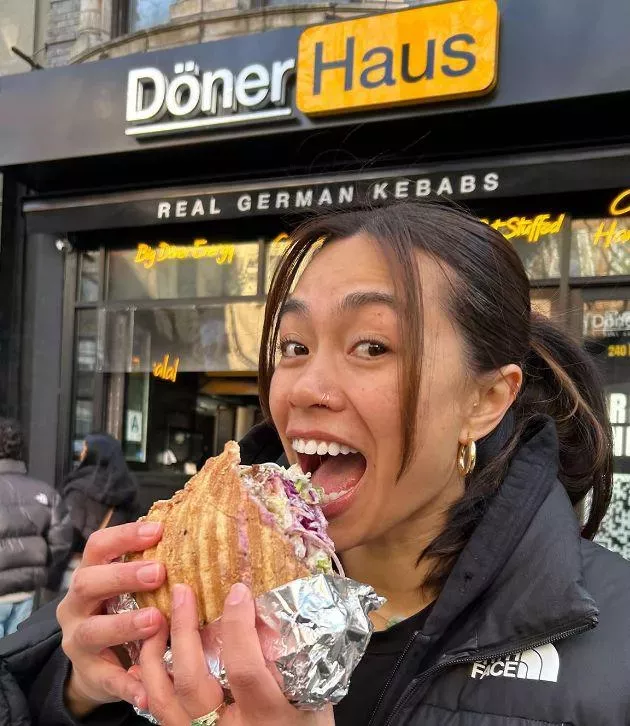
Counter service and walk-up traffic are one hot-dog format. They are not Wienerschnitzel's drive-through system and not a food-truck add-on. The picture shows a service style, not a brand.
| Field | Wienerschnitzel | Dog Haus | Crave Hot Dogs and BBQ |
| --- | --- | --- | --- |
| What it is | Drive-through hot dogs | Craft hot dogs and sausages | Hot dogs and barbecue |
| Founded / franchising | 1961 / 1965 | 2010 / 2013 | 2018 / 2018 |
| Units (2024) | 323 (246 franchised, 77 company) | 58 (58 franchised, 0 company) | 26 (26 franchised, 0 company) |
| Franchise fee | $32,000 | $40,000 | $45,000 |
| Royalty | 5% | 6%, or 4% for a ghost kitchen | 7% |
| Brand fund | 1% | 2% (may rise to 3.5%) | 2% |
| Local advertising | — | — | 1% |
| Comparable stack | 6% | 8% | 10% |
| Item 7 | — | $357,437–$625,800 | $301,500–$1,192,500 |
| Term | 20 years | 10 years; successive 10-year terms | 10 years; one 10-year option |
| Renewal / sale | No right of renewal; no right to sell | $5,000 renewal fee; $17,500 transfer fee | $5,000 renewal; $5,000 transfer |
| Territory | No protected area | Half-mile to five-mile radius | Five-mile radius |
| Item 19 | Yes | Yes | No |
| Training | 48 classroom, 480 on the job | 40 classroom, 102 on the job | 15 classroom, 37 on the job |
| Source | May 2024 comparative study | May 2024 comparative study | May 2024 comparative study |
Dashes are fields the source row does not state. Wienerschnitzel's missing
Item 7 is the sharpest of those blanks. It is omitted from the
[entry-cost ranking](/by-investment/) rather than filled from a portal. Crave
has no local-advertising counterpart on the other two rows' stack inputs in
the same way: Dog Haus and Wienerschnitzel have no required local-ad
percentage in the dataset, while Crave adds 1%.
## Fees, extras and the stack
Wienerschnitzel's 6% comparable stack is among the lower disclosed
percentages in the whole set. Dog Haus ranks at 8% on the 6% restaurant
royalty plus 2% marketing, creative and technology fee. That marketing
component may rise to 3.5%, and a separate $5,000 annual technology
development fee sits outside the percentage stack. Crave ranks at 10%: 7%
royalty, 2% brand fund, 1% local advertising.
A consultant who stops at “Wienerschnitzel is cheaper to run” has not read
the exit column. A consultant who stops at “Crave is 10%” has not asked which
physical format the 7% attaches to. Ghost-kitchen royalty at Dog Haus is 4%;
using that rate against a customer-facing restaurant's Item 7 would mix two
formats. The ranked stack uses the restaurant royalty.
Grand opening, where stated, also differs. Dog Haus records $20,000–$25,000.
Crave records $5,000. Wienerschnitzel has no grand-opening figure in the
dataset. Those are opening-marketing lines, not proof of support quality.
## Training and Item 19
Wienerschnitzel discloses 528 combined hours, 480 of them on the job — the
longest on-the-job figure in the directory. Dog Haus discloses 142 combined
hours. Crave discloses 52, the shortest classroom-plus-store total among
brands that quote both. Hours measure the disclosed attendance requirement.
They do not measure whether a drive-through crew and a craft-sausage line
need the same skills.
Item 19 is present for Wienerschnitzel and Dog Haus in the study; the dataset
does not include a population note for either, so this page does not invent
the sample. Crave has no financial performance representation in the study
row. Scale does not create one: 26 franchised outlets still sit under “No.”
The [Item 19 ranking](/by-item-19/) is the directory-wide split.
## Exit rights are the category's real split
Dog Haus offers successive ten-year terms, a $5,000 renewal fee, a $17,500
transfer fee and a territory ranging from a half-mile to five miles, set from
demographics, population, income and age. Crave offers one ten-year option,
$5,000 to renew, $5,000 to transfer, and a five-mile radius. Wienerschnitzel
offers a 20-year term, no protected area, no right of renewal and no right to
sell the business.
A candidate who plans to build equity by selling the restaurant is not
reading the Wienerschnitzel row. A candidate who plans to hold through one
renewal and then exit is reading Dog Haus or Crave, with different transfer
prices. Term length without those rights is not a gift. The
[term ranking](/by-term/) puts Wienerschnitzel's 20 years beside Great
Greek's 35 and the ten-year majority; this category is where that ranking
stops being theoretical.
Before treating these three as peers
- Name the physical format: drive-through, craft restaurant, ghost kitchen, express, or truck.
- If Item 7 is blank, demand the current FDD and a contractor's budget; do not paste a portal total.
- If Item 19 is yes without a population note in this dataset, read the current document before quoting results.
- If the candidate needs to sell or renew, read Wienerschnitzel's exit language twice.
- If Crave is on the list, match the Item 7 table to restaurant, express or truck.
- Do not use hot-dog unit counts as a control group for a six-unit döner system.
## Who these brands are not
None of the three is German döner, a platter cart, or a Korean fried-chicken
dining room. Wienerschnitzel is not a 58-unit craft brand and not a missing
Item 7 that can be borrowed from Dog Haus. Dog Haus is not a 323-unit
drive-through and not a 4% royalty unless the offer is the ghost-kitchen
variant. Crave is not the oldest system, not an Item 19 in this source, and
not a single format.
They remain useful neighbors on the [fee table](/) because they compete for
some of the same lunch traffic, some of the same second-generation restaurant
spaces, and some of the same franchise capital. The
[consultant workflow](/how-consultants-use-this/) says to screen format
before cuisine. This category is the exhibit: three sausage brands, three
contracts, one missing opening-cost range.
On [system size](/by-units/), Wienerschnitzel is the directory's largest row
and Crave is in the middle. On [age](/by-age/), they are 1961, 2010 and 2018.
On [training](/by-training/), they are 528 hours, 142 hours and 52 hours. On
[term](/by-term/), 20 years without sale sits beside successive ten-year
terms and a single ten-year option. Those four rankings already decide more
than the shared protein. The page compares filings. It does not pick a hot
dog.
Grand-opening lines, where stated, do not repair those gaps. Dog Haus records
$20,000–$25,000; Crave records $5,000; Wienerschnitzel has no figure here.
A larger opening-marketing line is not proof of support, and a missing Item 7
is not repaired by a grand-opening cell on another brand. Read the three
profiles, then the compare, then the current FDDs. Sausage is the aisle.
The filings are the work.
---
HTML: https://franchiselandscape.com/hot-dogs-and-sausage/