# Döner Haus franchise
Döner Haus is a german döner imbiss franchise based in New York, NY.
| Field | Value |
| --- | --- |
| Total ongoing fee | 5% of gross sales |
| Royalty | 3% |
| Brand fund | 2% |
| Local advertising | Not required |
| Initial franchise fee | $35,000 |
| Total investment | $359,500–$586,000 |
| Typical size | 700–1,200 sq ft |
| Units (2026) | 6 |
| Founded | 2023 |
| Item 19 | Yes. Discloses figures for a system with a short operating history, corporate and early franchised units. |
Standing-service imbiss rather than a seated restaurant, which is what puts the footprint at the bottom of the range in this set.
## A compact German-döner peer
Döner Haus is a German-döner quick-service system founded in 2023 and based in
New York, New York. The 2026 Franchise Disclosure Document row records six
outlets and a 700-to-1,200-square-foot standing-service imbiss rather than a
seated restaurant. That footprint is what puts the format at the compact end
of this set. Its [official location and franchise page](https://doner.haus/franchising)
shows kiosk ordering, walk-in traffic and standing-height service in compact
urban stores. Those are operator descriptions; the issued filing remains the
source for the ranked investment and fee figures.
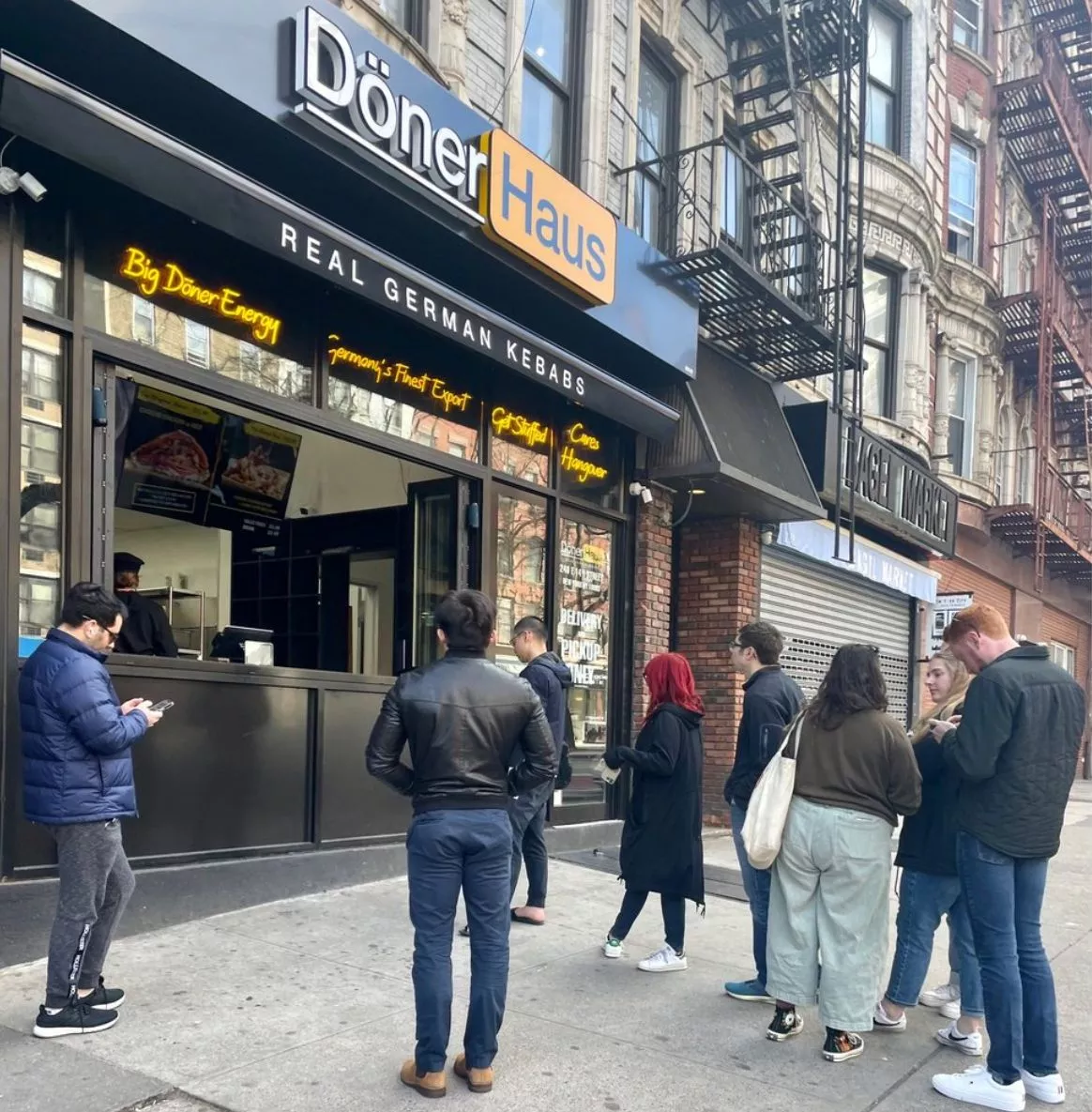
A street-facing service window and shallow frontage illustrate the compact format assumed by the 2026 filing.
The dataset's six-shop count covers five New York locations and one in Los
Angeles, as of 2026. That short operating history is the critical context
beside every other number. It supplies fewer annual cycles, renewals, transfers
and closure observations than older systems in the table. A low fee stack does
not cancel that limitation.
## Fee stack and Item 7
The 2026 row records a $35,000 initial franchise fee, a 3% royalty and a 2%
brand fund, for a 5% comparable stack. There is no required local-advertising
percentage in the dataset. Item 7 is $359,500–$586,000. Those figures are
nominal 2026 dollars from the issued range on the brand record. They describe
the compact imbiss, not a 1,200-to-1,400-square-foot restaurant and not a
five-outlet development schedule.
## Item 19 and Item 20
The 2026 row records an Item 19 for a system with a short history, corporate
stores and early franchised units. The yes/no badge is therefore only a prompt
to read the current disclosure: which stores are included, which period is
measured, whether figures are averages or individual examples, and what costs
are excluded. Company sales claims outside the FDD should not be blended with
the disclosed population.
The profile applies that test exactly as it does to The Great Greek, Mad for
Chicken or 375° Chicken 'n Fries. A financial representation from one or a few
stores is not a system-wide franchisee forecast regardless of the brand making
it. Item 20 in this row is the six-outlet 2026 snapshot. Contracted development
is not that snapshot.
## Development is not an outlet count
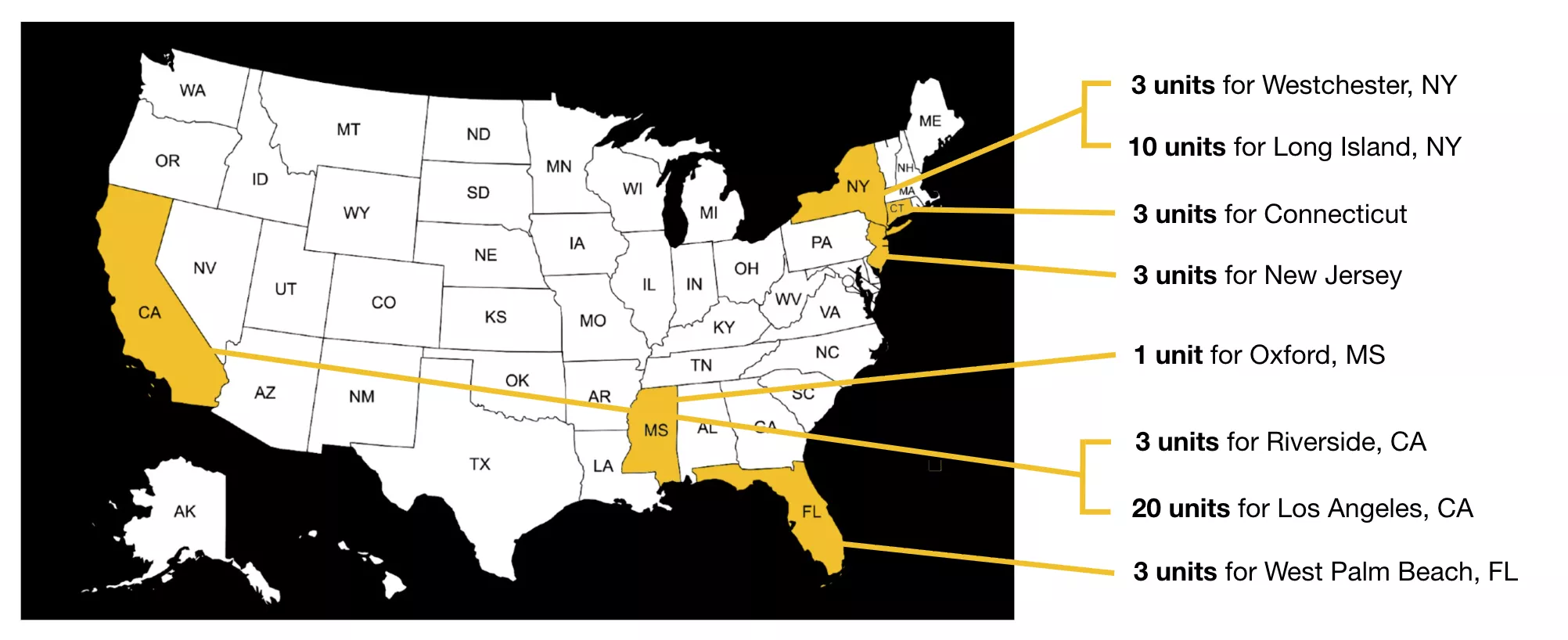
The company separately publishes a development pipeline by market. Contracted
units are obligations or plans, not shops trading, and they do not belong in the
Item 20 unit count until the applicable disclosure records them as outlets.
Operator-supplied: Döner Haus development artwork. The keyed numbers are contracted units, not independently verified openings or a map of the wider US döner category.
The same distinction applies across the directory: GDK's consumer locator,
Doner Shack's hold notice and any operator pipeline are dated company evidence,
not substitutes for a filing's year-end table.
## Product, format and who it is not
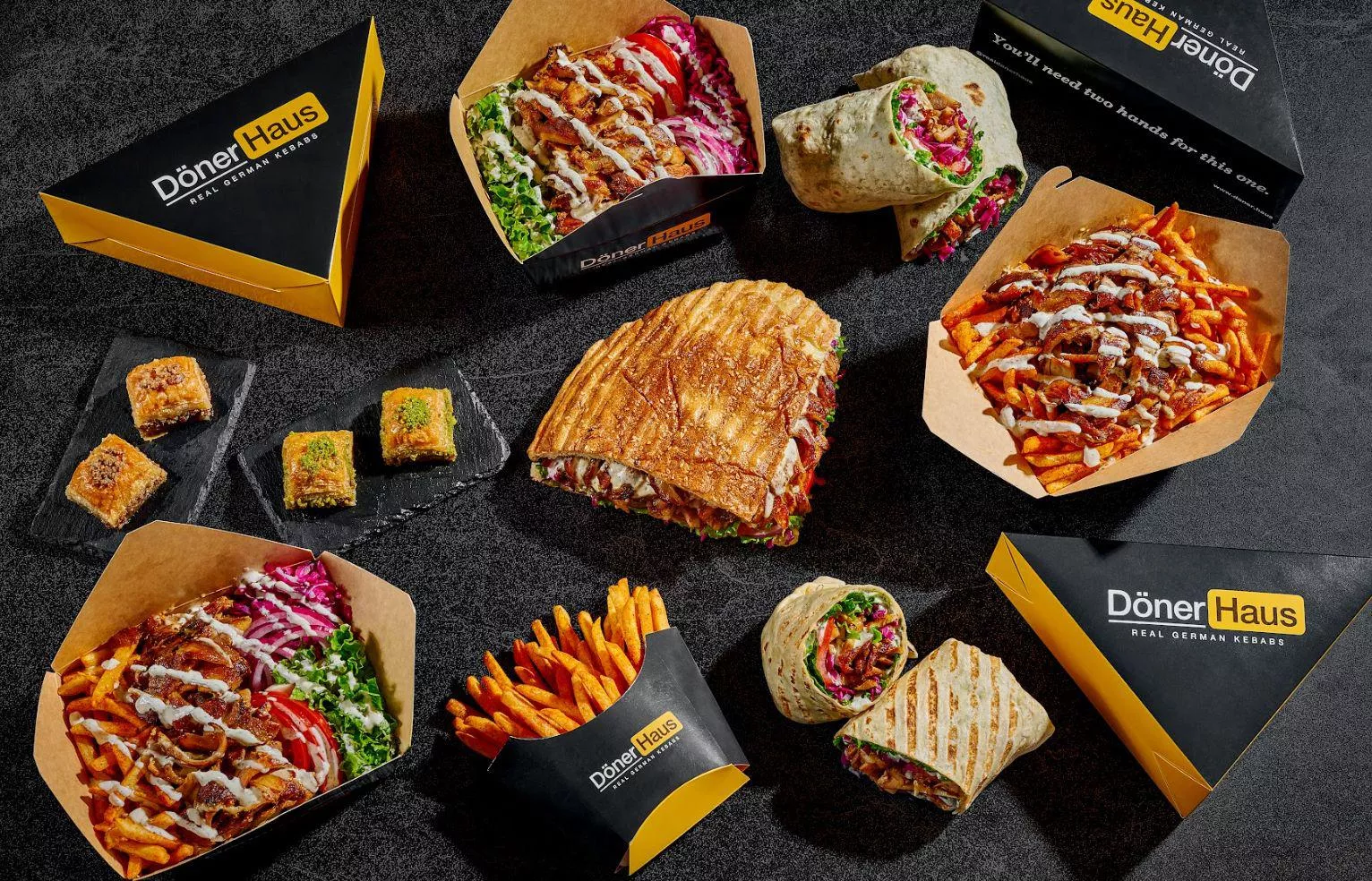
The public menu presents pide sandwiches, dürüm wraps and boxes over fries,
salad or rice, with chicken, beef or mixed meat. These choices describe Döner
Haus, not a universal definition of German döner. Halal, organic and ingredient
claims should be checked against the current operator documentation and any
applicable certificate rather than inferred from the category.
The operator's menu spans pocket bread, wraps and boxes, showing how one production line serves several carrying formats.
Döner Haus is not German Doner Kebab's restaurant-and-minimum package, not a
New York platter cart, not a 323-unit drive-through, and not a withdrawn UK
brand. Training hours and initial term in years are not in this 2026 dataset
row; those fields stay blank rather than being copied from GDK. The
[Döner Haus versus GDK compare](/compare/doner-haus-vs-german-doner-kebab/)
is the place to keep the two live German-döner filings from collapsing.
The investment, fee stack and Item 19 status above come from the same 2026
source used for every ranked field. The photographs and maps are permitted
company materials; they do not confer authorship, approval or favorable
treatment.
## What to request next
Obtain the current FDD and complete Item 11 and Item 17 from the document;
training hours and term in years are blank in this 2026 dataset row. Write
down Item 19's population as a short operating history with corporate and
early franchised units — not a system-wide forecast. Item 20 is six outlets
as of 2026; contracted states on operator maps are not that count. Item 7 is
$359,500–$586,000 for 700–1,200 square feet. Stack is 5% (3% royalty, 2%
brand fund). Franchise fee $35,000. Do not copy GDK's five-outlet minimum,
11% stack or 1,200–1,400-square-foot restaurant onto this row.
Döner Haus is a compact German-döner peer. It is handled by the same ranking
rules as every other brand in the set.
Figures from 2026 Franchise Disclosure Document; dataset year 2026.
---
HTML: https://franchiselandscape.com/franchises/doner-haus/